Category Archives: Food Toxin

USA – Outbreak Investigation of E. coli – Leafy Greens (December 2020) – CDC declares outbreak over, FDA investigation ongoing

FDA

The FDA, along with CDC and state and local partners, investigated a multistate outbreak of E. coli O157:H7 infections in the fall of 2020. The epidemiology and traceback investigation have determined that the outbreak was linked to leafy greens. The epidemiological and traceback investigations were not able to determine a specific type of leafy green linked to illnesses. On 12/22/2020, the CDC announced that this outbreak appears to be over. This outbreak, announced by FDA and CDC on October 28, 2020, was caused by a strain of E. coli that is genetically related to a strain linked to the fall 2019 romaine outbreak.

The FDA completed a traceback investigation of multiple types of leafy greens identified in patient interviews. Although no single ranch was identified as a common source of the leafy greens, FDA and state partners also conducted on-site investigations on farms of interest. 

Teams were deployed to dozens of ranches in the region to conduct large scale environmental sampling. Additionally, no Shiga toxin-producing E. coli were found on leafy greens. 

At this time, FDA’s investigational activities, including sample analysis are ongoing. A detailed report of FDA’s findings in the investigation will be released in early 2021, following the conclusion of investigational activities.

Recommendation

CDC has declared this outbreak to be over. There is no recommendation for consumers, retailers, or suppliers.


Case Count Map Provided by CDC
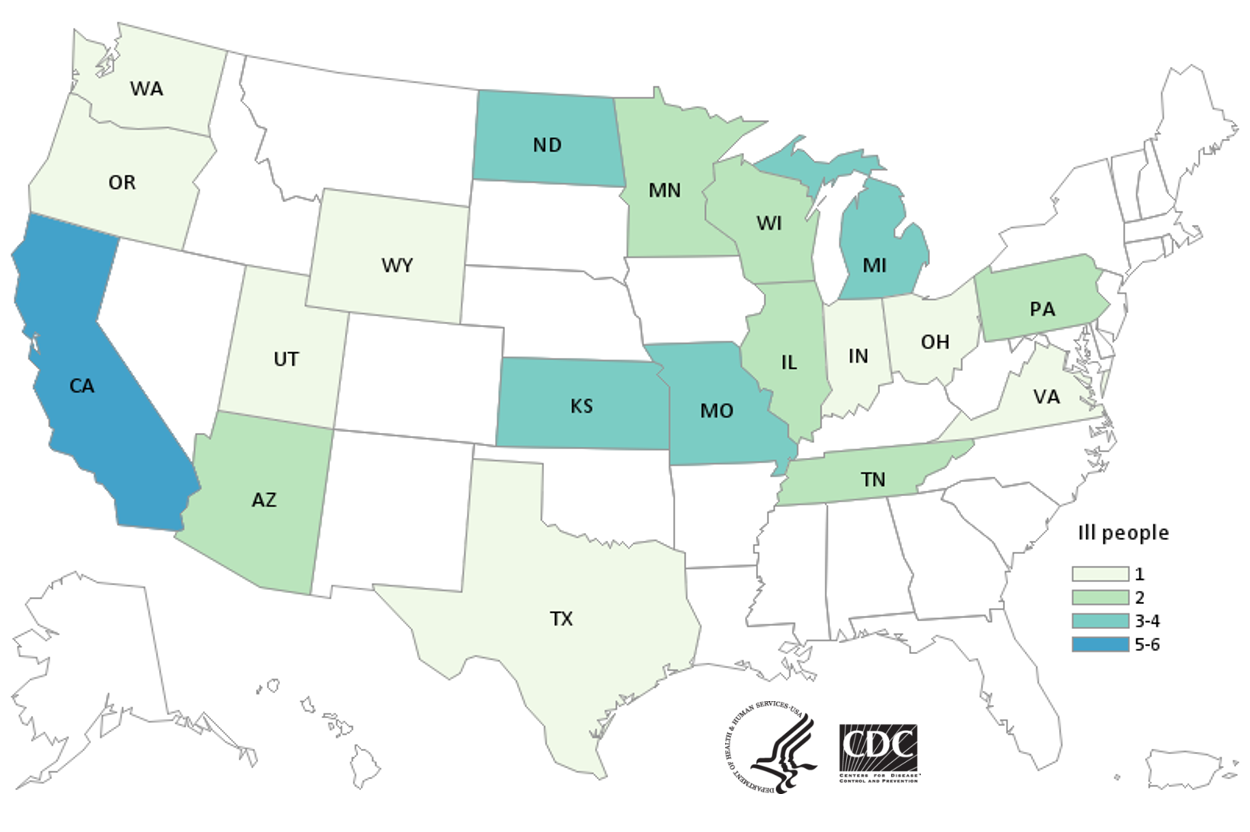
Outbreak Investigation of of E. coli in Leafy Greens (December 2020) - Case Count Map from CDC 12/22/2020

Case Counts

Total Illnesses: 40
Hospitalizations: 20 (4 Cases HUS)
Deaths: 0
Last Illness Onset Date: October 31, 2020
States with Cases: AZ (2), CA (6), IL (2), IN (1), KS (4), MI (3), MN (2), MO (3), ND (4), OH (1), OR (1), PA (2), TN (2), TX (1), UT (1), VA (1), WA (1), WI (2), WY (1)
*States with confirmed distribution; product could have been distributed further

Useful Links

Research – Citrinin in Foods and Supplements: A Review of Occurrence and Analytical Methodologies

MDPI

Citrinin (CIT) deserves attention due to its known toxic effects in mammalian species and its widespread occurrence in food commodities, often along with ochratoxin A, another nephrotoxic mycotoxin. Human exposure, a key element in assessing risk related to food contaminants, depends upon mycotoxin contamination levels in food and on food consumption. Commercial supplements, commonly designated as red rice, usually used in daily diets in Asiatic countries due to their medicinal properties, may pose a health problem as a result of high CIT levels. In addition to the worldwide occurrence of CIT in foods and supplements, a wide range of several analytical and detection techniques with high sensitivity, used for evaluation of CIT, are reviewed and discussed in this manuscript. This review addresses the scientific literature regarding the presence of CIT in foods of either vegetable or animal origin, as well as in supplements. On what concerns analytical methodologies, sample extraction methods, such as shaking extraction and ultrasonic assisted extraction (UAE), clean-up methods, such as liquid-liquid extraction (LLE), solid phase extraction (SPE) and Quick, Easy, Cheap, Effective, Rugged and Safe (QuECHERS), and detection and quantification methods, such as thin layer chromatography (TLC), high performance liquid chromatography (HPLC), capillary electrophoresis (CE), biosensors, and ELISA, are also reviewed.

India – Kerala health minister on Shigella outbreak: ‘Everything is under control’

Outbreak News Today

Shigella - kswfoodworld

After a suspected Shigella outbreak that claimed the life of an 11-year old child in the city of Kozhikode, Kerala health prime minister KK Shailaja has stated that the aforementioned outbreak has been ‘under control’ by health authorities.

“An 11-year-old child died last week in Kozhikode. After that tests have been done for about fifty suspected cases and six have been infected. Now, only two are in the hospital while others have been discharged,” she said.

She further added that the Shigella bacteria is prevalent in densely populated areas, through contaminated water.

The health department has conducted an awareness campaign and set up medical camps. Wells in the area were chlorinated,” Shailaja commented, while stressing health authority directives that people should first boil their water before consuming.

Germany – “NATUR favorites – Dried figs, 200 g” – Ochratoxin A

LMW


Warning type:Food
Date of first publication:December 21, 2020
Product name:

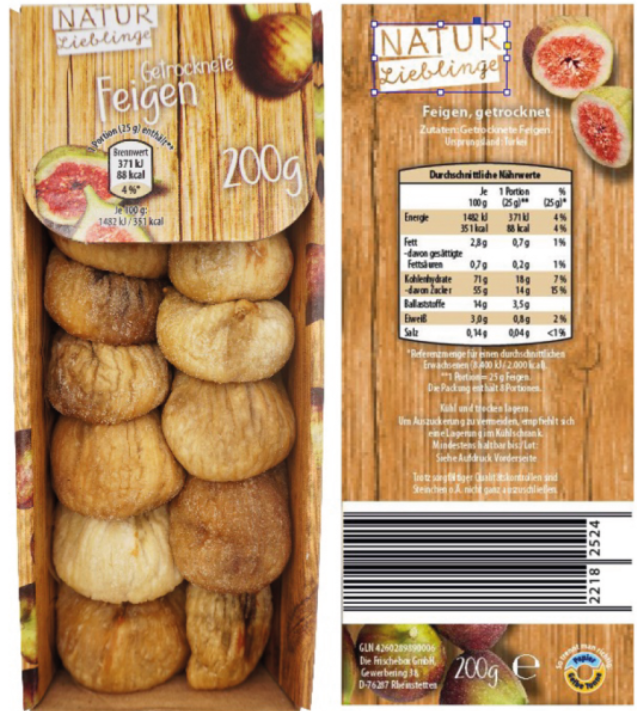
“NATUR favorites – Dried figs, 200 g”

Product pictures:

Unnamed.PNG

Press release

Manufacturer (distributor): Distributor: Frischebox GmbH, 76287 Rheinstetten Distribution via Aldi Süd in the federal states of Baden-Württemberg, Hesse and Rhineland-Palatinate
Reason for warning:

An increased content of ochratoxin-A (OTA) was found.

Packaging Unit: 200 g
Durability: Best before 20.06.2021
Lot identification: L4302 / 350058631-11-580
Further information:

Reference is made to the company’s consumer information sheet attached.

Contact to the responsible authorities:

Baden-Württemberg:

poststelle@mlr.bwl.de

Hesse:

Schnellwarnung@rpda.hessen.de

Rhineland-Palatinate:

Poststelle.Referat22@lua.rlp.de

Singapore – Recall of “Crab Brand” Black Pepper Seed Due to Presence of Bacillus cereus Exceeding Permitted Level

Click to access sfa-media-release—recall-of-crab-brand-black-pepper-seed-due-to-presence-of-bacillus-cereus-exceeding-permitted-levels.pdf

New Zealand – Clean, cook and chill to decrease risk of food poisoning

RNZ

As the festive season kicks off, people are being reminded of the increased risk of food poisoning at home.

The Ministry for Primary Industries has launched a food safety campaign reminding everyone to “Clean Cook, and Chill”.

Food Safety Minister Dr Ayesha Verrall said with rising summer temperatures, the risk of food poisoning increased.

“Food poisoning is a significant issue in New Zealand with an estimated 100,000 people getting sick from unsafe food handling practices at home.

“That’s why the Ministry for Primary Industries is launching an awareness campaign, reminding consumers to follow the 3 C’s: clean, cook and chill, when handling, cooking and storing raw meats such as poultry, to avoid getting sick and paying the price,” she said.

MPI has also teamed up with MasterChef winning sisters Karena and Kasey Bird to offer additional advice and helpful cooking tips on social media this summer.

Verrall said a recent study found that most New Zealanders don’t believe that food poisoning can be deadly or create long-term health consequences.

She said while for many, food poisoning will just mean a few days of an upset stomach, for others it can be more serious.

“Some people can and do experience more severe forms of foodborne illnesses as a result of picking up harmful bacteria and viruses like Campylobacter, Norovirus, Salmonella, Listeria, Escherichia coli (E. coli) and Bacillus cereus.

“This is especially true for young tamariki, our elderly community, pregnant mothers and Kiwis who suffer from other health issues,” she said.

Norway – Yersinia enterocolitica outbreak reported in Norway

Outbreak News Today

Yersinia p

The Norwegian Institute of Public Health has discovered an increased incidence of the gastrointestinal bacterium Yersinia enterocolitica O3. So far, infection has been detected in 10 people who live in several counties. Outbreak investigation has been initiated in collaboration with relevant municipal chief physicians, the Veterinary Institute and the Norwegian Food Safety Authority.

The National Institute of Public Health collaborates with the municipal health service, the Norwegian Food Safety Authority and the Norwegian Veterinary Institute to map whether patients can have a common source of infection. The patients are interviewed and the local Norwegian Food Safety Authority takes samples from food products in the homes of those who are infected, if residues are available, in order to identify the source of the outbreak if possible.

Research – Special Issue: Shiga Toxin-Producing Escherichia coli

MDPI

Globally, Shiga toxin-producing Escherichia coli (STEC) is an important cause of diarrheal disease, most notably hemorrhagic colitis, and post-diarrheal sequela, such as hemolytic-uremic syndrome (HUS) [1]. Cattle are a major reservoir of STEC, with approximately half of the cases in humans attributable to foodborne exposure [2]. Prevention of human illness has mainly been through food safety measures [2]. Despite extensive research, no other generally accepted and effective preventive measures or therapies for STEC infections in human patients are available [3]. Many questions remain about STEC virulence factors, pathogenesis, detection, and other aspects that necessitate a continuation of basic and applied research on a wide front. This Special Issue includes 14 papers (nine articles, two communications, one review, one comment, and one reply) that collectively provide novel information on the epidemiology [4,5,6,7], virulence factors [7,8,9,10], and pathogenesis [11,12,13] of STEC, and the molecular structure or toxicity [14,15,16] and immunodetection [17] of Shiga toxin.

India – FSSAI issues new manual for analysing aflatoxin in food

FNB News

The apex food regulator, FSSAI, has issued a revised manual for methods of analysis of mycotoxins including aflatoxin in food. FSSAI has stated that the manual shall be used by the laboratories with immediate effect and this manual shall supersede the earlier manual on mycotoxins.

According to the FSSAI all food samples suspected of being contaminated with mycotoxins must be handled with extreme care, as aflatoxins are potent carcinogenic substances.

The manual talks about personal safety precautions, precautions during analysis  and handling of glassware for aflatoxin analysis.

Currently, the regulatory limits for mycotoxins in food as defined by the FSSAI include 15 microgram per kg in cereals, and cereal products, pulses, nuts and nuts for further processing. For Aflatoxins  the limit is prescribed at 10 microgram  per kg for ready to eat products, and dried figs, while 30 microgram per kg for spices and for oilseeds for further processing, the limit is set at 15 microgram per kg.

Similarly, the limit of Aflatoxin M1 in milk is 0.5 microgram per kg, Ochratoxin A in wheat, barley and rye is at 20 microgram per kg, and for Patulin, the limit is 50mcrogram per kg in apple juice and apple juice ingredients in other beverages.

Further, the limit for Deoxynivalenol  in wheat is fixed at 1000ppm.

Mycotoxins—toxic secondary metabolites of filamentous fungi—are biological in origin. Only a few of the thousands of mycotoxins present significant food safety challenges to the farm-to-fork food continuum. The natural fungal flora associated with food safety is dominated by three genres: Aspergillus, Fusarium, and Penicillium.

Aflatoxins are highly toxic secondary metabolites and aflatoxin-producing fungi can contaminate crops in the field, at harvest, and during storage. Some of the more common crops susceptible to contamination with aflatoxins are cereals (e.g. maize, rice and wheat). The husk of these cereals are often used as animal feed.

Deoxynivalenol (DON) Deoxynivalenol (DON) also known as vomitoxin is a trichothecene mycotoxin mainly produced by Fusarium fungi (Fusarium molds). This plant pathogens can cause scab mainly in wheat and barley etc., and damages cereals the most widely by contamination in the field. The main commodities affected are cereals such as wheat, rice, barley, oats and maize etc.

Patulin is a mycotoxin that is produced by certain species of Penicillium, Apergillus, and Byssochylamys molds that may grow on a variety of foods including fruit, grains, and cheese  while Ochratoxin A (OTA) is a naturally occurring foodborne mycotoxin found in a wide variety of agricultural commodities worldwide, ranging from cereal grains to dried fruits to wine and coffee.

USA – Outbreak Investigation of E. coli O157:H7: Unknown Food (Fall 2020)

FDA

The FDA and CDC, in collaboration with state and local partners, have completed the investigation on two of three multistate outbreak of E. coli O157:H7 infections in the U.S. this fall.

One of these investigations, Outbreak Unknown Source 3, identified 18 reported illnesses in nine states: California, Colorado, Illinois, Michigan, New York, Ohio, Pennsylvania, Virginia, Washington.

FDA completed a traceback investigation of several potential food vehicles identified in patient interviews and although no single farm was identified as a common source of the outbreak, FDA and state partners also conducted on-site investigations on farms of interest. However, information and samples collected in these inspections did not link these farms to the outbreak. The investigation of a farm does not mean that the farm is linked to an outbreak. The results of an investigation into a farm may well lead to that firm being ruled out of the investigation. On 12/18/2020, the CDC announced that this outbreak had ended.

The other completed outbreak investigation, Outbreak Unknown Source 1, identified 32 reported illnesses in 12 states: California, Illinois, Louisiana, Maryland, Michigan, Montana, New Jersey, Ohio, Utah, Virginia, Washington, Wisconsin. This strain of E. coli is genetically similar to a strain linked to a romaine outbreak that occurred in the spring of 2018, though a food was not linked to the current outbreak. FDA completed a traceback investigation and was unable to determine a common source of the outbreak. FDA and state partners also conducted on-site inspections on farms of interest, though information collected in these inspections did not link these farms to the outbreak. On 12/18/2020, the CDC announced that this outbreak had ended.

Investigations of a third E. coli outbreak of Unknown Source 2 continue.

Recommendation

Consumers, restaurants, and retailers, were advised not to eat, sell, or serve recalled Tanimura & Antle, Inc. brand packaged single head romaine lettuce with a pack date of 10/15/2020 or 10/16/2020.

The recalled products are now well beyond expiration and likely no longer on the market or in consumers’ homes.