Category Archives: Research

Research – Application of peroxyacetic acid for decontamination of raw poultry products and comparison to other commonly used chemical antimicrobial interventions – A Review

Journal of Food Protection

Poultry remains one of the top food commodities responsible for foodborne illness in the U.S., despite poultry industry efforts since the inception of HACCP to reduce the burden of foodborne illness implicating poultry products. The appropriate use of antimicrobial compounds during processing of raw poultry can help minimize this risk. Currently, peroxyacetic acid (PAA) is the most popular antimicrobial in the poultry industry, displacing chlorine compounds and others. The aim of this review was to compare the effectiveness of PAA to that of other antimicrobials for the decontamination of raw poultry carcasses and parts. Twenty-six articles were found that compared PAA to over 20 different antimicrobials, applied as spray or immersion treatments for different exposure times and concentrations. The most common comparisons were to chlorine compounds (17 articles), to lactic acid (LA) compounds (5 articles) and to cetylpyridinium chloride (CPC, 6 articles). Studies measured effectiveness by reductions in native flora or inoculated bacteria, usually Salmonella or Campylobacter . PAA was found to be more effective than chlorine under most conditions studied. Effectiveness of PAA was higher or comparable to that of LA and CPC depending on product and treatment conditions. Overall, the results of primary literature studies support the popularity of PAA as an effective intervention against pathogenic bacteria during poultry processing.

Research – Histamine food poisoning: a sudden, large outbreak linked to fresh yellowfin tuna from Reunion Island,France, April 2017

Click to access 226790618.pdf

Finland – Finland sees record Listeria high in 2020

Food Safety News

Finland reported a record number of Listeria infections this past year with the figure almost twice as high as 2019.

The 93 Listeria infections in 2020 were nearly double the 50 in the year before and the largest annual total ever reported to the National Infectious Diseases Register. Almost 80 infections were recorded in 2018 and 90 in 2017.

Nearly all bacterial infections decreased significantly in 2020 from mid-March because of measures put in place because of the coronavirus pandemic, according to data published by the Finnish Institute for Health and Welfare (THL).

Research – Lacticaseibacillus rhamnosus Impedes Growth of Listeria spp. in Cottage Cheese through Manganese Limitation

MDPI

Acidification and nutrient depletion by dairy starter cultures is often sufficient to prevent outgrowth of pathogens during post-processing of cultured dairy products. In the case of cottage cheese, however, the addition of cream dressing to the curd and subsequent cooling procedures can create environments that may be hospitable for the growth of Listeria monocytogenes. We report on a non-bacterio-cinogenic Lacticaseibacillus rhamnosus strain that severely limits the growth potential of L. monocytogenes in creamed cottage cheese. The main mechanism underlying Listeria spp. inhibition was found to be caused by depletion of manganese (Mn), thus through competitive exclusion of a trace element essential for the growth of many microorganisms. Growth of Streptococcus thermophilus and Lactococcus lactis that constitute the starter culture, on the other hand, were not influenced by reduced Mn levels. Addition of L. rhamnosus with Mn-based bioprotective properties during cottage cheese production therefore offers a solution to inhibit undesired bacteria in a bacteriocin-independent fashion. View Full-Text

Research – EU – More Salmonella infections in Europe: Hygiene rules help prepare poultry safely

Eurekalert

kswfoodworld salmonella

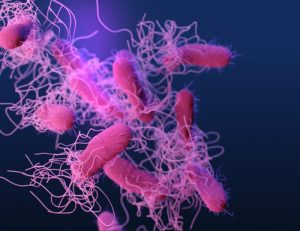
In recent months, more than three hundred cases of salmonellosis have occurred in various European countries and Canada, which are linked to each other. In the UK the cases could be partly traced back to frozen breaded poultry meat. The cause was contamination with the bacterium Salmonella Enteritidis, which causes gastrointestinal inflammation. Salmonella is not killed by deep freezing and can remain infectious at temperatures below zero degrees Celsius. The Robert Koch Institute (RKI) and the BfR are monitoring the situation together with the Federal Office of Consumer Protection and Food Safety (BVL). In Germany, the number of reported cases has currently risen to more than 20 in six federal states. In 2020, there were a total of about 10,000 reported cases of salmonellosis in Germany, most of which were caused by the consumption of contaminated food. In principle, foodborne infections can be avoided by paying particular attention to hygienic care when preparing raw poultry. Due to the measures taken to contain the COVID 19 pandemic, people are currently cooking more often at home and, in the course of this, convenience products such as frozen goods are also being used more frequently. Sometimes it is not obvious at first glance whether such products contain pre-cooked or raw meat. Sufficient heating should always be ensured during preparation, especially of products containing raw poultry meat. In addition, bacterial contamination of other dishes via the raw meat and breading is possible. “Especially for children and elderly people there is a higher risk of getting sick from salmonella,” says BfR President Prof. Dr. Dr. Andreas Hensel.

Research – Effect of UVC light-emitting diodes on pathogenic bacteria and quality attributes of chicken breast

Journal of Food Protection

This study aimed to investigate the inactivation of foodborne pathogens and the quality characteristics of fresh chicken breasts after Ultraviolet-C light-emitting diode (UVC-LED) treatment. Fresh chicken breasts were separately inoculated with Salmonella Typhimurium, Escherichia coli O157:H7, and Listeria monocytogenes at an initia population of 6.01, 5.80, and 6.22 log 10 CFU/cm 2 , respectively, then were treated by UVC-LED at 1000 to 4000 mJ/cm 2 . UVC-LED irradiation could inactivate the tested bacteria in a dose-dependent manner. After UVC-LED treatment at 4000 mJ/cm 2 , the populations of S . Typhimurium, E . coli O157:H7, and L . monocytogenes on chicken breasts were decreased by 1.90, 2.25, and 2.18 log 10 CFU/cm 2 , respectively. No significant ( P > 0.05) changes were found in the color, pH value, texture properties, and thiobarbituric acid reactive substances (TBARS) values of chicken breasts following the UVC-LED radiation at doses up to 4000 mJ/cm 2 . Overall, this study indicates that UVC-LED is a promising technology to reduce the number of microorganisms while maintaining the physico-chemical characteristics of poultry meat.

Research -Center for Foodborne Illness Research and Prevention – Impact reReport

Click to access 2019-2020%20CFI%20Impact%20Report.pdf

Research – Whole genome sequencing data used for surveillance of Campylobacter infections: detection of a large continuous outbreak, Denmark, 2019

Eurosurveillance

CDC Campy

Human campylobacteriosis is the most commonly reported zoonotic disease in Europe, with 246,571 reported cases in the European Union (EU) in 2018 [1].  infections are predominantly food-borne, with poultry as the primary source. However, other transmission routes are known, such as bathing, drinking contaminated water or direct contact with animals. In food samples, the highest occurrence of  was detected in fresh chicken meat (37.5% of samples tested) [1]. In Denmark, we had 5,389 registered human cases in 2019 (incidence: 93/100,000 inhabitants) and 33% of conventional chicken meat samples were positive for  at slaughter [2]. Of note, one third of the human infections diagnosed in Denmark are estimated to be travel-related [3].

Efforts to identify the specific source of  infection in humans are rarely made in Denmark or other countries. Therefore, relevant information for targeted public health actions to prevent  infections often does not exist. For decades, surveillance of other food-borne pathogens, especially  and  with high-discriminatory typing methods has proved to be a powerful tool for outbreak detection and investigations as well as for following trends and emergence of epidemic strains. Similar typing-based surveillance for  has not been widely used and generally has not been very useful for the decision-making process on mitigating efforts by the public health and food safety authorities. The high diversity of  isolates and the general assumption that most  infections are sporadic are plausible explanations.

We have previously shown that, based on whole genome sequencing (WGS) data of  isolates in 2015–17, we could identify numerous small outbreak-like clusters and, in many instances, genetically link them to concurrent animal and food isolates [4]. A large fraction of all 774 clinical isolates (27%) could be genetically linked to broilers or chicken meat, whereas only a few clinical isolates (2%) could be genetically linked to cattle isolates. A Danish case–control study conducted in the same period pointed at several food sources of campylobacteriosis among children and young adults, including consumption of chicken meat, minced beef, and fresh strawberries [5]. Therefore, in addition to sampling of chicken meat, the Danish Veterinary and Food Administration (DVFA) initiated sampling and analysis for  in several other food sources that were identified by the case–control study to obtain knowledge on the impact of these sources.

In our 2015–17 study, a comparison of human isolates to food and animal isolates was done retrospectively and therefore no specific public health actions were taken. To evaluate the value of a prospective and continuous WGS-based surveillance system for  in Denmark, we initiated WGS of isolates from human cases and retail food samples as well as the concurrent analysis of these cross-sector data. Here, we report the first year of surveillance (2019) and show that integrated WGS-based surveillance of  in humans and food sources can identify correlations between the occurrence of specific strains in chicken meat and in human infections. The surveillance was also able to detect prolonged or reappearing outbreaks, which allows for specific interventions to control  in the food production chain and thereby prevent human infections.

Research – Mycotoxins Affecting Animals, Foods, Humans, and Plants: Types, Occurrence, Toxicities, Action Mechanisms, Prevention, and Detoxification Strategies—A Revisit

MDPI

CDC Fusarium1

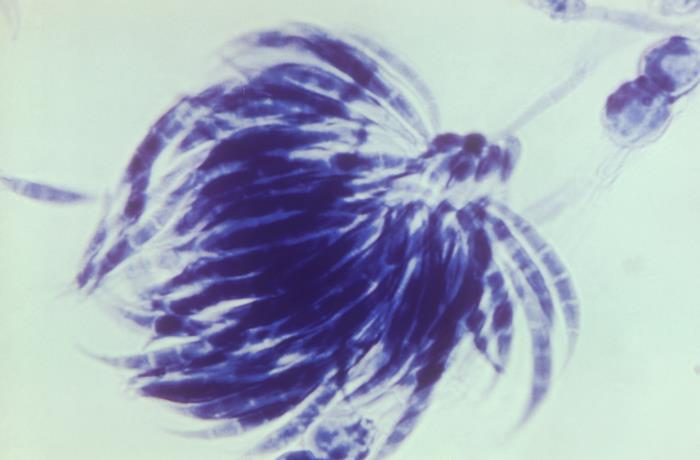
Mycotoxins are produced by fungi and are known to be toxic to humans and animals. Common mycotoxins include aflatoxins, ochratoxins, zearalenone, patulin, sterigmatocystin, citrinin, ergot alkaloids, deoxynivalenol, fumonisins, trichothecenes, Alternaria toxins, tremorgenic mycotoxins, fusarins, 3-nitropropionic acid, cyclochlorotine, sporidesmin, etc. These mycotoxins can pose several health risks to both animals and humans, including death. As several mycotoxins simultaneously occur in nature, especially in foods and feeds, the detoxification and/or total removal of mycotoxins remains challenging. Moreover, given that the volume of scientific literature regarding mycotoxins is steadily on the rise, there is need for continuous synthesis of the body of knowledge. To supplement existing information, knowledge of mycotoxins affecting animals, foods, humans, and plants, with more focus on types, toxicity, and prevention measures, including strategies employed in detoxification and removal, were revisited in this work. Our synthesis revealed that mycotoxin decontamination, control, and detoxification strategies cut across pre-and post-harvest preventive measures. In particular, pre-harvest measures can include good agricultural practices, fertilization/irrigation, crop rotation, using resistant varieties of crops, avoiding insect damage, early harvesting, maintaining adequate humidity, and removing debris from the preceding harvests. On the other hand, post-harvest measures can include processing, chemical, biological, and physical measures. Additionally, chemical-based methods and other emerging strategies for mycotoxin detoxification can involve the usage of chitosan, ozone, nanoparticles, and plant extracts. View Full-Text

Research – Legionella and Biofilms—Integrated Surveillance to Bridge Science and Real-Field Demands

MDPI

Legionella_Plate_01

Legionella is responsible for the life-threatening pneumonia commonly known as Legionnaires’ disease or legionellosis. Legionellosis is known to be preventable if proper measures are put into practice. Despite the efforts to improve preventive approaches, Legionella control remains one of the most challenging issues in the water treatment industry. Legionellosis incidence is on the rise and is expected to keep increasing as global challenges become a reality. This puts great emphasis on prevention, which must be grounded in strengthened Legionella management practices. Herein, an overview of field-based studies (the system as a test rig) is provided to unravel the common roots of research and the main contributions to Legionella’s understanding. The perpetuation of a water-focused monitoring approach and the importance of protozoa and biofilms will then be discussed as bottom-line questions for reliable Legionella real-field surveillance. Finally, an integrated monitoring model is proposed to study and control Legionella in water systems by combining discrete and continuous information about water and biofilm. Although the successful implementation of such a model requires a broader discussion across the scientific community and practitioners, this might be a starting point to build more consistent Legionella management strategies that can effectively mitigate legionellosis risks by reinforcing a pro-active Legionella prevention philosophy. View Full-Text