Category Archives: Research

Research – Poultry study points to genes linked to food bug – Campylobacter.

Roslin

Campylobacter kswfoodworld

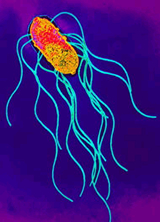
Variation in the response of chickens to Campylobacter helps identify key genes that may provide resistance to infection.

Research has identified genes in chickens that could offer resistance to harmful bacteria commonly found in poultry and could inform ways to limit the risk of associated food poisoning in people.

The study, led by a team from the Roslin institute, has identified a large number of genes in chicken guts that may determine whether the birds are resistant to Campylobacter.

The insights could inform research towards breeding chickens that are less likely to carry Campylobacter bacteria, and so limit the risk to poultry consumers.

Research – Escherichia coli Survival on Strawberries and Unpacked Romaine Lettuce Washed Using Contaminated Water

MDPI

A number of foodborne outbreaks have occurred in the past decade, with higher incidences associated with romaine lettuce and strawberries. Contaminated agricultural water has been reported as the source of microbial contamination in most of these outbreaks. Maintaining the adequate and sanitary quality (0 E. coli/100 mL) of agricultural water can be challenging during post-harvest operations such as washing. The study focused on the attachment of generic E. coli (Rifampicin resistant) onto romaine lettuce and strawberries, mimicking the produce wash step. The produce was washed with contaminated water, air-dried, and stored in display units for 7 days. The produce was sampled randomly each day and analyzed for the surviving E. coli count. The results indicated that E. coli can survive in both lettuce and strawberries over extended periods. A survival population of 2.3 log CFU/cm2 (day 8) was observed on lettuce with an initial population of 2.8 log CFU/cm2 (day 0). On strawberries, the population reduced from 3.0 (day 0) to 1.7 log CFU/cm2 (day 7), with an initial E. coli concentration of approx. 6 log CFU/mL in the wash water. Strawberry leaves had a higher attachment of E. coli than the fruit (p < 0.05). In conclusion, romaine lettuce and strawberries washed with contaminated water can cause an outbreak affecting consumers and public health. View Full-Text

Research – Prevalence, Antibiogram and Genetic Characterization of Listeria monocytogenes from Food Products in Egypt

MDPI

World Health Organization classified Listeria monocytogenes as a major notable foodborne pathogen associated with high mortality and hospitalization. The study reports the prevalence, antibiogram, virulence determination and genetic characterization of L. monocytogenes from different food products. A total of 250 food samples, fifty samples each from raw milk, ice cream, minced meat, fish fillet and sausage were collected from the Menoufiya governorate in Egypt. L. monocytogenes was detected in 17 (6.8%) of the tested food samples including minced meat (14%), fish fillet (8%), sausage (6%) and raw milk (6%). The antimicrobial susceptibility assay of 17 L. monocytogenes isolates against seventeen antibiotics belonging to eight antibiotics classes revealed a high susceptibility to norfloxacin (82.3%), amoxicillin-clavulanic acid (76.4%), cefotaxime (70.5%), erythromycin (64.6%), amoxicillin (64.6%), gentamicin (58.7%) and vancomycin (58.7%). While, high resistance was observed against oxytetracycline (76.4%), trimethoprim-sulfamethoxazole (76.4%), chloramphenicol (70.5%), doxycycline (64.6%), levofloxacin (41.2%) and azithromycin (41.2%). Of note, all L. monocytogenes isolates were multidrug-resistant. The multiplex PCR successfully amplified L. monocytogenes in all tested isolates. Screening of the five virulence-related genes revealed the hlyA and iap as the most prevalent genes followed by actA gene, however, the inlA and prfA genes were not detected in any of the studied isolates. The partial 16S rRNA gene sequencing of three L. monocytogenes isolates showed a high nucleotide similarity (99.1–99.8%) between the study isolates and various global clones, and phylogenetic analysis clustered these L. monocytogenes strains with other Listeria species including L. welshimeriL. seeligeri and L. innocua. This study demonstrates the impact of L. monocytogenes as a major contaminant of various food products and suggests more attention to the awareness and hygienic measures in the food industry. View Full-Text

Research – Occurrence of Human Enteric Viruses in Shellfish along the Production and Distribution Chain in Sicily, Italy

MDPI

Contamination of bivalve mollusks with human pathogenic viruses represents a recognized food safety risk. Thus, monitoring programs for shellfish quality along the entire food chain could help to finally preserve the health of consumers. The aim of the present study was to provide up-to-date data on the prevalence of enteric virus contamination along the shellfish production and distribution chain in Sicily. To this end, 162 batches of mollusks were collected between 2017 and 2019 from harvesting areas, depuration and dispatch centers (n = 63), restaurants (n = 6) and retail stores (n = 93) distributed all over the island. Samples were processed according to ISO 15216 standard method, and the presence of genogroup GI and GII norovirus (NoV), hepatitis A and E viruses (HAV, HEV), rotavirus and adenovirus was investigated by real-time reverse transcription polymerase chain reaction (real-time-RT PCR), nested (RT)-PCR and molecular genotyping. Our findings show that 5.56% of samples were contaminated with at least one NoV, HAV and/or HEV. Contaminated shellfish were sampled at production sites and retail stores and their origin was traced back to Spain and several municipalities in Italy. In conclusion, our study highlights the need to implement routine monitoring programs along the whole food chain as an effective measure to prevent foodborne transmission of enteric viruses. View Full-Text

Research – Antimicrobial effect of tea polyphenols against foodborne pathogens

Journal of Food Protection

In recent years, science and technology have developed to a considerable level. However, food contamination by food-borne pathogens is still widespread in many countries around the world, and food safety is a major global public health issue. Therefore, novel preservatives that can guarantee safer food are high in demand. Contrary to artificial food preservatives, tea polyphenols (TP) are getting wide attention as food additives for being “green”, “safe” and “healthy”. The sources of TP are wide, and the purification technology is sophisticated. Compared with other natural antibacterial agents, its antibacterial effect is more stable. It is an excellent natural antibacterial agent. Here, this review systematically summarizes the important chemical components of TP and discusses their antibacterial mechanisms against various foodborne pathogens. In addition, the potential application areas of TP are also discussed. It can provide a theoretical basis for the in-depth study of TP.

Research- Monte Carlo Simulation Model for Predicting Salmonella Contamination of Chicken Liver as a Function of Serving Size for Use in Quantitative Microbial Risk Assessment

Journal of Food Protection

Salmonella kswfoodworld

The first step in quantitative microbial risk assessment (QMRA) is to determine distribution of pathogen contamination among servings of the food at some point in the farm-to-table chain. In the present study, distribution of Salmonella contamination among servings of chicken liver for use in QMRA was determined at meal preparation. A combination of five methods: 1) whole sample enrichment; 2) quantitative polymerase chain reaction; 3) cultural isolation; 4) serotyping; and 5) Monte Carlo simulation were used to determine Salmonella prevalence (P), number (N), and serotype for different serving sizes. In addition, epidemiological data were used to convert serotype data to virulence (V) values for use in QMRA. A Monte Carlo simulation model based in Excel and simulated with @Risk predicted Salmonella P, N, serotype, and V as a function of serving size from one (58 g) to eight (464 g) chicken livers. Salmonella P of chicken livers was 72.5% (58/80) per 58 g. Four serotypes were isolated from chicken livers: 1) Infantis (P = 28%, V = 4.5); 2) Enteritidis (P = 15%, V = 5); 3) Typhimirium (P = 15%, V = 4.8); and 4) Kentucky (P = 15%, V = 0.8). Median Salmonella N was 1.76 log per 58 g (range: 0 to 4.67 log/58 g) and was not affected ( P > 0.05) by serotype. The model predicted a non-linear increase ( P ≤ 0.05) of Salmonella P from 72.5% per 58 g to 100% per 464 g, minimum N from 0 log per 58 g to 1.28 log per 464 g, and median N from 1.76 log per 58 g to 3.22 log per 464 g. Regardless of serving size, predicted maximum N was 4.74 log, mean V was 3.9, and total N was 6.65 log per lot (10,000 chicken livers). The data acquired and model developed in this study fill an important data and modeling gap in QMRA for Salmonella and chicken liver.

Research – Determining bacterial load and water quality of tomato flume tanks in Florida packinghouses

Journal of Food Protection

Monitoring and maintenance of water quality in dump tanks or flume systems is crucial to prevent pathogen cross-contamination during postharvest washing of tomatoes, but there is limited information on how organic matter influences sanitizer efficacy in the water. The main objective of this study was to monitor water quality in flume tanks and evaluate the efficacy of postharvest washing of tomatoes in commercial packinghouses. Flume tank water samples (n=3) were collected on an hourly basis from three packinghouses in Florida and analyzed for pH, total dissolved solids (TDS), free chlorine, chemical oxygen demand (COD), oxidation-reduction potential (ORP), and turbidity. Additionally, three flume water samples were collected and tested for total aerobic plate count (APC), total coliforms (TC), and generic E. coli (EC). Fresh tomatoes (n=3), both before and after washing, were collected and analyzed for the same bacterial counts. Turbidity, COD, and TDS levels in flume water increased over time in all packinghouses. Correlations observed include COD and turbidity (r = 0.631), turbidity and TDS (r = 0.810), and ORP and chlorine (r = 0.660). APC for water samples had an average range of 0.0 to 4.7 log CFU/mL and TC average range of 0.0 to 4.7 log CFU/mL. All water samples were negative for generic E. coli . The average APC for pre-and post-flume tomatoes from the three packinghouses was 6.0 log CFU/tomato and ranged from 2.2 to 7.4 log CFU/tomato. The average TC count was <1.5 and 7.0 log CFU/tomato for pre-and post-wash tomatoes, respectively. There was no significant effect ( P >0.05) of postharvest washing on the microbiological qualities of tomatoes. Water quality in flume tanks deteriorated over time in all packinghouses during a typical operational day of 4-8 h.

Research – High Hydrostatic Pressure Treatment Ensures the Microbiological Safety of Human Milk Including Bacillus cereus and Preservation of Bioactive Proteins Including Lipase and Immuno-Proteins: A Narrative Review

MDPI

Breast milk is the nutritional reference for the child and especially for the preterm infant. Breast milk is better than donated breast milk (DHM), but if breast milk is not available, DHM is distributed by the Human Milk Bank (HMB). Raw Human Milk is better than HMB milk, but it may contain dangerous germs, so it is usually milk pasteurized by a Holder treatment (62.5 °C 30 min). However, Holder does not destroy all germs, and in particular, in 7% to 14%, the spores of Bacillus cereus are found, and it also destroys the microbiota, lipase BSSL and immune proteins. Another technique, High-Temperature Short Time (HTST 72 °C, 5–15 s), has been tried, which is imperfect, does not destroy Bacillus cereus, but degrades the lipase and partially the immune proteins. Therefore, techniques that do not treat by temperature have been proposed. For more than 25 years, high hydrostatic pressure has been tried with pressures from 100 to 800 MPa. Pressures above 400 MPa can alter the immune proteins without destroying the Bacillus cereus. We propose a High Hydrostatic Pressure (HHP) with four pressure cycles ranging from 50–150 MPa to promote Bacillus cereus germination and a 350 MPa Pressure that destroys 106 Bacillus cereus and retains 80–100% of lipase, lysozyme, lactoferrin and 64% of IgAs. Other HHP techniques are being tested. We propose a literature review of these techniques. View Full-Text

Research – Economic evaluation of whole genome sequencing for pathogen identification and surveillance – results of case studies in Europe and the Americas 2016 to 2019 separator

Eurosurveillance

Whole genome sequencing (WGS) is transforming the work of microbiological reference laboratories across the globe. Complete genomic sequences from an isolate or sample have the potential to improve infectious disease surveillance programmes and strengthen epidemiological investigations. Examples include the potential to identify outbreaks earlier through the added value of genome-based cluster detection, the tracking of strains with specific markers relevant for health (for instance antigenicity, virulence, transmissibility, resistance markers) and the monitoring of effectiveness of control measures (for instance vaccination, elimination programmes) [1]. Development of pathogen genomics and the tools, infrastructure and necessary analytics for WGS can be used across sectors (public health, veterinary health or food safety) and pathogen types (viruses, bacteria or parasites), providing potential for further integration of surveillance activities and thus for economies of scale [1,2].

However, in practice, a model currently favoured involves the introduction of WGS into individual pathogen-focused programmes, where the costs of implementing WGS in routine diagnostics and surveillance remain high in comparison to the mainly phenotypic testing currently in use [2]. To better understand the cost differential between conventional methods and WGS in the context of pathogen identification and surveillance, and to identify the main factors affecting the costs and benefits of WGS-based surveillance systems, we conducted an economic evaluation in eight reference laboratories in seven countries (Argentina, Canada, Germany, Italy, the Netherlands, the United States (US) and two institutes from the United Kingdom (UK)). In a second step, we wanted to understand whether the benefits derived from the additional information obtained through the sequencing of pathogens is likely to balance out the additional cost of WGS. For this purpose, we estimated for the example of salmonellosis the number of cases of illness that would need to be prevented each year through the use of WGS in order to ‘break even’ on costs, i.e. in order to make the use of WGS cost-neutral.


Research – MYCOBIOTA ISOLATION AND AFLATOXIN B1 CONTAMINATION IN FRESH AND STORED SESAME SEEDS FROM RAINFED AND IRRIGATED ZONES OF PUNJAB, PAKISTAN

Study was carried out to evaluate the incidence of mycobiota and contamination of AFB 1  in sesame seeds from rainfed and irrigated zones of the Punjab, Pakistan. For this purpose, 100 sesame seed samples were collected directly from the fields of major sesame-producing areas of the rainfed and irrigated zone. Samples were subjected to the Agar Plate Method for the isolation of mycobiota and thin-layer chromatography for AFB 1 contaminations. Then, seed samples were stored for 12 months. After 12 months, the seeds were again analyzed for mycobiota and AFB 1 contaminations for comparison. The result of the present study revealed that all samples were reported positive for fungal growth in fresh and stored conditions. Twenty-one fungal species belonging to ten different fungal genera were isolated. Aspergillus flavus was the leading contaminant found in fresh and stored sesame seeds from rainfed and irrigated zone followed by A. niger, Alternaria alternata and Fusarium oxysporum . Least reported fungi were Aspergillus ochraceus and Cladosporium oxysporum.  AFB 1 analysis revealed that 92% fresh and 99% stored samples were contaminated with AFB 1 . In the rainfed zone, 88% fresh and 100% stored samples were contaminated with AFB 1 with a mean concentration of 15.74ppb and 33.8ppb, respectively. Similarly, in the irrigated zone, 96% fresh and 98% stored samples were contaminated with AFB 1 with a mean concentration of 20.5ppb and 27.56ppb, respectively. 20% fresh and 100% stored samples from rainfed zone and 28% fresh and 60% stored samples from irrigated zone were tainted with AFB 1 levels above 20 ppb, not fit for human consumption as per maximum limit (20ppb) assigned by FDA and FAO. This is the first-ever report of mycobiota and AFB 1 contamination in sesame seeds from rainfed and irrigated zones of the Punjab, Pakistan. This baseline data will be considered as an initial step to tackle this significant problem.