Category Archives: Research

Research – Reusable Plastic Crates (RPCs) for Fresh Produce (Case Study on Cauliflowers): Sustainable Packaging but Potential Salmonella Survival and Risk of Cross-Contamination

MDPI

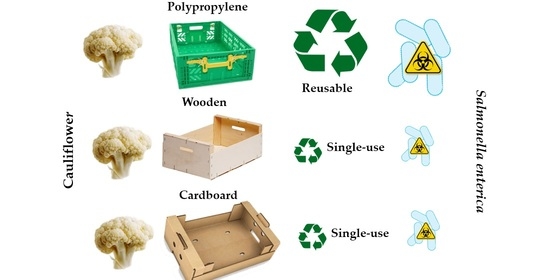
The handling of fresh fruits and vegetables in reusable plastic crates (RPCs) has the potential to increase the sustainability of packaging in the fresh produce supply chain. However, the utilization of multiple-use containers can have consequences related to the microbial safety of this type of food. The present study assessed the potential cross-contamination of fresh cauliflowers with Salmonella enterica via different contact materials (polypropylene from RPCs, corrugated cardboard, and medium-density fiberboard (MDF) from wooden boxes). Additionally, the survival of the pathogenic microorganism was studied in cauliflowers and the contact materials during storage. The life cycle assessment (LCA) approach was used to evaluate the environmental impact of produce handling containers made from the different food-contact materials tested. The results show a higher risk of cross-contamination via polypropylene compared with cardboard and MDF. Another outcome of the study is the potential of Salmonella for surviving both in cross-contaminated produce and in contact materials under supply chain conditions. Regarding environmental sustainability, RPCs have a lower environmental impact than single-use containers (cardboard and wooden boxes). To exploit the potential environmental benefits of RPCs while ensuring food safety, it is necessary to guarantee the hygiene of this type of container. View Full-Text

Research – Kitchen-scale Treatments for Reduction of Listeria monocytogenes in Prepared Produce

Journal of Food Protection

Listeriosis, a foodborne illness caused by Listeria monocytogenes , has relatively low incidence, but a substantial mortality rate, particularly in immunocompromised populations. Because of the known risk of L. monocytogenes and other pathogens in produce, immunocompromised individuals are often placed on neutropenic diets that exclude fresh produce. Therefore, this study aimed to evaluate several kitchen-scale treatments as potential interventions to reduce L. monocytogenes in prepared produce. Cucumbers, apples, and celery were dip inoculated with a three-strain cocktail of L. monocytogenes and dried for 24 h. Inoculated products were subjected to the following treatments as applicable: commercial sanitizer soak (90 s, with agitation), tap water rinse (15 s), tap water soak (90 s, with agitation), surface blanching (25 s), tap water rinse (15 s) followed by peeling, and surface blanching (25 s) followed by peeling. Additionally, inoculum uptake in celery and the impact of two different types of peelers (mechanical crank and manual) were assessed. Treated samples were plated on differential media and incubated for 48 h at 37°C. L. monocytogenes populations were then enumerated and compared to the untreated control (log CFU/g). All treatments lacked efficacy for celery, with reductions significantly less ( P < 0.05) than in other products, likely due to inoculum internalization. The sanitizer soak, tap water rinse, and tap water soak did not differ in efficacy ( P > 0.05), which was low for cucumbers (< 1.5 log CFU/g), apples (< 1.3 log CFU/g), and celery (< 0.7 log CFU/g). The two types of apple peelers did not differ in efficacy ( P > 0.05). Surface blanching and surface blanching followed by peeling were the most effective treatments in both cucumbers and apples ( P < 0.05), with average reductions of 4.2 to 5.1 and 3.5 to 5.9 log CFU/g, respectively.

Research – Presence of Listeria monocytogenes in Ready-to-Eat (RTE) meat products sold at retail stores in Costa Rica and analysis of contributing factors

Journal of Food Protection

Listeria monocytogenes is a pathogenic bacterium associated with RTE meat products sold at the retail level. The objective of this research was to determine the prevalence of Listeria monocytogenes in RTE meat products sold at retail in Costa Rica and to study the factors associated with the levels of contamination; analyzed factors include hygienic practices within stores (cutting techniques, microbial contamination of products) and the behavior of the isolates (persistence against antimicrobials and transfer potential). A total of 190 samples of RTE meat products were collected and analyzed for the presence of coliforms and Listeria species.  Isolates of L. monocytogenes were then evaluated in terms of resistance to disinfectants (quaternary ammonium compounds and chlorine) and their transfer potential from food contact surfaces (knife and cuttingboards). Overall Listeria spp. prevalence was 37,4% (71/190); L. innocua was present in 32,1% (61/190) of the products and L. monocytogenes was found in just 2,6% (5/190) of the samples. Most of the contaminated samples were cut with a knife at the moment of purchase (44,2%). When analyzing practices within the stores, it was observed that L. monocytogenes transfer from inoculated knife to “salchichón” was higher for samples cut right at the beginning of the experiment. Also, L. monocytogenes transfer from inoculated cuttingboards was independent of the number of slices but contamination from plastic was higher than wood. Regarding L. monocytogenes resistance to disinfectants, average reductions of 2,6 ± 1,1 log CFU/mL were detected after 6 minutes of exposure to 200 ppm of chlorine; however, chlorine resistance varied among the strains. Prevalence of L. monocytogenes in RTE meat products sold at retail could be associated with handling practices within the stores; further studies are necessary to estimate the impact of these practices on the overall risk for consumers.

Research – Microbial Inactivation and Quality Preservation of Chicken Breast Salad Using Atmospheric Dielectric Barrier Discharge Cold Plasma Treatment

MDPI

Microbiological safety of ready-to-eat foods is paramount for consumer acceptability. The effects of in-package atmospheric dielectric barrier discharge cold plasma (ADCP) treatment on the microbiological safety and quality of model chicken salad (CS) were investigated in this study. CS, packaged in a commercial polyethylene terephthalate container, was treated with ADCP at 24 kV for 2 min. The inactivation of indigenous mesophilic bacteria, Salmonella, and Tulane virus in CS; growth of indigenous mesophilic bacteria and Salmonella in CS; and quality of CS during storage at 4 °C were then investigated. ADCP inactivated indigenous mesophilic bacteria, Salmonella, and Tulane virus by 1.2 ± 0.3 log CFU/g, 1.0–1.5 ± 0.2 log CFU/g, and 1.0 ± 0.1 log PFU/g, respectively. Furthermore, it effectively retarded the growth of the microorganisms, while not significantly affecting the color of chicken, romaine lettuce, and carrot, and the antioxidant capacity of all vegetables throughout storage at the tested temperatures (p > 0.05). The color, smell, and appearance of all vegetables evaluated on day 0 were not significantly different in the sensory test, regardless of the treatment (p > 0.05). Collectively, ADCP treatment effectively decontaminates packaged CS without altering its quality-related properties. View Full-Text

Research – A Nosocomial Outbreak of Invasive Listeriosis in An Italian Hospital: Epidemiological and Genomic Features

MDPI

Listeria monocytogenes (L. monocytogenes) is a widespread opportunistic pathogen that causes the listeriosis foodborne disease. This bacterium has become a common contaminant of handled food, and a relevant public health issue. Here we describe a nosocomial outbreak of listeriosis caused by an ST451 strain of L. monocytogenes involving three cancer and one immunocompromised patients hospitalized in different units from the same hospital during September and October 2020. The epidemiological investigation was conducted using traditional microbiological methodology combined with a whole genome sequencing approach. The source of contamination was identified in the kitchen hospital, where a meat slicer used to prepare patients’ meals was tested positive to the same sequence type (ST) of L. monocytogenes. This is the first report of an outbreak of listeriosis caused by ST451 in Italy. View Full-Text

Research – Comparison of peracetic acid and chlorine effectiveness during fresh-cut vegetables processing at industrial scale

Journal of Food Protection

This study was conducted to compare the efficacy of two sanitizing agents (chlorine and PAA) in reducing (both spoilage and pathogenic) microorganisms and in reducing disinfection by-products ( DBPs) in the washing stage of three types of minimally processed vegetables: Iceberg lettuce, carrots and baby leaves. These fresh-cut products are consumed uncooked and, hence, a proper sanitation is essential in preventing food-borne illness outbreaks. The comparison was done at industrial scale, using equipment already present in the fresh-cut industry and washers designed and manufatured for this purpose. Results showed that, regarding washing water hygiene and final product microbial quality, the use of PAA had a similar efficacy than chlorine. Different scenarios (SCN) combining PAA, chlorine and water have been tested simulating the current industrial processes for each one of the tested vegetables. Overall, results confirmed that the use of a sanitizer, PAA or chlorine, in the washing water of the three tested vegetables is effective for the prevention of cross-contamination during the washing process and hence, to guarantee produce food safety. Regarding final product microbiological quality and shelf life, the use of chlorine or PAA showed no significant differences in lettuces neither in baby leaves. Regarging the potential formation of chlorinated DBPs in processing water, they were found not in significant amounts when washing water was treated with PAA in all scenarios and vegetables tested. Washing with 80 mg/L chlorine generated important amounts of THMs, chlorates and chlorites. While chlorates and chlorites were always below the recommended levels or legal limits established for drinking water, THMs exceeded these legal limits . With respect to perchlorates, values were below the quantification limit in all SCNs. Results obtained in the present study show that PAA is a reliable alternative to chlorine disinfection strategies in the fresh-cut industry.

Research – A cluster of Shiga Toxin-producing Escherichia coli O157:H7 highlights raw pet food as an emerging potential source of infection in humans

Cambridge Org

In August 2017, a cluster of four persons infected with genetically related strains of Shiga toxin-producing Escherichia coli (STEC) O157:H7 was identified. These strains possessed the Shiga toxin (stx) subtype stx2a, a toxin type known to be associated with severe clinical outcome. One person died after developing haemolytic uraemic syndrome. Interviews with cases revealed that three of the cases had been exposed to dogs fed on a raw meat-based diet (RMBD), specifically tripe. In two cases, the tripe had been purchased from the same supplier. Sampling and microbiological screening of raw pet food was undertaken and indicated the presence of STEC in the products. STEC was isolated from one sample of raw tripe but was different from the strain causing illness in humans. Nevertheless, the detection of STEC in the tripe provided evidence that raw pet food was a potential source of human STEC infection during this outbreak. This adds to the evidence of raw pet food as a risk factor for zoonotic transmission of gastrointestinal pathogens, which is widely accepted for SalmonellaListeria and Campylobacter spp. Feeding RMBD to companion animals has recently increased in popularity due to the belief that they provide health benefits to animals. Although still rare, an increase in STEC cases reporting exposure to RMBDs was detected in 2017. There has also been an increased frequency of raw pet food incidents in 2017, suggesting an increasing trend in potential risk to humans from raw pet food. Recommendations to reduce the risk of infection included improved awareness of risk and promotion of good hygiene practices among the public when handling raw pet food.

Research – Occurrence of Listeria monocytogenes in Artisanal Cheeses from Poland and Its Identification by MALDI-TOF MS

MDPI

Listeria monocytogenes is a foodborne pathogen. A source of infection can be artisanal cheeses. Identification of the Listeria species is important for the protection of public health and the food industry. This study aimed to examine artisanal cheeses for the presence of L. monocytogenes and the effectiveness of the MALDI-TOF MS method in the identification of the L. monocytogenes isolates. A total of 370 samples of artisanal cheeses were examined. L. monocytogenes was found in 23 cheese samples (6.2%). The reliability of L. monocytogenes identification achieved by MALDI-TOF MS was varied, and the vast majority of the isolates (27/32) were identified only to the secure genus, probable species level. This study showed that (i) the occurrence of L. monocytogenes in the artisanal cheeses was at a higher level than that in the other EU countries, (ii) the standard of species identification of L. monocytogenes isolates from artisanal cheeses achieved by MALDI-TOF MS was not satisfactory and (iii) the presence of L. monocytogenes in artisanal cheeses remains a problem with regard to the food safety criterion and a potential public health risk. View Full-Text

Research – Effect of UV-C Irradiation and Lactic Acid Application on the Inactivation of Listeria monocytogenes and Lactic Acid Bacteria in Vacuum-Packaged Beef

MDPI

The objective of this study was to test the effect of the combined application of lactic acid (0–5%) (LA) and UV-C light (0–330 mJ/cm2) to reduce Listeria monocytogenes and lactic acid bacteria (LAB) on beef without major meat color (L *, a *, b *) change and its impact over time. A two-factor central composite design with five central points and response surface methodology (RSM) were used to optimize LA concentration and UV-C dose using 21 meat pieces (10 g) inoculated with L. monocytogenes (LM100A1). The optimal conditions were analyzed over 8 weeks. A quadratic model was obtained that predicted the L. monocytogenes log reduction in vacuum-packed beef treated with LA and UV-C. The maximum log reduction for L. monocytogenes (1.55 ± 0.41 log CFU/g) and LAB (1.55 ± 1.15 log CFU/g) with minimal impact on meat color was achieved with 2.6% LA and 330 mJ/cm2 UV-C. These conditions impaired L. monocytogenes growth and delayed LAB growth by 2 weeks in vacuum-packed meat samples throughout 8 weeks at 4 °C. This strategy might contribute to improving the safety and shelf life of vacuum-packed beef with a low impact on meat color. View Full-Text

Research – An Update Review on Listeria Infection in Pregnancy

Dove press

Abstract: Listeria monocytogenes (LM) is an intracellular, aerobic and facultative anaerobic, Gram-positive bacterium, which is primarily transmitted to humans orally via food. LM could occur in asymptomatic pregnant women; however, fetal infection is a serious condition, entailing premature birth, abortion, sepsis, central nervous system (CNS) involvement, or even death. If a pregnant woman exhibits symptoms, the performance is almost like influenza, such as fever, headache, diarrhea, myalgia, or other digestive-related symptoms. This review collected clinical and empirical results regarding the mechanism, clinical manifestations, obstetrical outcome, diagnosis, treatment, vertical transmission, neonatal infection, and prevention of listeriosi according to articles published in PubMed from January 1, 1980, to March 20, 2021. The early detection and diagnosis of pregnancy-associated listeriosis are significant since sensitive antibiotics are effective at enhancing the prognosis of newborns. Listeriosis can be diagnosed using positive cultures from maternal or neonatal blood, neonatal cerebrospinal fluid (CSF), amniotic fluid, intrauterine mucosa, or the placenta. Two weeks of high-dose intravenous amoxicillin (more than 6 g/day) is recommended for LM pregnant women without allergy. Terminating the pregnancy to save the mother’s life should be considered if maternal and fetal conditions aggravate. Neonatal Listeria infection is primarily transmitted through the placenta, which is a critical illness associated with a high mortality rate. The necessary dietary guidance for pregnant women can reduce the incidence rate of pregnancy-related listeriosis.