Category Archives: Research

Research -Salmonella use intestinal epithelial cells to colonize the gut

Science Daily

kswfoodworld salmonella

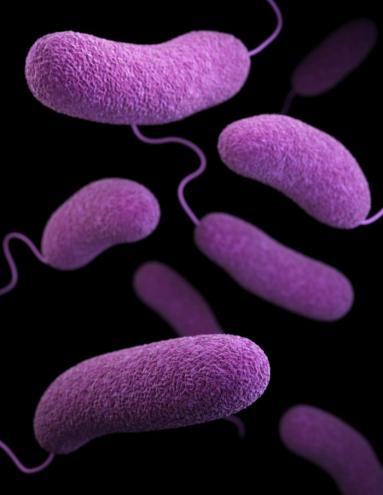
The immune system’s attempt to eliminate Salmonella bacteria from the gastrointestinal (GI) tract instead facilitates colonization of the intestinal tract and fecal shedding, according to National Institutes of Health scientists. The study, published in Cell Host & Microbe, was conducted by National Institute of Allergy and Infectious Diseases (NIAID) scientists at Rocky Mountain Laboratories in Hamilton, Montana.

Salmonella Typhimurium bacteria (hereafter Salmonella) live in the gut and often cause gastroenteritis in people. The Centers for Disease Control and Prevention estimates Salmonella bacteria cause about 1.35 million infections, 26,500 hospitalizations and 420 deaths in the United States every year. Contaminated food is the source for most of these illnesses. Most people who get ill from Salmonella have diarrhea, fever and stomach cramps but recover without specific treatment. Antibiotics typically are used only to treat people who have severe illness or who are at risk for it.

Salmonella bacteria also can infect a wide variety of animals, including cattle, pigs and chickens. Although clinical disease usually resolves within a few days, the bacteria can persist in the GI tract for much longer. Fecal shedding of the bacteria facilitates transmission to new hosts, especially by so-called “super shedders” that release high numbers of bacteria in their feces.

NIAID scientists are studying how Salmonella bacteria establish and maintain a foothold in the GI tract of mammals. One of the first lines of defense in the GI tract is the physical barrier provided by a single layer of intestinal epithelial cells. These specialized cells absorb nutrients and are a critical barrier that prevent pathogens from spreading to deeper tissues. When bacteria invade these cells, the cells are ejected into the gut lumen — the hollow portion of the intestines. However, in previous studies, NIAID scientists had observed that some Salmonella replicate rapidly in the cytosol — the fluid portion — of intestinal epithelial cells. That prompted them to ask: does ejecting the infected cell amplify rather than eliminate the bacteria?

To address this question, the scientists genetically engineered Salmonella bacteria that self-destruct when exposed to the cytosol of epithelial cells but grow normally in other environments, including the lumen of the intestine. Then they infected laboratory mice with the self-destructing Salmonella bacteria and found that replication in the cytosol of mouse intestinal epithelial cells is important for colonization of the GI tract and fuels fecal shedding. The scientists hypothesize that, by hijacking the epithelial cell response, Salmonella amplify their ability to invade neighboring cells and seed the intestine for fecal shedding.

The researchers say this is an example of how the pressure exerted by the host immune response can drive the evolution of a pathogen, and vice versa. The new insights offer new avenues for developing novel interventions to reduce the burden of this important pathogen.

USA – FDA Releases Results of FY20-FY21 Romaine Lettuce Sampling Assignment


FDA

Eurofins Food Testing UK

The U.S. Food and Drug Administration is releasing the findings of a sampling assignment that tested raw agricultural commodity romaine lettuce mostly at facilities and on farms in the Salinas, California, and Yuma, Arizona growing regions for the presence of pathogens that have been linked to outbreaks of foodborne illness.

The assignment to detect pathogenic Escherichia coli (specifically, Shiga toxin-producing E. coli or STEC) and Salmonella spp began in November 2019 and ended in December 2020, after a pause in sample collection and testing from March through October 2020 due to the COVID-19 pandemic. The FDA did not detect any pathogens during the assignment.

The agency prioritized sample collection at farms and FDA-registered facilities identified in traceback investigations as suppliers of romaine lettuce possibly linked or linked to outbreaks of foodborne illnesses from 2017 to 2019.   The FDA collected and tested 279 samples for both pathogens. Each sample was made up of 10 subsamples, with each subsample consisting of one or more heads or hearts of romaine lettuce and weighing at least 300 grams. This approach – the collection and testing of samples composed of multiple subsamples – increases the probability of detecting pathogens if present, given that microbial hazards may not be uniformly present. Agency field staff collected all samples in their natural form but for the outer leaves having been removed. No fresh-cut lettuce was collected.

Ensuring the microbiological safety of leafy greens continues to be a priority to the FDA. Although no pathogens were detected during this assignment, maintaining surveillance during the growing/harvesting season is helpful to informing the agency’s leafy greens prevention efforts, specifically those outlined in the FDA’s  Leafy Greens Action Plan. The FDA originally released the action plan in March 2020 to foster a more urgent and collaborative approach to preventing leafy greens outbreaks caused by STEC.  In April 2021, the FDA released an updated version of the plan which reaffirms our commitment to advancing leafy greens safety.

For More Information

EU Research – Risk characterisation of ciguatera poisoning in Europe

EFSA

The EuroCigua project main objective is to characterize the risk of Ciguatera Poisoning (CP) in Europe including several specific objectives: to determine the incidence of ciguatera in Europe and the epidemiological characteristics of cases; to assess the presence of ciguatoxin in food and the environment in Europe and to develop and validate methods for the detection, quantification and confirmation of the presence of ciguatoxin contaminated specimens.

This report compiles the activities carried out during the EuroCigua project from the signing in April 2016 until December 2020. The present document corresponds to Deliverable No. 6: “Final Scientific Report” on Risk characterization of ciguatera food poisoning in Europe of the Specific Agreement no. 1 “MANAGEMENT AND SCIENTIFIC COORDINATION” within the Framework Partnership Agreement GP/EFSA/AFSCO/2015/03 “Risk characterization of ciguatera food poisoning in Europe”.

EU – Shiga toxin-producing Escherichia coli (STEC) infection – Annual Epidemiological Report for 2019

ECDC

ECDC’s annual surveillance reports provide a wealth of epidemiological data to support decision-making at the national level. They are mainly intended for public health professionals and policymakers involved in disease prevention and control programmes.

Executive summary

  • For 2019, 29 EU/EEA countries reported 8 313 confirmed cases of Shiga toxin-producing Escherichia coli (STEC) infection.
  • The overall notification rate was 2.2 cases per 100 000 population.
  • After a stable period, the notification rate increased in 2018−2019.
  • The highest notification rates were reported in Denmark, Iceland, Ireland, Malta, and Norway.
  • The highest rate of confirmed cases was observed in 0–4-year-old children (10.3 cases per 100 000 population).

EU – Legionnaires’ disease – Annual Epidemiological Report for 2019

ECDC

Legionella_Plate_01

ECDC’s annual surveillance reports provide a wealth of epidemiological data to support decision-making at the national level. They are mainly intended for public health professionals and policymakers involved in disease prevention and control programmes.

Executive summary

  • Legionnaires’ disease remains an uncommon and mainly sporadic respiratory infection with an overall notification rate in 2019 for the EU/EEA of 2.2 cases per 100 000 population.
  • There is heterogeneity in notification rates between EU/EEA countries, with the highest rate reported by Slovenia (9.4 cases per 100 000 population).
  • The annual notification rate increased in recent years, from 1.4 in 2015 to 2.2 cases per 100 000 population in 2019.
  • There was a marginal decrease of less than 1% in the number of reported cases in 2019, compared with 2018.
  • Four countries (France, Germany, Italy, and Spain) accounted for 71% of all notified cases in 2019.
  • Males aged 65 years and above were most affected (8.4 cases per 100 000 population).
  • Only 10% of cases were culture-confirmed (10%) probably meaning that disease caused by Legionella species other than Legionella pneumophila is under-estimated.

Research – Presence, seasonal distribution and biomolecular characterization of Vibrio parahaemolyticus and Vibrio vulnificus in shellfish harvested and marketed in Sardinia (Italy) between 2017 and 2018

Journal of Food Protection

Food Illness

In the present study, we aimed to investigate the presence, seasonal distribution and biomolecular characterization of Vibrio parahaemolyticus and Vibrio vulnificus in samples of bivalve molluscs ( Mytilus galloprovincialis, Crassostrea gigas, Ruditapes decussatus, Venus verrucosa and Solen vagina ) and gastropod molluscs (Murex brandaris) harvested and marketed in Sardinia (Italy) between 2017 and 2018. A total of 444 samples were submitted to qualitative determination of Vibrio spp., V. parahaemolyticus and V. vulnificus. Identification and virulence profile of the isolated strains were performed by biomolecular methods. The overall prevalence of Vibrio spp. was 7%. The highest prevalence was pointed out in R. decussatus (8.3%). The prevalence of V. parahaemolyticus and V. vulnificus were 2.7% and 4.7% respectively. Higher levels of V. parahaemolyticus and V. vulnificus prevalence were highlighted in R. decussatus (4.2%) and C. gigas (6.2%) respectively. Potentially pathogenic V. parahaemolyticus strains were a minority ( n. 2 isolates tdh-/trh+ and n. 1 isolate tdh+/trh- ) and were recovered from M. galloprovincialis . None of the isolates was tdh+/ trh+. Pathogenic Vibrios infections are often underestimated and the reports of human infections in Europe are constantly increasing. European data on the true distribution of Vibrionaceae are scarce: the results of the present study highlight the need of constant monitoring plans to update the distribution of potentially pathogenic Vibrios.

Research – Histamine Limits by Country: A Survey and Review

Journal of Food Protection

Histamine is a biogenic amine and a food safety hazard, and it is the only biogenic amine regulated by statute or HACCP Guidance. This paper reviews the regulations for histamine levels in fish in countries around the world, including maximum limits or levels and sampling procedures in different fish preparations. The maximum histamine levels, sampling plans, and fish products are listed. The country-by-country regulations for maximum histamine acceptance levels in some food products vary by a factor of 8, from 50 ppm in some countries to a maximum of 400 ppm in other countries. For similar food products, the maximum histamine levels vary by a factor of 4 (from 50 ppm to 200 ppm) in, for example, fresh tuna. The country-by-country sampling plans vary widely as well and these, too, are covered in detail. Molecules of histamine are formed from L-histidine molecules, an amino acid, by a decarboxylation reaction caused by a bacterial enzyme, histidine decarboxylase. Histamine can form in many different species of saltwater fish that have elevated levels of free L-histidine. Histamine formation is completely preventable, and these methods are described as well. Although there are multiple maximum histamine acceptance levels, rapidly chilling the fish immediately after harvest by any means available is the only method to stop the formation of histamine. Fishermen should rapidly chill the fish using ice, chilled seawater, dense cold brine, or air blast freezers as quickly as possible.

Research – Lactic Starter Dose Shapes S. aureus and STEC O26:H11 Growth, and Bacterial Community Patterns in Raw Milk Uncooked Pressed Cheeses

MDPI

Adding massive amounts of lactic starters to raw milk to manage the sanitary risk in the cheese-making process could be detrimental to microbial diversity. Adjusting the amount of the lactic starter used could be a key to manage these adverse impacts. In uncooked pressed cheeses, we investigated the impacts of varying the doses of a lactic starter (the recommended one, 1×, a 0.1× lower and a 2× higher) on acidification, growth of Staphylococcus aureus SA15 and Shiga-toxin-producing Escherichia coli (STEC) O26:H11 F43368, as well as on the bacterial community patterns. We observed a delayed acidification and an increase in the levels of pathogens with the 0.1× dose. This dose was associated with increased richness and evenness of cheese bacterial community and higher relative abundance of potential opportunistic bacteria or desirable species involved in cheese production. No effect of the increased lactic starter dose was observed. Given that sanitary criteria were paramount to our study, the increase in the pathogen levels observed at the 0.1× dose justified proscribing such a reduction in the tested cheese-making process. Despite this, the effects of adjusting the lactic starter dose on the balance of microbial populations of potential interest for cheese production deserve an in-depth evaluation. View Full-Text

Research – Analysis of Microbiological and Chemical Hazards in Edible Insects Available to Canadian Consumers

Journal of Food Protection

Edible insects are a novel food in most countries; their popularity is growing because of their high protein/low fat content, ease of cultivation, and small environmental impact. To our knowledge, this is the first report that addresses both microbiological and chemical hazards in edible insects. Samples were collected from retail stores or purchase through e-commerce. A total of 51 samples of dried whole insects or insect powders were tested for generic Escherichia coli ( E. coli ) which serves as an indicator of the overall sanitation conditions throughout the food production chain, and the bacterial pathogen Salmonella species (spp.) Neither Salmonella spp. nor generic E. coli (>100 Colony Forming Units (CFU)/g) were found in any of the samples. 43 samples of crickets (protein bars, powders, flours, whole insects) and 4 samples of silkworm (whole insects) were analyzed for up to 511 pesticides. 39 samples contained residues from one to four pesticides; 34 samples were compliant and 5 samples were non-compliant with Canadian regulations. Seven different pesticide residues were detected with glyphosate and its metabolite, AMPA, being the predominant residues detected. Nineteen of the samples tested for pesticides were also analyzed for arsenic, cadmium, mercury, and lead; there was insufficient material remaining to allow for metals testing. The positive rate for arsenic, cadmium, lead and mercury was 100%, 79%, 58% and 74%, respectively. The detected concentrations ranged from 0.030 mg/kg to 0.34 mg/kg for arsenic, from 0.031 mg/kg to 0.23 mg/kg for cadmium, 0.019 mg/kg to 0.059 mg/kg for lead, and from 0.00094 mg/kg to 0.028 mg/kg for mercury. Based on the lack of detection of microbiological contamination, and the positive rate and levels of pesticides and metals observed in the products, Health Canada determined that all insect products analyzed were safe for human consumption. This is a limited study; CFIA will continue to monitor this novel food.

Research – Listeria monocytogenes Cold Shock Proteins: Small Proteins with A Huge Impact

MDPI

Listeria monocytogenes has evolved an extensive array of mechanisms for coping with stress and adapting to changing environmental conditions, ensuring its virulence phenotype expression. For this reason, L. monocytogenes has been identified as a significant food safety and public health concern. Among these adaptation systems are cold shock proteins (Csps), which facilitate rapid response to stress exposure. L. monocytogenes has three highly conserved csp genes, namely, cspAcspB, and cspD. Using a series of csp deletion mutants, it has been shown that L. monocytogenes Csps are important for biofilm formation, motility, cold, osmotic, desiccation, and oxidative stress tolerance. Moreover, they are involved in overall virulence by impacting the expression of virulence-associated phenotypes, such as hemolysis and cell invasion. It is postulated that during stress exposure, Csps function to counteract harmful effects of stress, thereby preserving cell functions, such as DNA replication, transcription and translation, ensuring survival and growth of the cell. Interestingly, it seems that Csps might suppress tolerance to some stresses as their removal resulted in increased tolerance to stresses, such as desiccation for some strains. Differences in csp roles among strains from different genetic backgrounds are apparent for desiccation tolerance and biofilm production. Additionally, hierarchical trends for the different Csps and functional redundancies were observed on their influences on stress tolerance and virulence. Overall current data suggest that Csps have a wider role in bacteria physiology than previously assumed. View Full-Text