Category Archives: Research

Research – Staphylococcal Infections: Host and Pathogenic Factors

MDPI

Staph

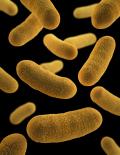
In 1880, the Scottish surgeon Sir Alexander Ogston first described staphylococci in pus from a surgical abscess in a knee joint: “The masses looked like bunches of grapes” [1]. In 1884, the German physician Friedrich Julius Rosenbach differentiated the staphylococci by the color of their colonies: S. aureus (from the Latin aurum, gold) [2]. For another 20 years, very little was known on the pathophysiology of this bug. Based on a PubMed search record, the first Staphylococcal paper was published in 1900 on a case report [3]. More and more scientists gradually engaged to study diseases caused by this bacterium.
There were some 10 publications recorded during the period 1900–1910, which translate in average to one publication/year. Research on this bug exploded in the 20th century, which is reflected in a recent PubMed search. It yields 47,974 publications records when searched using the keyword “Staphylococcus” in the title. During the period 2010–2020, the average publication was 2000 articles/year. This record makes Staphylococcus the single most researched bacterium based on this publication track record.
Over time, numerous Staphylococcus species were discovered, consisting of more than 45 staphylococcal species and 24 subspecies classified using molecular methods [4]. These various species of Staphylococcus are clinically important as 30% of the healthy human population is colonized with various Staphylococcus spp. Some strains are opportunistic pathogens and can cause a minor infection to life-threatening diseases. Pathogenicity of these different strains depends on several virulence factors: Level of protein expression as well as the robustness of the regulatory networks expressing these virulence factors.
These factors consist of numerous toxins, enterotoxins (some of which act as superantigens), enzymes, and proteins with other functions (cytoplasmic, extracellular, and surface) that are tightly regulated by two-components (TC), transcriptional and translational regulators, as well as quorum-sensing (QS) regulatory networks [5]. This Special Issue is dedicated to the studies and recent advancements in our understanding of staphylococcal virulence mechanisms that enable Staphylococcus spp. either to successfully establish themselves as a colonizer or to overcome the host’s defense system to cause infection.

Healthy, Safe, Sustainable: Driving Scotland’s Food Future Food Standards Scotland Strategy for 2021–2026

Click to access FSS_Strategy_2021-2026.pdf

Norway – Norwegian surveillance finds low levels of Salmonella

Food Safety News

Norwegian cattle, swine and poultry are only rarely infected with Salmonella, according to the results of surveillance programs in 2020.

Occurrence of Salmonella in Norwegian production animals and animal products is very low compared to most other countries. Salmonellosis has increased in recent decades but the majority of infections are acquired abroad.

Surveillance covers live animals such as pigs, poultry and cattle, eggs and fresh meat from pigs and cattle. Any Salmonella isolated in the programs is notifiable to the Norwegian Food Safety Authority (Mattilsynet). The Norwegian Veterinary Institute coordinates the surveillance programs, examines fecal samples and reports the results. Private laboratories analyze samples collected at slaughterhouses and cutting plants.

Programs are approved by the EU Commission which allows Norway to require additional guarantees on Salmonella when importing live animals and food products of animal origin from the European Union.

Korea – Food poisoning bacteria found in 15 kimchi products from China

Korean Times

Yersinia p

Food poisoning bacteria were detected in 15 out of 289 kimchi products imported from China, according to the Ministry of Food and Drug Safety, Tuesday.

Two out of four Chinese salt-cured cabbage products were also found to have used preservatives that are not permitted in Korea.


It examined the 289 products from 55 Chinese companies imported here, and detected Yersinia enterocolitica, a type of food poisoning bacteria, in 15 of them.

USA – USDA – Outbreak Investigations

FSIS USDA

The table below lists outbreak investigations in which FSIS responded by posting a recall of FSIS-regulated product linked to illness, a public health alert, and/or an after-action review report. The table does not include outbreak investigations that did not result in one or more of these outcomes.

Outbreak Year Pathogen Product Outcomes & References Active
2021 Salmonella Hadar Turkey, ground FSIS Public Notification: FSIS Issues Public Health Alert for Raw Ground Turkey Products Linked to Salmonella Hadar Illness

CDC Notice: Salmonella Outbreak Linked to Ground Turkey

Yes
2021 Salmonella Enteritidis Chicken, raw, breaded, stuffed (suspect) Yes
2021 Escherichia coli O157:H7 (E. coli) Beef, ground (suspect) No
2021 Escherichia coli O145 (E. coli) Beef, ground (suspect) No
2021 Escherichia coli O157:H7 (E. coli) Unknown

CDC Notice: View CDC Investigation Notice

No
2021 Listeria monocytogenes Unknown No

Hong Kong – Listeria monocytogenes in Cheese Products

CFS

Food Safety Focus (94th Issue, May 2014) – Incident in Focus

Listeria monocytogenes in Cheese Products

Reported by Ms. Janny MA, Scientific Officer,
Risk Assessment Section,
Centre for Food Safety

On 18 April 2014, the US Centers for Disease Control and Prevention (CDC) announced its final investigation on a listeriosis outbreak which involved eight persons, including two mother-newborn pairs and a newborn, with one death in the US. Results of the investigation, with food (fresh cheese curd) and environmental samples tested positive for Listeria monocytogenes, indicated that cheese products made by Roos Foods were the likely source of the outbreak. This article discusses the risk of L. monocytogenes in cheese products.

Cheeses

Cheeses can generally be obtained by coagulating the protein of milk and by partially draining the whey resulting from the coagulation. Nowadays, over 500 types of cheeses are available worldwide, with variations deriving from different cheese manufacturing processes, e.g. type of milk, coagulation method, starting culture, addition of salt and ripening etc.

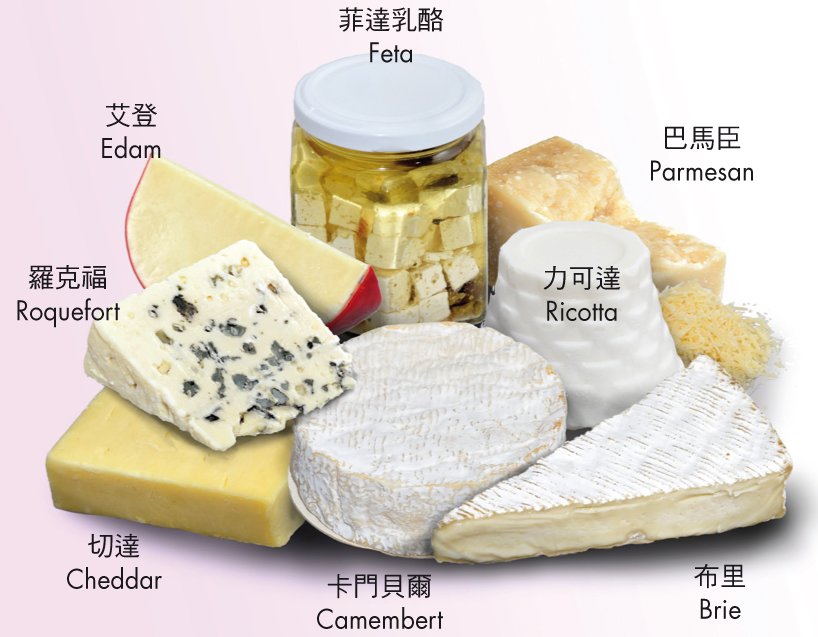
Various types of cheeses are available on the local market

In fact, there are various ways to categorise cheeses. Traditionally, cheeses have been classified principally by their moisture content-

Soft cheese – Has a higher moisture content, e.g. Feta, Brie, Camembert

Semi-hard cheese – Moisture content sits between soft and hard cheeses, e.g. Edam, Gouda

Hard cheese – Has a lower moisture content, e.g. Cheddar, Emmental

Extra hard cheese – Dry, slightly brittle, suitable for grating, e.g. Parmesan

Cheeses may also be grouped according to their principal ripening –

Unripened/ Fresh cheese – Ready for consumption soon after manufacture, e.g. Cottage cheese, Ricotta

Ripened cheese – Not ready for consumption shortly after manufacture; must be held for such time, temperature and other conditions that results in the necessary biochemical and physical changes characterising the cheese, including –

  • Mould ripened cheese – ripening has been accomplished primarily by the development of characteristic mould growth
  • Internal mould ripened: c haracterised by the growth of Penicillium roquefortii resulting a network of blue and green veins throughout the cheese (blue cheese), e.g. Danish blue, Roquefort, Stilton
  • Surface mould ripened: characterised by the growth of Penicillium camemberti on the cheese surface, e.g. Brie, Camembert
  • Cheese in brine – has no actual rind and preserved in brine e.g. Feta

Listeria monocytogenes in Cheeses

Cheeses, particularly soft cheeses, have been implicated in listeriosis outbreaks worldwide. Foodborne listeriosis is a relatively uncommon but serious disease caused by L. monocytogenes, a pathogen that can be killed under normal cooking temperature but is able to grow slowly at refrigerated temperature as low as 0°C. Asymptomatic infection of listeriosis probably occurs in most healthy people, but it can pose serious health risks for the susceptible population including pregnant women, elderly and immunocompromised individuals such as patients with AIDS and diabetes mellitus.

The presence of L. monocytogenes in cheeses may be originated from the ingredients particularly raw milk or can come from the processing plant environment, including the equipment, personnel or cross-contamination between finished products and raw materials. If the temperature as well as other conditions especially acidity and water content permit, L. monocytogenes can grow to high levels upon prolonged storage.

Cheeses of Higher or Lower Risk

Since pasteurisation, by heating milk to a specific temperature for a set period of time, kills L. monocytogenes effectively, cheeses made with pasteurised milk are generally considered of lower risk unless post-process contamination occurs.

For cheeses made with unpasteurised milk, their safety relies on a range of factors that influence the presence, growth, survival and inactivation of pathogenic microorganisms including L. monocytogenes.

In general, soft cheeses made with unpasteurised milk are of much higher L. monocytogenes risk than hard/ extra hard cheeses made with unpasteurised milk as the formers are likely to be less acidic and contain more moisture, which provide a favourable environment for the growth of L. monocytogenes, than the latter. A recent risk assessment study conducted by Food Standards Australia New Zealand also pointed out that the estimated L. monocytogenes risk from the consumption of certain raw milk soft cheeses i.e. feta and camembert is low in the general population but is high in the susceptible population. However, the L. monocytogenes risk upon the consumption of raw milk cheddar cheese (a type of hard cheese) and extra hard cheese in the general and susceptible populations is negligible and low/ very low respectively.

Key Points to Note:

  1. Cheeses, particularly soft cheeses, have been implicated in outbreaks of listeriosis worldwide.
  2. Cheeses made with pasteurised milk are generally considered of lower risk.
  3. Soft cheeses made from unpasteurised milk are the most risky.

Advice to susceptible populations

  • Read food labels and choose cheeses carefully before consumption.
    • Hard and extra hard cheeses are generally safe.
    • Avoid soft cheeses (e.g. Feta, Brie, Camembert) and blue cheeses (e.g. Danish blue, Gorgonzola and Roquefort).
    • For other types of cheeses, choose only those made from pasteurised milk.
    • Do not eat if in doubt.
  • Store cheese products strictly in accordance with the instructions on the labels.

Advice to the trade

  • Maintain good food and personal hygiene and avoid cross-contamination.
  • Provide sufficient information on food label for the consumers to make informed food choices.
    • Properly label whether the cheese products are made from raw/ unpasteurised or pasteurised milk.
    • Consider providing more information e.g. description on firmness of the cheese products.

Research – Bacteriophages for detection and control of foodborne bacterial pathogens—The case of Bacillus cereus and their phages

Wiley Online

Bacillus cereus is among the primary food‐poisoning pathogenic bacterium that causes diarrhea and emetic types of diseases throughout the world. Recent advances show that bacteriophages become important tools in detection and control of foodborne bacterial pathogens in foods. They gain the interest of researchers for the food industries mainly because they are host‐specific and harmless to humans. Studies showed that bacteriophages could be employed as natural or engineered, whole or part, and temperate or virulent type in designing a range of tools for the detection and control of foodborne bacterial pathogens. This article discusses the recent methods and advances in the utilization strategies of bacteriophages in detection and control of foodborne pathogens, with particular focus on B. cereus pathogen. Moreover, the article presents the latest and relevant information of B. cereus‐infecting phages with respect to their potential applications in foods to address food safety issues. It also reflects future research directions by indicating gap of studies on the area.

Switzerland – Swiss outbreaks fall but 10 die from listeriosis; survey shows public interest in food safety

Food Safety News

The number of foodborne outbreaks in Switzerland almost halved in 2020 compared to the year before.

Only 13 outbreaks were reported following the consumption of food this past year versus 23 in 2019.

Overall, more than 161 people became ill and at least 36 were hospitalized. Ten deaths were recorded in one outbreak. In 2019, more than 331 people fell ill and six were hospitalized.

One outbreak of Salmonella Bovismorbificans involved several regions in the country but investigators could not link it to a food source. Nine people fell sick in 2019 and 12 in 2020.

The infectious agent was only determined in three of 13 outbreaks with some of the others potentially due to Clostridium perfringens and histamine. The potential Clostridium perfringens outbreak at a restaurant resulted in 48 patients and was linked to a mixed pasta dish with ground meat in sauce and grated cheese. Another incident with 37 sick was at a banquet served to 1,200 people. An investigation found violations in the cold chain.

Research – Scientists discover five new species of listeria, improving food safety

Eurekalert

Listeria kswfoodworld food safety food poisoning

Image CDC

While examining the prevalence of listeria in agricultural soil throughout the U.S., Cornell University food scientists have stumbled upon five previously unknown and novel relatives of the bacteria.

The discovery, researchers said, will help food facilities identify potential growth niches that until now, may have been overlooked – thus improving food safety.

“This research increases the set of listeria species monitored in food production environments,” said lead author Catharine R. Carlin, a doctoral student in food science. “Expanding the knowledge base to understand the diversity of listeria will save the commercial food world confusion and errors, as well as prevent contamination, explain false positives and thwart foodborne outbreaks.”

Research – Presumptive probiotic bacteria from traditionally fermented African food challenge the adhesion of enteroaggregative E. coli

Wiley Online

E.coli

Colonization of intestinal tract with the potential to exclude, displace, and inhibit enteric pathogens is principally dependent on the adhesion ability of probiotics. Therefore, probiotic efficacy is considered to be mainly determined by their adhesion ability. The current study reports the antagonistic effect of four lactic acid bacteria (LAB) on the adhesion profile of four diarrhoeagenic and one non‐diarrhoeagenic enteroaggregative Escherichia coli (EAEC). All the bacterial strains investigated adhered to the Caco‐2 cells. All the LAB tested competitively excluded, displaced, and inhibited at least three (non‐) diarrhoeagenic EAEC strains from adhesion (p < 0.05). In all, Lactobacillus plantarum, FS2 exhibited the strongest adhesion to the Caco‐2 cells, competitive exclusion (CE), displacement, and inhibition against most of the EAEC strains. Additionally, the competence to exclude, displace, and inhibit the EAEC from adhesion depended on both the pathogens and the LAB strains tested; signifying the participation of several mechanisms. Contrary to all the EAEC strains, gastro‐intestinal stress factors such as low pH (2.5) had no effect on the adhesion of the LAB. Unlike the gastro‐intestinal acidic conditions, bile salt conditioning (at pH 6.5) had no effect on the adhesion of both EAEC and LAB. In conclusion, all the LAB tested showed specific anti‐adherence effects including CE, displacement, and inhibition against the selected EAEC. The results indicate that all the LAB, particularly, the L. plantarum, FS2 had a good ability for exerting antagonistic effects against the selected EAEC for the prevention of gastrointestinal infection.