Category Archives: Food Poisoning

Europe – Shigellosis Annual Epidemiological Report for 2017

Click to access AER_for_2017_shigellosis.pdf

Australia – NSW Annual Food Testing Report Released

Food Safety.com

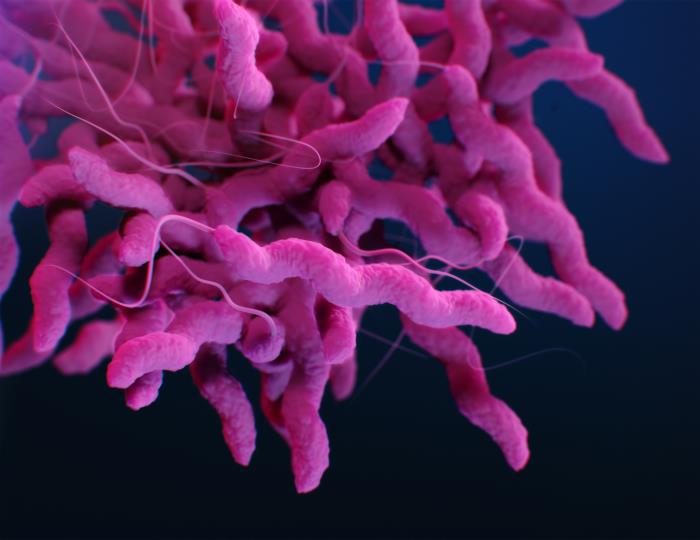
Campylobacter kswfoodworld

Every year, the New South Wales Food Authority (NSW Food Authority) releases their Annual Food Testing Report on the testing conducted by their primary testing provider and by other laboratories. This year’s report highlights some key findings with regards to food safety testing results and trends.

Testing is conducted for a variety of reasons including food-borne illness investigations, Food Safety Program verifications and other types of research. In the report, the NSW Food Authority breaks down the significant findings in each of these categories which provides important information for the Australian food industry.

Key facts from the report

The NSW Annual Food Testing Report provides the following facts for the period of July 2018 to June 2019:

  1. During this time period, there were a total of 6,431 samples submitted for testing.
  2. Sample types analysed included:
  • meat
  • seafood
  • dairy
  • plant products
  • packaged food
  • eggs
  • food from retail outlets
  • environmental samples

3. There were over 70 different types of tests performed. These included:

  • microbiological assessment
  • pH
  • water activity
  • allergens
  • additives such as preservatives

Key findings from the report

The findings listed in the report are categorized based on different programs. The following is a breakdown of some of the key findings:

Food-borne illness investigation findings

The report states that between 2018 and 2019 there were a total of 4,010 samples (food and environmental) that were submitted for testing. These samples were submitted for testing due to food-borne illness investigations and the follow-ups for these investigations.

Increase in Salmonella Enteritidis cases

The report discusses a marked increase in the cases of Salmonella Enteritidis that has been observed since the middle of 2018. The cases have now been linked to an outbreak of Salmonella Enteritidis that was locally acquired. This a significant difference from cases of Salmonella Enteritidis in Australia in the past, with most cases typically presenting in people who had travelled overseas.

Testing was conducted and monitoring took place to determine where the outbreak was stemming from. The investigation involved taking 2,072 samples from egg production businesses and testing eggs and environmental samples. The results from the testing showed that Salmonella Enteritidis was on 13 properties that were interconnected through people, eggs and/or equipment.

The result was six food recalls at the consumer level from properties affected in NSW, and one consumer level recall in Victoria. The report states that surveillance and monitoring of NSW egg farms is slated to continue throughout 2020.

Decrease in Listeria prevalence in melons

The melon industry in Australia, particularly the rockmelon industry, has been linked to food-borne illness outbreaks of Listeria in recent years. The report states that listeriosis cases in New South Wales has actually declined sharply as of late, which is being attributed to the improved food safety measures that have been put in place in the Australian melon industry.

During the period of November 2018 and April 2019, the New South Wales Department of Primary Industries (NSW DPI) conducted food safety training workshops for rockmelon growers in NSW. NSW DPI also conducted sampling of melon harvests and packhouse environments to make sure that melon growers were following food safety protocols.

Verification findings

Concerns about Campylobacter and Salmonella on poultry

Campylobacter and Salmonella infections are both significant health concerns for Australians. In order to monitor the prevalence of these two food-borne pathogens, the raw poultry verification program gathers ongoing data on their prevalence and levels in raw poultry.

The report states that during the period of July 2018 and June 2019, samples were taken from raw poultry including 196 from whole chickens/chicken portions from processing plants, and 312 chicken portions from retail facilities. The samples were tested for the presence of Campylobacter and Salmonella.

The results for processing plants:

Salmonella

  • detected in 21.4% of samples
  • 9.2% of samples had quantifiable levels

Campylobacter

  • detected in 86.7% of samples
  • 1.5% of samples had quantifiable levels

The results for retail facilities:

Salmonella

  • detected in 25.8% of samples
  • 1.7% of samples had quantifiable levels

Campylobacter

  • detected in 89.9% of samples
  • 6.4% of samples had quantifiable levels

Research findings

Investigating algal biotoxins in wild harvest shellfish

There are other types of food-borne pathogens that are not as well known as Listeria, Salmonella or Campylobacter. The report touches on how some algae produce toxic compounds that can then accumulate in certain types of fish, particularly filter-feeding bivalve shellfish. The concern is that the toxic compounds can be harmful to humans if they are consumed by eating the shellfish.

The NSW Food Authority conducted testing between 2018 and 2019 which involved taking samples from pipis which are a type of shellfish group. There were 76 samples taken and they were tested for three different types of algae toxin groups which were amnesic shellfish toxins, paralytic shellfish toxins and diarrhetic shellfish toxins. The results revealed that diarrhetic shellfish toxins were detected in 13 of the 76 samples.

The NSW Food Authority will continue to investigate the health concerns around algae toxins in harvest shellfish in the 2019-2020 fiscal year.

‘My five-year-old son died with E.coli after eating infected meat at school. He would have been 21 this year’

Wales Online

Sharon Jeffreys dreads this time of year.

As children return for the start of the school year, she relives what happened to her family 15 years ago over and over, and over again.

It was only two weeks into the start of the school year at Deri Primary in 2005 when her eldest son Chandler came home with stomach pains and the beginning of a nightmare for the young family.

Chandler had contracted E.coli O157 after eating contaminated food that had been supplied to the school by a local butcher.

But worse was to come after his younger brother Mason also became ill with the food poisoning.

The five-year-old had only just switched from taking packed lunches to having school dinners because he was so fond of chips and sausages.

“It was the worse decision I ever made,” says Sharon. “Mason loved his food. He was taking sausages and chips off the plates of children, so we decided to switch him to school dinners and he was really happy.”

Mason and eight-year-old Chandler were two of more than 150 schoolchildren and adults struck down in the south Wales outbreak. Thirty-one people were admitted to hospital, but Mason was the only one to die.

Belgium – Chicken fillet & farmer chicken thigh Loué brand. – Salmonella

AFSCA

Following a control and as a precautionary measure in order to guarantee the safety of the consumer, the company LDC – SABLE SAS asks to withdraw from the trade the White Farm Chicken Fillet of the Loué brand and the White Farm Chicken Leg of the Loué brand sold in the butcher’s department of certain Carrefour stores in Belgium and reminds consumers of them following a possible presence of salmonella. Product Description: Name: White Farm Chicken Fillet EAN: 2951079500000 Best Before Date ( BBD ): 14-15 / 09/20 LOT 2020037740 Name: White Farmer Chicken Leg EAN: 2951079400000 Best Before Date ( BBD ): 14-15 -17/09/20


Lot: 2020037740

The company LDC – SABLE SAS is proceeding today as a precautionary measure with the withdrawal from sale of the White Farm Chicken Fillet of the Loué brand and the White Farm Chicken Leg of the Loué brand following the suspicion of the presence salmonella.

All products have been withdrawn from sale. Some of these products were, however, marketed on the Belgian market before the withdrawal measure. It is therefore recommended that people who hold the products described above do not consume them and destroy them or return them to the point of sale where they will be refunded to you.

Foodborne illness caused by salmonella results in gastrointestinal disturbances often accompanied by fever within 12 to 72 hours of consuming the contaminated products. These symptoms may be aggravated in young children, immunocompromised individuals and the elderly.

People who have consumed the products mentioned above and who have these symptoms, are invited to consult their doctor by notifying him of this consumption.

For any further information, you can contact the Carrefour Belgium consumer service by dialing the free number 0800.9.10.11 , from 8:30 a.m. to 8 p.m. on working days and from 9 a.m. to 5 p.m. on Saturdays.

The societyLDC – SABLE SAS apologizes to Carrefour customers for the inconvenience caused.

France – Mon chevalin à moi brand Hippotonic and hippovrac – E.coli O157

https://www.oulah.fr/rappel-produit-hippotonic-et-hippovrac-de-marque-mon-chevalin-a-moi/

ENCOUNTERED PROBLEM

Presence of Escherichia coli O157: H7

PROPOSED SOLUTION

People who hold the product in question are asked not to consume them – and more particularly young children, pregnant women, immunocompromised people and the elderly – and to return them to the point of sale where they were purchased.

People who have consumed it and who present symptoms such as diarrhea, abdominal pain or vomiting should consult their doctor as soon as possible, mentioning this consumption and the possible link with the bacterium Escherichia coli.

In the absence of symptoms within 10 days after consuming the affected products, there is no need to worry and consult a doctor.

The E. coli bacterium is naturally present in the digestive microflora of humans and warm-blooded animals. Some strains of E. coli are pathogenic, and can be responsible in humans for various disorders ranging from mild diarrhea to more serious forms such as hemorrhagic diarrhea or severe kidney damage such as HUS, mainly in young children.

FURTHER INFORMATION

▸ Type of packaging
container under skin gingham red white

▸ Lot
102240010

▸ Barcode
• hippovrac: 0264205000000
• hippotonic: 3427240001029

▸ DLC / DLUO
• hippovrac: from 08/24 to 08/25
• hippotonic: from 08/29 to 08/31

▸ Veterinary identification number
FR 27 656 001 CE

▸ Marketing period
from 08/20 to 08/31

▸ Consumer service contact
SNVC is available to answer their questions on the telephone number 02.32.41.13.48 (8 am-12.30pm 1.30pm-5.30pm).

▸ Source
https://www.auchan.fr/

Research – Fate of aflatoxins during almond oil processing

JFP

Almonds rejected as inedible are often used for production of almond oil. However, low-quality almonds are frequently contaminated with aflatoxins, and little is known regarding transfer of aflatoxins to almond oil during processing. In this study, oil was produced from reject almonds by hexane extraction. Of 19 almond samples that were naturally contaminated with aflatoxins, 17 oil samples contained measurable amounts of aflatoxins, and aflatoxin content of contaminated oil was correlated with aflatoxin content of the nuts. However, oil aflatoxin levels were not correlated with the oxidation level of the oil as measured by percent free fatty acids and peroxide value. Adsorbents used in oil refining were tested for their ability to remove aflatoxins from contaminated oil. Fuller’s earth and bentonite were the most effective, removing 96% and 86% of total aflatoxins from contaminated oil samples, respectively. Treatment with diatomaceous earth, in contrast, had no effect on aflatoxin levels in oil. These results show that oil refining steps using mineral clay adsorbents may also function to remove aflatoxins from contaminated oil.

RASFF Alert – Bacillus cereus – Cooked Scorpions!

RASFF

Bacillus cereus (5.58x10E10 CFU/g) in cooked whole scorpions (Mesobuthus martensii) from Thailand in Germany

RASFF Alert – Ochratoxin A – Raisins

European Food Alerts

RASFF

ochratoxin A (44.93 µg/kg – ppb) in raisins from Slovakia in Hungary

RASFF Alerts – Aflatoxin – Berbere Spice – Pistachios – Peanut Butter – Dried Figs – Roasted and Salted Pistachios – Groundnuts – Ground Ginger – Peanuts

European Food Alerts

RASFF

aflatoxins (B1 = 5.3; Tot. = 18 µg/kg – ppb) in berbere spice from Ethiopia in the UK

RASFF

aflatoxins (B1 = 46.8; Tot. = 48.5 µg/kg – ppb) in pistachios in shell from the United States in Germany

RASFF

aflatoxins (B1 = 18.2; Tot. = 20.4 µg/kg – ppb) in pistachios from Iran in Germany

RASFF

aflatoxins (B1 = 17.6; Tot. = 20.3 µg/kg – ppb) in pistachios in shell from the United States in Germany

RASFF

aflatoxins (B1 = 55.8; Tot. = 62.7 µg/kg – ppb) in pistachios in shell from Iran in Germany

RASFF

aflatoxins (B1 = 16.8; Tot. = 18.5 µg/kg – ppb) in pistachio kernels from Iran in Germany

RASFF

aflatoxins (B1 = 13.1 µg/kg – ppb) in dried figs from Turkey in Germany

RASFF

aflatoxins (B1 = 99.3; Tot. = 110.6 µg/kg – ppb) in roasted and salted pistachios in shell from Turkey in Germany

RASFF

aflatoxins (B1 = 36.6; Tot. = 40.1 µg/kg – ppb) in pistachios from Iran in Germany

RASFF

aflatoxins (B1 = 9.9; Tot. = 20.8 µg/kg – ppb) in organic diced dried figs from Turkey in Germany

RASFF

aflatoxins (B1 = 20.9; Tot. = 23.7 µg/kg – ppb) in pistachios from Iran in Germany

RASFF

aflatoxins (B1 = 110.2; Tot. = 153.2 µg/kg – ppb) in unshelled groundnuts from Egypt in Germany

RASFF

aflatoxins (B1 = 119.9; Tot. = 153.7 µg/kg – ppb) in unshelled pistachios from Iran in Germany

RASFF

aflatoxins (B1 = 7.1; Tot. = 8.8 µg/kg – ppb) in peanut butter from the United States in the UK

RASFF

aflatoxins (B1 = 31; Tot. = 34 µg/kg – ppb) in ground ginger from Hungary in Slovenia

RASFF

aflatoxins (B1 = 82; Tot. = 90 µg/kg – ppb) in groundnuts from the United States in Denmark

RASFF

aflatoxins (B1 = 17.3; Tot. = 18.4 µg/kg – ppb) in peanuts in shell from China in the Czech Republic


RASFF Alert – Deoxynivalenol (DON) and Zearalenone in Wheat

European Food Alerts

RASFF

deoxynivalenol (DON) and zearalenone in wheat from the Czech Republic in Germany