Category Archives: Food Microbiology Research

Research – Human Norovirus strains differ in sensitivity to the body’s first line of defense

Science Daily

Interferon (IFN) responses are one of the first defenses the body mounts against viral infections, and research has shown that it plays a role controlling viral replication. But when researchers at Baylor College of Medicine investigated whether IFN restricted human norovirus (HuNoV) infection in human intestinal enteroids (HIEs), a cultivation system that recapitulates many of the characteristics of the human infection, they unexpectedly discovered that endogenous IFN responses by HIEs restricted growth of HuNoV strain GII.3, but not of GII.4, the most common strain worldwide.

UK – Tesco and Asda improve Campylobacter in chicken results

Food Safety News

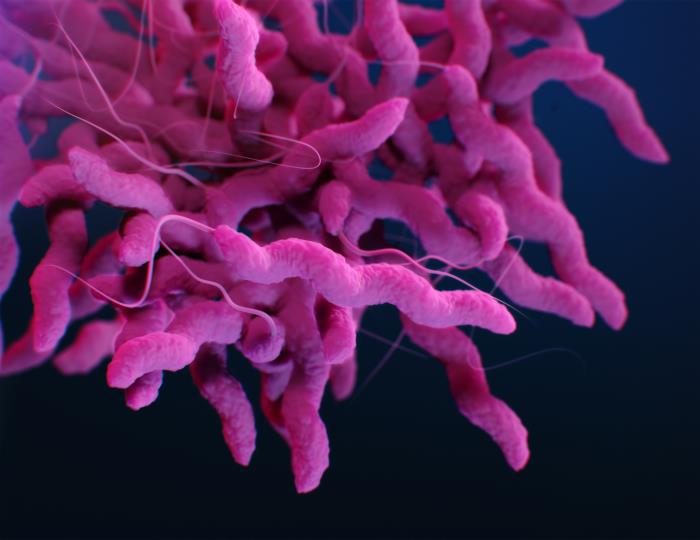
Campylobacter kswfoodworld

Image CDC

The percentage of chickens at Tesco and Asda testing positive for Campylobacter at the top level of contamination in the second quarter of 2020 has fallen below the FSA target.

The two supermarkets had recorded levels above the Food Standards Agency (FSA) threshold of 7 percent of birds with more than 1,000 colony forming units per gram (CFU/g) of Campylobacter in the first quarter of this year.

Tesco reported 9 percent of 132 samples in 1Q 2020 had the highest level of Campylobacter contamination while Asda recorded 9.2 percent.

The figures for 2Q from April to June show Tesco had 3 percent and Asda had 3.6 percent above the top level of contamination.

USA – Austin federal court makes it official: Blue Bell owes record $17.25 million in criminal penalties – Listeria monocytogenes

Food Safety News

A federal court in Texas sentenced ice cream manufacturer Blue Bell Creameries L.P. to pay $17.25 million in criminal penalties for shipments of contaminated products linked to a 2015 listeriosis outbreak.

The Brenham, Texas-based Blue Bell is an iconic 113-year old ice cream maker whose product was once only available in the Lone Star State.   It now distributes in about half the country with manufacturing in Texas, Alabama, and Oklahoma.   The 2005 listeria outbreak proved both costly and deadly for the ice cream maker.

Hong Kong – Test results of seasonal food surveillance project on mooncakes (first phase) all satisfactory

CFS

The Centre for Food Safety (CFS) of the Food and Environmental Hygiene Department (FEHD) today (September 2) announced the results of a seasonal food surveillance project on mooncakes (first phase). The results of 137 samples tested were all satisfactory.

A spokesman for the CFS said that samples covering traditional, snowy, ice-cream and other types of mooncakes had been collected from various retailers (including online retailers) and food factories for chemical and microbiological tests and nutrition content analysis.

The chemical tests covered colouring matters, preservatives, aflatoxins and metallic contaminants. Microbiological tests covered different pathogens. For nutrition content analysis, the contents of sodium and total fat of the samples were tested to see if they were consistent with the declared values on the nutrition labels.

Hong Kong – CFS announces food safety report for July

CFS

The Centre for Food Safety (CFS) of the Food and Environmental Hygiene Department today (August 31) released the findings of its food safety report for last month. The results of about 15,200 food samples tested were satisfactory except for seven samples that were announced earlier. The overall satisfactory rate was 99.9 per cent.

A CFS spokesman said about 1,400 food samples were collected for microbiological tests, some 3,600 samples were taken for chemical tests and the remaining 10,200 (including about 9,800 taken from food imported from Japan) were collected to test radiation levels.

The microbiological tests covered pathogens and hygiene indicators, while the chemical tests included pesticides, preservatives, metallic contaminants, colouring matters, veterinary drug residues and others.

The samples comprised about 3,600 samples of vegetables and fruit and their products; about 800 samples of cereals, grains and their products; about 700 samples of meat and poultry and their products; about 1,300 samples of milk, milk products and frozen confections; about 1,300 samples of aquatic and related products; and about 7,500 samples of other food commodities (including beverages, bakery products and snacks).

The seven unsatisfactory samples comprised three grass carp samples detected with trace amounts of malachite green, a sample of frozen green wrasse fillet found to contain excessive methylmercury, a sample of canned fried fish fibre detected with excessive mercury, a frozen confection sample found to contain excessive counts of hygiene indicator organisms and a vegetable sample detected with excessive pesticide residue.

EFSA risk assessments – pathogenic micro-organisms in fruit, berries and vegetables

Mattilsynet

EFSA risk assessments – pathogenic micro-organisms in fruit, berries and vegetables

Published 14.09.2020     Last changed 16.09.2020

In April 2020, EFSA (European Food Safety Authority) published a risk assessment related to Listeria monocytogenes in frozen fruits and vegetables that are blanched before freezing. The risk assessment was made as a result of a major international outbreak with listeriosis caused by frozen maize from Hungary.

EFSA identified several control activities that manufacturers can implement to reduce the risk, including cleaning and disinfection of the production environment, water, time and temperature control at various production stages , and correct labeling of the products:
FSA 2020 – The public health risk posed by Listeria monocytogenes in frozen fruits and vegetables including herbs, blanched during processing

In 2013 and 2014, EFSA published six reports on the dangers associated with pathogenic microorganisms in fruits, berries and vegetables.

EFSA 2013 – Scientific Opinion on the risk posed by pathogens in food of non-animal origin:
Part 1: Outbreak data analysis and risk ranking of food / pathogen combinations

Part 2: (5 sub-reports)

1.      Salmonella and norovirus in leafy greens eaten raw as salads

2.      Salmonella and Norovirus in berries

3.      Salmonella and Norovirus in tomatoes

4.      Salmonella in melons

5.      Salmonella, Yersinia, Shigella and Norovirus in bulb and stem vegetables, and carrots

In 2011, following the large outbreak of shiga toxin-producing E. coli (STEC) in sprouts in Germany and France, EFSA prepared a risk assessment for STECs and other pathogenic bacteria in sprouted seeds (sprouts, shoots and watercress). The seeds can be contaminated with disease-causing bacteria during production, storage and distribution, e.g. via contaminated irrigation water or soil. The germination process with high heat and moisture provides good growth conditions for bacteria found on the seeds:
EFSA 2011 – Scientific Opinion on the risk posed by Shiga toxin-producing E. coli (STEC) and other pathogenic bacteria in seeds and sprouted seeds

Canada – Canada updates Salmonella cases linked to onion consumption – United States lags two weeks behind

Food Poison Journal

1,518 sickened with Salmonella Newport in United States and Canada linked to California Thomson onions.

In Canada, as of September 14, 2020, there have been 506 confirmed cases of Salmonella Newport illness linked to this onion outbreak in the following provinces: British Columbia (116), Alberta (292), Saskatchewan (34), Manitoba (25), Ontario (14), Quebec (24) and Prince Edward Island (1).

Individuals became sick between mid-June and mid-August 2020. Seventy-one individuals have been hospitalized. Two people have died.

Research – Switzerland – Do changes in STEC diagnostics mislead interpretation of disease surveillance data in Switzerland? Time trends in positivity, 2007 to 2016

Eurosurveillance

Infections caused by Shiga toxin (Stx)-producing  (STEC) are generally mild and self-limiting or even asymptomatic. However, particularly in children and elderly people, STEC infections can lead to severe gastroenteritis with haemorrhagic diarrhoea and life-threatening conditions, e.g. haemolytic uraemic syndrome (HUS) [1,2].

STEC transmission can occur through the consumption of contaminated food and drinks, or by direct contact with infected individuals or animals shedding the bacterium* [1,35]. STEC infections are endemic in Europe, including Switzerland [6,7]. Cases occur sporadically or in outbreaks; a large outbreak attributed to contaminated sprouts occurred in Germany in 2011 [8]. Smaller outbreaks have also been reported, e.g. there was an outbreak in Italy in 2013 and in Romania in 2016, both were suspected to be caused by contaminated dairy products [9,10]. Considering 22 years of population-based data up to 2012, Majowicz et al. estimated in 2014 that STEC leads to an estimated 2.8 million illness cases per year, including 3,800 cases of HUS, globally [11].

The National Notification System for Infectious Diseases (NNSID) of the Swiss Federal Office of Public Health (FOPH) has been receiving all notifications of laboratory-confirmed STEC infections since 1999. Case numbers were generally constant until 2010, with only a few laboratories reporting STEC cases in Switzerland. An increase in cases was observed in 2011 following the outbreak in Germany, before returning to expected yearly fluctuations, and then markedly increasing since 2015 [12]. Given that this increase was observed around the same time as the introduction of syndromic multiplex PCR panels for stool analyses in standard laboratory practice in Switzerland [12], it was hypothesised that these panels were the cause of the increase in notified STEC cases. Traditionally, routine testing of stool samples for bacterial pathogens involved only  spp.,  spp. and  spp. using culture-based techniques. With syndromic multiplex PCR panels, stool samples can be tested for up to 22 pathogens, including STEC, in one single run [12,13].

Prior to the gradual introduction of multiplex PCR to the routine diagnostics between 2014 and 2015, STEC was only specifically tested for in Switzerland upon physician request, and this rarely happened. Current testing practice includes the use of small syndromic enteric bacterial panels for testing in patients without a travel history or a larger gastrointestinal panel if travel history is reported on the test order form [7].

A qualitative assessment found that Swiss laboratory experts uniformly agreed that the increase in STEC case numbers was due to the introduction and increasing use of multiplex PCR panels [7]. We set out to conduct a quantitative investigation as to whether an increase in the STEC testing rate associated with the use of the panels is what led to the increased notification of cases.

Our study assesses the development of the STEC positivity in the Swiss population between 2007 and 2016 using routine laboratory data, and gives insight into the epidemiology and notification numbers of STEC infections in Switzerland.

Europe – Shigellosis Annual Epidemiological Report for 2017

Click to access AER_for_2017_shigellosis.pdf

Australia – NSW Annual Food Testing Report Released

Food Safety.com

Campylobacter kswfoodworld

Every year, the New South Wales Food Authority (NSW Food Authority) releases their Annual Food Testing Report on the testing conducted by their primary testing provider and by other laboratories. This year’s report highlights some key findings with regards to food safety testing results and trends.

Testing is conducted for a variety of reasons including food-borne illness investigations, Food Safety Program verifications and other types of research. In the report, the NSW Food Authority breaks down the significant findings in each of these categories which provides important information for the Australian food industry.

Key facts from the report

The NSW Annual Food Testing Report provides the following facts for the period of July 2018 to June 2019:

  1. During this time period, there were a total of 6,431 samples submitted for testing.
  2. Sample types analysed included:
  • meat
  • seafood
  • dairy
  • plant products
  • packaged food
  • eggs
  • food from retail outlets
  • environmental samples

3. There were over 70 different types of tests performed. These included:

  • microbiological assessment
  • pH
  • water activity
  • allergens
  • additives such as preservatives

Key findings from the report

The findings listed in the report are categorized based on different programs. The following is a breakdown of some of the key findings:

Food-borne illness investigation findings

The report states that between 2018 and 2019 there were a total of 4,010 samples (food and environmental) that were submitted for testing. These samples were submitted for testing due to food-borne illness investigations and the follow-ups for these investigations.

Increase in Salmonella Enteritidis cases

The report discusses a marked increase in the cases of Salmonella Enteritidis that has been observed since the middle of 2018. The cases have now been linked to an outbreak of Salmonella Enteritidis that was locally acquired. This a significant difference from cases of Salmonella Enteritidis in Australia in the past, with most cases typically presenting in people who had travelled overseas.

Testing was conducted and monitoring took place to determine where the outbreak was stemming from. The investigation involved taking 2,072 samples from egg production businesses and testing eggs and environmental samples. The results from the testing showed that Salmonella Enteritidis was on 13 properties that were interconnected through people, eggs and/or equipment.

The result was six food recalls at the consumer level from properties affected in NSW, and one consumer level recall in Victoria. The report states that surveillance and monitoring of NSW egg farms is slated to continue throughout 2020.

Decrease in Listeria prevalence in melons

The melon industry in Australia, particularly the rockmelon industry, has been linked to food-borne illness outbreaks of Listeria in recent years. The report states that listeriosis cases in New South Wales has actually declined sharply as of late, which is being attributed to the improved food safety measures that have been put in place in the Australian melon industry.

During the period of November 2018 and April 2019, the New South Wales Department of Primary Industries (NSW DPI) conducted food safety training workshops for rockmelon growers in NSW. NSW DPI also conducted sampling of melon harvests and packhouse environments to make sure that melon growers were following food safety protocols.

Verification findings

Concerns about Campylobacter and Salmonella on poultry

Campylobacter and Salmonella infections are both significant health concerns for Australians. In order to monitor the prevalence of these two food-borne pathogens, the raw poultry verification program gathers ongoing data on their prevalence and levels in raw poultry.

The report states that during the period of July 2018 and June 2019, samples were taken from raw poultry including 196 from whole chickens/chicken portions from processing plants, and 312 chicken portions from retail facilities. The samples were tested for the presence of Campylobacter and Salmonella.

The results for processing plants:

Salmonella

  • detected in 21.4% of samples
  • 9.2% of samples had quantifiable levels

Campylobacter

  • detected in 86.7% of samples
  • 1.5% of samples had quantifiable levels

The results for retail facilities:

Salmonella

  • detected in 25.8% of samples
  • 1.7% of samples had quantifiable levels

Campylobacter

  • detected in 89.9% of samples
  • 6.4% of samples had quantifiable levels

Research findings

Investigating algal biotoxins in wild harvest shellfish

There are other types of food-borne pathogens that are not as well known as Listeria, Salmonella or Campylobacter. The report touches on how some algae produce toxic compounds that can then accumulate in certain types of fish, particularly filter-feeding bivalve shellfish. The concern is that the toxic compounds can be harmful to humans if they are consumed by eating the shellfish.

The NSW Food Authority conducted testing between 2018 and 2019 which involved taking samples from pipis which are a type of shellfish group. There were 76 samples taken and they were tested for three different types of algae toxin groups which were amnesic shellfish toxins, paralytic shellfish toxins and diarrhetic shellfish toxins. The results revealed that diarrhetic shellfish toxins were detected in 13 of the 76 samples.

The NSW Food Authority will continue to investigate the health concerns around algae toxins in harvest shellfish in the 2019-2020 fiscal year.