
Category Archives: Food Microbiology Research

Research – Persistent contamination of raw milk by Campylobacter jejuni ST-883

PubMed

Raw Milk Food Safety KSW FoodworldCampylobacter kswfoodworld

Campylobacter jejuni has caused several campylobacteriosis outbreaks via raw milk consumption. This study reports follow-up of a milk-borne campylobacteriosis outbreak that revealed persistent C. jejuni contamination of bulk tank milk for seven months or longer. Only the outbreak-causing strain, representing sequence type (ST) 883, was isolated from milk, although other C. jejuni STs were also isolated from the farm. We hypothesized that the outbreak strain harbors features that aid its environmental transmission or survival in milk. To identify such phenotypic features, the outbreak strain was characterized for survival in refrigerated raw milk and in aerobic broth culture by plate counting and for biofilm formation on microplates by crystal violet staining and quantification. Furthermore, whole-genome sequences were studied for such genotypic features. For comparison, we characterized isolates representing other STs from the same farm and an ST-883 isolate that persisted on another dairy farm, but was not isolated from bulk tank milk. With high inocula (105 CFU/ml), ST-883 strains survived in refrigerated raw milk longer (4-6 days) than the other strains (≤3 days), but the outbreak strain showed no outperformance among ST-883 strains. This suggests that ST-883 strains may share features that aid their survival in milk, but other mechanisms are required for persistence in milk. No correlation was observed between survival in refrigerated milk and aerotolerance. The outbreak strain formed a biofilm, offering a potential explanation for persistence in milk. Whether biofilm formation was affected by pTet-like genomic element and phase-variable genes encoding capsular methyltransferase and cytochrome C551 peroxidase warrants further study. This study suggests a phenotypic target candidate for interventions and genetic markers for the phenotype, which should be investigated further with the final aim of developing control strategies against C. jejuni infections.

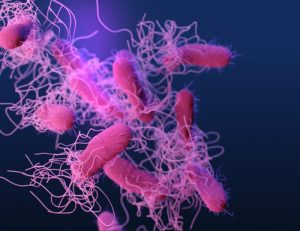
Europe – Shigellosis – Annual Epidemiological Report for 2017

Shigella - kswfoodworld

Image CDC

Shigellosis is a relatively uncommon disease in the European Union/European Economic Area (EU/EEA), but remains of concern in some countries and for some population groups. For 2017, 30 EU/EEA countries reported 6 337 confirmed shigellosis cases. The overall notification rate was 1.7 cases per 100 000 population, slightly higher than in 2016. The highest notification rate was observed in children below five years of age, followed by male adults aged 25–44 years. Sexual transmission of shigellosis among men who have sex with men (MSM) is thought to have contributed to the gender imbalance in the latter group.

Click to access AER_for_2017_shigellosis.pdf

USA – As 1500 Become Ill, with over 200 Hospitalized, the CDC and Canadian Health Agencies Investigation of Salmonella Red Onion Outbreak Continues

As 1500 Become Ill, with over 200 Hospitalized, the CDC and Canadian Health Agencies Investigation of Salmonella Red Onion Outbreak Continues

The Victim Count Nears 1500, with over 200 Hospitalizations in the Red Onion Salmonella Outbreak – Heath Investigators in Two Countries Scramble to Get it Under Control

The CDC has released new information on the Salmonella red onion outbreak, which has caused 1012 illnesses in the United States, with illnesses in 47 states and 136  infections requiring hospitalizations. In Canada, there have been 457 confirmed cases and 66 individuals requiring hospitalizations with illnesses.

CDC

Research – Record number of outbreak alerts on EU platform

Record number of outbreak alerts on EU platform

A European system used by countries to report outbreaks saw a record number of alerts in 2019.

The European Centre for Disease Prevention and Control (ECDC) hosts the Epidemic Intelligence Information System for food- and waterborne diseases (EPIS-FWD) platform. The network is a restricted web-based platform for experts to help with early detection and coordination of response to multi-country outbreaks through sharing information.

It consists of Urgent Inquiries and associated forums, which are the outbreak alert and investigation tools. The forums allow information to be shared about the outbreak investigation among a restricted number of experts. Nominated people outside the EPIS-FWD network, such as food safety and environmental experts or veterinarians from network countries or any expert or organization outside the network can also be invited to join.

Research – A new method may make tomatoes safer to eat

Science Daily

When vegetable farmers harvest crops, they often rely on postharvest washing to reduce any foodborne pathogens, but a new University of Georgia study shows promise in reducing these pathogens — as well as lowering labor costs — by applying sanitizers to produce while it is still in the fields.

Salmonella, Shiga toxin-producing E. coli and Listeria monocytogenes are major causes of foodborne diseases and of public health concern in the U.S. Tomato-associated Salmonella outbreaks reported to the Centers for Disease Control and Prevention have increased in frequency and magnitude in recent years, and fresh produce accounted for 21% of E. coli outbreaks reported to the CDC over a 20-year span.

Initially researchers were going to study the use of a nonchlorine-based sanitizer made of two food additives approved by the U.S. Food and Drug Administration — levulinic acid and sodium dodecyl sulfate — as a postharvest wash solution. However, at the suggestion of a producer involved in the study — Bill Brim of Lewis Taylor Farms in Tifton, Georgia — they designed the study using the solution in a preharvest spray, said Tong Zhao, associate research scientist with the Center for Food Safety on the UGA Griffin campus.

Research – Campylobacter infections expected to increase due to climate change in Northern Europe

Nature.com

Campylobacter kswfoodworld

Global climate change is predicted to alter precipitation and temperature patterns across the world, affecting a range of infectious diseases and particularly foodborne infections such as Campylobacter. In this study, we used national surveillance data to analyse the relationship between climate and campylobacteriosis in Denmark, Finland, Norway and Sweden and estimate the impact of climate changes on future disease patterns. We show that Campylobacter incidences are linked to increases in temperature and especially precipitation in the week before illness, suggesting a non-food transmission route. These four countries may experience a doubling of Campylobacter cases by the end of the 2080s, corresponding to around 6,000 excess cases per year caused only by climate changes. Considering the strong worldwide burden of campylobacteriosis, it is important to assess local and regional impacts of climate change in order to initiate timely public health management and adaptation strategies.

Research – Modeling the Effects of Product Temperature, Product Moisture, and Process Humidity on Thermal Inactivation of Salmonella in Pistachios during Hot-Air Heating

JFP

Prior efforts to model bacterial thermal inactivation in/on low-moisture foods generally have been based on isothermal and iso-moisture experiments and rarely included dynamic product and process variables. Therefore, the objective of this study was to test appropriate secondary models to quantify the effect of product temperature, product moisture, and process humidity on thermal inactivation of Salmonella Enteritidis PT30 on pistachios subjected to dynamic dry- or moist-air heating. In-shell pistachios were inoculated with S. Enteritidis PT30, equilibrated in controlled-humidity chambers (to target water activities, aw, of 0.45 or 0.65), and, in some cases, subjected to a presoak treatment prior to heating in a laboratory-scale, moist-air convection oven at multiple combinations (in duplicate) of dry bulb (104.4 or 118.3ºC) and dew point (~23.8, 54.4, or 69.4ºC) temperatures, with air speed of ~1.3 m/s. Salmonella survivors, pistachio moisture content, and aw were quantified at six time points for each condition, targeting cumulative lethality of ~3-5 log. The resulting data were used to estimate parameters for five candidate secondary models that included combinations of product temperature, product moisture, aw, and/or process dew point (coupled with a log-linear primary model). A model describing the D-value as a function of temperature and dew point fit the data well (RMSE 0.86 log CFU/g); however, adding a term to account for dynamic product moisture improved the fit (RMSE = 0.83 log CFU/g). In addition, product moisture content yielded better model outcomes, as compared to aw, particularly in the case of the presoaked pistachios. When validated at the pilot scale, the model was conservative, always under-predicting the experimental log reductions. Both dynamic product moisture and process humidity were critical factors in modeling thermal inactivation of Salmonella in a low-moisture product heated in an air-convection system.

Research – Evaluation of UVC Radiation and a UVC-Ozone Combination as Fresh Beef Interventions against Shiga Toxin–Producing Escherichia coli, Salmonella, and Listeria monocytogenes and Their Effects on Beef Quality

JFP

ABSTRACT

This research study was conducted to evaluate treatments with UVC light and a combination of UVC and ozone that have recently received attention from the beef processing industry as antimicrobial interventions that leave no chemical residues on products. The effectiveness of UVC and UVC plus gaseous ozone treatments was evaluated for inactivation of pathogenic bacteria on fresh beef and for any impact on fresh beef quality. Fresh beef tissues were inoculated with cocktails of Shiga toxin–producing Escherichia coli (STEC) strains (serotypes O26, O45, O103, O111, O121, O145, and O157:H7), Salmonella, and Listeria monocytogenes. Inoculated fresh beef tissues were subjected to UVC or UVC-ozone treatments at 106 to 590 mJ/cm2. UVC treatment alone or in combination with ozone reduced populations of STEC, Salmonella, L. monocytogenes, and aerobic bacteria from 0.86 to 1.49, 0.76 to 1.33, 0.5 to 1.14, and 0.64 to 1.23 log CFU, respectively. Gaseous ozone alone reduced populations of E. coli O157:H7, Salmonella, and L. monocytogenes by 0.65, 0.70, and 0.33 log CFU, respectively. Decimal reduction times (D-values) for STEC serotypes, Salmonella, and L. monocytogenes on surfaces of fresh beef indicated that the UVC-ozone treatment was more effective (P ≤ 0.05) than UVC light alone for reducing pathogens on the surface of fresh beef. Exposure to UVC or UVC plus gaseous ozone did not have a deleterious effect on fresh meat color and did not accelerate the formation of oxidative rancidity. These findings suggest that UVC and UVC in combination with gaseous ozone can be useful for enhancing the microbial safety of fresh beef without impairing fresh beef quality.

Research – Mycotoxins: A Threat To Poultry Sector

Technology Times

Campylobacter kswfoodworld

Wheat, maize, barley and peanuts are different sources of mycotoxins. If toxins invade crops before harvesting these are called as field fungi. If it invades post- harvest, they are called storage fungi. Mycotoxins cause heavy economic losses. These are common in tropical and sub-tropical countries in and around Asia.The highest occurring mycotoxin in Asia was FUM (fumonisins), detected in 85% of the samples at an average concentration of 1,354 ppb(parts per billion) .

The highest occurrence of FUM in Asia was detected in a Chinese corn sample (169,500 ppb). DON (deoxynivalenol) prevalence and average concentration in Asia were 77% and 735 ppb, respectively. ZEN (Zearalenone) was the third highest occurring mycotoxin in Asian samples, detected in 49% of tested samples at an average concentration of 201 ppb. In Asia, the highest ZEN value was detected in a Chinese grass sample (8,113 ppb). Aflatoxin was found in 38% of the samples at the highest average concentration worldwide (58 ppb).

Research – Outbreaks, Germination, and Inactivation of Bacillus cereus in Food Products: A Review

JFP

ABSTRACT

Bacillus cereus has been reported as a foodborne pathogen worldwide. Although food processing technologies to inactivate the pathogen have been developed for decades, foodborne outbreaks related to B. cereus have occurred. In the present review, foodborne outbreaks, germination, inactivation, and detection of B. cereus are discussed, along with inactivation mechanisms. B. cereus outbreaks from 2003 to 2016 are reported based on food commodity, number of cases, and consequent illnesses. Germination before sporicidal treatments is highlighted as an effective way to inactivate B. cereus, because the resistance of the pathogen increases significantly following sporulation. Several germinants used for B. cereus are listed, and their efficacies are compared. Finally, recently used interventions with sporicidal mechanisms are identified, and rapid detection methods that have been developed are discussed. Combining two or more interventions, known as the hurdle technology concept, is suggested to maximize the sporicidal effect. Further study is needed to ensure food safety and to understand germination mechanisms and sporicidal resistance of B. cereus.

HIGHLIGHTS
  • Bacillus cereus has been associated with several foodborne outbreaks.
  • Several germinants have been used to induce Bacillus cereus germination.
  • Resistance of Bacillus cereus may depend on the germination method.
  • Sporicidal effect of interventions can be maximized by hurdle technology.