Salmonella in chicken meal from The Netherland in Italy.
Salmonella in poultry meal from the UK in Belgium and the Netherlands
Salmonella Newport in dog chews from Poland in Germany

Salmonella in chicken meal from The Netherland in Italy.
Salmonella in poultry meal from the UK in Belgium and the Netherlands
Salmonella Newport in dog chews from Poland in Germany
Posted in Animal Feed, Animal Feed Salmonella, Animal Feed Testing, Food Micro Blog, Food Microbiology, Food Microbiology Blog, Food Microbiology Testing, microbial contamination, Microbiological Risk Assessment, Microbiology, Microbiology Investigations, Pet Food, Pet Food Testing, RASFF, Salmonella, Salmonella Dog Food, Uncategorized

MethodsData from 22 of 31 provincial-level administrative divisions (PLADs) of the National Foodborne Disease Outbreaks Surveillance System during 2004−2020 and Embase, China National Knowledge Infrastructure (CNKI), Wanfang Data, and Chinese Science and Technique Journals (CQVIP) from January 2004 to December 2020 to identify indexed publications in the Chinese literature using the following search terms “botulism,” or “botulinum toxin,” or “Clostridium botulinum.” The number and proportion of outbreaks, illnesses, and deaths by PLAD, food types, and contributing factors were calculated.
ResultsDuring 2004−2020, a total of 80 foodborne botulism outbreaks occurred in China, involving 386 illnesses and 55 deaths; most outbreaks were reported between June and August, with a sharp peak in January; 22 out of 31 PLADs reported foodborne botulism outbreaks, Xinjiang reported the largest number of outbreaks (20), followed by Qinghai (13); the most commonly implicated food was home-prepared traditional processed stinky tofu and dried beef, accounting for 51.25% events. Improper processing and improper storage in contributing factors accounted for 77.50% outbreaks. Initial misdiagnosis occurred in 27.50% of cases.
ConclusionsOutbreaks of foodborne botulism had a high case-fatality rate. Targeted food safety and popularization education to farmers and herdsmen in Xinjiang and Qinghai related to botulism prevention should be carried out, and timely outbreak investigation and hospital surge capacity should be improved.
Belgian scholars in consumers of sausages first described botulism in 1896 (1). It was confirmed that the growth and germination of toxins occurred only under particular conditions in an anaerobic low salt, low-acid environment. People who ingest food contaminated with botulinum neurotoxin (BoNT) produced by botulinum toxin can have a potentially fatal outcome (2). Outbreaks have been reported worldwide. In Canada, the first Clostridium botulinum type E outbreak in 1944 in Nanaimo, British Columbia was reported in 1947 (3); In China, Wu et al. first reported botulism in Xinjiang in 1958 due to edible semi-finished noodle sauce (4). A better understanding of the epidemiology of botulism outbreaks can help tailor local prevention and public health response strategies. Here, we reviewed surveillance data on outbreaks, illnesses, and deaths of botulism in China from 2004 to 2020.
Posted in Clostridium, Clostridium botulinum, Decontamination Microbial, food bourne outbreak, Food Illness, Food Micro Blog, Food Microbiology, Food Microbiology Blog, Food Microbiology Research, Food Microbiology Testing, Food Poisoning, Food Poisoning Death, Foodborne Illness, Foodborne Illness Death, foodborne outbreak, foodbourne outbreak, Illness, microbial contamination, Microbiological Risk Assessment, Microbiology, Microbiology Investigations, outbreak, Research

Consuming raw or undercooked eggs potentially causes Salmonella infection, which can pose severe, sometimes life-threatening, health risks, especially to susceptible populations. During August 2017 to August 2020, the Centre for Food Safety has received referrals of more than 300 food poisoning outbreaks related to food premises, involving nearly 1000 victims, caused by Salmonella species.
Both the outside and the inside of eggs can be contaminated with Salmonella. Egg shells can be contaminated with faecal matter and germs may enter through pores or cracks on the shell of eggs. Moreover, Salmonella can be introduced to the egg from infected reproductive tissues of poultry prior to shell formation. Eggs contaminated with Salmonella may look normal.
To assist the food trade in preventing food poisoning due to Salmonella in eggs and egg products, the Centre for Food Safety gives out practical food safety advice about using eggs in food preparation:
Purchase eggs from reliable sources and only accept eggs that are clean without cracks or leakage.
For dishes that often use lightly cooked or uncooked eggs, choose pasteurised eggs, egg products or dried egg powder. Pasteurisation is the process of applying low heat to kill pathogens and inactivate spoilage enzymes.
The above advice is applicable not only in food businesses but also in domestic settings to reduce risks of food poisoning.
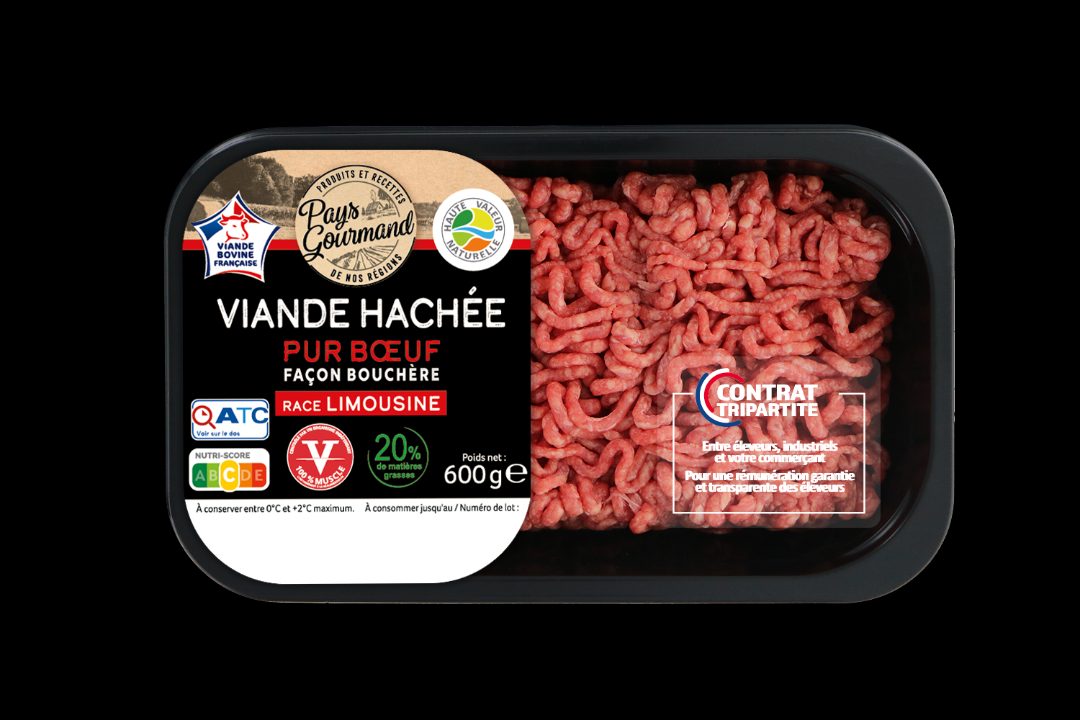
| GTIN | Lot | Date |
|---|---|---|
| 2006050052554 | 22130813 | Use-by date 02/06/2022 |
Posted in Bacterial Toxin, E.coli O26, Exotoxin, Food Toxin, Intoxications, Shigatoxin, STEC, STEC E.coli, Toxin
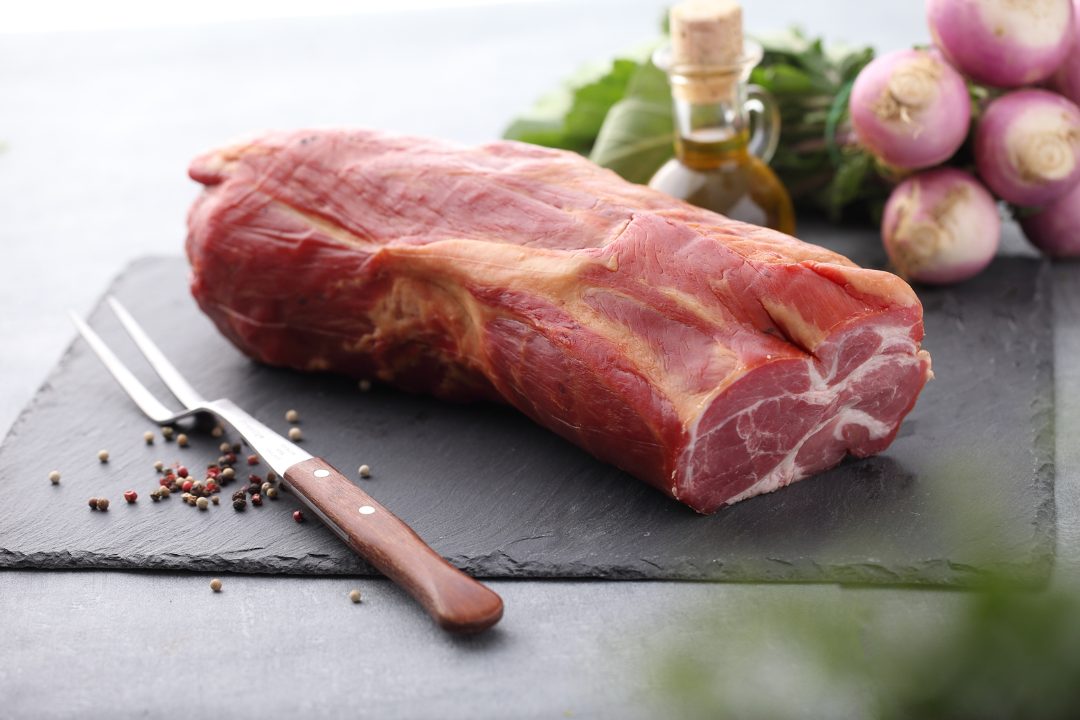
| GTIN | Batch | Date |
|---|---|---|
| 3301090182780 | 22137, whole under vacuum | Use-by date 07/16/2022 |
| Date Posted |
Ref # |
Pathogen or Cause of Illness |
Product(s) Linked to Illnesses (if any) |
Total Case Count |
Status |
| 6/15/
2022 |
1070 | Listeria monocytogenes |
Not Yet Identified | 12 | Active |
| 6/8/
2022 |
1068 | E. coli O157:H7 |
Not Yet Identified | 10 | Active |
| 6/1/
2022 |
1066 | Hepatitis A Virus | Strawberries | See Outbreak Advisory |
Active |
| 5/25/
2022 |
1067 | Salmonella Senftenberg |
Peanut Butter | See Outbreak Advisory | Active |
| 4/20/
2022 |
1064 | Not Yet Identified |
Dry Cereal | 558 adverse event reports |
Active |
| 4/13/
2022 |
1057 | Listeria monocytogenes |
Not Yet Identified |
21 | Active |
| 3/30/
2022 |
1060 | Not Yet Identified |
Meal Replacement Drink |
6 adverse event reports |
Closed |
| 3/16/
2022 |
1055 | Salmonella Saintpaul |
Not Identified | 60 | Closed |
| 2/17/
2022 |
1056 | Cronobacter sakazakii |
Powdered Infant Formula |
See Advisory |
Active (IMG) |
| 2/9/
2022 |
1040 | Listeria monocytogenes |
Not Identified | 20 | Closed |
| 2/2/
2022 |
1054 | Enteroinvasive E. coli O143:H26 |
Not Identified |
16 | Closed |
| 1/10/
2022 |
1050 | E. coli O121:H19 |
Romaine | 4 | Closed |
Posted in Cronobacter sakazakii, E.coli O121, E.coli O157, E.coli O157:H7, FDA, Food Micro Blog, Food Microbiology, Food Microbiology Blog, Food Microbiology Research, Food Microbiology Testing, Hepatitis A, Listeria monocytogenes, microbial contamination, Microbiological Risk Assessment, Microbiology, Microbiology Investigations, O143:H26, Salmonella
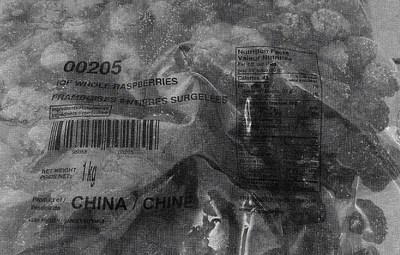
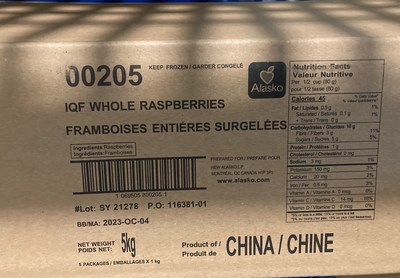
The Ministry of Agriculture, Fisheries and Food (MAPAQ), in collaboration with the Food Inspection Division of the City of Montreal and the company Distribution Alimentaire Aubut inc., warns the public not to consume the product indicated in the table below, because this food may have been contaminated with a norovirus.
This warning stems from a Canadian Food Inspection Agency food recall involving Alasko brand IQF Whole Raspberries from China. They are distributed in several establishments across Canada . The recalled lot is as follows*:
*Lot # SY21278 PO
: 116381-01
BB/MA: 2023-OC-04
* The information on the batch concerned is only found on the transport boxes.
The product was offered in a frozen state. Its label includes, in addition to its name, the mention “Prepared for New Alasko LP”.
|
Establishment |
Product name |
Format |
Affected lot |
|
Aubut Food Distribution Inc. 3975 St. Ambroise Street Montreal |
“IQF Whole Raspberries” |
Box of 5 kg (5 bags of 1 kg) |
Units sold until June 15, 2022 |
|
1 kg bag |
The company named in the table is voluntarily recalling the product in question. It has agreed with MAPAQ and the Food Inspection Division of the City of Montreal to issue this warning as a precautionary measure. In addition, people who have this product in their possession are advised not to consume it. They must return it to the establishment where they bought it or throw it away.
Even if the product does not show signs of tampering or a suspicious smell, it may be contaminated with norovirus and cause illness when consumed. Generally, the possible symptoms are nausea, vomiting, diarrhea and abdominal cramps. Muscle pain, fatigue, fever, chills and headache may also occur. People exposed to norovirus usually show these symptoms within 24 to 48 hours of eating contaminated food. Cases of illness have been reported to MAPAQ and could be associated with the consumption of this food.
Posted in food contamination, food handler, Food Hazard, Food Hygiene, Food Illness, Food Inspections, Food Micro Blog, Food Microbiology, Food Microbiology Blog, Food Microbiology Testing, Food Pathogen, food recall, Food Safety, Food Safety Alert, Food Testing, Food Virus, Foodborne Illness, Illness, Norovirus

Jumbo recall
Product: Jumbo brand falafel (vegan).
Nature of the problem: possible presence of Listeria
In agreement with the FASFC, Jumbo is withdrawing from sale the product “falafel vegan” with the EAN code 8718452486236 and the expiry dates (DLC) 03-07-2022 and 07-07-2022 of the Jumbo brand and is recalling it to consumers because of the possible presence of Listeria.
Jumbo asks its customers not to consume this product and to return it to the point of sale where it was purchased, where they will be reimbursed.
Product description Product
name: falafel (vegan)
Brand: Jumbo
EAN code: 8718452486236 Best before
dates (BDD): 07-03-2022 and 07-07-2022
Sale period: June 10 to 14, 2022
Nature of packaging: plastic packaging
Weight: 200 g
The product was distributed through Jumbo’s subsidiaries in Belgium.
For more information , customers can contact customer services on 0800-98998 or Jumbo.com .
Our apologies for the inconvenience caused.
Posted in food contamination, food handler, Food Hazard, Food Hygiene, Food Inspections, Food Micro Blog, Food Microbiology, Food Microbiology Blog, Food Microbiology Testing, Food Pathogen, food recall, Food Safety, Food Safety Alert, Food Safety Management, Food Testing, Listeria, Listeria monocytogenes

Since the beginning of the week, six people with a previous diagnosis of botulism have been hospitalized in different regions of Ukraine – Volyn, Chernihiv, Zhytomyr, Rivne, Kherson and Kyiv. Among the causes of the disease, experts from the Centers for Disease Control and Prevention call the use of fried and dried river fish of their own cooking or unknown production, home canned food.
We remind you that botulism is a food poisoning that can lead to serious consequences. In summer, when the air temperature rises, you should pay attention to the conditions of storage and cooking. Therefore, to protect against botulism, you should avoid the following products if you have doubts about their quality and storage / transportation conditions:
Symptoms of botulism:
Symptoms of botulism often appear gradually, without sharp rises in temperature, so there is an illusion of frivolity. Later there is a visual impairment – one of the first signs of botulism. At the same time there is thirst, dryness of the mucous membranes, swallowing disorders, may change the tone of voice. Patients complain of a feeling of “lump” in the throat, pain when swallowing, sore throat.
Neurological symptoms last for several days and are accompanied by a general toxic syndrome – patients complain of severe headache, dizziness, insomnia, general weakness, fever. In severe cases, patients are concerned about the feeling of shortness of breath. Respiratory failure develops, which is the cause of death in botulism.
At the slightest suspicion of botulism, see a doctor immediately!
Posted in botulism, Clostridium, Clostridium botulinum, food contamination, food handler, Food Hazard, Food Hygiene, Food Illness, Food Inspections, Food Micro Blog, Food Microbiology, Food Microbiology Research, Food Microbiology Testing, Food Pathogen, Food Poisoning, Food Safety, Food Safety Alert, Food Safety Management, food safety training, Food Testing, Food Toxin


Foodtrade AS is recalling Brazil nuts in 1 kg bags of the brand «The nut mixer Brazil nuts», in addition to Brazil nuts sold in bulk at fruit and vegetable stores across the country. The products are sold in the stores of Nøtteblanderen. The reason is that the nuts contain aflatoxin above the permitted limit value. Aflatoxin is a harmful toxin from molds.
About 300 bags of nuts from Foodtrade AS have been sold in Nøtteblanderen’s stores in Oslo, Bergen, Stavanger, Ålesund and Kristiansand in the period April-June 2022.
The nut mixer reports that the remaining products have been withdrawn and are no longer available in their stores.
The nut mixer asks customers who have purchased this product to return it to the store where it was purchased, or throw it in residual waste.
A total of 21 cartons of Brazil nuts from Sunrise AS have been sold in bulk in fruit and vegetable shops across the country. Consumers who have purchased the Brazil nuts after 2 May 2022 are asked to either contact the store where the product was purchased or throw it away.
The mold aflatoxin has been detected in a batch of Brazil nuts from Bolivia. Aflatoxins are carcinogenic and can damage the genetic material (DNA) after high intake over a long period of time. The amount of aflatoxin in these nuts is above the permitted limit value, and the products are therefore considered to be unsafe.
Posted in Aflatoxin, Aspergillus Toxin, food contamination, Food Hazard, Food Hygiene, Food Inspections, Food Micro Blog, Food Microbiology, Food Microbiology Blog, Food Microbiology Testing, Food Poisoning, food recall, Food Safety, Food Safety Alert, Food Testing, Food Toxin, Mold Toxin, Mould Toxin, Mycotoxin, Toxin


