RASFF Alerts – Aflatoxin – Organic Almonds – Pistachio Kernels – Dried Figs – Groundnut Kernels

European Food Alerts

RASFF

aflatoxins (B1 = 31; Tot. = 34 µg/kg – ppb) in organic almonds from Italy in Denmark

RASFF

aflatoxins (B1 = 38.8; Tot. = 44 µg/kg – ppb) in pistachio kernels from the United States, dispatched from Turkey in Bulgaria

RASFF

aflatoxins (B1 = 12.8; Tot. = 24.4 µg/kg – ppb) in dried figs in Sweden

RASFF

aflatoxins (B1 = 175; Tot. = 190 µg/kg – ppb) in groundnut kernels from Angola in Portugal

RASFF

aflatoxins (B1 = 17.4; Tot. = 24.5 µg/kg – ppb) in organic dried figs from Spain in Denmark

RASFF

aflatoxins (B1 = 34; Tot. = 37 µg/kg – ppb) in pistachios from Turkey in the Netherlands

RASFF

aflatoxins (B1 = 64.8; Tot. = 72.2 µg/kg – ppb) in pistachio kernels from Iran in Germany

RASFF Alerts – Animal Feed – Enterobacteriaceae – Dog Chews

European Food Alerts

RASFF

too high count of Enterobacteriaceae (1910 CFU/g) in dog chews from China in Sweden

RASFF Alerts – Animal Feed – Salmonella – Dog Chews – Dried Silkworm Pupae – Organic Sunflower Cake –

European Food Alerts

RASFF

Salmonella (presence /25g) in dog chews from Germany in Germany

RASFF

Salmonella (presence /25g) in dog chews from Poland in Germany

RASFF

Salmonella (presence in 1 out of 5 samples /25g) in dried silkworms pupae from China in Germany

RASFF

Salmonella enterica ser. Oranienburg (presence /25g) in organic sunflower cake from Italy in Germany

Israel – Aloe Vera Drink – Pseudomonas aeruginosa

Click to access RCL_17122020_EN.pdf

USA – Investigations of Foodborne Illness Outbreaks Update

FDA

The link above is a list of outbreak investigations being managed by FDA’s CORE Response Teams. The investigations are in a variety of stages, meaning that some outbreaks have limited information, and others may be near completion.

A public health advisory will be issued for outbreak investigations that have resulted in specific, actionable steps for consumers to take to protect themselves. Please direct your attention to those pages for the most up to date information on the investigation and for consumer protection information.

Australia – Nudie nothing but 2 apples 200ml – Mycotoxin – Patulin

FSANZ

Product information

Monde Nissan Australia Pty Ltd (nudie Foods) is conducting a recall of nudie nothing but 2 apples 200ml. The product has been available for sale at independent food retailers including IGA in NSW, Vic & SA and independent food retailers in Qld, Tas & WA and Woolworths nationally.

Date markings

BEST BEFORE 18-JUNE-21
(All other Best Before dates are not affected)

nudie nothing but 2 apples 200ml

Problem

The recall is due to microbial (mycotoxin – patulin) contamination.

Food safety hazard

Food products containing the mycotoxin patulin may cause illness if consumed.

Country of origin

Australia

What to do​

Any consumers concerned about their health should seek medical advice and should return the products to the place of purchase for a full refund.

For further information please contact:

Monde Nissan Australia Pty Ltd
1800 466 834
info@nudie.com.au
www.nudie.com.au

Related links:

USA – Outbreak Investigation of E. coli – Leafy Greens (December 2020) – CDC declares outbreak over, FDA investigation ongoing

FDA

The FDA, along with CDC and state and local partners, investigated a multistate outbreak of E. coli O157:H7 infections in the fall of 2020. The epidemiology and traceback investigation have determined that the outbreak was linked to leafy greens. The epidemiological and traceback investigations were not able to determine a specific type of leafy green linked to illnesses. On 12/22/2020, the CDC announced that this outbreak appears to be over. This outbreak, announced by FDA and CDC on October 28, 2020, was caused by a strain of E. coli that is genetically related to a strain linked to the fall 2019 romaine outbreak.

The FDA completed a traceback investigation of multiple types of leafy greens identified in patient interviews. Although no single ranch was identified as a common source of the leafy greens, FDA and state partners also conducted on-site investigations on farms of interest. 

Teams were deployed to dozens of ranches in the region to conduct large scale environmental sampling. Additionally, no Shiga toxin-producing E. coli were found on leafy greens. 

At this time, FDA’s investigational activities, including sample analysis are ongoing. A detailed report of FDA’s findings in the investigation will be released in early 2021, following the conclusion of investigational activities.

Recommendation

CDC has declared this outbreak to be over. There is no recommendation for consumers, retailers, or suppliers.


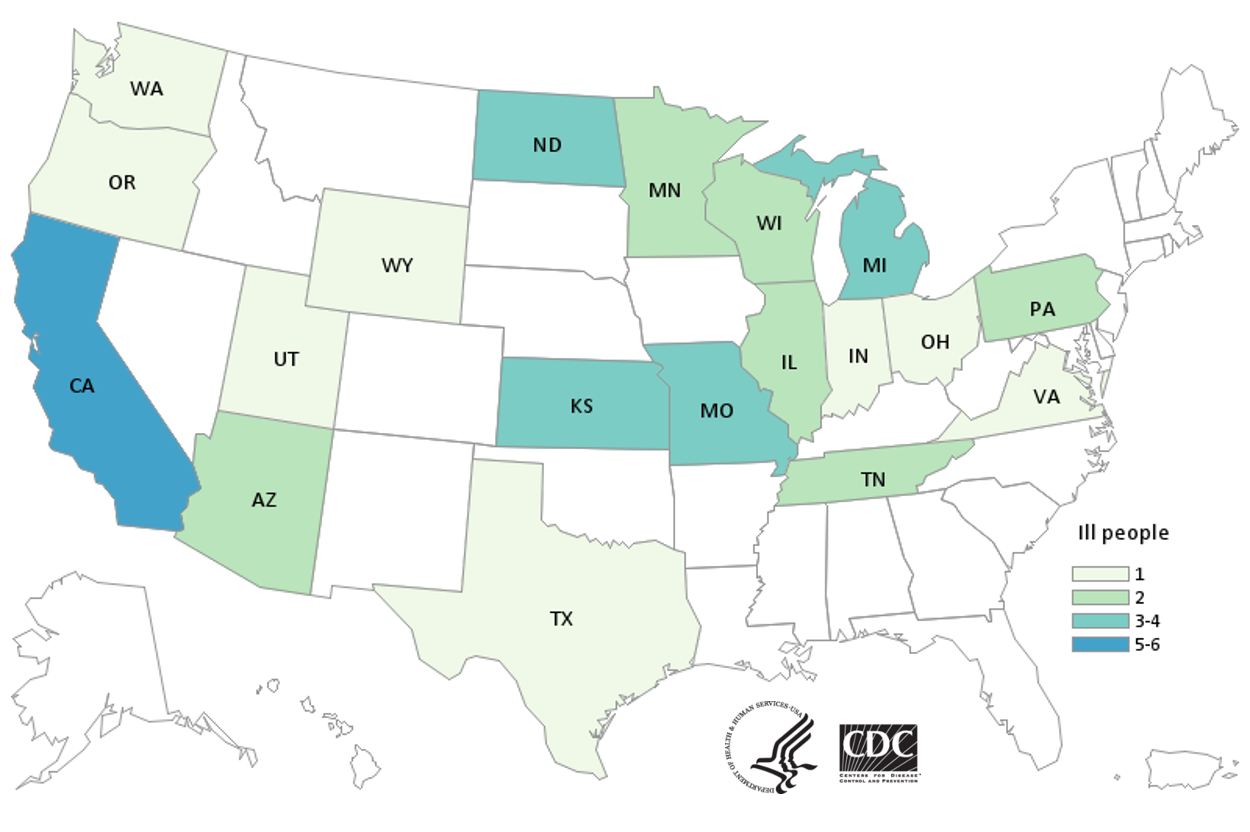
Case Count Map Provided by CDC

Outbreak Investigation of of E. coli in Leafy Greens (December 2020) - Case Count Map from CDC 12/22/2020

Case Counts

Total Illnesses: 40
Hospitalizations: 20 (4 Cases HUS)
Deaths: 0
Last Illness Onset Date: October 31, 2020
States with Cases: AZ (2), CA (6), IL (2), IN (1), KS (4), MI (3), MN (2), MO (3), ND (4), OH (1), OR (1), PA (2), TN (2), TX (1), UT (1), VA (1), WA (1), WI (2), WY (1)
*States with confirmed distribution; product could have been distributed further

Useful Links

Research – Citrinin in Foods and Supplements: A Review of Occurrence and Analytical Methodologies

MDPI

Citrinin (CIT) deserves attention due to its known toxic effects in mammalian species and its widespread occurrence in food commodities, often along with ochratoxin A, another nephrotoxic mycotoxin. Human exposure, a key element in assessing risk related to food contaminants, depends upon mycotoxin contamination levels in food and on food consumption. Commercial supplements, commonly designated as red rice, usually used in daily diets in Asiatic countries due to their medicinal properties, may pose a health problem as a result of high CIT levels. In addition to the worldwide occurrence of CIT in foods and supplements, a wide range of several analytical and detection techniques with high sensitivity, used for evaluation of CIT, are reviewed and discussed in this manuscript. This review addresses the scientific literature regarding the presence of CIT in foods of either vegetable or animal origin, as well as in supplements. On what concerns analytical methodologies, sample extraction methods, such as shaking extraction and ultrasonic assisted extraction (UAE), clean-up methods, such as liquid-liquid extraction (LLE), solid phase extraction (SPE) and Quick, Easy, Cheap, Effective, Rugged and Safe (QuECHERS), and detection and quantification methods, such as thin layer chromatography (TLC), high performance liquid chromatography (HPLC), capillary electrophoresis (CE), biosensors, and ELISA, are also reviewed.

Research – Evolution of a killer: How African Salmonella made the leap from gut to bloodstream

Science Daily

kswfoodworld.com

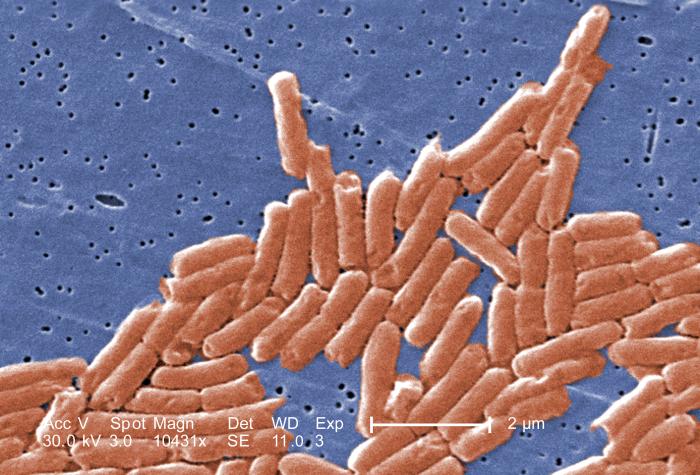
Image CDC

University of Liverpool scientists have exploited the combined power of genomics and epidemiology to understand how a type of Salmonella bacteria evolved to kill hundreds of thousands of immunocompromised people in Africa.

Bloodstream infections caused by a drug-resistant type of Salmonella Typhimurium called ST313 are a major public health concern in Africa, where the disease is endemic and causes ~50,000 deaths each year. What was missing was an understanding of the timing of the major evolutionary events that equipped African Salmonella to cause bloodstream infections in humans.

In a new paper published in Nature Microbiology, a team of researchers from the UK, France and Malawi, sampled two comprehensive collections of Salmonella isolates from African patients with bloodstream infections, spanning 1966 to 2018, to piece together the evolutionary journey of the Salmonella over 50 years of human infections in Africa, including the discovery of a new lineage of antibiotic-susceptible ST313.

The study was led by Professor Jay Hinton at the University of Liverpool, who has been researching Salmonella for more than 30 years and leads the 10,000 Salmonella Genomes Project — a worldwide effort to understand the epidemiology, transmission and virulence of invasive non-Typhoidal Salmonellosis.

Professor Hinton said: “Through a remarkable team effort we have removed some of the mystery about the evolution of African Salmonella. We hope that by learning how these pathogens became able to infect the human bloodstream we will be better prepared to tackle future bacterial epidemics.”


India – Kerala health minister on Shigella outbreak: ‘Everything is under control’

Outbreak News Today

Shigella - kswfoodworld

After a suspected Shigella outbreak that claimed the life of an 11-year old child in the city of Kozhikode, Kerala health prime minister KK Shailaja has stated that the aforementioned outbreak has been ‘under control’ by health authorities.

“An 11-year-old child died last week in Kozhikode. After that tests have been done for about fifty suspected cases and six have been infected. Now, only two are in the hospital while others have been discharged,” she said.

She further added that the Shigella bacteria is prevalent in densely populated areas, through contaminated water.

The health department has conducted an awareness campaign and set up medical camps. Wells in the area were chlorinated,” Shailaja commented, while stressing health authority directives that people should first boil their water before consuming.