Research – Investigation and Follow-Up of a Staphylococcal Food Poisoning Outbreak Linked to the Consumption of Traditional Hand-Crafted Alm Cheese

MDPI

Staph

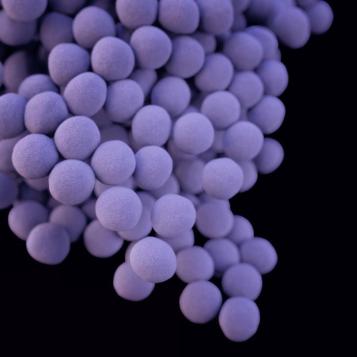
Image CDC

Staphylococcal food poisoning (SFP) is one of the most important foodborne diseases. This work describes a SFP event linked to the consumption of alm cheese and involved three people belonging to the same family. Leftovers of the consumed cheese, samples from the grocery store and the producing alm were collected and tested for Coagulase positive staphylococci (CPS) enumeration and for the presence of staphylococcal enterotoxins (SEs). Isolates were typed with MLST, spa typing, and tested for SEs and methicillin resistance genes. An in vitro test evaluated SEs production in relation to bacterial growth. The presence of CPS and SEs was detected in all cheese samples and all isolates belonged to the same methicillin sensitive ST8/t13296 strain harbouring sed, ser and sej genes. The in vitro test showed the production of enterotoxins started from 105 CFU/mL. The farmer was prescribed with corrective actions that led to eradication of the contaminating strain. View Full-Text

Research – Photocatalytically Enhanced Inactivation of Internalized Pathogenic Bacteria in Fresh Produce using Ultraviolet Irradiation with Nano-titanium Dioxide

Journal of Food Protection

Once pathogens are internalized in fresh produce, they pose a challenging food safety issue since they are not effectively inactivated by conventional rinsing or sanitization. To protect food safety and public health, the objectives were to examine internalized levels of foodborne pathogens in different types of fresh produce and to investigate the effectiveness of photocatalytically enhanced inactivation of internalized pathogens in fresh produce using UV irradiation with titanium dioxide (TiO 2 ). For this, green fluorescent protein-labeled S. Typhimurium and E. coli O157:H7 were inoculated on the leaf surface of four types of fresh produce (~10 8 CFU (colony-forming unit)/leaf) and varying concentrations of TiO 2 suspension (0.50, 0.75, 1.00, 1.25, and 1.50 µg/ml)) were applied to the surface of contaminated leaves. Depending on the nature of each vegetable, the internalized bacterial level differed (log 2 – 5 CFU/g of leaf). When UV irradiation (6,000 J/m 2 ) was applied, the internalized S. Typhimurium and E. coli levels were reduced by 0.8 – 2.4 log CFU/leaf and was with TiO 2 , the reduction was 1.1 – 3.7 log CFU/leaf. The inactivation efficiency increased as the TiO 2 concentration (up to 1.50 μg/leaf). These results indicate that the TiO 2 application enhanced the photocatalytic inactivation of internalized foodborne pathogens. The application of TiO2 would be most practical before UV irradiation and before distributing the produce. This study established a platform for future research on the inactivation of various internalized pathogens for protecting public health and scaling up fresh produce treatments by the food industry.

Research – Antimicrobial Blue Light versus Pathogenic Bacteria: Mechanism, Application in the Food Industry, Hurdle Technologies and Potential Resistance

MDPI

Blue light primarily exhibits antimicrobial activity through the activation of endogenous photosensitizers, which leads to the formation of reactive oxygen species that attack components of bacterial cells. Current data show that blue light is innocuous on the skin, but may inflict photo-damage to the eyes. Laboratory measurements indicate that antimicrobial blue light has minimal effects on the sensorial and nutritional properties of foods, although future research using human panels is required to ascertain these findings. Food properties also affect the efficacy of antimicrobial blue light, with attenuation or enhancement of the bactericidal activity observed in the presence of absorptive materials (for example, proteins on meats) or photosensitizers (for example, riboflavin in milk), respectively. Blue light can also be coupled with other treatments, such as polyphenols, essential oils and organic acids. While complete resistance to blue light has not been reported, isolated evidence suggests that bacterial tolerance to blue light may occur over time, especially through gene mutations, although at a slower rate than antibiotic resistance. Future studies can aim at characterizing the amount and type of intracellular photosensitizers across bacterial species and at assessing the oxygen-independent mechanism of blue light—for example, the inactivation of spoilage bacteria in vacuum-packed meats. View Full-Text

Luxembourg – Pet Food – MULTIFIT NATIVE BRAND “HÜHNERHÄLSE” CHICKEN NECK RECALL – PRESENCE OF SALMONELLA

SAP

Danger  : Presence of Salmonella

Last name Hühnerhälse
Mark Multifit Native
Unit 200 g
Date of Minimum Durability (DDM) 04/28/2022
Lot 261020

Risk of salmonellosis

People who handle dog food contaminated with Salmonella are at risk of getting salmonellosis.
The salmonella can cause symptoms such as nausea, vomiting, abdominal cramps, diarrhea, fever and headache in 6 to 72 hours after consumption. These symptoms may be aggravated in young children, immunocompromised individuals and the elderly. In this case, please consult a doctor.

RASFF Alerts – Salmonella – Chicken Fillets – Chicken Doner – Chicken Wings – Chicken Quarter – Chicken Fillet and Goulash Meat – Smoked Trout Fillets

European Food Alerts

RASFF

Salmonella enterica ser. Enteritidis (presence /25g) in chilled chicken fillets from the Netherlands in the Netherlands

RASFF

Salmonella enterica ser. Infantis (presence /25g) in chilled chicken fillets from the Netherlands in Denamark

RASFF

Salmonella (presence /25g) in frozen chicken doner from Romania in Romania

RASFF

Salmonella (presence /25g) in chicken wings from Poland in Lithuania

RASFF

Salmonella (presence /25g) in chicken quarter from Poland in Poland

RASFF

Salmonella enterica ser. Enteritidis (in 4 out of 5 samples /25g) in chilled chicken fillet and goulash meat from Poland in Lithuania

RASFF

Listeria monocytogenes (< 10 CFU/g) in smoked trout fillets from Denmark in the Netherlands

RASFF Alerts – Listeria monocytogenes – Chilled Smoked Salmon – Cooked Chicken Cuts – Pizza Baguette with Ham – Smoked Trout Fillets – Cooked Sausages with Smoked Garlic

European Food Alerts

RASFF

Listeria monocytogenes (<10 CFU/g) in chilled smoked salmon from the United Kingdom, via Germany in Switzerland

RASFF

Listeria monocytogenes (presence /25g) in frozen cooked chicken cuts from Austria in Switzerland

RASFF

Listeria monocytogenes (160 to 2900 CFU/g) in pizza baguette with ham from Poland in Poland

RASFF

Listeria monocytogenes (< 10 CFU/g) in smoked trout fillets from Denmark in the Netherlands

RASFF

Listeria monocytogenes (350 CFU/g) in cooked sausages with smoked garlic from France in France

RASFF Alert- STEC E.coli – Vacuum Packed Beef Salami

European Food Alerts

RASFF

shigatoxin-producing Escherichia coli ( stx1+ stx2+ /25g) in vacuum-packed beef salami from Slovenia in Slovenia

RASFF Alert – Mycotoxin – Ochratoxin A – Dried Figs

European Food Alerts

RASFF

ochratoxin A (28.8 mg/kg – ppm) in dried figs from Turkey in Germany

RASFF Alert – Foodborne Outbreak – Salmonella – Courgettes

European Food Alerts

RASFF

foodborne outbreak suspected to be caused by Salmonella enterica ser. Kedougou in courgettes from the Netherlands and Spain in Finland

RASFF Alert – Moulds – Sesame Seeds

European Food Alerts

RASFF

sesame seeds from Nigeria, via Turkey infested with moulds in the Netherlands