Category Archives: Toxin

Research – Underreported Human Exposure to Mycotoxins: The Case of South Africa

MDPI

South Africa (SA) is a leading exporter of maize in Africa. The commercial maize farming sector contributes to about 85% of the overall maize produced. More than 33% of South Africa’s population live in rural settlements, and their livelihoods depend entirely on subsistence farming. The subsistence farming system promotes fungal growth and mycotoxin production. This review aims to investigate the exposure levels of the rural population of South Africa to dietary mycotoxins contrary to several reports issued concerning the safety of South African maize. A systematic search was conducted using Google Scholar. Maize is a staple food in South Africa and consumption rates in rural and urban communities are different, for instance, intake may be 1–2 kg/person/day and 400 g/person/day, respectively. Commercial and subsistence maize farming techniques are different. There exist differences influencing the composition of mycotoxins in food commodities from both sectors. Depending on the levels of contamination, dietary exposure of South Africans to mycotoxins is evident in the high levels of fumonisins (FBs) that have been detected in SA home-grown maize. Other potential sources of exposure to mycotoxins, such as carryover effects from animal products and processed foods, were reviewed. The combined effects between FBs and aflatoxins (AFs) have been reported in humans/animals and should not be ignored, as sporadic breakouts of aflatoxicosis have been reported in South Africa. These reports are not a true representation of the entire country as reports from the subsistence-farming rural communities show high incidence of maize contaminated with both AFs and FBs. While commercial farmers and exporters have all the resources needed to perform laboratory analyses of maize products, the greater challenge in combatting mycotoxin exposure is encountered in rural communities with predominantly subsistence farming systems, where conventional food surveillance is lacking.
RASFF Alert – Shellfish Toxins – Oysters

RASFF

Azaspiracid toxins above the regulatory limit in oysters from Ireland in France

New Zealand – Public health warning for shellfish extended for West Coast, North Island – PSP – Toxins

MPI

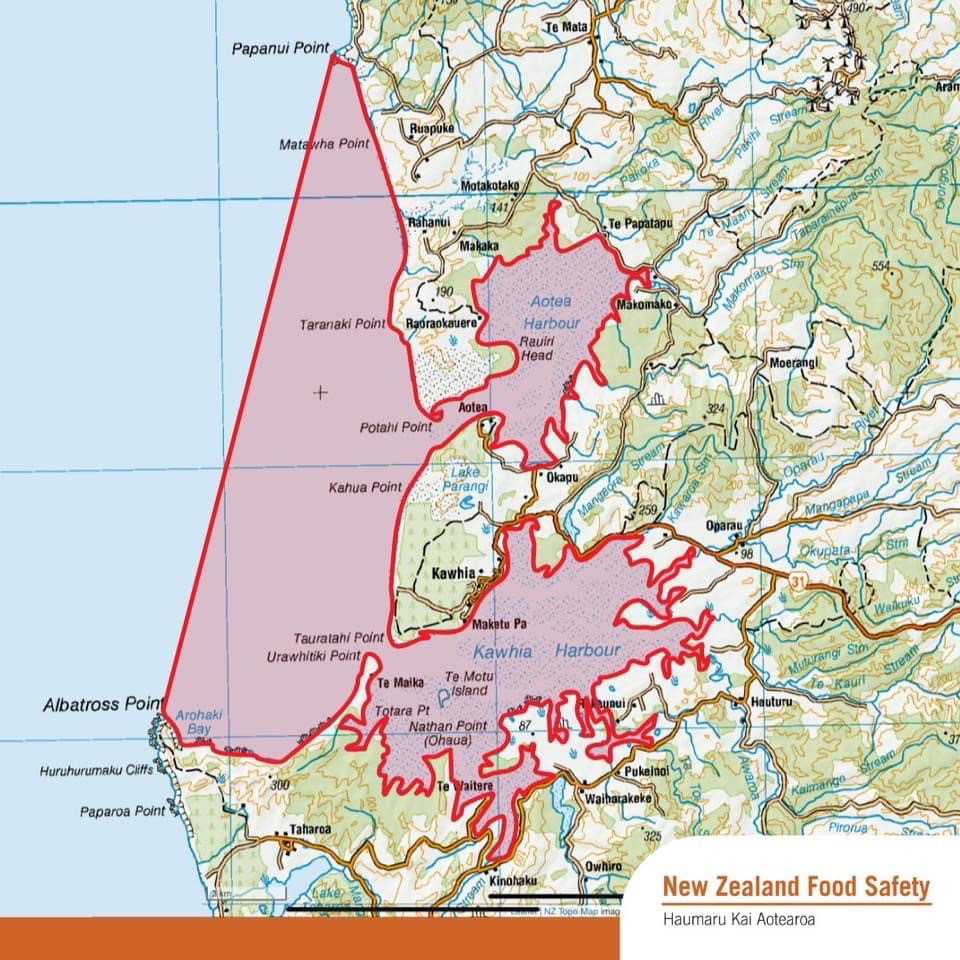
Map of the affected area in the Kawhia Harbour area, West Coast, North Island

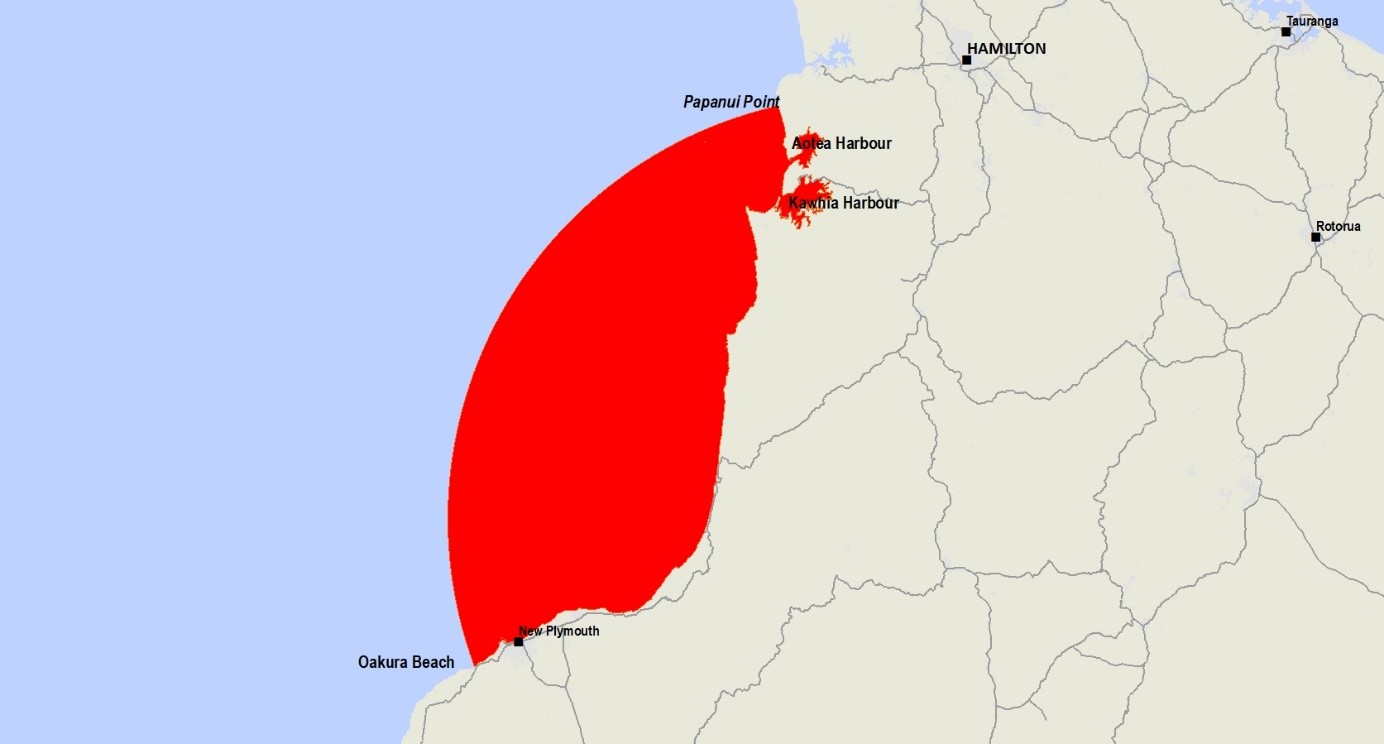
New Zealand Food Safety today extended a public health warning against collecting shellfish in the Waikato region and have extended this south to the Taranaki region. The public health warning now applies to the coastline from Papanui Point (south of Raglan), south to Oakura Beach. Paralytic shellfish toxins have been detected at levels above the safe limit set by MPI.

Routine tests on shellfish samples taken from this region have shown levels of Paralytic Shellfish Poisoning (PSP) toxins above the safe limit of 0.8 mg/kg set by New Zealand Food Safety. Anyone eating shellfish from this area is potentially at risk of illness.

Mussels, oysters, tuatua, pipi, toheroa, cockles, scallops, catseyes, kina (sea urchin), and all other bivalve shellfish should not be eaten.

Note, cooking shellfish does not remove the toxin.

Pāua, crab, and crayfish may still be eaten if the gut has been completely removed prior to cooking, as toxins accumulate in the gut. If the gut is not removed, its contents could contaminate the meat during the cooking process.

Symptoms typically appear between 10 minutes and 3 hours after ingestion and may include:

  • numbness and a tingling (prickly feeling) around the mouth, face, and extremities (hands and feet)
  • difficulty swallowing or breathing
  • dizziness
  • headache
  • nausea
  • vomiting
  • diarrhoea
  • paralysis and respiratory failure and in severe cases, death.

If anyone becomes ill after eating shellfish from an area where a public health warning has been issued, phone Healthline for advice on 0800 61 11 16, or seek medical attention immediately. You are also advised to contact your nearest public health unit and keep any leftover shellfish in case it can be tested.

Monitoring of toxin levels will continue and any changes will be communicated accordingly. Commercially harvested shellfish – sold in shops and supermarkets, or exported – is subject to strict water and flesh monitoring programmes by MPI to ensure they are safe to eat.

RASFF Alert – Staphylococcal Toxin Outbreak – Canned Mushrooms

RASFF

Staphylococcal toxin outbreak due to consumption of canned mushrooms (boletus edulis) from Spain

USA – What you need to know about E. coli O157:H7 and its complications during an Outbreak

Food Poison Journal

E. coli O157:H7 is one of thousands of serotypes of Escherichia coli.

E. coli O157:H7 was first recognized as a pathogen in 1982 during an investigation into an outbreak of haemorrhagic colitis associated with consumption of hamburgers from a fast-food chain restaurant. Retrospective examination of more than three thousand E. coli cultures obtained between 1973 and 1982 found only one isolate with serotype O157:H7, and that was a case in 1975. In the ten years that followed, there were approximately thirty outbreaks recorded in the United States. This number is likely misleading, however, because E. coli O157:H7 infections did not become a reportable disease in any state until 1987, when Washington became the first state to mandate its reporting to public health authorities. Consequently, an outbreak would not be detected if it was not large enough to prompt investigation.

E. coli O157:H7’s ability to induce injury in humans is a result of its ability to produce numerous virulence factors, most notably Shiga toxin (Stx), which is one of the most potent toxins known to man. Shiga toxin has multiple variants (e.g., Stx1, Stx2, Stx2c), and acts like the plant toxin ricin by inhibiting protein synthesis in endothelial and other cells. Endothelial cells line the interior surface of blood vessels and are known to be extremely sensitive to E. coli O157:H7, which is cytotoxigenic to these cells.

Spain – Alert for the presence of Staphylococcal toxin in mushrooms fried in olive oil (Boletus edulis)

asca

 09:30
fried mushrooms

New Zealand – Consumers urged not to eat illegal mussels

MPI

New Zealand Food Safety is urging consumers not to eat mussels being sold illegally at independent retailers or online.

The sale of imported mussels is carefully controlled to ensure they meet New Zealand’s food safety requirements. While mussels from Fiji may be brought into New Zealand for personal use, they cannot be sold.

Deputy director general Vincent Arbuckle says Fijian mussels have been removed from sale at some smaller retailers catering to Pacific Island communities, and online.

“As New Zealand Food Safety has not assessed Fiji’s growing, harvesting and processing controls for mussels we cannot be confident that the mussels don’t pose a food safety risk to consumers.”

The mussels are also known as: Nakai, Naakai, Nakaai, Kai, Batissa violacea and Fresh Water Mussels.

“It’s vital that mussels available to buy for members of the public are safe to eat. Knowing where the mussels you want to buy have come from can help reduce the risk of any potential health problems.

“Our message to people buying mussels is that if you are in any doubt, ask the retailer where the product has come from. If it is from Fiji, the mussels should not be for sale.”

Mussels are a higher risk food because of the way they feed, which increases the likelihood of contamination from bacteria, viruses, toxins and chemicals.

New Zealand – North Island warning Kawhia Harbour area, West Coast -PSP

MPI

North Island warning

Kawhia Harbour area, West Coast

Reason for alert Paralytic Shellfish Poisoning (PSP)

Date warning issued 17 August 2022

Media release

Affected area From Albatross Point across to Papanui Point, Including Kahwia and Aotearoa Harbours, West Coast North Island.
Shellfish affected Mussels, oysters, tuatua, pipi, toheroa, cockles, scallops, catseyes, kina (sea urchin) and all other bivalve shellfish.

Note, cooking shellfish does not remove the toxin.

Pāua, crab and crayfish may still be eaten if the gut has been completely removed prior to cooking, as toxins accumulate in the gut. If the gut is not removed its contents could contaminate the meat during the cooking process.

Symptoms Symptoms typically appear between 10 minutes and 3 hours after ingestion and may include:

  • numbness and a tingling (prickly feeling) around the mouth, face, and extremities (hands and feet)
  • difficulty swallowing or breathing
  • dizziness
  • headache
  • nausea
  • vomiting
  • diarrhoea
  • paralysis and respiratory failure and in severe cases, death.
Other information Paralytic shellfish toxins have been detected in shellfish at levels over the safe limit of 0.8mg/kg set by MPI. Ongoing testing will continue and any changes will be communicated accordingly.

Map of affected area

Map of the affected area in the Kawhia Harbour area, West Coast, North Island
Map of the affected area Kawhia Harbour area, West Coast

Japan – 14 children in Japan sent to hospital in suspected mass food poisoning

Mainichi

Fourteen members of a children’s club were taken to hospital on Aug. 9 during a visit to a swimming pool in Sammu, Chiba Prefecture, in a suspected case of mass food poisoning.

Chiba Prefectural Police’s Sammu Police Station explained that about 50 children were on the children’s club visit to Hasunuma Water Garden in the city. At least 19 members began to complain that they felt sick about an hour after they ate lunch at around noon. They had eaten rice balls that had been made that morning. The rice balls were apparently not chilled after being made, leading police to suspect food poisoning.

Sri Lanka – Customs probing seized coconut oil bowsers amid Aflatoxin scare

Economy Next

Sri Lanka customs has taken into their custody two bowsers which were said to contain coconut oil, an official said amid a scare involving aflatoxin contaminated oil being released to the market.

The two bowsers said to contain 55,000 liters of oil destined to a coconut oil refining company had been handed over to Sri Lanka Customs by Dankotuwa police.

“Currently they are being handed over to the Customs Preventive Directorate,” Director General of the Customs Vijitha Ravipriya told reporters Wednesday.

“We are now investigating. However, the bowsers have not been opened yet to see whether it is, unrefined oil, refined oil or some other substances.”