Category Archives: Food Micro Blog

France – SMOKED SALMON GROWN IN SCOTLAND 4 SLICES – 140G – Listeria monocytogenes

Gov france

Identification information of the recalled product

  • Product category Feed
  • Product subcategory Fishery and aquaculture products
  • Product brand name ROUND THE SEAS
  • Model names or references SMOKED SALMON GROWN IN SCOTLAND 4 SLICES – 140G
  • Identification of products
    GTIN Batch Date
    3564706552609 BATCH F2360477 Use-by date 09/23/2022
  • Packaging PACK OF 140G COMPOSED OF 4 SLICES
  • Marketing start/end date From 08/26/2022 to 09/08/2022
  • Storage temperature Product to be stored in the refrigerator
  • Health mark EN 76.664.003 EC
  • Further information ONLY PRODUCTS BEARING THE ADDITIONAL CODE 02 FOLLOWING THE BARCODE ARE CONCERNED BY THE RECALL.
  • Geographic area of ​​sale Whole France
  • Distributors E.LECLERC

Practical information regarding the recall

  • Reason for recall Risk of presence of Listeria monocytogenes in the product.
  • Risks incurred by the consumer Listeria monocytogenes (causative agent of listeriosis)
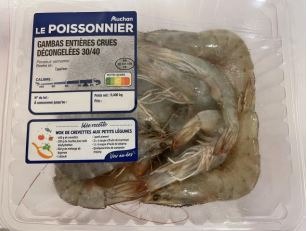
FranceWhole raw thawed king prawns Auchan Le Poissonnier – vibrio vulnificus

Gov france

Identification information of the recalled product

  • Product category Feed
  • Product subcategory Fishery and aquaculture products
  • Product brand name Auchan Le Poissonnier
  • Model names or references400g trays
  • Identification of products
    GTIN Batch Date
    3254562419603 Lot 36890 Use-by date 08/09/2022
    3254562419603 Lot 37169 Use-by date 09/14/2022
  • Products ListPoster_crev_floes.pdfAttachment
  • Packaging400g tray
  • Marketing start/end date From 30/08/2022 to 08/09/2022
  • Storage temperature Product to be stored in the refrigerator
  • Health mark FR 56 121 179 EC
  • Geographic area of ​​sale Whole France
  • Distributors Auchan hypermarket

Practical information regarding the recall

  • Reason for recall Vibrio vulnificus
  • Risks incurred by the consumer Vibrio vulnificus

Italy –  Maccagno – STEC E.coli

Salute

Brand : Antoniotti Michela

Name : Maccagno

Reason for reporting : Recall due to microbiological risk

Publication date : 9 September 2022

Documentation

Documentation

Research – Underreported Human Exposure to Mycotoxins: The Case of South Africa

MDPI

South Africa (SA) is a leading exporter of maize in Africa. The commercial maize farming sector contributes to about 85% of the overall maize produced. More than 33% of South Africa’s population live in rural settlements, and their livelihoods depend entirely on subsistence farming. The subsistence farming system promotes fungal growth and mycotoxin production. This review aims to investigate the exposure levels of the rural population of South Africa to dietary mycotoxins contrary to several reports issued concerning the safety of South African maize. A systematic search was conducted using Google Scholar. Maize is a staple food in South Africa and consumption rates in rural and urban communities are different, for instance, intake may be 1–2 kg/person/day and 400 g/person/day, respectively. Commercial and subsistence maize farming techniques are different. There exist differences influencing the composition of mycotoxins in food commodities from both sectors. Depending on the levels of contamination, dietary exposure of South Africans to mycotoxins is evident in the high levels of fumonisins (FBs) that have been detected in SA home-grown maize. Other potential sources of exposure to mycotoxins, such as carryover effects from animal products and processed foods, were reviewed. The combined effects between FBs and aflatoxins (AFs) have been reported in humans/animals and should not be ignored, as sporadic breakouts of aflatoxicosis have been reported in South Africa. These reports are not a true representation of the entire country as reports from the subsistence-farming rural communities show high incidence of maize contaminated with both AFs and FBs. While commercial farmers and exporters have all the resources needed to perform laboratory analyses of maize products, the greater challenge in combatting mycotoxin exposure is encountered in rural communities with predominantly subsistence farming systems, where conventional food surveillance is lacking.

Research – Aflatoxins Contamination in Raw and Roasted Cashew nuts in Mtwara, Tanzania

AJMR

The aim of this work was to determine the contamination levels of raw and roasted cashew nuts sold in Masasi and Newala districts of Mtwara region in Tanzania. A total of 60 samples including 40 roasted (24 samples from Newala and 16 from Masasi) and 20 raw samples (12 from Newala and 8 from Masasi) were collected. Determination of total aflatoxins levels in raw and roasted cashew nuts samples was carried out by immune affinity high performance liquid chromatography (HPLC). The levels of contamination ranged from not detected (less than Limit of Quantification) to 3.29 µg/kg for both aflatoxin B1 and total aflatoxin in the cashew nuts samples. None of the samples had total aflatoxins contamination greater than the recommended maximum residues of 4 µg/kg set by European Commission (2010) or 10 µg/kg set by FAO and WHO (1995). About a quarter (38%) of the samples had total aflatoxins less than limit of quantification. All roasted cashew nut samples were found to have total aflatoxins less than 3 µg/kg while about 86% of raw cashew nut samples had total aflatoxins less than 3 µg/kg.

Research – Examining the Effect of Organic Acids on Inactivation of Hepatitis E Virus

Journal of Food Protection

Infection with hepatitis E virus genotype 3 (HEV-3) is an emerging cause of illness in developed countries. In North America and Europe, HEV-3 has been increasingly detected in swine, and exposure to pigs and pork products is considered the primary source of infection. We have previously demonstrated the prevalence of the HEV-3 genome in commercial pork products in Canada. In this study, we investigated the application of citric acid and acetic acid to inactivate HEV-3 on food and on food-contact surfaces. For this purpose, plastic, stainless steel and pork pâté surfaces were inoculated with HEV-3 and were treated with acetic acid or citric acid at 1%, 3%, or 5%. The infectivity of post treatment viral particles was determined by cell culture. A greater than 2-log reduction in viral infectivity was observed on plastic and stainless steel treated with the organic acids, but the treatment was much less effective on HEV infectivity on pork pâté (average reductions of 0.47 log citric acid, and 0.63 log acetic acid). Therefore, we conclude that citric acid and acetic acid have potential application to control HEV-3 on food contact surfaces, but are not suitable for food.

Research Paper Sunlight Parameters Influence the Survival and Decline of Salmonella and Escherichia coli in Water

Journal of Food Protection

The effect of variations in temperature, ultraviolet (UV) radiation, and sunlight intensity on generic Escherichia coli , E. coli O157:H7, Salmonella Newport and antibiotic resistant (ABR) variants of E. coli O157:H7 and S . Newport exposed to sunlight was evaluated. Bacterial strains suspended in sterile deionized water at a concentration of 8 log CFU/ml were exposed to sunlight on three different days for 180 min; control treatments were stored in the dark. The mean temperature of 30.08 and 26.57℃ on day 1 and 3 were significantly different (p<0.05). The UV intensity was significantly different on all three days and sunlight intensity significantly differed on day 3 (p<0.05). Bacterial population decline positively correlated with temperature, sunlight and UV intensity. Differences in bacterial population declines differed among specie, antibiotic resistance (ABR) profile and day of exposure. (p<0.05). On days 1 and 2, the populations of generic E. coli dropped below the limit of detection (1 log CFU/ml) while the % of live cells was 67% and 6.6% respectively. The artificial neural network model developed to predict bacterial survival under different environmental conditions suggested that Salmonella cells were more resistant than E. coli . The ABR strains had significantly higher viable cells after sunlight exposure (p<0.05). Sunlight exposed cells resuscitated in TSB varied in maximum population density and maximum growth rate based on bacterial species and presence of antibiotic resistance. Morphological changes such as viable but non-culturable (VBNC) state transition and filament formation was detected in sub-populations of sunlight exposed bacteria. Daily fluctuations in UV and sunlight intensity can result in significant variations in bacterial decline and recovery.

USA – Illinois county reports outbreak of infections from Campylobacter

Food Safety News

Campylobacter kswfoodworld

The McHenry County Department of Health in Illinois is reporting a significant increase in infections from Campylobacter.

Health officials have identified eight cases of campylobacteriosis with illness onsets between Aug. 17 and Aug. 30. That is four times more cases compared to the previous two weeks and 3.33 times more cases in August compared to July.

“No common source of infection has been identified at this time,” according to the health department.

Campylobacter bacteria is the most common cause of bacterial diarrhea in the United States, according to the county health officials. People can become ill with campylobacteriosis by eating contaminated food, drinking contaminated water or having contact with infected animals.

UK – Reading Festival: Investigation into food poisoning outbreak

BBC

An outbreak of food poisoning, after a number of festival-goers fell ill at Reading Festival, is being scrutinized.

Reading Borough Council said it was investigating following reports “relating to suspected food poisoning” at the festival.

Posting on the Reading Festival Community Facebook group, several festival-goers said they were suddenly struck down over the weekend with symptoms including diarrhoea, vomiting, stomach aches and a fever.

Some said they were forced to leave the festival as they were so unwell.

Czech Republic – BREAD DUMPLING – Mold/Mould

Potravinynapranyri

Illustrative photo #1

Illustrative photo #2

Place of inspection:
Doksy – Staré Splavy ( Doksy – Staré Splavy, 471 63 Doksy – Staré Splavy )
ID: 46014713
Food group: Dishes / Side dishes

BREAD DUMPLING
Category: Dangerous foods
Invalid parameter:

fungi visible to the eye

There were visible mold colonies on the surface of the food.

The food had an expired use-by date.

Expiration date: 07/04/2022
Packaging: transparent film with a PAP label
Quantity of the product in the package: 0.8 kg
Date of sample collection: 7/14/2022
Reference number: 22-000363-SZPI-CZ
The sample was detected by the official control of the State Agricultural and Food Inspection.