Category Archives: Toxin

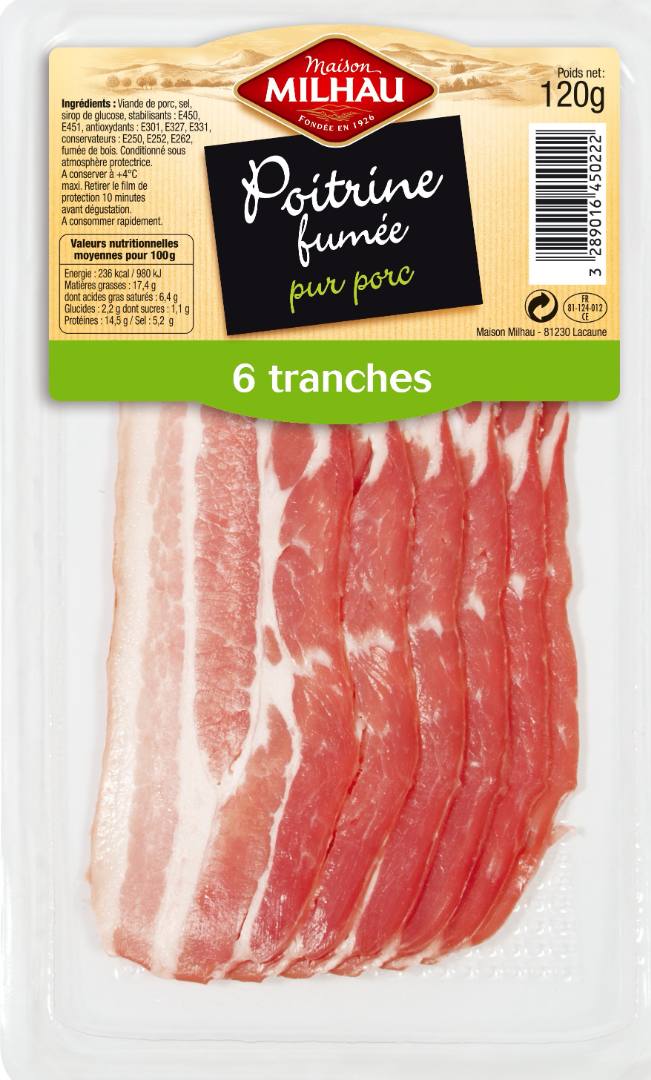
France – Smoked Pork Bacon pack 6 slices 100g – Staphylococcal Enterotoxin

Gov france

Identification information of the recalled product

  • Product category Feed
  • Product subcategory Meats
  • Product brand name MILHAU HOUSE
  • Model names or references Smoked breast pack 6 slices 100g
  • Identification of products
    GTIN Batch Date
    3289010003974 336206 Use-by date 01/26/2023
  • Packaging Under protective atmosphere
  • Marketing start/end date From 07/12/2022 to 15/12/2022
  • Storage temperature Product to be stored in the refrigerator
  • Health mark EN 81.124.012 EC
  • Geographic area of ​​sale Departments: AUDE (11), CHARENTE (16), CHARENTE-MARITIME (17), DORDOGNE (24), GARD (30), HERAULT (34), LANDES (40), LOT (46), HAUTES-PYRENEES (65) , PYRENEES-ORIENTALES (66), TARN (81), TARN-ET-GARONNE (82)
  • Distributors Leclerc, Carrefour, Intermarché, Super U, U Express
  • List of points of saleTraça_ventes_Lot_336206_-_Pack_Poitrine_smoked_6_Tr_100g.pdf

Practical information regarding the recall

  • Reason for recall Presence of staphylococcal enterotoxin

USA – Investigated Illnesses and Outbreaks Table Update for Seafood Related Natural Toxin and Scombrotoxin Fish Poisoning

FDA

January 12, 2023

Table 1: Closed Illness and Outbreak Incidents is a list of investigations that were managed by FDA’s Seafood-Related Natural Toxin and Scombrotoxin Fish Poisoning Team for Fish Other Than Molluscan Shellfish. The listed incidents have been completed at this time.

The table is managed and updated when a significant number of illnesses have been investigated in a specific period of time or at least quarterly.

The table has been updated to illustrate additional information such as

  • Pending analytical results;
  • Confirmed fish/fishery product species identifications; and
  • Completed analytical results are listed in their own column.

The following FDA tracking numbers, and illness type have been added to the table:

  • 20-09-08: CFP;
  • 22-08-15: SFP;
  • 22-08-17: SFP;
  • 22-09-18: SFP;
  • 22-09-20: CFP/SFP;
  • 22-10-21: Unknown;
  • 22-11-22: SFP; and
  • 22-12-23: SFP.

The table may be found at: How to Report Seafood-Related Toxin and Scombrotoxin Fish Poisoning Illnesses | FDA

Research – Evaluation of the dietary exposure of the Catalan population to mycotoxins of the genus Fusarium

ACSA

Within the framework of total diet studies, the Catalan Food Safety Agency (ACSA) publishes a second study on the evaluation of mycotoxins: “Evaluation of the dietary exposure of the Catalan population to mycotoxins of the genus Fusarium”.

In 2014, a first study was published in which the presence of the main mycotoxins in food intended for human consumption in the Catalan market was determined, and the intake of food linked to this contamination to estimate the food exposure of the population residing in Catalonia, and evaluate the risk to health (ACSA, 2014). Considering the results obtained, the ACSA considered it necessary to carry out this second, more specific study on mycotoxins, evaluating those that were found most frequently in the foods of the Catalan market, the mycotoxins of the genus Fusarium, and also taking into account the most exposed population groups.

The present study shows that the mycotoxins detected with greater frequency were DON and ENNB followed, with a much lower frequency, by mycotoxin T-2 and mycotoxins FB1 and DON-3G. The rest of mycotoxins analyzed (3-ADON, 15-ADON, NIV, FUS-X, zearalenone, HT-2, FB2 and FB3) will always present levels below the detection limit.

All the age groups evaluated have an exposure to DON and ENNB lower than the respective safety values. The average exposure of the adult population and children in Catalonia to the mycotoxin DON presents values ​​between 7.5% and 10.1% of the safety value. The average exposure of the population to ENNB presents values ​​​​that are two orders of magnitude lower than the extrapolated safety values.

Total diet studies make it possible to better understand the reality linked to the main chemical pollutants that reach the Catalan market, and in this way specific decisions can be made to correct possible risk situations for the health of consumers.

Research – Control measures for Shiga toxin-producing Escherichia coli (‎STEC)‎ associated with meat and dairy products: meeting report

WHO

Overview

Although Shiga toxin-producing Escherichia coli (STEC) have been isolated from a variety of food production animals, they are most commonly associated with ruminants from which we derive meat and milk. Because of the widespread and diverse nature of ruminant-derived food production, coupled with the near ubiquity of STEC worldwide, there is no single definitive solution for controlling STEC that will work alone or in all situations. Instead, the introduction of multiple interventions applied in sequence, as a “multiple-hurdle scheme” at several points throughout the food chain (including processing, transport and handling) will be most effective.

This report summarizes the review and evaluation of interventions applied for the control of STEC in cattle, raw beef and raw milk and raw milk cheese manufactured from cows’ milk, and also evaluates available evidence for other small ruminants, swine and other animals. The information is presented from primary production, to the end of processing, providing the reader with information on the currently available interventions based on the latest scientific evidence.

This work was undertaken to support the development of guidelines for the control of STEC in beef, raw milk and cheese produced from raw milk by the Codex Committee on Food Hygiene (CCFH).

Report


USA – Botulism from food causes the death of a respected outdoorsman from Jackson Hole

Food Safety News

Wyoming social media reports the death of 55-year-old Hans Russell, who succumbed to botulism after being conscious but also completely paralyzed for several weeks in a Salt Lake City hospital.

Russell was a popular outdoorsman and river guide in Jackson Hole, WY. His death is blamed on a solo camping trip to Idaho where he consumed a can of soup that was not properly refrigerated. The doctors in Salt Lake City who fought to keep him alive came to believe that the single can of soup was the source of the botulism toxin Russell consumed.

RASFF Alert – Histamine – Sardine Fillets

RASFF

Presence of histamine in frozen sardine fillets from Morocco in France and Portugal

France – Sardine Rillettes – Histamine

Gov france

Identification information of the recalled product

  • Product category Feed
  • Product subcategory Fishery and aquaculture products
  • Product brand name Crustar mor
  • Model names or references RISAR650 Sardine rillettes 650g
  • Identification of products
    GTIN Batch Date
    3200746500049 A318 Use-by date 14/11/2023
  • Marketing start/end date From 15/11/2022 to 25/11/2022
  • Storage temperature Product to be stored in the refrigerator
  • Health mark EN 22.272.006 EC
  • Geographic area of ​​sale Whole France
  • Distributors Top Atlantic

Practical information regarding the recall

  • Reason for recall Non-conforming level of histamine in sardines
  • Risks incurred by the consumer Endogenous toxins: histamine (fish, cheese, alcoholic beverages, meats)

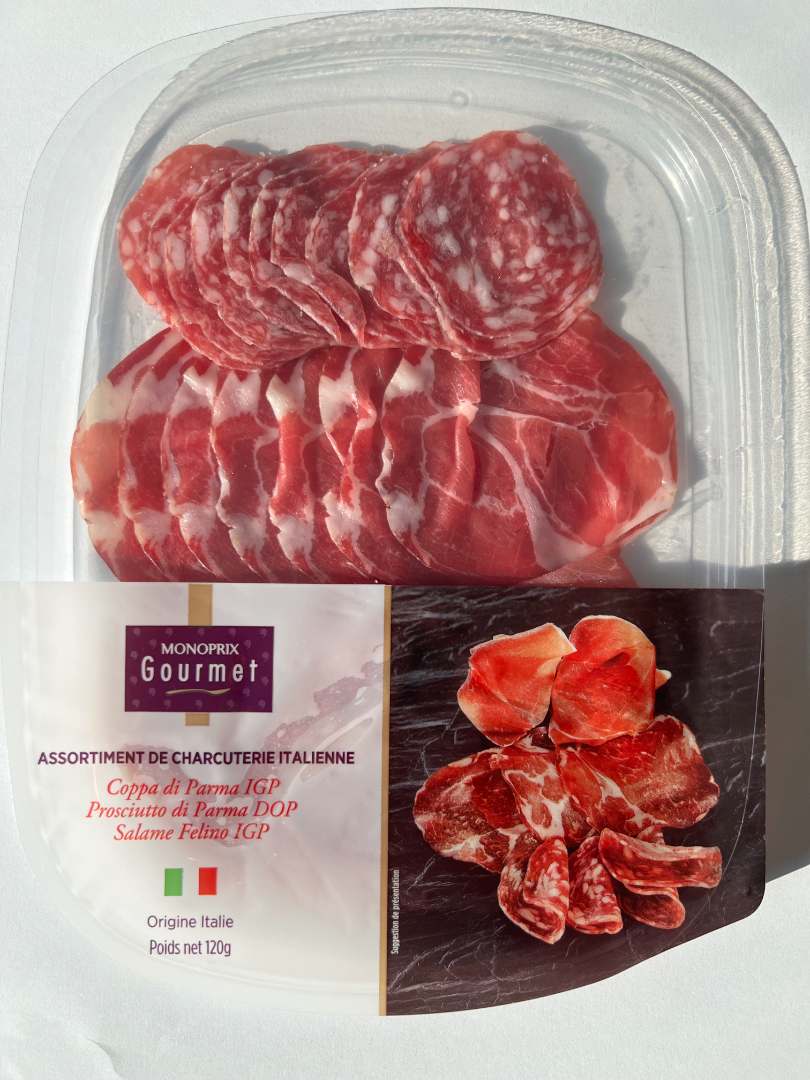
France – Assortment of Italian charcuterie 120 g Monoprix Gourmet – Staphylococcal Toxins

Gov france

Identification information of the recalled product

  • Product category Feed
  • Product subcategory Meats
  • Product brand name Monoprix Gourmet
  • Model names or references120g
  • Identification of products
    GTIN Batch Date
    3350033794573 150123 Date of minimum durability 15/01/2023
  • Packaging Plastic tray 120 g
  • Marketing start/end date From 07/10/2022 to 21/11/2022
  • Storage temperature Product to be stored in the refrigerator
  • Health mark IT 550 L CE
  • Geographic area of ​​sale Whole France
  • Distributors MONO PRICE

Practical information regarding the recall

  • Reason for recall Detection of Staphylococcal Enterotoxins
  • Risks incurred by the consumer Other biological contaminants

Research – The underestimated risk of mycotoxins in dairy cows

All About Feed

It is a myth that rumen microbial activity allows dairy cows to handle mycotoxin toxicity completely. A closer look at rumen degradation capability shows that this is not the case. Therefore, a mitigation strategy should be holistic, practical and beyond binding.

Risk, impact, and diagnostics

A complex and diverse Total Mixed Ration (TMR) poses multiple mycotoxin toxicity challenges. Although rumen microbes can reduce the toxicity of some mycotoxins, not all mycotoxins are equally degraded in the rumen. In high-yielding dairy cows high-starch diets can compromise the detoxification capacity of rumen microbes. For some mycotoxins, such as zearalenone (ZEN), rumen degradation may increase the toxicity. Furthermore, extended periods of exposure to low levels of multiple mycotoxins may lead to chronic toxicity, an increasing issue that is notoriously difficult to diagnose at an early stage.

Mycotoxins can threaten dairy cows’ health, rumen function, feed intake, milk yield, milk quality, lameness, and reproductive abilities. Many “mouldy silage syndrome” cases in the field have shown incidences of increased somatic cell counts, undigested faecal feed particles, laminitis, mastitis and ruminitis cases. Cases of reproductive challenges and vaccination failures have been reported with multiple mycotoxins in TMR.

Read more at the link above

RASFF Alerts – Histamine – Gruyere Cheese – Sardines – Anchovy Fillets

RASFF

Elevated Levels of Histamine and Tyramine in Gruyere Raw Milk Cheese from France in Ireland

RASFF

Histamine levels above allowed in semi-preserved sardines from Morocco in Spain

RASFF

Histamine in salted anchovy fillets from Croatia in Serbia