Category Archives: Food Toxin

Belgium – Exotic City – “Africa Village” brand roasted peanuts. – Aflatoxin

AFSCA

In agreement with the AFSCA, Exotic City is withdrawing the Roasted Peanuts product from sale and is recalling consumers.

Product Description

Roasted
peanuts Product category: peanuts
Brand: Africa Village
Date of Minimum Durability (MDD): 31-12-2022
Weight: 350g


Exotic City requests not to consume these products and to bring them back to the point of sale where they are have been purchased.

The product is sold via:

– EXOTIC CITY – avenue de l’Expansion 1, 4432 ALLEUR
– BUDDHA – Zwijnaardsesteenweg 752, 9000 Gent
– KAUSAR ETHNIC MARKET 2 – Place du marche 12, 4000 Liège
– NKUDABAGENZI ALBIN – Rue De Gilly 28, 6200 CHÂTELINEAU
– OPERA SHOP – George Clemenceau 35A, 4000 Liège
– SAVEUR DE EXOTIC NAMUR – Rue Rogier 46, 5000 Namur

For any further information , you can contact: direction@exoticcity.be – admin@exoticcity.be
Tel: + 32 / 4.228 .04.00

France – Cora brand Gorgonzola PDO 150g – Listeria monocytogenes

Oulah

Product recall: Cora brand Gorgonzola PDO 150g

ENCOUNTERED PROBLEM

Presence of listeria

PROPOSED SOLUTION

People who hold this product are asked not to consume it and to return it to the point of sale where it was purchased for refund or exchange.

People who have consumed this product and who have a fever, isolated or accompanied by headaches, are invited to consult their attending physician, notifying them of this consumption.
Pregnant women should pay special attention to these symptoms, as well as immunocompromised people and the elderly. These symptoms may suggest listeriosis, a disease that can be serious and can take up to eight weeks to incubate.

FURTHER INFORMATION

▸ Barcode
3.257.986.760.115

▸ Lot
P 230005

▸ DLC
01/10/2020

▸ Source
https://www.cora.fr/


Canada – N.B. declares outbreak of shellfish bacteria causing gastrointestinal illness – Vibrio parahaemolyticus

Global News CA

Food Illness - Vibrio

Image CDC

New Brunswick health officials have declared an outbreak of vibrio parahaemolyticus, a bacteria found in shellfish that causes gastrointestinal illness in humans.

The province says nine cases of vibrio have been confirmed. The average for New Brunswick is typically only two to three cases a year.

“I am advising all New Brunswickers to ensure that they obtain shellfish and other seafood from a licensed establishment or harvest shellfish from fishing zones which are currently open by Fisheries and Oceans Canada,” said N.B. chief of health Dr. Jennifer Russell in a news release.

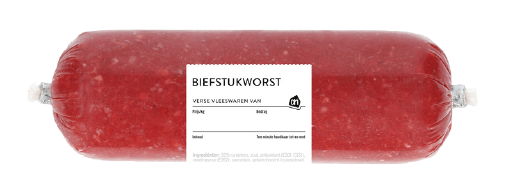
Belgium – ALBERT HEIJN AH Biefstukworst (beef sausage). – Possible Micro Contamination

AFSCA

In agreement with the AFSCA, Albert Heijn is withdrawing from sale the beef sausage ‘AH Biefstukworst’ of the Albert Heijn brand and is recalling this product to consumers. There is a risk of food poisoning associated with the consumption of this product, due to the possible presence of microbiological contamination. Consumption of this product may therefore pose a risk to health – especially in young children, the elderly, people with weakened immune systems and pregnant women.

Albert Heijn asks his customers not to consume this product and to bring it back to the point of sale where it was purchased. The product will be refunded or exchanged there. Please contact a doctor if you have any health problem.

Product description

• Product category: Beef sausage
• Product name:: AH Biefstukworst
• Brand: Albert Heijn
• Date of minimum durability (DDM): 21-09-2020
• Sales period: from 03/09/2020 to 09/18/2020
• Type of packaging: plastic packaging
• Weight: 200 g

For any further information , please contact Albert Heijn on 0800 777 05

Netherlands – AH steak sausage 200 grams – E.coli

NVWA

Important safety warning AH steak sausage 200 grams

Albert Heijn has decided on the AH Steak sausage st. 200 grams from the stores. With the AH Steak sausage st. 200 grams with an expiry date of 21 September 2020, the bacterium e.coli was found.

Albert Heijn urges customers not to eat AH steak sausage and to bring it back to an Albert Heijn store, where they will be reimbursed for the purchase price upon return of the product.

See also the Albert Heijn website

E.coli

Eating a product with an E. coli bacteria (faeces bacteria, STEC, EHEC) can, if not thoroughly cooked, result in nausea, vomiting and (bloody) diarrhea within a week. Especially for young children, the elderly, people with low immunity and pregnant women. Consult your doctor or general practitioner for more information if you have health complaints after eating the said product.

Download ‘Important safety warning AH steak sausage 200 grams’

PDF document | 1 page | 97 KB

Warning | 19-09-2020

Steak sausage AH

Research – Surveillance of foodborne disease outbreaks in China, 2003–2017

Science Direct

Foodborne disease remains a major public health problem worldwide. To understand the epidemiology and changes of foodborne disease in China, data reported to the National Foodborne Disease Outbreak Surveillance System during 2003–2017 were collected. A total of 19,517 outbreaks, which resulted in 235,754 illnesses, 107,470 hospitalizations, and 1,457 deaths, were reported in this period. Of the 13,307 outbreaks with known etiology, 31.8% of outbreaks were caused by poisonous mushrooms, followed by Vibrio parahaemolyticus (11.3%), saponin (8.0%), Salmonella (6.8%), nitrite (6.4%), pesticide (4.8%), Staphylococcus aureus (4.2%) and Bacillus cereus (3.0%). Among 18,955 outbreaks with reported setting, 46.6% were associated with food prepared in a household, followed by 22.5% with food prepared in a restaurant, and 18.4% prepared in a canteen. Of the 13,305 outbreaks associated with a single food category, fungi (mainly poisonous mushroom) were the most commonly implicated food category, followed by meats, vegetables, aquatic animals, condiments, poisonous plants (such as saponin, tung oil or seed, aconite) and grains (such as rice, noodle, rice noodle). Analysis of foodborne disease outbreaks can provide insight into the most important causative agents and sources of foodborne disease, and assist public health agencies determine the high-risk etiology and food pairs, specific points of contamination and settings to reduce foodborne disease illnesses.

Research – Potential of pulsed electric field to control Aspergillus parasiticus, aflatoxin and mutagenicity levels: Sesame seed quality

Wiley Online

kswfoodworld

Image CDC

Seed processing technologies are essential for seed safety and functionality through protection of physicochemical quality, pathogen inactivation, aflatoxin detoxification and alleviation of mutagenicity. Design of a pilot‐scale unit of pulsed electric fields (PEF) to treat sesame seeds with respect to quality parameters, Aspergillus parasiticus inactivation and aflatoxin reduction as well as alleviation of aflatoxin mutagenicity were prompted in this study. PEF energy ranged from 0.97 to 17.28 J achieved maximum reductions of peroxide value and acidity number of 67.4 and 85.7%, respectively, and did not change color L*, a*, b* and hue values. A 60% reduction of A. parasiticus counts occurred at the maximum PEF energy. Aflatoxins G1, G2, B1, and B2 contents decreased by 94.7, 92.7, 86.9, and 98.7%, respectively. Except for the samples treated by 2.16 J with 100 μg/plate and by 6.80 J with 10 μg/plate, PEF treatment provided elimination of aflatoxin mutagenity. It is concluded that PEF treatment can be used to treat sesame seeds with preservation of physicochemical properties, inactivation of A. parasiticus and decomposition of aflatoxins with reduced mutagenicity.

Research – Human Norovirus strains differ in sensitivity to the body’s first line of defense

Science Daily

Interferon (IFN) responses are one of the first defenses the body mounts against viral infections, and research has shown that it plays a role controlling viral replication. But when researchers at Baylor College of Medicine investigated whether IFN restricted human norovirus (HuNoV) infection in human intestinal enteroids (HIEs), a cultivation system that recapitulates many of the characteristics of the human infection, they unexpectedly discovered that endogenous IFN responses by HIEs restricted growth of HuNoV strain GII.3, but not of GII.4, the most common strain worldwide.

RASFF Alert – Aflatoxin – Groundnut Kernels

European Food Alerts

RASFF

aflatoxins (B1 = 16.8; Tot. = 19.3 µg/kg – ppb) in groundnut kernels from Argentina in Bulgaria

RASFF Alerts – STEC E.coli – VP Beef Meat – Raw Goats Milk Cheese – Minced Beef

European Food Alerts

RASFF

shigatoxin-producing Escherichia coli (O104, stx1- stx2+ eae- /25g) in chilled vacuum-packed beef meat from France in Italy

RASFF

shigatoxin-producing Escherichia coli in raw goat’s milk cheese from France in Germany

RASFF

shigatoxin-producing Escherichia coli (O 103; stx +, eae + /25g) in minced beef from Belgium in Belgium