Category Archives: Food Toxin

USA – FDA – Investigations of Foodborne Illness Outbreaks

FDA

The following is a list of outbreaks investigations being managed by FDA’s CORE Response Teams. The investigations are in a variety of stages, meaning that some outbreaks have limited information, and others may be near completion.

public health advisory will be issued for outbreak investigations that have resulted in specific, actionable steps for consumers to take to protect themselves. Please direct your attention to those pages for the most up to date information on the investigation and for consumer protection information.
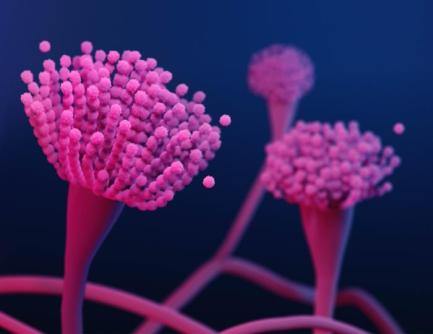
Research – 5 warning signs of mycotoxin contamination in feed

Farmers Weekly

kswfoodworld

Image CDC

Farmers are being warned to keep their eyes peeled for signs of contamination in feed after sampling has shown high mycotoxin risk levels.

UK-wide sampling carried out by Alltech has shown that 46% of total mixed rations (TMR) produced in spring-summer have a moderate to high mycotoxin risk.

“The most common types of mycotoxin found were the Type A Trichothecenes and the Penicilliums,” explains Bob Kendal, North England ruminant manager at Alltech.

“Penicilliums are found in silages and are of particular concern for ruminants. The mould starts life white in colour before developing a blue/grey/green colour and, as the name suggests, can have an antibiotic effect on rumen bacteria.

“This manifests itself as acidosis-like symptoms, dung consistency and sudden drops in milk.

“Type A Trichothecenes includes T-2 toxin which can have a serious effect on the gut of the cow and reduce intakes and performance.”

Research – Climate Change and Food Poisoning

The Counter

Fungal toxins known as mycotoxins, including some thought lost to history, are claiming new territory as the Earth warms.

RASFF Alerts – Aflatoxins – Dried Figs – Groundnuts – Almonds

European Food Alerts

RASFF

aflatoxins (B1 = 9.6; Tot. = 10.6 µg/kg – ppb) in dried figs from Turkey in Germany

RASFF

aflatoxins (B1 = 23; Tot. = 25 µg/kg – ppb) in groundnuts from the United States in Denmark

RASFF

aflatoxins (B1 = 57; Tot. = 62 µg/kg – ppb) in shelled almonds from the United States in Spain

RASFF Alert – Vibrio parahaemolyticus – Frozen Raw Shrimps

RASFFEuropean Food Alerts

Vibrio parahaemolyticus (in 4 out of 5 samples /25g) in frozen raw shrimps (Penaeus vannamei) from Vietnam, via the Czech Republic in Slovakia

RASFF Alerts – Bacillus cereus – Puddings – Cocoa Powder

European Food Alerts

RASFF

enterotoxin producing Bacillus cereus (up to 7100 CFU/g) in cocoa powder for children from unknown origin, via Germany in Finland

RASFF

Bacillus cereus in different varietes of pudding from Germany in Germany

RASFF Alert – Histamine – Frozen Yellowfin Tuna Loins

European Food Alerts

RASFF

histamine in frozen yellowfin tuna loins and sakus (Thunnus albacares) from Vietnam, via Belgium in the UK

Research – Microbiological control of pasteurized and unpasteurized dairy products, 2018 – Norway

Mattilsynet

The microbiological quality was generally good for the 189 dairy products on the Norwegian market that the Norwegian Food Safety Authority examined in 2018. Nevertheless, we see that there are microbiological challenges in connection with unpasteurized dairy products.

What did we investigate? 189 samples of unpasteurized and pasteurized cheeses and other dairy products produced in Norway and in the EU.
Period: 2018
What were we looking for? The four categories have been analyzed for various disease-causing bacteria (pathogens). These choices are made in order to get the most information for each category.

The different categories are:

PN = pasteurized milk product produced in Norway.

P EU = pasteurized milk product produced outside Norway.

UN = unpasteurized milk product produced in Norway.

U EU = unpasteurized milk product produced outside Norway.
The various disease-causing infectious agents we analyzed for:

Listeria monocytogenes (pathogen): PN, P EU, UN, U EU, number 189 pcs.

Shigatoxin-producing Escherichia coli (STEC) (pathogen): UN, U EU, number 96 pcs.

E. coli (hygiene parameter): PN, UN, U EU, 169 st.

S. aureus (hygiene parameter): UN, number 71 st.

Toxins (enterotoxin) from S. aureus (pathogen): UN, U EU, number 96 pcs.

Salmonella (pathogen): U EU, number 25 st.

What did we find? Listeria monocytogenes : No detection in 189 samples of dairy product.

Shigatoxin-producing Escherichia coli (STEC):
One finding in French red cow cheese of cow’s milk ( E. coli O-, stx2 and eae ). A total of 25 unpasteurized milk products produced outside Norway were examined. No findings in 71 unpasteurized milk products from Norway.

Escherichia coli (hygiene parameter):
In 73 pasteurized milk products from Norway, there was a detection and this was above the lower limit value (100 kde / g) but below the upper limit value (1,000 kde / g). No E. coli was detected above the detection limit of 10 colony forming units / g sample (kde / g) in the other samples.

In 61 of the 71 unpasteurized milk products produced in Norway, E. coli was not detected above the detection limit of 10 colony-forming units / g sample (kde / g). 3 st. (4.2%) was above 100 kde / g.

In unpasteurized dairy products from the EU (25), 5 (20%) of the products had more than 100 kde / g E. coli. There is no microbiological criterion for E. coli in the regulations for unpasteurized cheeses.

Staphylococcus aureus:
Of 71 samples, none exceeded the regulatory limit of 10,000 kde / g.

Of the 96 unpasteurized dairy products examined, the enterotoxins AE Toxins (enterotoxins), which some S. aureus can produce , were not detected .

Salmonella was not detected in the 25 samples of unpasteurized milk products produced outside Norway.

France – Product recall: Franprix brand Pause Meal 125g rosette sandwich -Salmonella

Oulah

Product recall: Franprix brand Pause Meal 125g rosette sandwich

ENCOUNTERED PROBLEM

Presence of salmonella

PROPOSED SOLUTION

Those in possession of this product are asked not to consume it and to return it to the point of sale where it was purchased.

Foodborne illness caused by salmonella results in gastrointestinal disturbances, diarrhea, vomiting and abdominal pain, often accompanied by fever; these symptoms may be more severe in young children, immunocompromised individuals and the elderly. The incubation period can range from 6 to 72 hours.
People who have consumed the products mentioned below and who have these symptoms are invited to consult their doctor, notifying him of this consumption.

FURTHER INFORMATION

▸ Barcode
3263858760916

▸ Lot
• 030701
• 030901
• 031101
• 031401
• 031901

▸ DLC
• 11/19/20
• 11/21/20
• 11/23/20
• 11/26/20
• 12/01/20

▸ Health
stamp FR 01-159-002 CE

▸ Consumer service contact
For any further information, you can contact customer service by dialing the telephone number: 09 70 17 10 00 (non-surcharged call) from Monday to Saturday from 8:30 am to 10 pm or by e-mail at the contact address @ franprix.fr.

▸ Source
https://www.franprix.fr/

USA – Fresh Express recalls Romaine for E. coli O26

Food Poison Journal

Fresh Express is voluntarily recalling a limited number of cases of expired 10.5 oz. Fresh Express Kit Caesar Supreme with the Use-By Date of November 8, 2020 and Product Code S296 because it may be contaminated with Escherichia coli STEC 026 bacteria.  The recall is being executed out of an abundance of caution in the unlikely event the product, which is now 8 days past the Use-By Date, is still in stores or consumers’ homes.  The recalled product was distributed primarily in Western and Southwestern U.S. states.