Category Archives: Salmonella

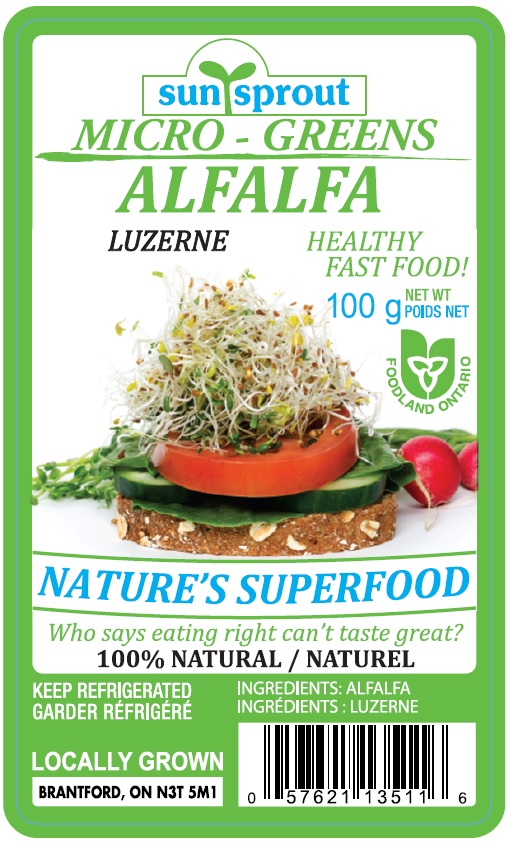
Canada – Updated Food Recall Warning – Sprouts Alive brand and Sunsprout brand Micro – Greens Alfalfa recalled due to Salmonella

CFIA

Recall date:
September 19, 2020
Reason for recall:
Microbiological – Salmonella
Hazard classification:
Class 1
Company / Firm:
Sunsprout Natural Foods
Distribution:
Ontario
Extent of the distribution:
Consumer

Recall details

Ottawa, September 19, 2020 – The food safety warning issued on August 11, 2020 has been updated to include additional product information. This additional information was identified during the Canadian Food Inspection Agency’s (CFIA) food safety investigation.

Sunsprout Natural Foods is recalling Sprouts Alive brand and Sunsprout brand Micro – Greens Alfalfa from the marketplace due to possible Salmonella contamination. Consumers should not consume and retailers, restaurants, and institutions should not sell or use the recalled products described below.

Recalled products

Brand Product Size UPC Codes
Sprouts Alive Micro – Greens Alfalfa 100 g 0 69022 10030 3 All best before dates up to and including BBOCT13
Sunsprout Micro – Greens Alfalfa 100 g 0 57621 13511 6 All best before dates up to and including BBOCT13

What you should do

If you think you became sick from consuming a recalled product, call your doctor.

Check to see if you have the recalled products in your home or establishment. Recalled products should be thrown out or returned to the location where they were purchased.

Food contaminated with Salmonella may not look or smell spoiled but can still make you sick. Young children, pregnant women, the elderly and people with weakened immune systems may contract serious and sometimes deadly infections. Healthy people may experience short-term symptoms such as fever, headache, vomiting, nausea, abdominal cramps and diarrhea. Long-term complications may include severe arthritis.

Background

This recall was triggered by findings by the CFIA during its investigation into a foodborne illness outbreak. The CFIA is conducting a food safety investigation, which may lead to the recall of other products. If other high-risk products are recalled, the CFIA will notify the public through updated Food Recall Warnings.

The CFIA is verifying that industry is removing the recalled products from the marketplace.

Illnesses

Public Health Ontario is investigating an outbreak of human illness associated with consumption of these products.

Product photos

Printer ready version of photos

  • Sprouts Alive - Micro – Greens Alfalfa - 100 g
  • Sunsprout - Micro – Greens Alfalfa - 100 g

Public enquiries and media

Public enquiries
Toll-free: 1-800-442-2342 (Canada and U.S.)
Telephone: 1-613-773-2342 (local or international)
Email: cfia.enquiries-demandederenseignements.acia@canada.ca
Media relations
Telephone: 613-773-6600
Email: cfia.media.acia@canada.ca

Research – Surveillance of foodborne disease outbreaks in China, 2003–2017

Science Direct

Foodborne disease remains a major public health problem worldwide. To understand the epidemiology and changes of foodborne disease in China, data reported to the National Foodborne Disease Outbreak Surveillance System during 2003–2017 were collected. A total of 19,517 outbreaks, which resulted in 235,754 illnesses, 107,470 hospitalizations, and 1,457 deaths, were reported in this period. Of the 13,307 outbreaks with known etiology, 31.8% of outbreaks were caused by poisonous mushrooms, followed by Vibrio parahaemolyticus (11.3%), saponin (8.0%), Salmonella (6.8%), nitrite (6.4%), pesticide (4.8%), Staphylococcus aureus (4.2%) and Bacillus cereus (3.0%). Among 18,955 outbreaks with reported setting, 46.6% were associated with food prepared in a household, followed by 22.5% with food prepared in a restaurant, and 18.4% prepared in a canteen. Of the 13,305 outbreaks associated with a single food category, fungi (mainly poisonous mushroom) were the most commonly implicated food category, followed by meats, vegetables, aquatic animals, condiments, poisonous plants (such as saponin, tung oil or seed, aconite) and grains (such as rice, noodle, rice noodle). Analysis of foodborne disease outbreaks can provide insight into the most important causative agents and sources of foodborne disease, and assist public health agencies determine the high-risk etiology and food pairs, specific points of contamination and settings to reduce foodborne disease illnesses.

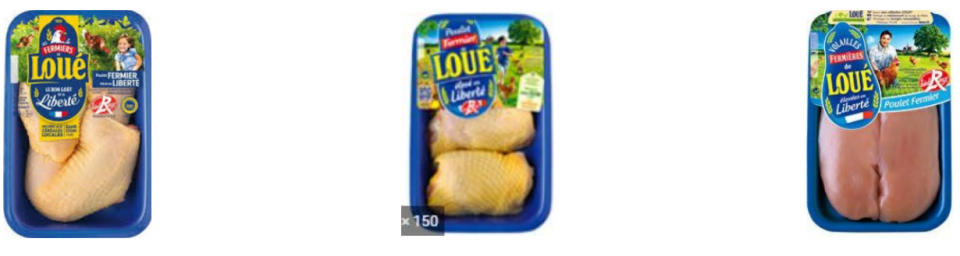
Luxembourg – TRAY OF 2 YELLOW CHICKEN THIGHS, TRAY OF 2 WHITE CHICKEN FILLETS, TRAY OF 3 HIGH CHICKEN THIGHS FROM THE LDC BRAND – PRESENCE OF SALMONELLA

SAP

Last name Tray of 2 yellow chicken thighs
Mark LDC
Bar code 0217823000000
Best before date (DLC) 09/09/2020
Lot 2020037392
Last name Tray of 2 white chicken fillets
Mark LDC
Bar code 3266980282882
Best before date (DLC)

NEW DLC!

1) 08/09/2020 & 09/09/2020

2) 09/22/2020

Lot

NEW LOT!

1) 2020037371

2) 2020038037

Last name Tray of 3 tall chicken thighs
Mark LDC
Bar code 3266980006969
Best before date (DLC) 09/11/2020
Lot 2020037371

Danger: Presence of salmonella


Salmonella can cause symptoms such as nausea, vomiting, abdominal cramps, diarrhea, fever and headache within 6 to 72 hours after consumption. These symptoms may be aggravated in young children, immunocompromised individuals and the elderly. People who have consumed these products and who present these symptoms are advised to consult a doctor, notifying him of this consumption.


Sale in Luxembourg by: Auchan

A sale by other operators cannot be excluded.

Source of information: Auchan recall notification.


Communicated by: Government Commission for Quality, Fraud and Food Safety .


RASFF Alerts – Salmonella – Paprika Powder – Frozen Whole Cockerels

European Food Alerts

RASFF

Salmonella (presence /25g) in paprika powder from China in Spain

RASFF

Salmonella enterica ser. Indiana (present /25g) in frozen whole cockerels from France in Finland

Italy – BON-TON SALAMI DI BARABINO SANTINO & C. SAS – SALAMINI STAG.S. – Salmonella

Salute

Brand : BON-TON SALUMI DI BARABINO SANTINO & C. SAS

Name : SALAMINI STAG.S.

Reason for reporting : Recall due to microbiological risk

Publication date : 17 September 2020

Documentation

Documentation

Belgium – Delikip Recall BV Product: Marinated Chicken Drumsticks – Salmonella

AFSCA

Delikip Recall BV
Product: marinated chicken drumsticks – 4 pieces.
Problem: Possible presence of Salmonella.

In agreement with the AFSCA, Delikip Bv is withdrawing the marinated chicken drumsticks from sale and is recalling it to consumers because of the possible presence of Salmonella.

Delikip Bv asks its customers not to consume this product and to return it to the point of sale where it was purchased or it will be refunded.


Product description
– Product name: marinated chicken drumsticks – 4 pieces
– Use by date (
Best before): 09/18/2020
– Lot number: 11092020 – Sale period: from 09/11/2020 to 09/14/2020
– Type of packaging: plastic
dish – Weight: between 0.420 kg and 0.480 kg

The product has been distributed by:
– Spar Hombeek – Kapelseweg 4, 2811 Hombeek.
– Spar Kuyle – Kortrijksepoortstraat 82, 9000 Gent.

For any further information , contact:
Madame Van Overberghe Lieve
info@delikip.be

Research – Switzerland – Do changes in STEC diagnostics mislead interpretation of disease surveillance data in Switzerland? Time trends in positivity, 2007 to 2016

Eurosurveillance

Infections caused by Shiga toxin (Stx)-producing  (STEC) are generally mild and self-limiting or even asymptomatic. However, particularly in children and elderly people, STEC infections can lead to severe gastroenteritis with haemorrhagic diarrhoea and life-threatening conditions, e.g. haemolytic uraemic syndrome (HUS) [1,2].

STEC transmission can occur through the consumption of contaminated food and drinks, or by direct contact with infected individuals or animals shedding the bacterium* [1,35]. STEC infections are endemic in Europe, including Switzerland [6,7]. Cases occur sporadically or in outbreaks; a large outbreak attributed to contaminated sprouts occurred in Germany in 2011 [8]. Smaller outbreaks have also been reported, e.g. there was an outbreak in Italy in 2013 and in Romania in 2016, both were suspected to be caused by contaminated dairy products [9,10]. Considering 22 years of population-based data up to 2012, Majowicz et al. estimated in 2014 that STEC leads to an estimated 2.8 million illness cases per year, including 3,800 cases of HUS, globally [11].

The National Notification System for Infectious Diseases (NNSID) of the Swiss Federal Office of Public Health (FOPH) has been receiving all notifications of laboratory-confirmed STEC infections since 1999. Case numbers were generally constant until 2010, with only a few laboratories reporting STEC cases in Switzerland. An increase in cases was observed in 2011 following the outbreak in Germany, before returning to expected yearly fluctuations, and then markedly increasing since 2015 [12]. Given that this increase was observed around the same time as the introduction of syndromic multiplex PCR panels for stool analyses in standard laboratory practice in Switzerland [12], it was hypothesised that these panels were the cause of the increase in notified STEC cases. Traditionally, routine testing of stool samples for bacterial pathogens involved only  spp.,  spp. and  spp. using culture-based techniques. With syndromic multiplex PCR panels, stool samples can be tested for up to 22 pathogens, including STEC, in one single run [12,13].

Prior to the gradual introduction of multiplex PCR to the routine diagnostics between 2014 and 2015, STEC was only specifically tested for in Switzerland upon physician request, and this rarely happened. Current testing practice includes the use of small syndromic enteric bacterial panels for testing in patients without a travel history or a larger gastrointestinal panel if travel history is reported on the test order form [7].

A qualitative assessment found that Swiss laboratory experts uniformly agreed that the increase in STEC case numbers was due to the introduction and increasing use of multiplex PCR panels [7]. We set out to conduct a quantitative investigation as to whether an increase in the STEC testing rate associated with the use of the panels is what led to the increased notification of cases.

Our study assesses the development of the STEC positivity in the Swiss population between 2007 and 2016 using routine laboratory data, and gives insight into the epidemiology and notification numbers of STEC infections in Switzerland.

Australia – NSW Annual Food Testing Report Released

Food Safety.com

Campylobacter kswfoodworld

Every year, the New South Wales Food Authority (NSW Food Authority) releases their Annual Food Testing Report on the testing conducted by their primary testing provider and by other laboratories. This year’s report highlights some key findings with regards to food safety testing results and trends.

Testing is conducted for a variety of reasons including food-borne illness investigations, Food Safety Program verifications and other types of research. In the report, the NSW Food Authority breaks down the significant findings in each of these categories which provides important information for the Australian food industry.

Key facts from the report

The NSW Annual Food Testing Report provides the following facts for the period of July 2018 to June 2019:

  1. During this time period, there were a total of 6,431 samples submitted for testing.
  2. Sample types analysed included:
  • meat
  • seafood
  • dairy
  • plant products
  • packaged food
  • eggs
  • food from retail outlets
  • environmental samples

3. There were over 70 different types of tests performed. These included:

  • microbiological assessment
  • pH
  • water activity
  • allergens
  • additives such as preservatives

Key findings from the report

The findings listed in the report are categorized based on different programs. The following is a breakdown of some of the key findings:

Food-borne illness investigation findings

The report states that between 2018 and 2019 there were a total of 4,010 samples (food and environmental) that were submitted for testing. These samples were submitted for testing due to food-borne illness investigations and the follow-ups for these investigations.

Increase in Salmonella Enteritidis cases

The report discusses a marked increase in the cases of Salmonella Enteritidis that has been observed since the middle of 2018. The cases have now been linked to an outbreak of Salmonella Enteritidis that was locally acquired. This a significant difference from cases of Salmonella Enteritidis in Australia in the past, with most cases typically presenting in people who had travelled overseas.

Testing was conducted and monitoring took place to determine where the outbreak was stemming from. The investigation involved taking 2,072 samples from egg production businesses and testing eggs and environmental samples. The results from the testing showed that Salmonella Enteritidis was on 13 properties that were interconnected through people, eggs and/or equipment.

The result was six food recalls at the consumer level from properties affected in NSW, and one consumer level recall in Victoria. The report states that surveillance and monitoring of NSW egg farms is slated to continue throughout 2020.

Decrease in Listeria prevalence in melons

The melon industry in Australia, particularly the rockmelon industry, has been linked to food-borne illness outbreaks of Listeria in recent years. The report states that listeriosis cases in New South Wales has actually declined sharply as of late, which is being attributed to the improved food safety measures that have been put in place in the Australian melon industry.

During the period of November 2018 and April 2019, the New South Wales Department of Primary Industries (NSW DPI) conducted food safety training workshops for rockmelon growers in NSW. NSW DPI also conducted sampling of melon harvests and packhouse environments to make sure that melon growers were following food safety protocols.

Verification findings

Concerns about Campylobacter and Salmonella on poultry

Campylobacter and Salmonella infections are both significant health concerns for Australians. In order to monitor the prevalence of these two food-borne pathogens, the raw poultry verification program gathers ongoing data on their prevalence and levels in raw poultry.

The report states that during the period of July 2018 and June 2019, samples were taken from raw poultry including 196 from whole chickens/chicken portions from processing plants, and 312 chicken portions from retail facilities. The samples were tested for the presence of Campylobacter and Salmonella.

The results for processing plants:

Salmonella

  • detected in 21.4% of samples
  • 9.2% of samples had quantifiable levels

Campylobacter

  • detected in 86.7% of samples
  • 1.5% of samples had quantifiable levels

The results for retail facilities:

Salmonella

  • detected in 25.8% of samples
  • 1.7% of samples had quantifiable levels

Campylobacter

  • detected in 89.9% of samples
  • 6.4% of samples had quantifiable levels

Research findings

Investigating algal biotoxins in wild harvest shellfish

There are other types of food-borne pathogens that are not as well known as Listeria, Salmonella or Campylobacter. The report touches on how some algae produce toxic compounds that can then accumulate in certain types of fish, particularly filter-feeding bivalve shellfish. The concern is that the toxic compounds can be harmful to humans if they are consumed by eating the shellfish.

The NSW Food Authority conducted testing between 2018 and 2019 which involved taking samples from pipis which are a type of shellfish group. There were 76 samples taken and they were tested for three different types of algae toxin groups which were amnesic shellfish toxins, paralytic shellfish toxins and diarrhetic shellfish toxins. The results revealed that diarrhetic shellfish toxins were detected in 13 of the 76 samples.

The NSW Food Authority will continue to investigate the health concerns around algae toxins in harvest shellfish in the 2019-2020 fiscal year.

Canada – Notice not to consume coriander microgreens sold by Les Jardins Picoudi – Salmonella

MAPAQ

Quebec September 10, 2020 – MAPAQ, in collaboration with the company Les Jardins Picoudi, in Saint-Robert , is warning the population not to consume the product indicated in the table below, because this food is likely to contain Salmonella bacteria .


Product name Formats CUP Targeted lot
“Coriander microgreens” 75 g 813 526 000 153 3,246

The product that is the subject of this advisory was available for sale at several locations across the province . It was packaged in rectangular transparent plastic dishes and sold refrigerated. The label includes, in addition to the proper name of the products, the words “PICOUDI”.

The operator is voluntarily recalling the product in question. He agreed with MAPAQ to disseminate this notice as a precautionary measure. It should be noted that no case of illness associated with the consumption of this food has been reported to MAPAQ to date.

People who have a product in their possession are therefore advised not to consume it. They must either return it to the establishment where they bought it or throw it away. Even if the product does not show any signs of spoilage or a suspicious odor, it is likely to be contaminated with Salmonella bacteria.

Consuming food contaminated with this bacteria can cause salmonellosis, a foodborne illness. In young children, the elderly and people with weakened immune systems, salmonellosis can cause very serious infections. In healthy people, it can manifest with symptoms such as high fever, chills, severe headache, vomiting, nausea, abdominal pain, or diarrhea, sometimes accompanied by blood in the stomachs. stool. Symptoms usually appear 6 to 72 hours after consuming a contaminated food or after contact with an animal carrying the bacteria. Symptoms usually last three to seven days.

Italy – SMOKED NORWEGIAN SALMON -Listeria monocyotgenes

Brand : UNES

Name : SMOKED NORWEGIAN SALMON

Reason for reporting : Recall due to microbiological risk

Publication date : 11 September 2020

Documentation

11-09-2020 – PDF (488.7 Kb)