Category Archives: Food Toxin

Sri Lanka – Company importing unrefined coconut oil fails second Aflatoxin test

Adaderana

A company that imported unrefined coconut oil containing the carcinogen Aflatoxin has failed its second quality test as well, the Sri Lanka Standards Institution (SLSI) stated.

The company in question has failed due to its test reports indicating an overdose of Aflatoxin in the imported oil.

Accordingly, the company will have to re-export the relevant oil stocks.

Meanwhile, 03 more companies have appealed for a second test of their samples and their reports are due tomorrow (29).

Several companies are currently re-testing samples of imported unrefined coconut oil containing the potent carcinogen Aflatoxin.

These tests are carried out by the SLSI, the Food Safety Unit of the Ministry of Health, and the Industrial Technology Institute (ITI).

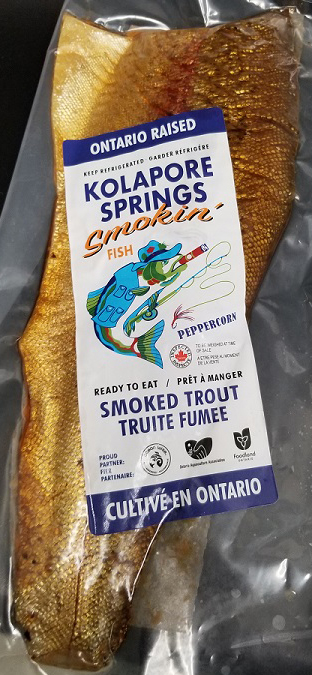
Canada – Food Recall Warning – Kolapore Springs brand smoked trout products recalled due to potential presence of dangerous bacteria – Clostridium botulinum

CFIA

Recall date:
March 26, 2021
Reason for recall:
Microbiological – Clostridium botulinum
Hazard classification:
Class 1
Company / Firm:
North Shore Specialty Foods
Distribution:
Ontario
Extent of the distribution:
Consumer

Recall details

Ottawa, March 26, 2021 – North Shore Specialty Foods is recalling Kolapore Springs brand smoked trout products from the marketplace because they may permit the growth of Clostridium botulinum. Consumers should not consume the recalled products described below.

Recalled products

Brand Product Size UPC Codes
Kolapore Springs Smoked trout Variable 6 27987 16383 4 All best before dates up to and including 2021 MR 31
Kolapore Springs Smoked trout, Peppercorn Variable 6 27987 16383 4 All best before dates up to and including 2021 MR 31

What you should do

If you think you became sick from consuming a recalled product, call your doctor.

Check to see if you have the recalled products in your home. Recalled products should be thrown out or returned to the store where they were purchased.

Food contaminated with Clostridium botulinum toxin may not look or smell spoiled but can still make you sick.

Symptoms in adults can include facial paralysis or loss of facial expression, unreactive or fixed pupils, difficulty swallowing, drooping eyelids, blurred or double vision, difficulty speaking, including slurred speech, and a change in sound of voice, including hoarseness.

Symptoms of foodborne botulism in children can include difficulty swallowing, slurred speech, generalized weakness and paralysis. In all cases, botulism does not cause a fever. In severe cases of illness, people may die.

Background

This recall was triggered by Canadian Food Inspection Agency (CFIA) test results. The CFIA is conducting a food safety investigation, which may lead to the recall of other products. If other high-risk products are recalled, the CFIA will notify the public through updated Food Recall Warnings.

The CFIA is verifying that industry is removing the recalled products from the marketplace.

Illnesses

There have been no reported illnesses associated with the consumption of these products. this active outbreak investigation.

Product photos

Printer ready version of photos

  • Kolapore Springs - Smoked trout
  • Kolapore Springs - Smoked trout, Peppercorn

Public enquiries and media

Company information
North Shore Specialty Foods: 1-705-606-1377 (Sean)
Public enquiries
Toll-free: 1-800-442-2342 (Canada and U.S.)
Telephone: 1-613-773-2342 (local or international)
Email: cfia.enquiries-demandederenseignements.acia@canada.ca
Media relations
Telephone: 613-773-6600
Email: cfia.media.acia@canada.ca

Australia- Food Recall Statistics – 2020

FSANZ

Why do we collect food recall data?

We collect data on Australian food recalls to identify trends and common issues in the food industry and help find ways to prevent future incidents.

An analysis of annual food recall statistics for the last 10 years is below. For statistics on allergen-related recalls see Undeclared allergen food recall statistics. Our statistics are updated annually.

Classification of food recalls

We classify food recalls based on the reason for the recall. Reasons include:

  • Microbial contamination
  • Labelling
  • Foreign matter
  • Chemical/other contaminants
  • Undeclared allergen
  • Biotoxin
  • Other

Food recall statistics (1 January 2011 – 31 December 2020)

Figure 1: Food recalls by year 2011-2020

Fig 1.png

Between 2011 and 2020, FSANZ coordinated 763 recalls, including 109 recalls in 2020 (see Figure 1). The 10-year average increased from 71 to 76 recalls per year.

Microbial contamination food recalls

Figure 6Food recalls due to microbial contamination by microbe 2011-2020

 Fig 6.png

Between 2011 and 2020 there were 195 food recalls due to microbial contamination (see Table 1). As shown in Figure 6, the most common microbes were Listeria monocytogenes (65 recalls; 33%), Salmonella (48 recalls; 25%) and E. coli (42 recalls; 22%). Salmonella related recalls increased in 2020 due to multiple recalls associated with lettuce products.

Meat and meat products, dairy products and mixed and/or processed foods were the main food groups recalled due to Listeria monocytogenes contamination. The food industry and government place a high priority on Listeria management in these sectors and undertake extensive product testing to monitor for contamination.

A wide range of foods are recalled due to Salmonella contamination. Eggs and fruits, vegetables and herbs were the most commonly recalled categories. Fruits, vegetables and herbs recalled due to Salmonella included lettuce, sprouts, rockmelon and dried herbs.

Dairy products are more commonly recalled due to concerns with process hygiene, indicated through E. coli testing, than other categories of food. Other products commonly recalled for E. coli include fresh sprouts and fermented sausages.

Research – Ciguatera fish poisoning on the rise.

Saipan Tribune

The Commonwealth Healthcare Corp. has lately seen an increase in ciguatera fish poisoning cases due to the consumption of various shallow- to deep-water bottom fish and has warned the public to avoid eating fish larger than about 4-6 lbs.

Ciguatera fish poisoning, or CFP, is a common food-borne illness related to the consumption of certain species of fish that have been contaminated with plankton (algae) derived toxin associated with coral reefs. The ciguatera toxin is non-detectable as it does not harm the fish and is unrecognizable when consumed. Unlike other food-borne illnesses, CFP is not transferred from cross-contamination due to inadequate food handler hygiene, food preparation, cooking, handling, and storage. In addition, the ciguatera toxin can withstand cooking and freezing temperatures and is not preventable if the fish species already harbors the toxin.

Vietnam – Woman dies in HCMC after eating toxic vegan pate – Clostridium botulinum

VN Express

kswfoodworld

A 42-year-old woman has died and two others are in critical condition in HCMC after consuming vegan food that might have been contaminated with the botulinum toxin.

The woman, her 16-year-old daughter and 53-year-old sister had bowls of rice vermicelli on March 20. Among its ingredients was pate from an inflated can, indicating possible contamination.

All three women later developed symptoms of muscle weakness, respiratory and circulatory failure. They were rushed from the southern province of Binh Duong to the 115 People’s Hospital in HCMC. While one woman died, the other two were in critical condition as of Thursday.

RASFF Alerts – Aflatoxin – Groundnuts – Shelled Pistachios – Sesame Seeds – Black Pepper – Nutmeg

European Food Alerts

RASFF

aflatoxins (B1 = 21; Tot. = 33 µg/kg – ppb) in groundnuts from Spain in the Netherlands

RASFF

aflatoxins (B1 = 69; Tot. = 70 mg/kg – ppm) in shelled pistachios from Iran, via Hong Kong in Italy

RASFF

aflatoxins (B1 = 32.6; Tot. = 36.0 µg/kg – ppb) in shelled pistachios from Iran, dispatched from Hong Kong in Italy

RASFF

aflatoxins (B1 = 38.0; Tot. = 40.0 µg/kg – ppb), Salmonella enterica ser. Chester (presence /25g) and Salmonella enterica ser. London (presence /25g) in sesame seeds from Iran in Finland

RASFF

aflatoxins (B1 = 9.5 µg/kg – ppb) in black pepper from Indonesia, via France in Switzerland

RASFF

aflatoxins (B1 = 43.4; Tot. = 48.8 µg/kg – ppb) in nutmeg from Indonesia in Germany

RASFF

aflatoxins (B1 = 25; Tot. = 30 / B1 = 40; Tot. = 50 µg/kg – ppb) in groundnuts from Egypt in the Netherlands

RASFF

Salmonella enterica ser. Ealing (presence /25g), Salmonella enterica ser. Kiambu (presence /25g) and Salmonella enterica ser. Newport (presence /25g) in black pepper from Brazil in Germany

RASFF Alert – E.coli – Live Mussels

European Food Alerts

RASFF

too high count of Escherichia coli (6800 MPN/100g) in live mussels from Spain in France

RASFF Alert – STEC E.coli – Chilled Beef Rump Tails

European Food Alerts

RASFF

shigatoxin-producing Escherichia coli (O26 stx+ eae+ /25g) in chilled beef rump tails from Argentina in Germany

UK – Home Cooking and Selling Risks

LEX

With the country in lockdown and having more spare time than ever before, there has been a concerning rise in food businesses operating out of people’s homes and selling on social media. Many of these businesses have been set up by people who have lost their jobs or are on furlough, including professional chefs hit by the closure of restaurants. Instead of opening the next market stall or restaurant, they are using the power of Instagram and Facebook to try and succeed in the crowded market.

However, the food safety watchdog has issued an alert that Britons could be putting their health at serious risk as many of these ‘home-cookers’ are not registering as official food businesses, meaning that their food hygiene arrangements are not checked. They are operating under the radar and often you won’t find any trace of them outside of Instagram, not even a website. They simply post a picture of something freshly prepared and the rest of the conversations happens on a ‘DM’ to decide on the price and the location from where the order is to be picked up.

BBC

There has been a “concerning” rise in food businesses operating out of people’s homes during lockdown, according to the food safety watchdog.

Many of them are selling food through social media, putting further pressure on a hygiene inspection system that is under strain because of the crisis.

And other experts are also worried.

“Little food businesses are popping up like mushrooms in lockdown,” said Julie Barratt from the Chartered Institute of Environmental Health (CIEH).

“There are rank outsiders operating off the radar, who think, ‘Oh, my mum can cook’, and confuse cooking with catering,” she added. They sell to locals on apps such as Whatsapp, Instagram and Nextdoor.

Many are failing to register as food businesses, meaning their hygiene arrangements are not checked by local authorities.

But even those that do register are often not getting an inspection – despite new businesses usually being a priority – because the system is struggling to keep up during the pandemic.

Hygiene inspections ceased completely during the first lockdown and since then a scaled-back operation has focused on high-risk cases.

Norway – Children sick in Norway after drinking raw milk

Food Safety News

Almost 20 children in Norway have fallen sick after a farm visit that included drinking unpasteurized, raw milk.

Health officials reported 17 people became ill after the farm trip, including 16 children aged 3 to 5 years old. Most were infected with Campylobacter but a few patients were also diagnosed with infections from the parasite Cryptosporidium after contact with animals.

The children fell ill after the farm visit in Viken, a county in Eastern Norway, where they were served raw, unpasteurized milk as part of their packed lunch. Pasteurization kills bacteria, viruses and parasites often found in raw milk.

The Norwegian Food Safety Authority (Mattilsynet) and the Norwegian Institute of Public Health (Folkehelseinstituttet) recommend that children, pregnant women, the elderly and those with weakened immune systems avoid drinking raw milk, because infections can have serious consequences for them.