Research – The Investigation of Mycotoxins and Enterobacteriaceae of Cereal-Based Baby Foods Marketed in Turkey

MDPI

In this study, a total of 85 cereal-based baby foods with or without milk (four different brands; A, B, C, and D) collected from Ankara local markets, Turkey were analyzed for mycotoxins, total aerobic mesophilic bacteria (TAMB), and Enterobacteriaceae contamination. Baby foods were analyzed for 12 toxicological important mycotoxins such as aflatoxin B1, B2, G1, and G2; fumonisin B1 and B2; ochratoxin A; sterigmatocystin (STE); deoxynivalenol (DON); zearalenone (ZON); and T-2 toxin and HT-2 toxin by LC-MS/MS multi-mycotoxin method. In addition to these mycotoxins, the presence of aflatoxin M1 (AFM1) was investigated in baby foods containing milk. The classical culture method was used for microbiological analysis. Consequently, at least one mycotoxin was detected in 69.41% of the total samples. The most frequently detected mycotoxins were STE (34.12%) and HT-2 (34.12%). However, AFM1 was not detected in any of the baby foods containing milk. Also, TAMB and Enterobacteriaceae were isolated from 30.59% and 10.59% of samples, respectively. As a result, it was determined that the mycotoxin levels in the analyzed samples were in accordance with the mycotoxin levels specified in the Turkish Food Codex.
USA – Outbreak Investigation of Salmonella Thompson – Seafood (October 2021) – Outbreak Over.

FDA

The FDA, along with CDC and state and local partners, investigated a multistate outbreak of Salmonella Thompson infections linked to seafood manufactured or processed by Northeast Seafood Products, Inc. of Denver, CO. As of 12/6/2021, the CDC has declared this outbreak over. According to CDC, the majority of sick people were either Colorado residents or reported traveling to Colorado in the week before they got sick.

FDA’s traceback investigation identified Northeast Seafood Products, Inc. as a common distributor among illness sub-clusters. As part of this outbreak investigation, environmental samples were collected from Northeast Seafood Products, Inc. On 10/7/2021, environmental samples collected from Northeast Seafood Products, Inc. were reported positive for Salmonella Thompson and were determined to be a match to the outbreak strain through whole genome sequencing.

On 10/8/2021, Northeast Seafood Products, Inc. recalled Haddock, Monkfish, Bone-in Trout, Grouper, Red Snapper, Red Rock Cod, Ocean Perch, Pacific Cod, Halibut, Coho Salmon, Atlantic Salmon Portions, Lane Snapper, Tilapia, All Natural Salmon Fillet, Pacific Sole, and Farm Raised Striped Bass. These products were sold to restaurant and Albertsons, Safeway, and Sprouts supermarkets in Colorado. The Pacific Cod sold through Sprouts is not being recalled. A full list of recalled products is available on FDA’s website.

Recommendation

Consumers, restaurants, and retailers should not eat, sell, or serve any recalled seafood. Recalled seafood was sold fresh and would be past shelf-life unless it was frozen after purchase. FDA recommends that anyone who might have purchased or received recalled product, check their freezers and throw away recalled product.

A full list of recalled products is available on FDA’s website.


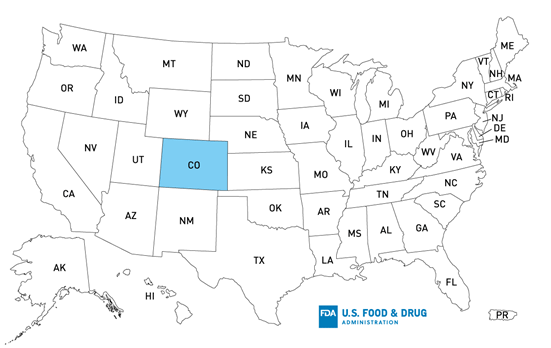
Map of U.S. Distribution of Recalled Northeast Seafood Products

 Outbreak Investigation of Salmonella Thompson – Seafood - Map of U.S. Distribution of Recalled Products (October 8, 2021)

Case Count Map Provided by CDC

Outbreak Investigation of Salmonella Thompson – Seafood - CDC Case Count Map (December 6, 2021)

Case Counts

Total Illnesses: 115
Hospitalizations: 20
Deaths: 0
Last Illness Onset: September 7, 2021
States with Cases: AZ (1), CA (1), CO (93), CT (1), IA (1), MN (2), MO (1), NE (2), NJ (2), PA (1), TX (2), VA (3), WA (1), WI (2), WY (2)
Product Distribution*: CO
*States with confirmed distribution; product could have been distributed further

South Africa- Safari recalls some products following Salmonella contamination.

OFM

Safari recalls some products following salmonella contamination | News Article

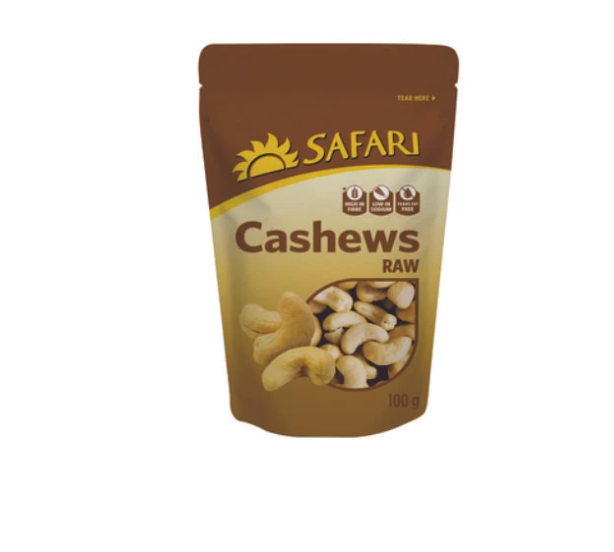
Pretoria-based Pioneer Foods has announced that it is recalling specific batches of the Peanuts & Raisins and Cashew nuts products, sold under its Safari brand in South Africa, Botswana and Namibia.

This after routine testing at the Safari production site in KwaZulu-Natal identified a batch of products which tested positive for low levels of salmonella.

Pioneer Foods says production was halted following the discovery, with the product placed on hold and ring-fenced.

It’s understood a limited number of cases of Safari 60g Peanuts & Raisins and Safari 100g Raw Cashews products were released from the site last month, despite having been isolated for destruction.

“This limited number of affected products should never have been released into trade, and whilst we have not received any health-related complaints from consumers to date, we have decided to proceed to proactively recall these specific products,” says CEO, Tertius Carstens.

At least 92% of the products have been retrieved.

“All other Safari products remain safe for consumption,” the company adds.

“We have already engaged with the South African National Consumer Commission as well as the South African Department of Health.

“Consumers who have the products listed above, with the specific batch or date coding, are urged to return these products to the retailer from which they were purchased in order to receive a full refund.”

Italy – Animal Feed – HYBRID CORN – Aflatoxin

Salute

Brand : LA FATTORIA DI MZ

Name : HYBRID MAIZE zoot use KG 25 RAW MATERIAL FOR FEED

Reason for reporting : Recall due to microbiological risk

Publication date : 6 December 2021

Click to access C_17_PubblicazioneRichiami_1602_azione_itemAzione0_files_itemFiles0_fileAzione.pdf

Italy – Animal Feed – MEDIUM HYBRID CRUSHED CORN – Aflatoxin

Salute

Brand : LA FATTORIA DI MZ

Name : MEDIUM HYBRID FRANTURCO GRASS 25 KG ZOOTECHNICAL USE RAW MATERIAL FOR FEED

Reason for reporting : Recall due to microbiological risk

Publication date : 6 December 2021

Click to access C_17_PubblicazioneRichiami_1601_azione_itemAzione0_files_itemFiles0_fileAzione.pdf

Research – Bacillus amyloliquefaciens ALB65 Inhibits the Growth of Listeria monocytogenes on Cantaloupe Melons

ABSTRACT

Listeria monocytogenes is a foodborne pathogen that causes high rates of hospitalization and mortality in people infected. Contamination of fresh, ready to eat produce by this pathogen is especially troubling because of the ability of this bacterium to grow on produce under refrigeration temperatures. In this study, we created a library of over 8,000 plant phyllosphere-associated bacteria and screened them for the ability to inhibit the growth of L. monocytogenes in an in vitro fluorescence-based assay. One isolate, later identified as Bacillus amyloliquefaciens ALB65, was able to inhibit the fluorescence of L. monocytogenes by >30-fold in vitro. B. amyloliquefaciens ALB65 was also able to grow, persist, and reduce the growth of L. monocytogenes by >1.5 log CFU on cantaloupe melon rinds inoculated with 5 × 103 CFU at 30°C and was able to completely inhibit its growth at temperatures below 8°C. DNA sequence analysis of the B. amyloliquefaciens ALB65 genome revealed six gene clusters that are predicted to encode genes for antibiotic production; however, no plant or human virulence factors were identified. These data suggest that B. amyloliquefaciens ALB65 is an effective and safe biological control agent for the reduction of L. monocytogenes growth on intact cantaloupe melons and possibly other types of produce.
IMPORTANCE Listeria monocytogenes is estimated by the Centers for Disease Control and Prevention and the U.S. Food and Drug Administration to cause disease in approximately 1,600 to 2,500 people in the United States every year. The largest known outbreak of listeriosis in the United States was associated with intact cantaloupe melons in 2011, resulting in 147 hospitalizations and 33 deaths. In this study, we demonstrated that Bacillus amyloliquefaciens ALB65 is an effective biological control agent for the reduction of L. monocytogenes growth on intact cantaloupe melons under both pre- and postharvest conditions. Furthermore, we demonstrated that B. amyloliquefaciens ALB65 can completely inhibit the growth of L. monocytogenes during cold storage (<8°C).

USA – FSMA Proposed Rule on Agricultural Water

FDA

The FDA is proposing a revision to Subpart E of the FDA Food Safety Modernization Act (FSMA) Produce Safety Rule that would change the pre-harvest agricultural water requirements for covered produce (other than sprouts). The requirements in this proposed rule, if finalized, would replace the pre-harvest microbial quality criteria and testing requirements in the Produce Safety Rule with requirements for systems-based pre-harvest agricultural water assessments. These assessments would be used to identify conditions that are reasonably likely to introduce known or reasonably foreseeable hazards into or onto produce or food contact surfaces, and to determine whether corrective or mitigation measures are needed to minimize the risks associated with pre-harvest agricultural water.

These proposed requirements are intended to address stakeholder concerns about the complexity and practical implementation of certain pre-harvest agricultural water requirements in the Produce Safety Rule while continuing to protect public health. The requirements also are designed to be adaptable to future advancements in agricultural water quality science.

We are not proposing to change the requirements for harvest and post-harvest uses of agricultural water, or the agricultural water requirements for sprouts.  Sprouts are subject to specific pre-harvest agricultural water requirements, and the compliance dates for those sprouts requirements have passed.

Overview

1. Agricultural Water Assessment

The proposed rule, if finalized, would replace the pre-harvest microbial quality criteria and testing requirements in the Produce Safety Rule for covered produce (other than sprouts) with requirements for systems-based pre-harvest agricultural water assessments to be used for hazard identification and risk management decision-making (see the webpage for the final Produce Safety Rule for a description of the requirements as currently written).  Under the proposed requirements, covered farms would be required to conduct pre-harvest agricultural water assessments once annually, and whenever a change occurs that increases the likelihood that a known or reasonably foreseeable hazard will be introduced into or onto produce or food contact surfaces. As part of their pre-harvest agricultural water assessments, these farms would be required to evaluate certain factors (listed in the link above) that could impact produce safety.

Wales – Two E. coli O157 infections in children under investigation in Wales

Food Safety News

Public health officials in Wales are investigating two E. coli O157 infections at different primary schools in the country.

Public Health Wales, Conwy County Borough Council and Betsi Cadwaladr University Health Board are looking into a case of E. coli O157 at a primary school in Abergele.

The same three agencies are also investigating a probable case of E. coli O157 at a primary school in Conwy to try and find the source.

There is currently no evidence in either case to suggest the child acquired the infection at the school.

“Parents and guardians of pupils that attend the school and who may have had contact with this case have been contacted and advised on infection prevention and control measures, and what steps to take if their child develops symptoms. Contacts have been asked to submit samples for testing and to remain off school until negative results are received,” he said.

India – Karimnagar: 100 students fall sick due to food poisoning in Choppadandi

Telangana Today

Karimnagar: At least 100 students of Social Welfare Girls Residential School, Choppadandi, took ill after having lunch on Friday. They complained of stomach-ache and started vomiting following food poisoning.

According to the students, they were served cabbage, egg, dal and sambar for lunch. Immediately after lunch, they developed symptoms of food poisoning. The school authorities suspect there was a problem with the cabbage dish.

EU – Multiple EU countries part of Salmonella outbreak

Food Safety News

At least four European countries have been affected by a Salmonella outbreak with investigators as yet unable to determine the source.

Thirteen people have fallen ill in Iceland, eight in Denmark, one in Sweden and an unknown number of people were also ill in the Netherlands and Belgium. The European Centre for Disease Prevention and Control (ECDC) was informed about the outbreak by national authorities.

In September in Iceland, there was an increase in reports of Salmonella infections. Further investigations found they were the same type of Salmonella typhimurium. Samples were sent to Statens Serum Institute (SSI) in Denmark for sequencing.