Research – Keep food fresh with this bacteria-killing packaging

NTU Singapore

Hepatitis A kswfoodworld

A team of scientists from NTU Singapore and Harvard T.H. Chan School of Public Health, US, has developed a ‘smart’ food packaging material that is biodegradable, sustainable and kills microbes that are harmful to humans. It could also extend the shelf-life of fresh fruit by two to three days.

The natural food packaging is made from a type of corn protein called zein, starch and other naturally derived biopolymers, infused with a cocktail of natural antimicrobial compounds (see video at the link above). These include oil from thyme, a common herb used in cooking, and citric acid, which is commonly found in citrus fruits.

In lab experiments, when exposed to an increase in humidity or enzymes from harmful bacteria, the fibres in the packaging have been shown to release the natural antimicrobial compounds, killing common dangerous bacteria that contaminate food, such as E. coli and Listeria, as well as fungi.

The packaging is designed to release the necessary miniscule amounts of antimicrobial compounds only in response to the presence of additional humidity or bacteria. This ensures that the packaging can endure several exposures, and last for months.

As the compounds combat any bacteria that grow on the surface of the packaging as well as on the food product itself, it has the potential to be used for a large variety of products, including ready-to-eat foods, raw meat, fruits, and vegetables.

In an experiment, strawberries that were wrapped in the packaging stayed fresh for seven days before developing mould, compared to counterparts that were kept in mainstream fruit plastic boxes, which only stayed fresh for four days.

The invention is the result of the collaboration by scientists from the NTU-Harvard T. H. Chan School of Public Health Initiative for Sustainable Nanotechnology (NTU-Harvard SusNano), which brings together NTU and Harvard Chan School researchers to work on cutting edge applications in agriculture and food, with an emphasis on developing non-toxic and environmentally safe nanomaterials.

The development of this advanced food packaging material is part of the University’s efforts to promote sustainable food tech solutions, that is aligned with the NTU 2025 strategic plan, which aims to develop sustainable solutions to address some of humanity’s pressing grand challenges.
USA – FDA says E. coli outbreak associated with romaine lettuce is over

Food Safety News

Federal officials are reporting that an outbreak of E. coli O121:H9 infections linked to romaine lettuce has ended.

Four illnesses were confirmed in the outbreak. Little other information was available from the Food and Drug Administration.

“The information collected over the course of this investigation indicated that romaine lettuce was the likely source of this outbreak; however, it appears that this outbreak is over, and there is no actionable advice for consumers,” according to FDA officials.

“FDA has been conducting a traceback investigation and other activities in an effort to learn more about possible sources or routes of contamination.”

The FDA first reported the outbreak two weeks ago but has not shared any information about patient demographics or what states are involved. The agency did not report when the first illness was reported or when the last one was logged by public health officials.

As of Jan. 26, the Centers for Disease Control and Prevention had not posted any information about the outbreak. That is generally standing procedure for the agency if a specific product is not identified.

Research – Role of climate change in increased mycotoxin levels

All About Feed

Climate change is likely to be part of the reason for the increase in mycotoxin issues for the global animal feed business. And the trend is expected to continue and even accelerate over the next 5 years.

7 out of 10 analyses run last year found raw ingredients contaminated with mycotoxins, according to Cargill’s annual review. But reassuringly, just 35% of these reached performance risk thresholds, showing that positive analyses are not always concerning.

Last year’s study analysed more than 328,000 samples across more than 150 global feed plants, on-farm samplings and storage locations in 54 countries. The majority of these were corn (212,254), cereals (85,478), oilseeds (27,602) or others (3,632). It found 72% of analyses were contaminated with at least one mycotoxin showing that contamination is more likely than not across all ingredients.

Since mycotoxins are produced by moulds as a natural defence response to environmental factors, their occurrence is linked to climate conditions.

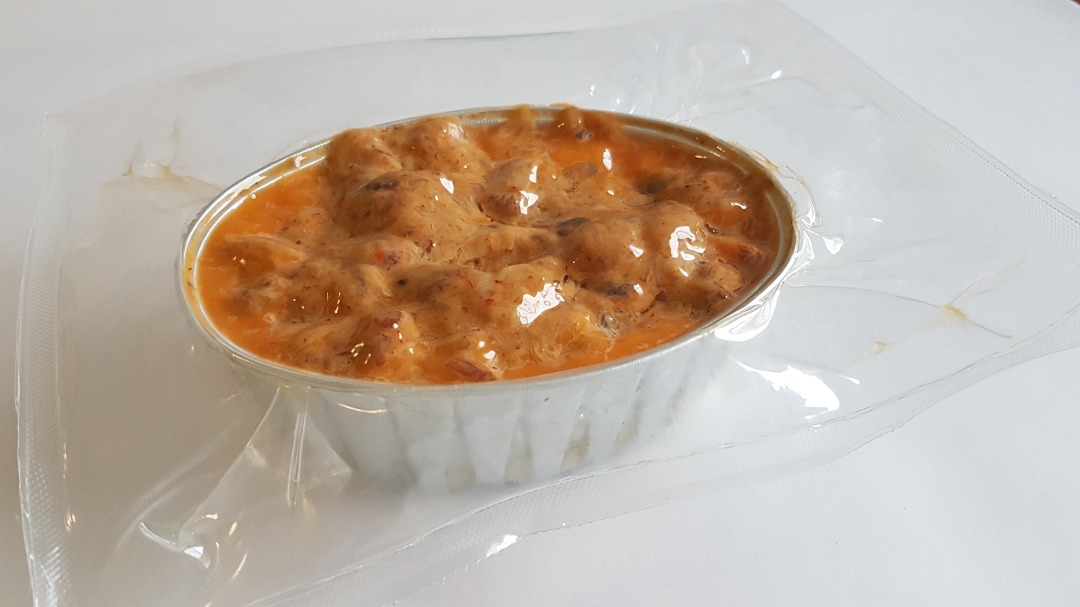
France – Rilettes with Espelette pepper AOP – Listeria monocytogenes

Gov france

Identification information of the recalled product

  • Product category Food
  • Product subcategory Meats
  • Product brand name Raoul Deshildre
  • Model names or references Espelette pepper rillettes
  • Identification of products
    GTIN Lot Dated
    3514134506873 *0046143 Use-by date between 06/01/2022 and 30/01/2022
    3514134507252 *0046143 Use-by date between 06/01/2022 and 30/01/2022
  • Packaging Vacuum packaging.
  • Marketing start/end date From 06/01/2022 to 26/01/2022
  • Storage temperature Product to be stored in the refrigerator
  • Health mark FR 59 011 001 EC
  • Further information The Rillettes are packaged in small aluminum trays, and are vacuum-packed.
  • Geographic area of ​​sale Departments: NORD (59), PAS-DE-CALAIS (62)
  • Distributors Vending machines from Raoul Deschildre Collectivités
  • List of points of saleLIST_OF_AUTOMATIC_DISTRIBUTORS_DE_LA_SOCIÉTÉ_RAOUL_DESCHIDLRE.pdf

Practical information regarding the recall

  • Reason for recall Presence of Listeria Monocytogenes
  • Risks incurred by the consumer Listeria monocytogenes (causative agent of listeriosis)

USA – Core Investigation Table Update

FDA

Date
Posted
Ref


#

Pathogen
Product(s)
Linked to
Illnesses

(if any)
Investigation
Status
1/10/

2022

1050 E. coli
O121:H19
Romaine Ended
12/29/

2021

1052 E. coli
O157:H7
Packaged Salad Active
12/20/

2021

1039 Listeria
monocytogenes
Packaged Salad Active
12/15/

2021

1048 Listeria
monocytogenes
Packaged Salad Active
9/15/

2021

1031 Salmonella
Oranienburg
Red, Yellow,
and White Onions
Active

Research – Are Frozen Fruits and Vegetables Healthy and Safe?

Consumer Reports

At Consumer Reports, we’ll always tell you what we find with our testing—it’s important to highlight when products and services excel and when they fall short. When we look at food through a safety lens, unfortunately we often find reasons to be concerned—whether that’s because of substances like heavy metals in supplements, baby food, or spices, or disease-causing bacteria such as E. coli in ground beef.

But sometimes, as is the case with CR’s recent tests of frozen fruits and veggies, we get good news. Our food scientists recently tested more than 300 samples of eight types of frozen produce and didn’t find any harmful bacteria.

Most frozen vegetables are blanched in hot water or steamed before freezing, which may lead many to think they are already cooked and risk free—people let their toddlers snack on frozen veggies, or might toss them into a salad without cooking them first. But though frozen produce is convenient and generally safe, it may still harbor bacteria that cause foodborne illness, such as Listeria monocytogenes or salmonella.

Read more at the link above.

Research – Publisher’s Platform: The World’s Largest and Deadliest Listeria Outbreak is turning 4 in March

Food Safety News

In March of this year it will be 4 years since I boarded a flight from Seattle to Johannesburg (20 plus hour flight) to speak at a food safety conference just days after the South African health authorities announced that a Listeria outbreak had been linked to a product named polony manufactured by the largest food manufacturer in Africa.

I recall how similar it felt to the early days of the Jack-in-the-Box E. coli outbreak of 1993– how everyone seemed honestly shocked that such a tragedy could happen.

I have spent the last 4 years working (being 10 hours behind has required far too many late nights and early morning calls) with a cadre of amazing lawyers and more amazing staff moving forward in the first foodborne illness class action in Africa.  We have much to do to find justice to the more than 1,000 sickened and their families.  I am saddened by the pace of the litigation, but determined to take care of our class members – we have to work harder.

New Zealand – Public health warning about shellfish in West Coast, South Island – Shellfish Toxins -DSP – Diarrhetic shellfish toxins

MPI

The Ministry for Primary Industries (MPI) today issued a public health warning against collecting shellfish from the South Island West Coast between Greymouth and Charleston. Diarrhetic shellfish toxins have been detected in mussels from 12-Mile Bluff at levels above the safe limit set by MPI.

Anyone eating shellfish from this area is potentially at risk of illness.

Ongoing testing will continue and any changes will be communicated accordingly.

Mussels, oysters, tuatua, pipi, toheroa, cockles, scallops, catseyes, kina (sea urchin) and all other bivalve shellfish should not be eaten.

Note, cooking shellfish does not remove the toxin.

Pāua, crab and crayfish may still be eaten if the gut has been completely removed prior to cooking, as toxins accumulate in the gut. If the gut is not removed its contents could contaminate the meat during the cooking process.

Symptoms typically appear within half an hour of ingestion and last for about 24 hours. Symptoms may include:

  • diarrhoea
  • vomiting
  • nausea
  • abdominal cramps

If anyone becomes ill after eating shellfish from an area where a public health warning has been issued, freephone Healthline for advice on 0800 61 11 16, or seek medical attention immediately. You are also advised to contact your nearest public health unit and keep any leftover shellfish in case it can be tested.

Commercially harvested shellfish – sold in shops and supermarkets, or exported – is subject to strict water and flesh monitoring programmes by MPI to ensure they are safe to eat. There is no commercial harvesting of shellfish in the affected area.

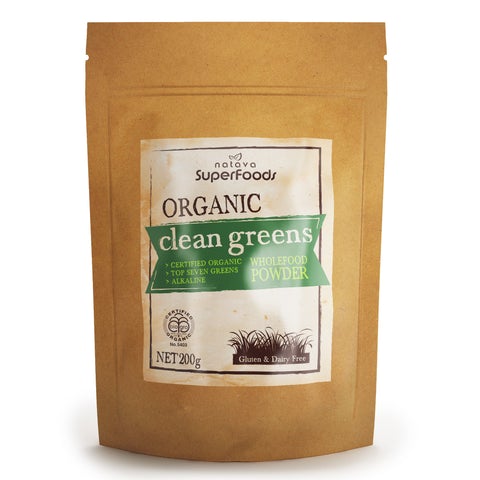
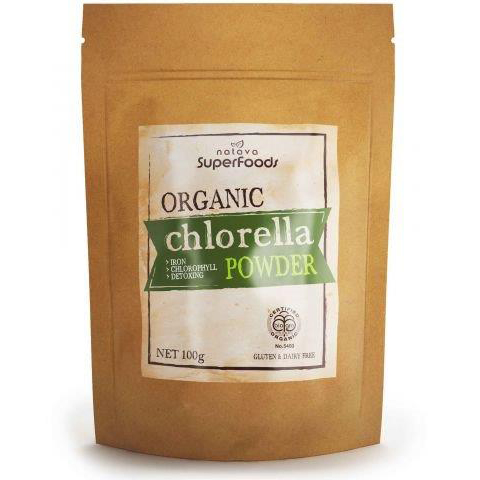
New Zealand – Natava SuperFoods brand Organic Chlorella Powder and Organic Clean Greens Wholefood Powder – Salmonella

MPI

Canada – Absence of information necessary for the safe consumption of smoked salmon sold by the company To each his own beer

MAPAQ

QUEBEC CITY, Jan. 25, 2022 /CNW Telbec/ – The Ministère de l’Agriculture, des Pêcheries et de l’Alimentation (MAPAQ), in collaboration with the company À each his beer, located at 1446, boulevard Bona-Dussault, in Saint-Marc- des-Carrières, warns the population not to consume the product indicated in the table below if it has not been kept in the freezer at all times since the time of purchase. Indeed, the product label does not include the information necessary for its safe consumption, namely the statement “Keep frozen until use” which is required.

Product name

Format

Affected lot

“MAPLE-SMOKED PAVÉ-SMOKED ATLANTIC SALMON”

248g

Units sold until
January 25, 2022

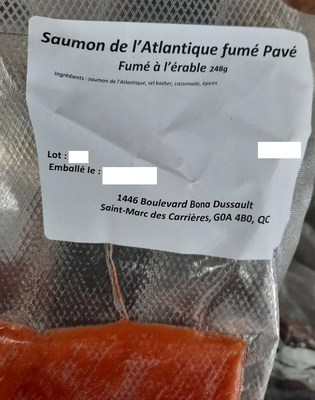
The product that is the subject of this warning was offered for sale until January 25, 2022 inclusively, and only at the establishment designated above. It was packaged in a clear plastic bag and sold frozen. The product label includes, in addition to its name and list of ingredients, the address of the establishment.

The operator is voluntarily recalling the product. It has agreed with MAPAQ to issue this warning as a precautionary measure. Persons who have this product in their possession and have not kept it in the freezer at all times since the time of purchase are advised not to consume it. They must either return it to the establishment where they bought it or throw it away. Even if the affected product shows no signs of tampering or suspicious odors, consuming it may pose a health risk. It should be noted that no case of illness associated with the consumption of this food has been reported to MAPAQ to date.

Atlantic Salmon Pavé (CNW Group/Ministry of Agriculture, Fisheries and Food) 

Hazard Classification:  Class 1
Reference Number:  4477

Source:
Media relations
Direction des communications
Ministry of Agriculture, Fisheries
and Food
Tel. : 418 380-2100, extension 3512
www.mapaq.gouv.qc.ca

QuoteView original content to download multimedia: http://www.newswire.ca/en/releases/archive/January2022/25/c7508.html