Canada – Notice not to consume products packaged in glass jars and sold by the company Les Délices de Pa pis Ma (SENC)

MAPAQ

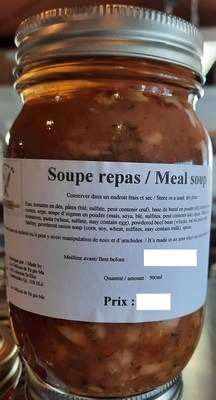
Meal soup (CNW Group/Ministry of Agriculture, Fisheries and Food)

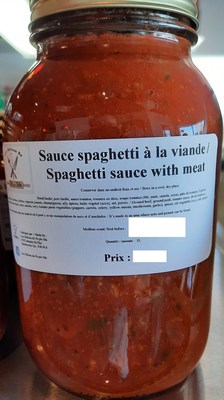
Meat Spaghetti Sauce (CNW Group/Ministry of Agriculture, Fisheries and Food)

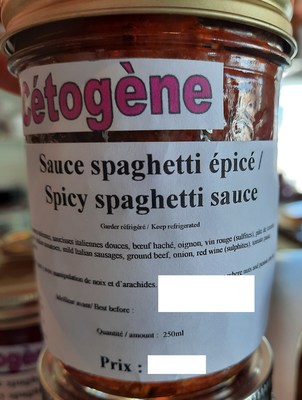
Spicy spaghetti sauce (CNW Group/Ministry of Agriculture, Fisheries and Food)

QUEBEC CITY, Jan. 25, 2022 /CNW Telbec/ – The Ministry of Agriculture, Fisheries and Food (MAPAQ), in collaboration with Les Délices de Pa pis Ma (SENC), located at 6025, chemin de Saint-Élie, in Sherbrooke , advises the public not to consume the products indicated in the table below, because they have not been packaged in such a way as to ensure their safety.

Product name

Format

Affected lot


“ MEAT SPAGHETTI SAUCE ”

500ml

1 litre

Units sold until
January 24, 2022

“MEAL SOUP”

500ml

“SPICY SPAGHETTI SAUCE”

125ml

250ml

The products that are the subject of this warning were offered for sale until January 24, 2022, and this, only at the establishment designated above. The products were packaged in Mason-type glass jars with metal lids and sold at room temperature. The label of the products includes, in addition to their name, the mention “Les délices de Pa pis Ma”.

The operator is voluntarily recalling the products in question. It has agreed with MAPAQ to issue this warning as a precautionary measure. Also, people who have any of these products in their possession are advised not to consume it. They must return it to the establishment where they bought it or throw it away. Even if the affected products show no signs of tampering or suspicious odors, their consumption may represent a health risk. It should be noted that no case of illness associated with the consumption of these foods has been reported to MAPAQ to date.

Additional information

The Ministry publishes various information documents concerning food safety. Interested persons can consult them in the “Food Consumption” section of the MAPAQ website: www.mapaq.gouv.qc.ca/consommation . They also have the possibility of registering online, by visiting www.mapaq.gouv.qc.ca/rappelsfoods , to receive, by e-mail, the food recall press releases published by the Ministry. Finally, it is possible to follow “MAPAQfoods” on Twitter at the following address: www.twitter.com/MAPAQfoods .

Switzerland – Source of rise in Swiss Hepatitis E cases remains a mystery; pork investigated

Food Safety News

Hepatitis E virus capsid structure. HEV infection causes viral hepatitis. Atomic-level structure.

Officials in Switzerland have been unable to find what was behind an increase in hepatitis E infections that affected more than 100 people in 2021.

The Federal Office of Public Health (FOPH) recorded a rise in cases of hepatitis E virus (HEV) between January and May 2021.

A total of 105 cases were reported across the country, which is almost triple the number compared to the same period in previous years. More men than women were affected and patients ranged in age from 18 to 87 years old. A total of 29 people were hospitalized with or following an HEV infection and two died.

USA – “Haifa Smoked Fish and Caviar*** Turbot Cold Smoked***Net Wt 8 0z.” – Listeria monocytogenes

FDA

Product Details

Product Description:

“Haifa Smoked Fish and Caviar*** Turbot Cold Smoked***Net Wt 8 0z.”

Reason for Recall: May be contaminated with Listeria monocytogenes

Product Quantity: 1150 lbs

Recall Number: F-0505-2022

Code Information: lot code: 246, 97, 223, 299, 321 UPC Code: 8 32007 00110 6

Classification:

Class I

Event Details

Event ID: 89258

Voluntary / Mandated:

Voluntary: Firm initiated

Product Type:

Food

Initial Firm Notification of Consignee or Public:

Two or more of the following: Email, Fax, Letter, Press Release, Telephone, Visit

Status: Ongoing

Distribution Pattern: NY, NJ

Recalling Firm:

D & M Smoked Fish, Inc.
9415 150th St
Jamaica, NY 11435-4524
United States

Recall Initiation Date: 12/21/2021

Center Classification Date: 1/14/2022

USA – Enforcement Reports – ZOCALO AJI LIMO DRIED CHILI PODS – Mould/Mold

FDA

Product Details

Product Description:

ZOCALO AJI LIMO DRIED CHILI PODS- ORGANIC, Dried Aji Peppers for consumer consumption. Product is vacuum sealed in plastic bag. Net weight per bag 1.25 oz (35 g), 6 bags per case. Product of Peru. UPC 8 32924 00879 0.The product label is read in parts: “***ZOCALO gourmet *** ORGANIC more…

Reason for Recall: Due to presence of mold on product

Product Quantity: 70 cases (6 bags per case)

Recall Number: F-0506-2022

Code Information: Product ZHR 252, Lot # 1-OALWDP-YU with best by date of March 2024.

Classification: Class II

Event Details

Event ID:  89219

Voluntary / Mandated:

Voluntary: Firm initiated

Product Type: Food

Initial Firm Notification of Consignee or Public: E-Mail

Status: Ongoing

Distribution Pattern: Distributed in CA, KY, MO,MS, MT, NM, NY, OR, TX, WA and Washington DC.

Recalling Firm:

Power Selles Imports dba Culinary Collective
12407 Mukilteo Speedway Bldg B Ste 245
Lynnwood, WA 98087-1518
United States

Recall Initiation Date: 12/13/2021

Center Classification Date: 1/14/2022

Hong Kong – CFS urges public not to consume one kind of butter product from Australia with potential microbial contamination

CFS

Issue Date 25.1.2022
Source of Information The Department of Agriculture, Water and the Environment of Australia
Food Product One kind of butter product imported from Australia
Product Name and Description Product name: MG Brand Butter, Unsalted 25KG
Brand: MG
Place of origin: Australia
Net weight: 25 kilograms
Date of manufacture: April 21, 2021
Shelf life: Two years
Importer: Foodgears Industrial International Ltd
Reason For Issuing Alert
  • The Centre for Food Safety (CFS) received a notification from the Department of Agriculture, Water and the Environment of Australia that the above-mentioned product might have been microbiologically contaminated and is being recalled.
Action Taken by the Centre for Food Safety
  • l   According to the information provided by the Department of Agriculture, Water and the Environment of Australia, the affected batch of the product has been imported into Hong Kong. Upon learning of the incident, the CFS immediately contacted the local importer concerned for follow-up.
  • A preliminary investigation found that the local importer, Foodgears Industrial International Ltd, had imported the affected batch of the product into Hong Kong. The importer concerned has initiated a recall according to the CFS’ instructions.
Advice to the Trade
  • Stop using or selling the product concerned immediately if they possess it.
Advice to Consumers
  • Not to consume the affected batch of the product if they have bought any.
Further Information The CFS press release

Enquiries about the recall can be made to the hotline at 3999 5706 during office hours.

Centre for Food Safety
Food and Environmental Hygiene Department
2022-1-25

Germany – Lotus Ice cream sticks white (3x90ml) – Mould/Mold

LMW

Alert type: Food
Date of first publication: 01/25/2022
Product name:

Lotus Ice cream sticks white (3x90ml)

Product images:

Product image ice cream.jpg

Lotus Bakeries GmbH

Manufacturer (distributor):

Lotus Bakeries GmbH Rather Str. 110a 40476 Düsseldorf Distribution via Kaufland

Reason for warning:

Possible mold infestation

Packaging Unit: 3x 90ml
Durability: 11.2023
Lot identification: L1144ZZ
Further information:

Please refer to the attached recall letter.

Click to access R%FCckrufschreiben.pdf

France – Jesus of Ardèche sold at the charcuterie stand with service – Salmonella

Gov france

Identification information of the recalled product

  • Product category Food
  • Product subcategory  Meats
  • Product brand name unbranded (sold at the stand department with service)
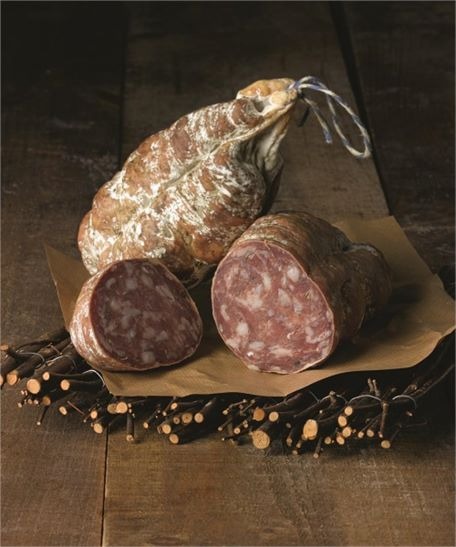
  • Model names or references Jesus of Ardeche
  • Identification of products
    Lot
    Product sold at the stand at the cup from 13/12/2021 to 21/01/2022
  • Marketing start/end date From 13/12/2021 to 21/01/2022
  • Storage temperature Product to be stored at room temperature
  • Health mark/
  • Further information Product sold at the Charcuterie stand between 12/13/2021 and 01/21/2022
  • Geographic area of ​​sale Cora Ales
  • Distributors Hypermarket Cora Ales

Practical information regarding the recall

  • Reason for recall Presence of Salmonella
  • Risks incurred by the consumer Salmonella spp (causative agent of salmonellosis)

USA – Interagency Food Safety Analytics Collaboration (IFSAC)2022–2023 Interim Strategic Plan

CDC

Bacteria And Germs On Food

In 2011, three federal agencies—the Centers for Disease Control and Prevention (CDC), the U.S. Food and Drug Administration (FDA), and the Food Safety and Inspection Service (FSIS)—created the Interagency Food Safety Analytics Collaboration (IFSAC). Its purpose is to improve coordination of federal food safety analytic efforts and address cross-cutting priorities for food safety data collection, analysis, and use. Since its inception, IFSAC’s focus has been foodborne illness source attribution: identifying which foods are the most important sources of selected major foodborne illnesses. As part of this effort, IFSAC now produces annual estimates for four priority pathogens: Salmonella, Escherichia coli O157, Listeria monocytogenes, and Campylobacter.
Federal agencies and food safety experts rely on these attribution analyses to inform strategic planning and risk-based decision-making; estimate benefits of interventions; and evaluate the impact of interventions, such as new or revised regulations, policies, and performance standards. By bringing together data from a variety of sources, broadly exploring an array of methods and disciplines, and developing sound analytical methods, IFSAC scientists can improve estimates of the sources of foodborne illness.
Purpose
During the five years covered by IFSAC’s first strategic plan (2012–2016), IFSAC aimed to improve methods to categorize foods implicated in outbreaks; estimate the percentage of certain foodborne illnesses attributable to each food source; identify data needs; take steps to determine how to better acquire, improve, and organize data available for source attribution; validate current methods and modeling approaches; develop improved methods; and create a plan for communicating results to the public.
During the five years covered by IFSAC’s second strategic plan (2017–2021), IFSAC continued to work toward accomplishing three goals:
1) improve the use and quality of new and existing data sources to conduct analyses and develop estimates,
2) improve analytic methods and models, and
3) enhance the use of and communications about IFSAC products. IFSAC activities have been substantially affected by the COVID-19 global pandemic.
During 2020 and 2021, many staff from CDC, FDA, and FSIS who lead and participate in IFSAC projects and their oversight have been deployed to COVID-19 response efforts, have had to focus on pandemic-related activities, or have covered agency program activities while others were deployed. IFSAC continues to publish annual estimates of foodborne illness source attribution, but resource limitations have delayed some projects.
The ongoing pandemic response will require prioritization of future efforts. As a result of these resource constraints, IFSAC developed this interim strategic plan, which describes IFSAC’s accomplishments during 2017–2021 and identifies key activities for 2022–2023.
Near the end of this interim period, we intend to share information about our direction, goals, and approaches to our future work. Activities Major accomplishments during 2017–2021:
•Developed a recency-weighted statistical modeling approach to estimate the sources of foodborne illness caused by specific pathogens and published the method in a peer-reviewed journal.
•Updated IFSAC’s scheme for categorizing foods implicated in foodborne disease outbreaks, anddescribed it in a peer-reviewed published article.
•Produced annual estimates of the sources of foodborne illness for Salmonella, EscherichiacoliO157, Listeria monocytogenes, and Campylobacter for 2015–2019.
•Analyzed outbreak data on Salmonella illnesses acquired from consumption of pork products to support draft USDA performance standards for the minimum acceptable Salmonella contamination of pork cuts and ground pork products.
•Continued to explore new methods and models for foodborne illness source attribution, including random forest and other machine learning algorithms.
•Hosted a public webinar on our strategic plan and future directions in May 2017.
•Presented progress on several projects at scientific conferences.
Short-term Goals
During the years 2022–2023, we will continue to publish annual reports on foodborne illness source attribution for priority pathogens. We will continue to improve methods for estimating foodborne illness source attribution using outbreak and sporadic (non-outbreak-associated) disease data, pursuing external collaborations as needed to maximize capabilities and access to data sources. Specifically, we intend to prioritize the following activities:
•Analyzing trends in foodborne disease outbreak-associated illnesses over the past 20 years and submitting a manuscript to a peer-reviewed journal describing our methods and results.
•Continuing to develop and refine machine-learning approaches to predict the food sources of human illnesses with unknown sources by using whole-genome sequencing (WGS) to compare Salmonella isolates of known source with those from ill persons whose source is unknown.
•Adapting the WGS-based methods developed for Salmonella to attribute sporadic Campylobacter illnesses to food sources.
•Assessing the frequency of multi-year outbreaks and their impact on source attribution analyses and deciding whether to improve the methods for using them in outbreak-based source attribution models.
•Collaborating with FoodNet staff to estimate population attributable fractions for key food sources of sporadic Salmonella Enteritidis and Campylobacter illnesses by developing case- control studies using FoodNet case exposure ascertainment data and FoodNet Population Survey data.
•Continue to develop a method to incorporate into attribution estimates those outbreaks associated with complex foods (i.e., multi-ingredient foods) for which the contaminated ingredient is unknown.
Future Direction
IFSAC’s primary focus continues to be improving estimates of the food sources of illness caused by major pathogens. Whereas IFSAC has always focused on estimating the sources of all (not just outbreak-associated) illnesses, the methods have thus far only used data from outbreaks. In recent years, we developed methods to use data from sporadic illnesses to make these estimates.
In this interim period, we will continue to evaluate our approach to attributing Campylobacter illnesses to specific food categories. Our recent reports have highlighted the challenges associated with attributing Campylobacter illnesses to foods based on outbreak data, due to the outsized influence of outbreaks from foods not widely consumed but with high risk of illness, such as unpasteurized milk and chicken livers.
As we continue our work during this interim period, we will develop IFSAC’s strategic vision for the future, including goals, strategic objectives, and projects. We will continue to re-evaluate project priorities as needs arise. For more information, visit the IFSAC website or email IFSAC.

Research – What Is Listeria Meningitis? Causes, Treatment, and More

Healthline

Listeria meningitis is a type of bacterial meningitis that is a serious complication of a listeria infection. Without prompt treatment, it can quickly become life threatening. After recovering from meningitis, some people are left with permanent disabilities.

Meningitis involves inflammation and swelling of the protective membranes, called meninges, that surround the brain and spinal cord. This can happen for many reasons, including injury and infection.

Listeria infection, also called listeriosis, is a rare disease caused by the bacteria called Listeria monocytogenes. According to the Food and Drug Administration (FDA)Trusted Source, almost all cases stem from consuming contaminated food. It’s most likely to affect pregnant people, newborns, and those with a weakened immune system.

We’ll overview what causes listeria meningitis to occur, how to treat it, prevention, and more.

Research – Food Poisoning Treatment

Food Poisoning News

While the effects of food poisoning are usually not life-threatening, they can be very unpleasant and result in additional health conditions that require medical attention. Some patients may be at risk for more serious complications depending on their overall health condition and the type of bacteria or virus causing the illness.