Category Archives: Vibrio

New Zealand – Consumers urged not to eat illegal mussels

MPI

New Zealand Food Safety is urging consumers not to eat mussels being sold illegally at independent retailers or online.

The sale of imported mussels is carefully controlled to ensure they meet New Zealand’s food safety requirements. While mussels from Fiji may be brought into New Zealand for personal use, they cannot be sold.

Deputy director general Vincent Arbuckle says Fijian mussels have been removed from sale at some smaller retailers catering to Pacific Island communities, and online.

“As New Zealand Food Safety has not assessed Fiji’s growing, harvesting and processing controls for mussels we cannot be confident that the mussels don’t pose a food safety risk to consumers.”

The mussels are also known as: Nakai, Naakai, Nakaai, Kai, Batissa violacea and Fresh Water Mussels.

“It’s vital that mussels available to buy for members of the public are safe to eat. Knowing where the mussels you want to buy have come from can help reduce the risk of any potential health problems.

“Our message to people buying mussels is that if you are in any doubt, ask the retailer where the product has come from. If it is from Fiji, the mussels should not be for sale.”

Mussels are a higher risk food because of the way they feed, which increases the likelihood of contamination from bacteria, viruses, toxins and chemicals.
Hong Kong – Pre-shucked Oysters for Raw Consumption – What Should One be Aware of?

cfs

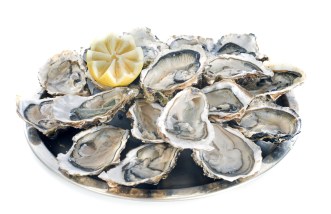
french oysters

Raw Oysters are High-risk Foods
Oysters are filter feeders. They constantly draw in water and accumulate materials from water, including pathogens such as Vibrio bacteria, norovirus and hepatitis A virus. These pathogens can infect people who eat oysters raw or undercooked. In addition, bacteria like Vibrio can continue to grow in oysters after harvesting if oysters are not maintained at low enough temperatures from harvest through to consumption. Food poisoning outbreaks related to raw oysters have been reported locally from time to time. Although the illness is usually mild and self-limiting, causing symptoms such as diarrhoea, abdominal cramps and vomiting, they can also cause severe health consequences especially for susceptible individuals.

Additional Risks in Shucked Oysters
Both physical and microbiological contamination are possible during the shucking of oysters. Physical removal of shellfish meat from the shell at the shucking table often exposes the product to dirt, mud and detritus. Shucked oysters should be rinsed or washed well to eliminate these contaminants and to reduce microbiological level of the products. Good hygiene practices should also be observed to minimise contamination from the workers and the working environment.

Before deshelling, oysters can stay alive even after long-haul shipping if kept under correct temperature and conditions. Once killed after shucking, raw oysters can deteriorate quickly if the temperature is not low enough to limit bacterial growth. Shucked oysters should be packed and chilled or frozen as soon as possible. Furthermore, an uninterrupted cold chain during transportation is critical to ensure safety and quality of the shellfish products.

USA – Man Dead After Eating Raw Oyster at Seafood Restaurant in Dania Beach: Vibrio

NBC Miami

A man is dead after contracting a bacterial infection from eating a raw oyster at the Rustic Inn Crabhouse in Dania Beach, according to the Sun Sentinel.

His death was traced to the bacteria, Vibrio, which is typically found in raw or undercooked seafood, like oysters.

According to the Sun Sentinel, the manager of the Rustic Inn, Gary Oreal, said the man who died was a former employee who had dined there earlier this month when the restaurant served as many as 100 dozen oysters. He was the only person who became sick.

“He had that one in a billion that was bad,” Oreal told the Sun Sentinel. “I feel horrible.”

RASFF Alert – Vibrio vulnificus – Frozen Raw Shrimps

RASFF

Detection of vibrio vulnificus in frozen raw shrimps from Ecuador in France

Research – Prevalence, genomic characterization, and risk assessment of human pathogenic Vibrio species in seafood

Journal of Food Protection

Pathogenic Vibrio spp. are largely responsible for human diseases caused through consumption of contaminated seafood. The aim of this study was to determine the prevalence, population densities, species diversity and molecular characteristics of pathogenic Vibrio in various seafood commodities and its associated health risks. Samples of finfish and shellfish (oysters and sea urchins) were collected from different regions and analyzed for Vibrio using the Most Probable Number (MPN) technique. Genomic DNA of putative Vibrio isolates was analyzed by whole genome sequencing (WGS) for taxonomic identification and identification of genes responsible for virulence and antimicrobial resistance. The risk of vibrio-related illnesses due to the consumption of contaminated seafood was assessed using Risk Ranger. Population densities of presumptive Vibrio fell in the range of 2.6 – 4.4 Log MPN/g and correlated with seasonality, with the summer season favoring significantly (p < 0.05) higher Vibrio counts. A total of 15 Vibrio isolates were identified as V. alginolyticus (5), V . parahaemolyticus (6), V. harveyi (2) or V. diabolicus (2). Two of the six V. parahaemolyticus isolates (ST 2504 and ST 2505) originating from oysters were found to be either tdh + or trh + and thus considered a human pathogen due to elaboration of Thermostable Direct Hemolysin (TDH) or TDH-related hemolysin (TRH). In addition to virulence genes, the shellfish isolates also harbored genes encoding resistance to multiple antibiotics including tetracycline, penicillin, quinolone and beta-lactam antibiotics, thus arousing concern. The risk assessment exercise pointed to an estimated 21 annual cases of V. parahaemolyticus -associated gastroenteritis in the general population attributed to consumption of contaminated oysters. This study highlights not only the wide prevalence and diversity of Vibrio in seafood, but also the potential of certain strains to threaten public health.

Research – Epidemiological and microbiological investigation of a large increase in vibriosis, northern Europe, 2018

Eurosurveillance

Food Illness

The habitat of  spp. bacteria is fresh and brackish water with moderate salinity. Non-toxigenic , as well as several human pathogenic non-cholera  species, including  and , cause vibriosis after seawater exposure or consumption of contaminated seafood [1]. Clinical manifestations range from mild gastroenteritis and otitis to wound infections that may lead to severe necrotising fasciitis and septicaemia with a potentially fatal outcome [25].

The Baltic Sea region is one of the areas where increasing numbers of cases related to  species causing vibriosis (VCV) have been reported in the last decades [6]. Several studies have shown how the occurrence of heatwaves, which lead to an increase in sea surface temperature, are linked with an increase in the number of reported vibriosis cases [4,712]. For instance, the years with an especially warm summer in the Baltic Sea region, 2006, 2010 and particularly 2014 (the warmest year in historical records at the time), were also the years with the largest number of vibriosis cases reported [6,11].

However, there is a notable gap in surveillance data for vibriosis since it is not a notifiable disease in the majority of European countries [1,6]. Therefore, the aim of this multi-country study was to describe the epidemiology of vibriosis cases in countries bordering the North and Baltic Seas area during the exceptionally warm year of 2018 [13,14], in order to investigate the extent of these infections in the study countries, map their genetic diversity, understand the predictors for developing severe vibriosis, and propose recommendations for public health measures.

Research – Efficacy of 405 nm Light-Emitting Diode Illumination and Citral Used Alone and in Combination for Inactivation of Vibrio parahaemolyticus on Shrimp

MDPI

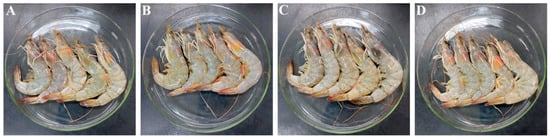
Vibrio parahaemolyticus is a widely distributed pathogen, which is frequently the lead cause of infections related to seafood consumption. The objective of the present study was to investigate the antimicrobial effect of the combination of 405 nm light-emitting diode (LED) and citral on V. parahaemolyticus. The antimicrobial effect of LED illumination and citral was evaluated on V. parahaemolyticus not only in phosphate-buffered saline (PBS) but also on shrimp. Quality changes of shrimp were determined by sensory evaluation. Changes in bacteria cell membrane morphology, cell membrane permeability, cell lipid oxidation level, and DNA degradation were examined to provide insights into the antimicrobial mechanism. The combination of LED treatments and citral had better antimicrobial effects than either treatment alone. LED combined with 0.1 mg/mL of citral effectively reduced V. parahaemolyticus from 6.5 log CFU/mL to below the detection limit in PBS. Combined treatment caused a 3.5 log reduction of the pathogen on shrimp within 20 min and a 6 log reduction within 2 h without significant changes in the sensory score. Furthermore, combined LED and citral treatment affected V. parahaemolyticus cellular morphology and outer membrane integrity. The profile of the comet assay and DNA fragmentation analysis revealed that combination treatment did not cause a breakdown of bacterial genomic DNA. In conclusion, LED may act synergistically with citral. They have the potential to be developed as novel microbial intervention strategies. View Full-Text

RASFF Alerts – Vibrio cholerae – Shrimps

RASFF

Vibrio cholerae in frozen shrimps from Ecuador in Spain

Research – Quantitative Risk Assessment of Vibrio parahaemolyticus in Shellfish from Retail to Consumption in Coastal City of East China 

Journal of Food Protection

Food Illness

Vibrio parahaemolyticus is the main foodborne pathogen of acute gastroenteritis in the world. A quantitative microbiological risk assessment (QMRA) was conducted to evaluate the health risk caused by V. parahaemolyticus in shellfish in the costal cities of east China. The QMRA framework was established from shellfish at retail through cooking at home to consumption. The prevalence and concentration of V. parahaemolyticus in shellfish, cooking methods, storage temperature and time after purchase, shellfish consumption frequency and consumption amount were analyzed in the exposure assessment. The results of the exposure assessment were introduced into the Beta-Poisson dose response model, and Monte Carlo analysis was used to calculate the risk of gastroenteritis caused by shellfish consumption. The results showed that the probability of illness caused by V. parahaemolyticus due to shellfish consumption per person per year (Pill,yr) was 3.49E-05. There were seasonal differences in the Pill/meal, the maximum Pill/meal was 4.81E-06 in summer, and the minimum Pill/meal was 2.27E-07 in winter. The sensitivity analysis showed that the concentration of V. parahaemolyticus in shellfish and the consumption per meal were main factors contributing to the illness. This QMRA provided valuable information such as the probability of illness associated with the consumption of shellfish and it also provided references for prevention strategies and control standards of V. parahaemolyticus in shellfish.

Nepal – Nepalese cholera outbreak: Kathmandu bans Panipuri

World Akkam

Kathmandu, June 26: Kathmandu, the capital of Nepal, is currently facing another outbreak of cholera. As of Sunday, at least 12 people have been infected with the disease, and authorities are struggling to contain the outbreak.

Cases of cholera have been found in several parts of the city, and health authorities have not yet identified the source. It was found that the water sources in many areas contained Vibrio cholerae.

Meanwhile, Kathmandu’s affiliated city, Lalitpur, has banned the sale of Panipuri and chat from Sunday for fear of cholera.

Lalitpur Metropolitan City (LMC) has decided to stop selling and distributing Panipuri and Chatpate in big cities from Saturday. LMC has banned the sale of Panipuri and Chapati, claiming that Vibrio cholerae was found in the water used in Panipuri.