Category Archives: Norovirus

Research – Pooled prevalence and genetic diversity of norovirus in Africa: a systematic review and meta-analysis

Virology J

Food Borne Illness - Norovirus -CDC Photo

Abstract

Background

Noroviruses are the leading cause of acute gastroenteritis in all age groups globally. The problem is magnified in developing countries including Africa. These viruses are highly prevalent with high genetic diversity and fast evolution rates. With this dynamicity, there are no recent review in the past five years in Africa. Therefore, this review and meta-analysis aimed to assess the prevalence and genetic diversity of noroviruses in Africa and tried to address the change in the prevalence and genetic diverisity the virus has been observed in Africa and in the world.

Methods

Twenty-one studies for the pooled prevalence, and 11 out of the 21 studies for genetic characterization of norovirus were included. Studies conducted since 2006, among symptomatic cases of all age groups in Africa, conducted with any study design, used molecular diagnostic methods and reported since 2015, were included and considered for the main meta-analysis. PubMed, Cochrane Library, and Google Scholar were searched to obtain the studies. The quality the studies was assessed using the JBI assessment tool. Data from studies reporting both asymptomatic and symptomatic cases, that did not meet the inclusion criteria were reviewed and included as discussion points. Data was entered to excel and imported to STATA 2011 to compute the prevalence and genetic diversity. Heterogeneity was checked using I2 test statistics followed by subgroup and sensitivity analysis. Publication bias was assessed using a funnel plot and eggers test that was followed by trim and fill analysis.

Result

The pooled prevalence of norovirus was 20.2% (95% CI: 15.91, 24.4). The highest (36.3%) prevalence was reported in Ghana. Genogroup II noroviruses were dominant and reported as 89.5% (95% CI: 87.8, 96). The highest and lowest prevalence of this genogroup were reported in Ethiopia (98.3%), and in Burkina Faso (72.4%), respectively. Diversified genotypes had been identified with an overall prevalence of GII. 4 NoV (50.8%) which was followed by GII.6, GII.17, GI.3 and GII.2 with a pooled prevalence of 7.7, 5.1, 4.6, and 4.2%, respectively.

Conclusion

The overall pooled prevalence of norovirus was high in Africa with the dominance of genogroup II and GII.4 genotype. This prevalence is comparable with some reviews done in the same time frame around the world. However, in Africa, an in increasing trained of pooled prevalence had been reported through time. Likewise, a variable distribution of non-GII.4 norovirus genotypes were reported as compared to those studies done in the world of the same time frame, and those previous reviews done in Africa. Therefore, continuous surveillance is required in Africa to support future interventions and vaccine programs.
New Zealand – Consumers urged not to eat illegal mussels

MPI

New Zealand Food Safety is urging consumers not to eat mussels being sold illegally at independent retailers or online.

The sale of imported mussels is carefully controlled to ensure they meet New Zealand’s food safety requirements. While mussels from Fiji may be brought into New Zealand for personal use, they cannot be sold.

Deputy director general Vincent Arbuckle says Fijian mussels have been removed from sale at some smaller retailers catering to Pacific Island communities, and online.

“As New Zealand Food Safety has not assessed Fiji’s growing, harvesting and processing controls for mussels we cannot be confident that the mussels don’t pose a food safety risk to consumers.”

The mussels are also known as: Nakai, Naakai, Nakaai, Kai, Batissa violacea and Fresh Water Mussels.

“It’s vital that mussels available to buy for members of the public are safe to eat. Knowing where the mussels you want to buy have come from can help reduce the risk of any potential health problems.

“Our message to people buying mussels is that if you are in any doubt, ask the retailer where the product has come from. If it is from Fiji, the mussels should not be for sale.”

Mussels are a higher risk food because of the way they feed, which increases the likelihood of contamination from bacteria, viruses, toxins and chemicals.

Hong Kong – Pre-shucked Oysters for Raw Consumption – What Should One be Aware of?

cfs

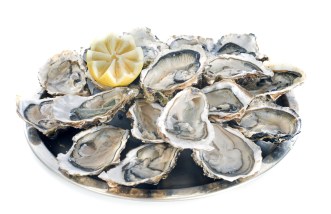
french oysters

Raw Oysters are High-risk Foods
Oysters are filter feeders. They constantly draw in water and accumulate materials from water, including pathogens such as Vibrio bacteria, norovirus and hepatitis A virus. These pathogens can infect people who eat oysters raw or undercooked. In addition, bacteria like Vibrio can continue to grow in oysters after harvesting if oysters are not maintained at low enough temperatures from harvest through to consumption. Food poisoning outbreaks related to raw oysters have been reported locally from time to time. Although the illness is usually mild and self-limiting, causing symptoms such as diarrhoea, abdominal cramps and vomiting, they can also cause severe health consequences especially for susceptible individuals.

Additional Risks in Shucked Oysters
Both physical and microbiological contamination are possible during the shucking of oysters. Physical removal of shellfish meat from the shell at the shucking table often exposes the product to dirt, mud and detritus. Shucked oysters should be rinsed or washed well to eliminate these contaminants and to reduce microbiological level of the products. Good hygiene practices should also be observed to minimise contamination from the workers and the working environment.

Before deshelling, oysters can stay alive even after long-haul shipping if kept under correct temperature and conditions. Once killed after shucking, raw oysters can deteriorate quickly if the temperature is not low enough to limit bacterial growth. Shucked oysters should be packed and chilled or frozen as soon as possible. Furthermore, an uninterrupted cold chain during transportation is critical to ensure safety and quality of the shellfish products.

Denmark – Health and Economic Burden of Seven Foodborne Diseases in Denmark, 2019

Mary Anne Liebert

We ranked seven foodborne pathogens in Denmark on the basis of their health and economic impact on society in 2019. We estimated burden of disease of infections with Campylobacter spp., Salmonella spp., Shiga toxin-producing Escherichia coli (STEC), Yersinia enterocoliticaListeria monocytogenes, norovirus, and hepatitis A virus in terms of incidence, mortality, disability-adjusted life years (DALY), and economic burden in terms of direct and indirect health costs. These seven pathogens accounted for 268,372 cases, 98 deaths, and 3121 DALYs, and led to a total expenditure of 434 million Euro in 1 year in a country with 5.8 million citizens. Foodborne infections by CampylobacterSalmonella, and norovirus caused the most DALYs, whereas Campylobacter, and norovirus and STEC had the higher costs. A combination of disease burden and cost of illness estimates is useful to inform policymaking and establish food safety priorities at the national level.

Virginia Tech researcher to test vaccine for Norovirus

VTX

Norovirus Food Safety kswfoodworld

Lijuan Yuan, professor of virology and immunology at the Virginia-Maryland College of Veterinary Medicine at Virginia Tech, will evaluate a potential live oral vaccine for norovirus, the No. 1 cause of foodborne illness.

Indiana University’s John Patton and colleagues are developing a norovirus vaccine that uses the Rotarix rotavirus vaccine as a platform. Using reverse genetics, they will insert a norovirus protein into Gene 7 of the rotavirus. The virus will then express the norovirus protein in the gut, inducing an immune response against norovirus.

Yuan’s lab will evaluate the replication capacity, immunogenicity, and protective efficacy of the vaccine using gnotobiotic pig models of human rotavirus and norovirus infection and diarrhea. A gnotobiotic animal is one that has been specially raised to contain zero germs or bacteria so researchers can better study the effects of bacteria and viruses such as rotavirus and norovirus.

According to the Centers for Disease Control and Prevention, norovirus is the leading cause of vomiting and diarrhea from acute gastroenteritis in the United States, resulting in 19 million to 21 million cases every year.

Norovirus tends to affect young children and the elderly the most. It’s responsible for about 24,000 hospitalizations and 925,000 outpatient visits for American children each year, according to the National Center for Biotechnology Information. Rotavirus also causes acute gastroenteritis and hits young children the hardest.

“Together, rotavirus and norovirus cause over 415,000 deaths every year, and norovirus also has a very significant burden even in the countries that don’t have a lot of deaths. The economic cost is huge, $4.2 billion in direct costs and $60 billion in indirect societal costs. You hear about norovirus outbreaks on the news all the time in hospitals, nursing homes, and cruise ships and how it’s closing down restaurants, so it’s got a lot of economic implications,” said Yuan.

RASFF Alerts – Norovirus – Frozen Raspberries

RASFF

Norovirus group II detected in frozen raspberries from France in Spain, Ivory Coast and Cameroon

IAFP 2022: Persistence of Norovirus, Hepatitis A in Low-Moisture Foods

Food Safety.Com

Food Borne Illness - Norovirus -CDC Photo

Hepatitis A and Human Norovirus

Dr. Gibson introduced and gave an overview of the two most relevant enteric viruses in food safety—human Norovirus and Hepatitis A—on which Dr. Jaykus later elaborated. The viruses share several characteristics, such as being resistant to environmental degradation, having a low infectious dose, and shedding from infected individuals at high concentrations. The enteric viruses are also highly persistent on foods and are difficult to inactivate. According to Dr. Jaykus, the viruses can persist on surfaces for days to weeks at room temperature; on foods in water, the viruses can persist for weeks to months if refrigerated, and indefinitely if frozen. Although viral persistence is strong for enteric viruses, the viruses’ survivability depends on the surface, matrix, and temperatures to which they are subject.

Hepatitis A is more common in low-income countries and its common modes of transmission are ready-to-eat (RTE) foods, fresh and frozen produce, and LMFs. Hepatitis A has a public health impact of over 37,000 foodborne cases in the U.S., annually. Norovirus, which causes approximately 5.5 million cases of foodborne illness in the U.S. each year, is mainly transmitted through foods at restaurants due to contamination by infected food handlers; soft, red fruits are also associated with Norovirus due to being hand-harvested. Foods that are handled by humans during harvesting, processing, or preparation are common vehicles for Norovirus as the pathogen can remain infectious and shed from infected individuals for up to eight weeks.

In dry environments, the enteric viruses can transfer between surfaces at a rate of 5–10 percent; in moist environments, the viruses’ rate of transferability increases to over 95 percent. Hepatitis A and Norovirus have also shown to be effective at attaching and sticking to existing biofilms.

Spain – 109 infections confirmed in Norovirus outbreak in Mojacar, Almeria, tourist complex

Euroweekly

A total of 109 people have been confirmed infected by the norovirus outbreak at a tourist complex in the Almeria municipality of Mojacar.

An outbreak of norovirus in the Best Pueblo Indalo apartments located in the Almeria municipality of Mojacar has infected 109 people according to a report today, Friday, July 29, from the Territorial Delegation of Health and Families.

The first case was confirmed last Wednesday, July 27, and epidemiologists have since been carrying out an exhaustive tracking of newly affected patients.

“It is an explosive virus, but the symptoms are mild and disappear within 24 to 48 hours”, health sources confirmed to Diario de Almeria. They assured the publication that a significant number of patients had already recovered.

Those affected by this stomach virus have suffered vomiting, gastrointestinal ailments, diarrhoea, and general malaise these past few days. It is a sickness that is not caused by food poisoning but is most likely transmitted through direct contact with surfaces such as a railing or a doorknob.

France – Frozen raspberries 500g – Norovirus

Gov france

Identification information of the recalled product

  • Product category Feed
  • Product subcategory Fruits and vegetables
  • Product brand name Carrefour Classic’
  • Model names or references Frozen raspberries 500g – Carrefour Classic’
  • Identification of products
    GTIN Batch Date
    3560071448936 34911601 Date of minimum durability 01/25/2024
    3560071448936 34418901 Date of minimum durability 11/01/2024
    3560071448936 34920701 Date of minimum durability 01/14/2024
    3560071448936 37472201 Date of minimum durability 06/13/2024
  • Packaging500g bag
  • Marketing start/end date From 03/11/2022 to 07/26/2022
  • Storage temperature Product to keep in the freezer
  • Health mark EMB 02408D
  • Further information Bags bearing the EMB code 02408D near the barcode
  • Geographic area of ​​sale Whole France
  • Distributors Crossroads

Practical information regarding the recall

  • Reason for recall Microbial contamination (presence of norovirus)
  • Risks incurred by the consumer Norovirus

USA – FDA Is Focusing on Safety of Frozen Berries

Food Safety Tech

From 1983 to 2018, there were 50 outbreaks globally that were attributed to frozen berries: 36 caused by Norovirus and 14 by Hepatitis A.

On July 22, the FDA announced that it is developing a food safety prevention strategy to enhance the safety of fresh and frozen berries. The move comes in response to multiple hepatitis A (HAV) and norovirus (NoV) outbreaks linked to the consumption of both fresh and frozen berries.

The FDA reports that there have been four HAV outbreaks and three NoV outbreaks linked to frozen berries from 1990 to 2016 in the U.S., and since 2011, there have been three HAV outbreaks linked to fresh berries, including a current outbreak linked to fresh organic strawberries.

In addition, from 1983 to 2018, there were 50 outbreaks globally that were attributed to frozen berries: 36 caused by NoV and 14 by HAV. The FDA noted that although freezing preserves berries it generally does not inactivate viruses that may be introduced at various points in the supply chain, such as by infected workers, contaminated water or contaminated food contact surfaces. In addition, fresh berries are generally eaten raw without a kill-step that could eliminate pathogens.

In August, the FDA plans to resume an assignment to collect and test frozen berries that it paused at the start of the COVID-19 pandemic. The assignment seeks to estimate the prevalence of HAV and NoV in frozen strawberries, raspberries and blackberries and help the FDA identify sites where practices or conditions may exist that constitute safety vulnerabilities.

The FDA also plans to work collaboratively with industry, academia and regulatory partners in the development of a food safety prevention strategy to identify measures that can be taken to limit or prevent contamination from occurring throughout the berry supply chain, approaches to re-enforce control measures and their application as well as areas where additional research is needed.