Category Archives: Food Temperature Abuse

RASFF Alerts – Aflatoxin – Dried Figs – Pistachios – Groundnuts

RASFF

Aflatoxins in roasted and salted pistachios from Turkey in Germany

RASFF

Aflatoxins in pistachios in shell from Turkey in Germany

RASFF

Aflatoxin in Egyptian groundnuts in the Netherlands

RASFF

Aflatoxins in figs from Turkey in Germany

RASFF

Aflatoxins in dried figs from Turkey in Poland

USA -Euro Foods Dba Citterio USA Corp. Recalls Salame Stick Products Due To Possible Salmonella Contamination

FSIS USDA

WASHINGTON, Nov. 10, 2021 – Euro Foods, a Freeland, Penn. establishment, is recalling approximately 119,091 pounds of salame stick products that may be contaminated with Salmonella the U.S. Department of Agriculture’s Food Safety and Inspection Service (FSIS) announced today. FSIS issued a public health alert for the salame stick products on October 29, 2021, believing that the product was no longer in commerce. However, following this alert, FSIS observed product available at one retail location and two Citterio salame stick samples previously collected by the California Department of Public Health have tested positive for Salmonella.

The Italian-style salame stick items were produced prior to October 25, 2021. The following products are subject to recall [view label]:

  • 2-oz. packages containing Citterio “Premium Italian-Style Salame Sticks ALL NATURAL” with “best by” dates through January 23, 2022, located next to the barcode.

The products subject to recall bear establishment number “EST. 4010” inside the USDA mark of inspection. These items were shipped to retail locations nationwide and exported to Bermuda.

FSIS has been working with the Centers for Disease Control and Prevention (CDC) and state public health partners to investigate a multistate outbreak of 31 Salmonella I 4,[5],12:i:- illnesses in 10 states with onset dates ranging from September 18, 2021 through October 18, 2021. The epidemiologic and traceback investigation identified that ill people consumed Citterio Italian-style Salame Sticks produced by Euro Foods Inc. Two unopened, intact, packages of Citterio Italian-style Salame Sticks collected by the California Department of Public Health as part of the ongoing investigation tested positive for Salmonella. Further testing is ongoing to determine if the product samples are related to the outbreak. FSIS continues to work with federal and state public health partners to determine if there are additional illnesses linked to these products.

Consumption of food contaminated with Salmonella can cause salmonellosis, one of the most common bacterial foodborne illnesses. The most common symptoms of salmonellosis are diarrhea, abdominal cramps, and fever within 6 hours to 6 days after eating the contaminated product. The illness usually lasts 4 to 7 days. Most people recover without treatment. In some persons, however, the diarrhea may be so severe that the patient needs to be hospitalized. Older adults, infants, and persons with weakened immune systems are more likely to develop a severe illness. Individuals concerned about an illness should contact their health care provider.

FSIS is concerned that some product may be in consumers’ pantries or refrigerators. Consumers who have purchased these products are urged not to consume them. These products should be thrown away or returned to the place of purchase.

Click to access 042-2021-label.pdf

RASFF Alert- Ochratoxin – Spray Dried Soluble Coffee

RASFF

Ochratoxin A in spray dried soluble coffee from India in Romania

RASFF Alerts – Mold/Mould Growth in Chilli Flakes

RASFF

Mold growth in chili flakes from Germany in Denmark

Research – Healthcare-associated foodborne outbreaks in high-income countries: a literature review and surveillance study, 16 OECD countries, 2001 to 2019

Eurosurveillance

Yearly, 23 million foodborne disease illnesses and 5,000 deaths are estimated in the World Health Organization (WHO) European Region, and 41 foodborne Disability Adjusted Life Years (DALYs) per 100,000 population were estimated for the WHO Sub-Region EUR A in 2010 [1]. In Europe, a total of 5,146 foodborne and waterborne outbreaks, including 48,365 cases of illness and 40 deaths were reported to the European Food Safety Authority (EFSA) in 2018 [2]. Vulnerable populations, including elderly patients, immunocompromised patients, children younger than five years old and pregnant women are more susceptible to foodborne infections and are more prone to develop severe courses of disease compared with healthy people [3]. Therefore, healthcare is a setting where foodborne outbreaks (FBO) can cause considerable morbidity and mortality. In 2020, 20.6% of the European Union (EU) population was aged 65 years and older [4]. As the proportion of elderly people is projected to further increase, the share of the vulnerable population as patients in healthcare facilities (HCF) is likely to increase and thereby the risk associated with healthcare-associated foodborne outbreaks (HA-FBO). Personnel (medical and non-medical staff, food handlers etc) of HCF may also be at risk for HA-FBO and be a source of further spread in healthcare settings and elsewhere. This can cause major disruption of services [5].

So far, literature reviews have covered pathogens responsible for HA-FBO, including  [6],  [79] and norovirus [10,11] and focused on microbiological food safety issues in healthcare settings [5,12]. Between 2014 and 2019, a listeriosis outbreak in Germany affected 13 cases who had an inpatient stay in 12 different HCF during the incubation period [13]. In the United Kingdom (UK) in 2019, nine listeriosis cases of which seven died, had consumed sandwiches in seven HCF during the incubation period [14].

We conducted a literature review to describe the causative agents including bacteria, viruses, parasites and fungi, the incriminated food vehicles and other outbreak characteristics of HA-FBO in 37 countries that are members of the Organisation for Economic Cooperation and Development (OECD) [15]. Furthermore, we analysed German surveillance data and data from the EFSA on HA-FBO. The aim of this article is to describe the current status of HA-FBO in order to improve surveillance and provide public health recommendations for prevention.

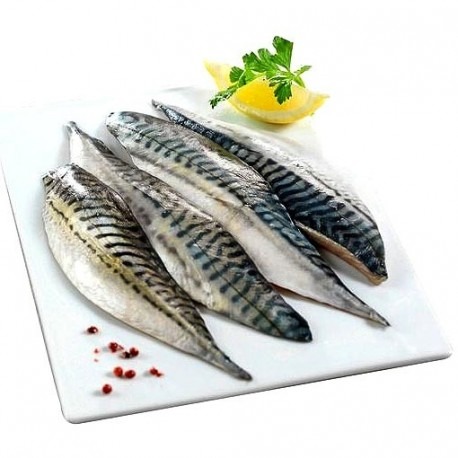
France – Whole mackerel and fillets sold in the seafood department – Histamine

Gov france

Identifying information for the recalled product

  • Product category Food
  • Product sub-category Fishery and aquaculture products
  • Product brand name Unbranded
  • Names of models or references Whole mackerel and Mackerel fillets
  • Product identification
    Lot
    see list of products attached
  • Products List Product_list.pdf Enclosed
  • Start date / End of marketing From 08/10/2021 to 14/10/2021
  • Storage temperature Product to be stored in the refrigerator
  • Geographical sales area Auchan Semur-en-Auxois
  • DistributorsAuchan Semur in Auxois
  • List of points of sale Address_Auchan_Semur.pdf

Practical information regarding the recall

  • Reason for recall Presence of histamine

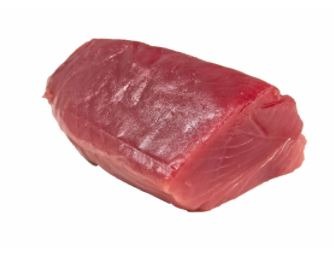
France – Sliced ​​Tuna Loin – Histamine

Gov france

Identifying information for the recalled product

  • Product category Food
  • Product sub-category Fishery and aquaculture products
  • Product brand name unbranded
  • Names of models or references Sliced ​​tuna loin sold at the traditional stand of the CARREFOUR IVRY SUR SEINE store between 02/10/2021 and 06/10/2021
  • Product identification
    GTIN Lot
    1111111111116 sold between 02/10/2021 and 06/10/2021
  • Packaging by weight, presented sliced
  • Start date / End of marketing From 02/10/2021 to 06/10/2021
  • Storage temperature Product to be stored in the refrigerator
  • Further information Sliced ​​tuna loin sold at the traditional stand of the CARREFOUR IVRY SUR SEINE store between 02/10/2021 and 06/10/2021
  • Geographical sales area CARREFOUR IVRY SUR SEINE ONLY
  • Distributors ONLY CARREFOUR IVRY SUR SEINE

Practical information regarding the recall

  • Reason for recall presence of histamine
  • Risks incurred by the consumer Endogenous toxins: histamine (fish, cheese, alcoholic drinks, cold meats)

Research – Whole genome sequencing reveals great diversity of Vibrio spp in prawns at retail

Microbiology Research

Food Illness

Consumption of prawns as a protein source has been on the rise worldwide with seafood identified as the predominant attributable source of human vibriosis. However, surveillance of non-cholera is limited both in public health and in food. Using a population- and market share-weighted study design, 211 prawn samples were collected and cultured for spp. Contamination was detected in 46 % of samples, and multiple diverse isolates were obtained from 34 % of positive samples. Whole genome sequencing (WGS) and phylogenetic analysis illustrated a comprehensive view of species diversity in prawns available at retail, with no known pathogenicity markers identified in and . Antimicrobial resistance genes were found in 77 % of isolates, and 12 % carried genes conferring resistance to three or more drug classes. Resistance genes were found predominantly in , though multiple resistance genes were also identified in and . This study highlights the large diversity in derived from prawns at retail, even within a single sample. Although there was little evidence in this study that prawns are a major source of vibriosis in the UK, surveillance of non-cholera is very limited. This study illustrates the value of expanding WGS surveillance efforts of non-cholera Vibrios in the food chain to identify critical control points for food safety through the production system and to determine the full extent of the public health impact.

USA – Cilantro May Be the Source in Mystery Multistate Salmonella Outbreak

Food Poisoning Bulletin

Salmonellaa

Cilantro may be the source in the mystery multistate Salmonella Oranienburg outbreak, according to a dendrogram on the National Center for Biotechnology Information site, part of the National Institutes of Health. According to that information, cilantro has tested positive for Salmonella Oranienburg, the bacteria that has caused this outbreak.

RASFF Alert – Histamine – Tuna

RASFF

Histamine in tuna – Netherlands and Sweden