Author Archives: KSW

USA -FDA Advises Restaurants and Retailers Not to Serve or Sell and Consumers Not to Eat Certain Mussels from Newfoundland, Canada Due to Potential Contamination

FDA

Certain live mussels from Allen’s Fisheries, Ltd. (NL0047SP), Benoit’s Cove, Newfoundland, Canada were initially harvested on 2/07/2024 (Julian date 24038) from harvest area AQ # 15 Newfoundland, with final harvest date of 2/18/2024 (Julian date 24049) and shipped to  distributors in CT, FL, MD, MA, NJ, NY, and PA on or around 2/21/2024 (Julian Date 24052). The live mussels were distributed to restaurants and retailers in CT, FL, MD, MA, NJ, NY, and PA and may have been distributed to other states, as well.

The following product tag is provided to be representative of labeling that would accompany the implicated mussels.
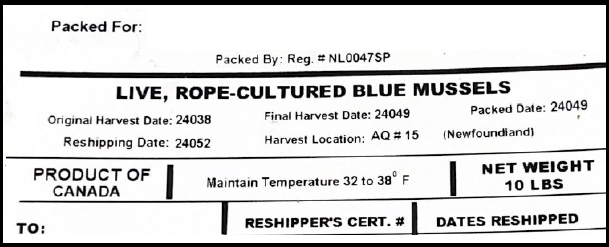
Sample product tag from the alert concerning certain mussels from Newfoundland, Canada due to potential contamination

Purpose

The FDA is advising restaurants and food retailers not to serve or sell and to dispose of mussels and consumers not to eat mussels from Allen’s Fisheries (NL0047SP) in Newfoundland, Canada, harvested on 2/07/2024 (Julian date 24038), from harvest area AQ # 15 Newfoundland, with final harvest date of 2/18/2024 (Julian date 24049) and shipped to distributors in CT, FL, MD, MA, NJ, NY, and PA on or around 2/21/2024 (Julian Date 24052) because they may be contaminated.

Contaminated shellfish can cause illness, especially if eaten raw, particularly in people with compromised immune systems. Food contaminated with pathogens or biotoxins may look, smell, and taste normal. Consumers of these products who are experiencing food poisoning symptoms such as diarrhea, stomach pain or cramps, nausea, vomiting, or fever should contact their healthcare provider, who should report their symptoms to their local Health Department.

Summary of Problem and Scope

On 3/1/2024, the New Jersey Department of Health advised the FDA of an outbreak of illness associated with consumption of certain mussels. The cases experienced symptoms including nausea, vomiting and diarrhea. The advisory includes mussels from Allen’s Fisheries (NL0047SP) in Newfoundland, Canada, harvested on 2/07/2024 (Julian date 24038), from harvest area AQ # 15 Newfoundland, with final harvest date of 2/18/2024 (Julian date 24049) and shipped to distributors in CT, FL, MD, MA, NJ, NY, and PA on or around 2/21/2024 (Julian Date 24052).

USA – Jen’s Breakfast Burritos, LLC, Recalls Ready to Eat Breakfast Burrito Products Due to Possible Listeria Contamination

FSIS USDA

WASHINGTON, March 10, 2024 – Jen’s Breakfast Burritos, LLC, an Auburn, Wash. establishment, is recalling approximately 144 pounds of ready-to-eat (RTE) breakfast burrito products that may be adulterated with Listeria monocytogenes, the U.S. Department of Agriculture’s Food Safety and Inspection Service (FSIS) announced today.

The RTE breakfast burrito items were produced on February 29, 2024. The following products are subject to recall [view labels]:

  • 7-oz. individual wax paper packages containing “Smoked Bacon Breakfast Burrito” with lot code 060-1 on a sticker on the back of the package.
  • 7-oz. individual wax paper packages containing “Ham Breakfast Burrito” with lot code 060-2 on a sticker on the back of the package.
  • 7-oz. individual wax paper packages containing “Seasoned Pork Breakfast Burrito” with lot code 060-3 on a sticker on the back of the package.

The products subject to recall bear establishment number “EST. 1826” inside the USDA mark of inspection. These items were shipped to “to-go” kiosk locations in Washington.

The problem was discovered after FSIS performed routine product testing and the results indicated the product may be contaminated with Listeria monocytogenes.

There have been no confirmed reports of adverse reactions due to consumption of these products. Anyone concerned about an illness should contact a healthcare provider.

Italy – Multi-fruit drink (red genius smoothie) – Patulin

Salute

Brand : Solevita

Name : Multi-fruit drink (red genius smoothie)

Reason for reporting : Recall due to chemical risk

Publication date : 9 March 2024

Documentation

Documentation

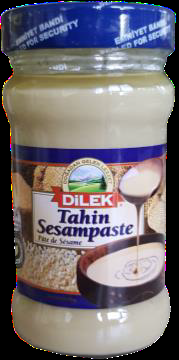
Germany – DILEK sesame paste “Tahini” 300g – Salmonella

Lebensmittelwarnung

Alert type:

Groceries

Date of first publication:

March 8, 2024

Product name:

DILEK sesame paste “Tahini” 300g

Product images:

Product image.png

Product image sesame paste

Manufacturer (distributor):

ANATOL GmbH & Co. Wholesale KG distributed through Kaufland branches

Reason for warning:

Detection of Salmonella

Packaging Unit: 300g
Durability: October 16, 2026
Lot identification:

Research – USDA Develops Egg Pasteurization Technology That Rapidly Kills 99.999 Percent of Salmonella

Food Safety.com

Researchers at the U.S. Department of Agriculture’s Agricultural Research Service (USDA’s ARS) have developed a thermal pasteurization method based on Radio Frequency (RF) technology that effectively reduces the presence of Salmonella in intact eggs, in a fraction of the time required for traditional pasteurization.

Although thermal pasteurization is proven to inactivate pathogens in intact eggs, less than 3 percent of commercial eggs are pasteurized in the U.S., as the process can take more than 57 minutes, according to ARS. Conventional thermal pasteurization involves submerging the eggs fully in hot water.

Research – Outbreak of Salmonella Typhimurium linked to Swedish pre-washed rocket salad, Sweden, September to November 2022

Eurosurveillance

At the end of September 2022, the Public Health Agency of Sweden (PHAS) observed an increase of domestic  cases reported by treating physicians and clinical microbiological laboratories through the Swedish national electronic notification system for notifiable diseases (SmiNet). Data obtained from regional clinical microbiological laboratories performing subtyping of  isolates on serogroup level suggested that  serogroup B was causing the national increase of cases.

On 4 October 2022, PHAS identified a cluster of eight cases of  Typhimurium belonging to the 7-gene multilocus sequence type (ST) 19 based on whole genome sequencing (WGS), suggesting a common source. The cluster was identified as part of the PHAS microbial surveillance programme, which is based on voluntary submission of metadata and isolates of  from domestic cases, by the regional clinical microbiological laboratories. At PHAS, typing is performed using WGS and conventional slide agglutination can be done if needed.

On 7 October 2022, a national outbreak was declared, following the laboratory confirmation of another 11 cases belonging to the cluster distributed in 11 of 21 Swedish regions. The outbreak control team was coordinated by PHAS and included the Swedish Food Agency (SFA) and regional departments of communicable disease control and prevention (CDC).

We describe an outbreak investigation of  Typhimurium in Sweden linked to cases in Finland, in September–November 2022. We collaborated with Finnish authorities and aimed to assess the extent of the outbreak, identify its source and initiate appropriate control measures to prevent further cases.

Research – Refrigerate lettuce to reduce risk of E. coli contamination

Science Daily

Leafy green vegetables are important sources of dietary fiber and nutrients, but they can harbor harmful pathogens. In particular, lettuce has often been involved in outbreaks of foodborne illness across the U.S. A new study examines factors that affect E. coli contamination on five different leafy greens — romaine lettuce, green-leaf lettuce, spinach, kale, and collards.

Research – Chapter 12 – Mycotoxins in cereals

Science Direct

Abstract

Mycotoxins are toxic secondary metabolites of filamentous food-borne fungi that grow worldwide on a variety of cereals and other agricultural produce. Aflatoxinsochratoxin Afumonisins, trichothecenes, and zearalenone occur on cereals and lead to mycotoxicoses among humans, animals, and poultry. Some mycotoxins are carcinogenic, hepatotoxic, nephrotoxic, dermatoxic, genotoxic, teratogenic, immunotoxic, or estrogenic. Good agricultural practice involving sound preharvest practices such as optimum tillage, crop rotation, planting date, avoidance of drought stress, and optimal fertilization contributes to the production of healthy crops. Biocontrol agents, such as Aflasafe, and genetically modified insect-resistant maize, such as Bt maize, reduce mycotoxin formation in maize. Hygienic storage conditions contribute to the prevention of mycotoxin formation. Reliable analytical results are necessary for compliance with mycotoxin regulations and control procedures to facilitate the international trade of cereals. Compliance with regulations of international food safety authorities as well as public awareness of mycotoxins should enhance the protection of populations from the adverse health effects of mycotoxins.

Research – Survival of Listeria Strains and Shelf Life Determination of Fresh Blueberries (Vaccinium corymbosum) Treated with Cold Atmospheric Plasma

MDPI

Abstract

Fresh blueberries are delicate, hand-picked, packaged, and refrigerated fruits vulnerable to spoilage and contamination. Cold atmospheric plasma (CAP) is a promising antimicrobial technology; therefore, this study evaluated the CAP treatment effect on acid-tolerant Listeria innocua and Listeria monocytogenes and evaluated changes in the quality of the treated fruit. Samples were spot-inoculated with pH 5.5 and 6.0 acid-adapted Listeria species. Samples were treated with gliding arc CAP for 15, 30, 45, and 60 s and evaluated after 0, 1, 4, 7, and 11 days of storage at 4 °C and 90% humidity for the following quality parameters: total aerobic counts, yeast and molds, texture, color, soluble solids, pH, and titratable acidity. CAP treatments of 30 s and over demonstrated significant reductions in pathogens under both the resistant strain and pH conditions. Sixty-second CAP achieved a 0.54 Log CFU g−1 reduction in L. monocytogenes (pH 5.5) and 0.28 Log CFU g−1 for L. monocytogenes (pH 6.0). Yeast and mold counts on day 0 showed statistically significant reductions after 30, 45, and 60 s CAP with an average 2.34 Log CFU g−1 reduction when compared to non-CAP treated samples. Quality parameters did not show major significant differences among CAP treatments during shelf life. CAP is an effective antimicrobial treatment that does not significantly affect fruit quality.

Research – Fates of attached E. coli o157:h7 on intact leaf surfaces revealed leafy green susceptibility

Science Direct

Abstract

Leafy greens, especially lettuce, are repeatedly linked to foodborne outbreaks. This paper studied the susceptibility of different leafy greens to human pathogens. Five commonly consumed leafy greens, including romaine lettuce, green-leaf lettuce, baby spinach, kale, and collard, were selected by their outbreak frequencies. The behavior of E. coli O157:H7 87-23 on intact leaf surfaces and in their lysates was investigated. Bacterial attachment was positively correlated with leaf surface roughness and affected by the epicuticular wax composition. At room temperature, E. coli O157:H7 had the best growth potentials on romaine and green-leaf lettuce surfaces. The bacterial growth was positively correlated with stomata size and affected by epicuticular wax compositions. At 37 °C, E. coli O157:H7 87-23 was largely inhibited by spinach and collard lysates, and it became undetectable in kale lysate after 24 h of incubation. Kale and collard lysates also delayed or partially inhibited the bacterial growth in TSB and lettuce lysate at 37 °C, and they sharply reduced the E. coli O157:H7 population on green leaf lettuce at 4 °C. In summary, the susceptibility of leafy greens to E. coli O157:H7 is determined by a produce-specific combination of physiochemical properties and temperature.