Monthly Archives: January 2023

Research – Microbiological safety of aged meat

EFSA

Abstract

The impact of dry‐ageing of beef and wet‐ageing of beef, pork and lamb on microbiological hazards and spoilage bacteria was examined and current practices are described. As ‘standard fresh’ and wet‐aged meat use similar processes these were differentiated based on duration. In addition to a description of the different stages, data were collated on key parameters (time, temperature, pH and aw) using a literature survey and questionnaires. The microbiological hazards that may be present in all aged meats included Shiga toxin‐producing Escherichia coli (STEC), Salmonella spp., Staphylococcus aureus, Listeria monocytogenes, enterotoxigenic Yersinia spp., Campylobacter spp. and Clostridium spp. Moulds, such as Aspergillus spp. and Penicillium spp., may produce mycotoxins when conditions are favourable but may be prevented by ensuring a meat surface temperature of −0.5 to 3.0°C, with a relative humidity (RH) of 75–85% and an airflow of 0.2–0.5 m/s for up to 35 days. The main meat spoilage bacteria include Pseudomonas spp., Lactobacillus spp. Enterococcus spp., Weissella spp., Brochothrix spp., Leuconostoc spp., Lactobacillus spp., Shewanella spp. and Clostridium spp. Under current practices, the ageing of meat may have an impact on the load of microbiological hazards and spoilage bacteria as compared to standard fresh meat preparation. Ageing under defined and controlled conditions can achieve the same or lower loads of microbiological hazards and spoilage bacteria than the variable log10 increases predicted during standard fresh meat preparation. An approach was used to establish the conditions of time and temperature that would achieve similar or lower levels of L. monocytogenes and Yersinia enterocolitica (pork only) and lactic acid bacteria (representing spoilage bacteria) as compared to standard fresh meat. Finally, additional control activities were identified that would further assure the microbial safety of dry‐aged beef, based on recommended best practice and the outputs of the equivalence assessment.

PDF

Research – New Nordic report on food safety in seaweed and kelp

Mattilsynet

Together with other food inspectorates in the Nordics, the Norwegian Food Safety Authority has looked at a common Nordic approach to risk management of food safety in seaweed kelp for use as food. The project group recommends that, among other things, a harmonized regulatory framework for food safety should be developed, where seaweed and kelp are classified as a specific group of food, with subgroups for different species.

Interest in seaweed and kelp for use as food is increasing in the Nordic countries and in other countries in Europe. Although seaweed is the largest aquaculture product in the world, there are still no international standards or regulations for food safety in such foods, such as Codex standards or EU legislation.

Nordic species and Nordic waters can have distinctive characteristics that differ from other regions of the world. This must be taken into account in the development of future regulations.

With this as a background, a joint Nordic project was created in 2020, funded by the Nordic Council of Ministers, consisting of the food inspectorates in Denmark, Iceland, the Faroe Islands, Sweden and Norway.

The purpose was to develop a common Nordic approach to risk management of food safety in seaweed and kelp for use in regulatory development in the EU and Codex, and as a background for guidance material in the countries.

The project ended with a report containing updated knowledge about food safety in seaweed and kelp, with special emphasis on Nordic conditions. It describes, among other things, existing production and risk management, which Nordic species are relevant for use as food, their new food status and analysis data from the various countries for heavy metals and iodine.

Read more about the report on the Norwegian Food Safety Authority’s website

Research – Small Contaminations on Broiler Carcasses Are More a Quality Matter than a Food Safety Issue

MDPI

Abstract

Depending on the interpretation of the European Union (EU) regulations, even marginally visibly contaminated poultry carcasses could be rejected for human consumption due to food safety concerns. However, it is not clear if small contaminations actually increase the already present bacterial load of carcasses to such an extent that the risk for the consumers is seriously elevated. Therefore, the additional contribution to the total microbial load on carcasses by a small but still visible contamination with feces, grains from the crop, and drops of bile and grease from the slaughter line was determined using a Monte Carlo simulation. The bacterial counts (total aerobic plate count, EnterobacteriaceaeEscherichia coli, and Campylobacter spp.) were obtained from the literature and used as input for the Monte Carlo model with 50,000 iterations for each simulation. The Monte Carlo simulation revealed that the presence of minute spots of feces, bile, crop content, and slaughter line grease do not lead to a substantial increase of the already existing biological hazards present on the carcasses and should thus be considered a matter of quality rather than food safety.

Research – Antimicrobial and Antibiofilm Effect of Commonly Used Disinfectants on Salmonella Infantis Isolates

MDPI

Abstract

Salmonella enterica subsp. enterica serovar Infantis is the most prevalent serovar in broilers and broiler meat in the European Union. The aim of our study was to test the biofilm formation and antimicrobial effect of disinfectants on genetically characterized S. Infantis isolates from poultry, food, and humans. For the biofilm formation under various temperature conditions (8 °C, 20 °C, and 28 °C) and incubation times (72 h and 168 h), the crystal violet staining method was used. The evaluation of the in vitro antimicrobial effect of Ecocid® S, ethanol, and hydrogen peroxide was determined using the broth microdilution method. The antibiofilm effect of subinhibitory concentration (1/8 MIC) of disinfectants was then tested on S. Infantis 323/19 strain that had the highest biofilm formation potential. Our results showed that the biofilm formation was strain-specific; however, it was higher at 20 °C and prolonged incubation time. Moreover, strains carrying a pESI plasmid showed higher biofilm formation potential. The antibiofilm potential of disinfectants on S. Infantis 323/19 strain at 20 °C was effective after a shorter incubation time. As shown in our study, more effective precautionary measures should be implemented to ensure biofilm prevention and removal in order to control the S. Infantis occurrence.

USA – CDC – Game Day Food Safety Tips

CDC

What You Need to Know

  • Wash your hands with soap and running water for at least 20 seconds before, during, and after preparing food and before eating.
  • Separate raw meats from ready-to-eat foods like vegetables when preparing, serving, or storing foods.
  • Make sure food is cooked to a safe internal temperature.
  • Keep hot foods hot (140°F or warmer) and cold foods cold (40°F or colder).
  • Throw out perishable food that has been sitting at room temperature for more than 2 hours (more than 1 hour if it has been exposed to temperatures above 90°F).

Tackling a game day spread? Play by these rules and keep the runs on the field. Make sure your game day favorites are memorable for all the right reasons.

Malta – Nearly 800 reported cases of food poisoning in 2022

Times of Malta

Just over 780 people were reported to have suffered from food poisoning last year, nearly 300 more than the numbers reported in pre-pandemic years, according to official statistics.

In 2022, a total of 781 food poisoning cases were reported to the health authorities, a major increase from the 486 registered in 2019.

The figure last year includes 357 people impacted by 71 outbreaks, up from the 232 people involved in 63 outbreaks of food poisoning in 2019.

The most common food-borne bacteria are Salmonella and Campylobacter, according to the list provided showing the food and water-borne diseases reported by the local health authorities.

Belgium – Pistachios – Aflatoxin

AFSCA

Recall of pistachios by the farmer Bas “Boer Bas” in Bruges
Product: Pistachios.
Problem: Too high aflatoxin content.


In consultation with the FASFC, pistachios in bulk (in jars) are withdrawn from sale and recalled to consumers because of too high aflatoxin content.

The Bas farmer “Boer Bas” asks his customers not to consume this product and to bring it back to the point of sale. We will of course reimburse you for it and have it destroyed.

Product description

– Product name: Pistachio
– Information on the label and batch number: Stat No 0802520000 Poste IR – Batch N°12
– Best before dates (DDM): 08/30/2023 and 08/31/2023
– Sales period : from 05/09/2022 to 01/12/2022
– Nature of packaging: glass jar (reconditioned) with a label on the lid
– Weight: 200gr-500gr (variable according to the size of the jar)


The product was distributed by:

Farmer “Boer Bas” Sint-Pietersnoordstraat 3 8000 BRUGES

For more information please contact:

Jens Mouton, Torhoutbahn 125, 8480 Ichtegem
phone 0472 82 65 98 or info@boerbas.be

Quebec – Notice not to consume various Montefino cheeses prepared and sold by Ferme Diodati SENC – Food Safety

Quebec

QUEBEC CITY , Jan. 27, 2023 /CNW Telbec/ – The Ministère de l’Agriculture, des Pêcheries et de l’Alimentation (MAPAQ), advises the population not to consume the products indicated in the table below, because pasteurization was not carried out in such a way as to ensure their safety.

Product name

Format

Affected batch

“Montefino cheese – fresh cranberries”

VARIABLE

11/23/22 (made on)

11/23/25 (best before)

“Montefino cheese – natural fresh”

VARIABLE

11/23/22 (made on)

11/23/25 (best before)

“Montefino cheese – fresh with fine herbs”

VARIABLE

11/23/22 (made on)

11/23/25 (best before)

“Montefino cheese – fresh hot pepper”

VARIABLE

11/23/22 (made on)

11/23/25 (best before)

“Montefino cheese – fresh cracked black pepper”

VARIABLE

11/23/22 (made on)

11/23/25 (best before)

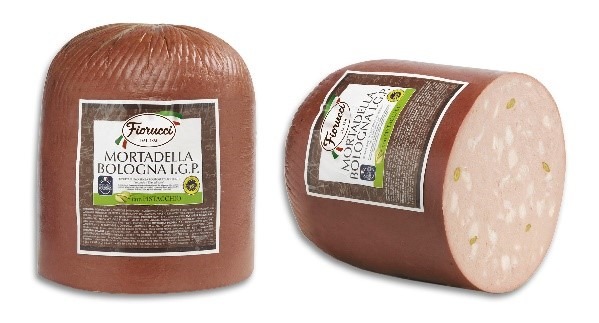
France – Mortadella Bologna IGP – Listeria monocytogenes

Gov france

Identification information of the recalled product

  • Product category Feed
  • Product subcategory Meats
  • Product brand name CESARE FIORUCCI
  • Model names or references Mortadella Bologna IGP 7 kg
  • Identification of products
    GTIN Batch Date
    3294380006029 2190333010 Use-by date 02/27/2023
  • Packaging Pieces of 7 kg sold by the cut on the traditional shelf
  • Marketing start/end date From 14/12/2022 to 27/01/2023
  • Storage temperature Product to be stored in the refrigerator
  • Health mark IT 272 L CE
  • Further information Products sold by the cut in the traditional department
  • Geographic area of ​​sale Whole France
  • Distributors GRAL CENTRALE, FRANCE FRES CENTRALE, BUISSON, O SOLE MIO, LE SALOIR ST REMY (GIE GP GROUPE), SATRAS, LES ARTCUTIERS, SAVEURS D’ANTOINE, SAS PERFORMANCES (Socovol), LGS, GALEC

Practical information regarding the recall

  • Reason for recall Regulatory microbiological non-compliance (presence of L. monocytogenes < 10 cfu/g on 1 part analysed)
  • Risks incurred by the consumer Listeria monocytogenes (causative agent of listeriosis)

India – Two more arrested in food poisoning case

The Hindu

The police team probing the death of a 33-year-old woman due to food poisoning from a restaurant in Kottayam on Wednesday arrested two more persons from Malappuram in connection with the case.