Monthly Archives: June 2021

Information – KEEPCALMANDWASH YOUR HANDS

Click to access keep-calm-wash-your-hands_8.5×11.pdf

Research – Whole genome sequencing data used for surveillance of Campylobacter infections: detection of a large continuous outbreak, Denmark, 2019

Eurosurveillance

CDC Campy

Human campylobacteriosis is the most commonly reported zoonotic disease in Europe, with 246,571 reported cases in the European Union (EU) in 2018 [1].  infections are predominantly food-borne, with poultry as the primary source. However, other transmission routes are known, such as bathing, drinking contaminated water or direct contact with animals. In food samples, the highest occurrence of  was detected in fresh chicken meat (37.5% of samples tested) [1]. In Denmark, we had 5,389 registered human cases in 2019 (incidence: 93/100,000 inhabitants) and 33% of conventional chicken meat samples were positive for  at slaughter [2]. Of note, one third of the human infections diagnosed in Denmark are estimated to be travel-related [3].

Efforts to identify the specific source of  infection in humans are rarely made in Denmark or other countries. Therefore, relevant information for targeted public health actions to prevent  infections often does not exist. For decades, surveillance of other food-borne pathogens, especially  and  with high-discriminatory typing methods has proved to be a powerful tool for outbreak detection and investigations as well as for following trends and emergence of epidemic strains. Similar typing-based surveillance for  has not been widely used and generally has not been very useful for the decision-making process on mitigating efforts by the public health and food safety authorities. The high diversity of  isolates and the general assumption that most  infections are sporadic are plausible explanations.

We have previously shown that, based on whole genome sequencing (WGS) data of  isolates in 2015–17, we could identify numerous small outbreak-like clusters and, in many instances, genetically link them to concurrent animal and food isolates [4]. A large fraction of all 774 clinical isolates (27%) could be genetically linked to broilers or chicken meat, whereas only a few clinical isolates (2%) could be genetically linked to cattle isolates. A Danish case–control study conducted in the same period pointed at several food sources of campylobacteriosis among children and young adults, including consumption of chicken meat, minced beef, and fresh strawberries [5]. Therefore, in addition to sampling of chicken meat, the Danish Veterinary and Food Administration (DVFA) initiated sampling and analysis for  in several other food sources that were identified by the case–control study to obtain knowledge on the impact of these sources.

In our 2015–17 study, a comparison of human isolates to food and animal isolates was done retrospectively and therefore no specific public health actions were taken. To evaluate the value of a prospective and continuous WGS-based surveillance system for  in Denmark, we initiated WGS of isolates from human cases and retail food samples as well as the concurrent analysis of these cross-sector data. Here, we report the first year of surveillance (2019) and show that integrated WGS-based surveillance of  in humans and food sources can identify correlations between the occurrence of specific strains in chicken meat and in human infections. The surveillance was also able to detect prolonged or reappearing outbreaks, which allows for specific interventions to control  in the food production chain and thereby prevent human infections.

Research – Mycotoxins Affecting Animals, Foods, Humans, and Plants: Types, Occurrence, Toxicities, Action Mechanisms, Prevention, and Detoxification Strategies—A Revisit

MDPI

CDC Fusarium1

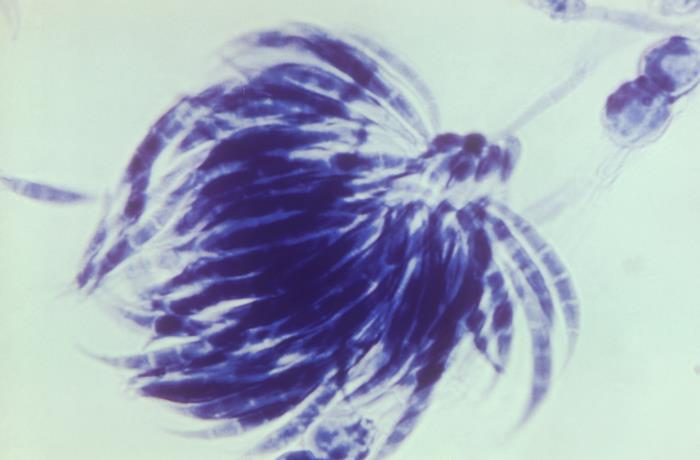
Mycotoxins are produced by fungi and are known to be toxic to humans and animals. Common mycotoxins include aflatoxins, ochratoxins, zearalenone, patulin, sterigmatocystin, citrinin, ergot alkaloids, deoxynivalenol, fumonisins, trichothecenes, Alternaria toxins, tremorgenic mycotoxins, fusarins, 3-nitropropionic acid, cyclochlorotine, sporidesmin, etc. These mycotoxins can pose several health risks to both animals and humans, including death. As several mycotoxins simultaneously occur in nature, especially in foods and feeds, the detoxification and/or total removal of mycotoxins remains challenging. Moreover, given that the volume of scientific literature regarding mycotoxins is steadily on the rise, there is need for continuous synthesis of the body of knowledge. To supplement existing information, knowledge of mycotoxins affecting animals, foods, humans, and plants, with more focus on types, toxicity, and prevention measures, including strategies employed in detoxification and removal, were revisited in this work. Our synthesis revealed that mycotoxin decontamination, control, and detoxification strategies cut across pre-and post-harvest preventive measures. In particular, pre-harvest measures can include good agricultural practices, fertilization/irrigation, crop rotation, using resistant varieties of crops, avoiding insect damage, early harvesting, maintaining adequate humidity, and removing debris from the preceding harvests. On the other hand, post-harvest measures can include processing, chemical, biological, and physical measures. Additionally, chemical-based methods and other emerging strategies for mycotoxin detoxification can involve the usage of chitosan, ozone, nanoparticles, and plant extracts. View Full-Text

Research – Legionella and Biofilms—Integrated Surveillance to Bridge Science and Real-Field Demands

MDPI

Legionella_Plate_01

Legionella is responsible for the life-threatening pneumonia commonly known as Legionnaires’ disease or legionellosis. Legionellosis is known to be preventable if proper measures are put into practice. Despite the efforts to improve preventive approaches, Legionella control remains one of the most challenging issues in the water treatment industry. Legionellosis incidence is on the rise and is expected to keep increasing as global challenges become a reality. This puts great emphasis on prevention, which must be grounded in strengthened Legionella management practices. Herein, an overview of field-based studies (the system as a test rig) is provided to unravel the common roots of research and the main contributions to Legionella’s understanding. The perpetuation of a water-focused monitoring approach and the importance of protozoa and biofilms will then be discussed as bottom-line questions for reliable Legionella real-field surveillance. Finally, an integrated monitoring model is proposed to study and control Legionella in water systems by combining discrete and continuous information about water and biofilm. Although the successful implementation of such a model requires a broader discussion across the scientific community and practitioners, this might be a starting point to build more consistent Legionella management strategies that can effectively mitigate legionellosis risks by reinforcing a pro-active Legionella prevention philosophy. View Full-Text

Research – Reusable Plastic Crates (RPCs) for Fresh Produce (Case Study on Cauliflowers): Sustainable Packaging but Potential Salmonella Survival and Risk of Cross-Contamination

MDPI

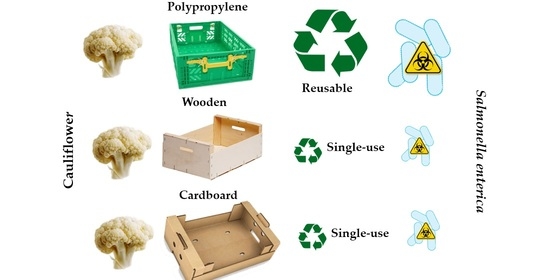
The handling of fresh fruits and vegetables in reusable plastic crates (RPCs) has the potential to increase the sustainability of packaging in the fresh produce supply chain. However, the utilization of multiple-use containers can have consequences related to the microbial safety of this type of food. The present study assessed the potential cross-contamination of fresh cauliflowers with Salmonella enterica via different contact materials (polypropylene from RPCs, corrugated cardboard, and medium-density fiberboard (MDF) from wooden boxes). Additionally, the survival of the pathogenic microorganism was studied in cauliflowers and the contact materials during storage. The life cycle assessment (LCA) approach was used to evaluate the environmental impact of produce handling containers made from the different food-contact materials tested. The results show a higher risk of cross-contamination via polypropylene compared with cardboard and MDF. Another outcome of the study is the potential of Salmonella for surviving both in cross-contaminated produce and in contact materials under supply chain conditions. Regarding environmental sustainability, RPCs have a lower environmental impact than single-use containers (cardboard and wooden boxes). To exploit the potential environmental benefits of RPCs while ensuring food safety, it is necessary to guarantee the hygiene of this type of container. View Full-Text

USA – Core Investigation Table

FDA

Ireland – Tipperary County Council not aware of source of Cryptosporidium in Borrisokane water

Tipperary Live

crypto

Tipperary County Council is not aware if the source of the cryptosporidium that has affected Borrisokane water supply has been found, local councillors have been told.

Cllr Ger Darcy had also raised concerns as to whether the pollution could happen again.

Irish Water is installing a UV system to kill any bacteria in the supply and director of water services Jerry Robinson said that hopefully that would be done this month, but warned it was a “work in progress”.

He said the UV system should prevent issues in the future.

USA – Kirkwood’s Chicken Cordon Bleu appears linked to Salmonella Outbreak

Food Poison Journal

Arizona, Minnesota, Indiana, Indiana, Michigan and New York report Salmonella illnesses.

CDC, public health and regulatory officials in several states, and the U.S. Department of Agriculture’s Food Safety and Inspection Service (USDA-FSIS) are collecting different types of data to investigate a multistate outbreak of Salmonella Enteritidis infections linked to raw frozen breaded stuffed chicken products.

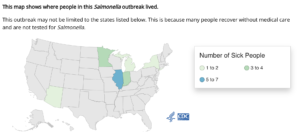
As of June 2, 2021, a total of 17 people infected with the outbreak strain of Salmonella Enteritidis have been reported from 6 states. Illnesses started on dates ranging from February 21, 2021 to May 7, 2021.

Sick people range in age from 3 to 83 years, with a median age of 52 years, and 60% are female. Of 13 people with information available, 8 (62%) have been hospitalized; no deaths have been reported.

People reported buying many different brands of raw frozen breaded stuffed chicken products from multiple stores. When asked about how the products were prepared at home, seven people reported undercooking, microwaving, or air frying the product.

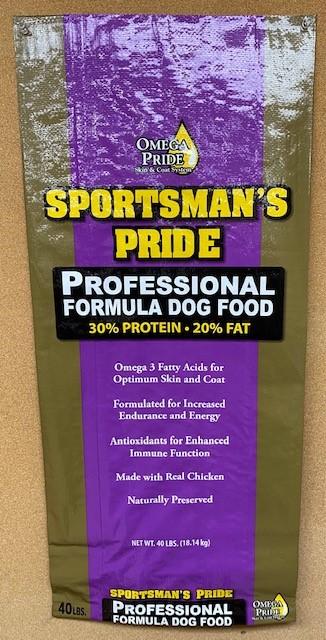
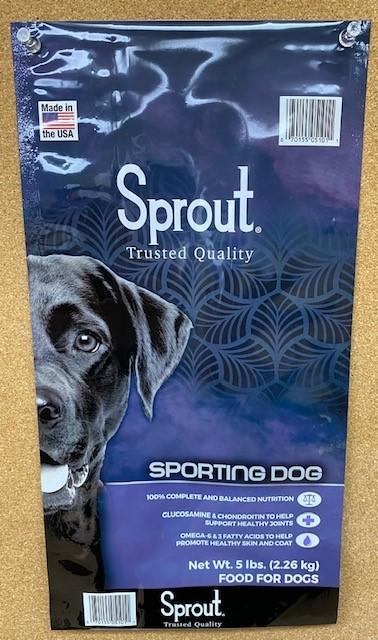
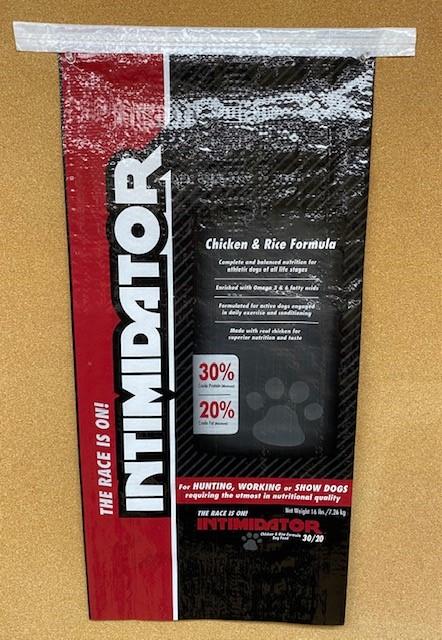
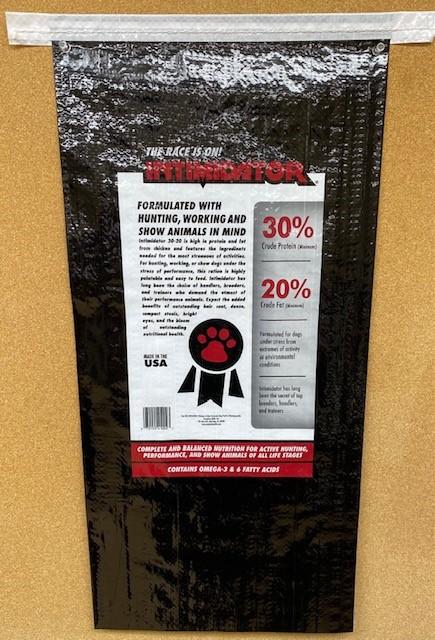
USA – Sunshine Mills, Inc. Issues Voluntary Recall of Certain Dog Food Products Because of Possible Salmonella Contamination

FDA

Sunshine Mills, Inc. is issuing a voluntary recall of certain dog food products because of the potential to be contaminated with Salmonella. No illnesses, injuries or complaints have been reported to date. The potential for contamination was noted after the firm was notified by the distributor, Fleet Wholesale Supply Company, who was informed by Minnesota Department of Agriculture when a sample of 5 lbs. Sprout Sporting Dog Food product was collected and tested positive for Salmonella during routine surveillance.

Salmonella can affect animals eating the products and there is risk to humans from handling contaminated products, especially if they have not thoroughly washed their hands after having contact with the products or any surfaces exposed to these products.

Healthy people infected with Salmonella should monitor themselves for some or all of the following symptoms: nausea, vomiting, diarrhea or bloody diarrhea, abdominal cramping and fever. Rarely, Salmonella can result in more serious ailments, including arterial infections, endocarditis, arthritis, muscle pain, eye irritation, and urinary tract symptoms. Consumers exhibiting these signs after having contact with this product should contact their healthcare providers.

Pets with Salmonella infections may be lethargic and have diarrhea or bloody diarrhea, fever, and vomiting. Some pets will have only decreased appetite, fever and abdominal pain. Infected but otherwise healthy pets can be carriers and infect other animals or humans. If your pet has consumed a recalled product and has these symptoms, please contact your veterinarian.

The best buy date and lot code can be found on the back of each package. The products identified below were distributed online and in retail stores:

Product Size BB Date Code & Lot UPC Code States
Sportsman’s Pride Professional
Formula 30/20 Dog Food
40 lb. Best if used By 7 Oct 2021 7015510184 MS, FL, TN, LA, VA, NC, TX
Lot: TI1 07/Oct/2020
Sprout Sporting Dog Food 5 lb. Best if used By 6 Oct 2021 7015505101 MN, WI, IA, SD, ND
Lot: TE1 06/Oct/2020
40 lb. Best if used By 6 Oct 2021 7015505100
Lot: TI3 06/Oct/2020
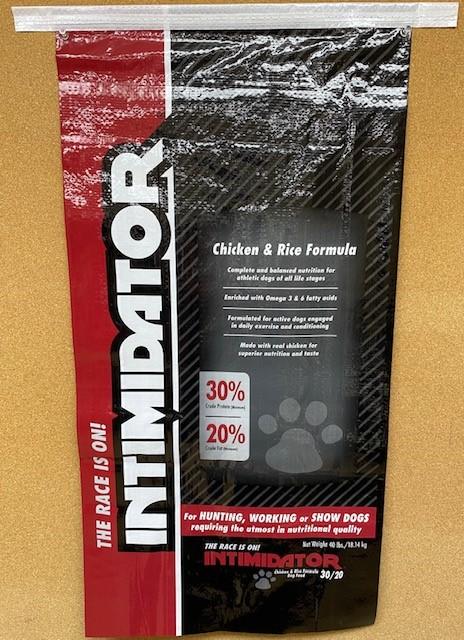
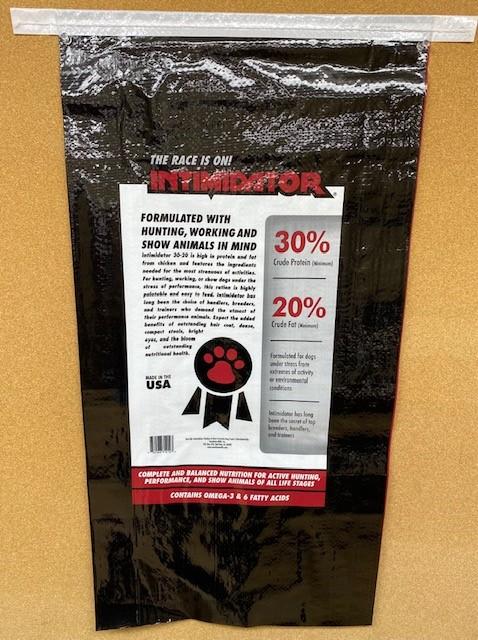
Intimidator Chicken & Rice Formula
Dog Food 30/20
16 lb. Best if used By 6 Oct 2021 7015541002 TX, MS, FL, AL
Lot: TA1 06/Oct/2020
40 lb. Best if used By 6 Oct 2021 5216631214
Lot: TA1 06/Oct/2020
FRM Gold Select High Performance
Dog Food
50 lb. Best if used By 6 Oct 2021 1549905873 GA, FL
Lot: TA1 06/Oct/2020

There are no other Sportsman’s Pride®, Sprout, Intimidator®, or FRM® Gold Select products or other lot codes of these products affected by this recall.

Retailers who received the recalled lots have been contacted and asked to pull these lots from their inventory and shelves Consumers who have purchased the recalled products should discontinue use of the product and may return the unused portion to the place of purchase for a full refund. Consumers may contact Sunshine Mills, Inc. customer service at (800) 705-2111 from 7AM to 4PM Central Time, Monday through Friday, or by email at customer.service@sunshinemills.com for additional information.

This is a voluntary recall being conducted in cooperation with the U.S. Food and Drug Administration.


Company Contact Information

Consumers:
Sunshine Mills, Inc.
 800-705-2111
 customer.service@sunshinemills.com
 

Product Photos

USA -Banner Smoked Fish Recalls Smoked Fish Products Because of Possible Health Risk – Listeria monocytogenes

FDA

Banner Smoked Fish, Inc. of Brooklyn, NY is voluntarily recalling its SMOKED FISH (product names and photos of labels are listed below) of all products within expiry, in all package sizes, all package types and all lots. The recall is because the products have the potential to be contaminated with Listeria monocytogenes, an organism which can cause serious and sometimes fatal infections in young children, frail or elderly people, and others with weakened immune systems. Although healthy individuals may suffer only short-term symptoms such as high fever, severe headache, stiffness, nausea, abdominal pain and diarrhea, Listeria infection can cause miscarriages and stillbirths among pregnant women.

The recalled smoked fish were distributed through retails and distributions, also online purchasing in NY, NJ, IL, PA, CA, FL, NE, AZ, MA, MD, VA, NV, OR, WI, NC, SC, and GA area.

The product comes in various sizes in both air pack and vacuum packages. The lot number or sell by date are placed on the back of the package.

The products were found to be processed under unsanitary condition. The problem was discovered through FDA routine inspection. No illnesses have been reported to date in connection with this problem.

Consumers who have purchased these items are urged to return them to the place of purchase for a full refund. Consumers with questions may contact the company at (718) 449 – 1400 from 8 AM – 4 PM EST.

Product name
1. Barbeque Spiced Smoked Nova Salmon
2. Brook Trout
3. Center Sliced Smoked Norwegian Style Salmon
4. Everything Spiced Smoked Nova Salmon
5. Finest Sliced Salty Lox
6. Finest Sliced Smoked Nova Salmon
7. Irish Cured Smoked Salmon
8. Lox Trimmings
9. Mackerel
10. Naturally Smoked Nova Salmon
11. Noon Hour Smoked Salmon
12. Norwegian Style Smoked Salmon
13. Nova Atlantic Salmon
14. Nova Bits
15. Nova Homarus
16. Nova Lox
17. Nova Salmon
18. Nova Salmon Bagel Cuts
19. Pastrami Nova Atlantic Salmon
20. Pastrami Style Smoked Nova Salmon
21. Pepper Crusted Smoked Nova Salmon
22. Presliced Gravad Lox
23. Presliced Pastrami Style Salmon
24. Presliced Pastrami Style Salmon
25. Presliced Scotch Style Salmon
26. Presliced Scotch Style Salmon
27. Presliced Scotch Style Smoked Salmon
28. Presliced Smoked Atlantic Salmon
29. Sable
30. Sliced Gravlax
31. Sliced Pastrami Style Nova
32. Sliced Smoked Norwegian Style Salmon
33. Sliced Smoked Salmon
34. Sliced Smoked Scotch Style Salmon
35. Smoked Nova Bagel Cuts
36. Smoked Nova Lox
37. Smoked Nova Salmon
38. Smoked Sliced Nova Salmon
39. Smoked Trout
40. Somga
41. Trimmed Nova
42. Whitefish

Company Contact Information

Consumers:
Banner Smoked Fish, Inc.
 718-449-1400

Product Photos at the Link above