Category Archives: STEC E.coli

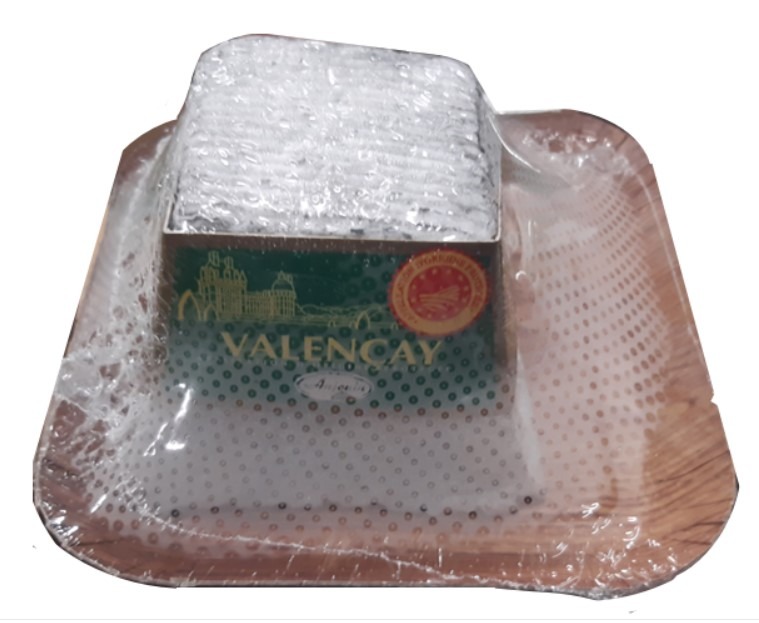
France – VALENCAY AOP – STEC E.coli O103

Gov france

Identifying information for the recalled product

  • Product category Food
  • Product sub-category Milk and dairy products
  • Product brand name CLOS CHEVREL
  • Names of models or references VALENCAY AOP CHEVREL – 220g
  • Product identification
    Lot
    Sold in the traditional department between August 19 and September 14
  • Packaging220 g
  • Start date / End of marketing From 08/19/2021 to 09/14/2021
  • Storage temperature Product to be stored in the refrigerator
  • Health mark FR 36.004.001 CE
  • Further information Sold in the traditional department as in the photo without GTIN, lot number and DLC visible to the consumer.
  • Geographical sales area Whole France
  • Distributors INTERMARKET

Practical information regarding the recall

  • Reason for recall Presence of Escherichia coli STEC O103: H2
  • Risks incurred by the consumer Toxinogenic Escherichia coli shiga (STEC)

USA- Decreased Incidence of Infections Caused by Pathogens Transmitted Commonly Through Food During the COVID-19 Pandemic — Foodborne Diseases Active Surveillance Network, 10 U.S. Sites, 2017–2020

CDC

Summary

What is already known about this topic?

Before 2020, the incidence of infections transmitted commonly by food had not declined for many years.

What is added by this report?

During 2020, FoodNet identified 26% fewer infections compared with the average annual number during 2017–2019, including decreased infections associated with international travel.

What are the implications for public health practice?

The pandemic and resulting public health response present challenges to explaining changes in observed foodborne illness incidences. Continued surveillance might help elucidate the impact of the COVID-19 pandemic on foodborne illness and identify strategies to decrease illnesses. Concerted efforts are needed to reduce the incidence of these infections from farm to processing plant to restaurants and homes. Consumers can reduce their risk of foodborne illness by following safe food-handling and preparation recommendations.

Foodborne illnesses are a substantial and largely preventable public health problem; before 2020 the incidence of most infections transmitted commonly through food had not declined for many years. To evaluate progress toward prevention of foodborne illnesses in the United States, the Foodborne Diseases Active Surveillance Network (FoodNet) of CDC’s Emerging Infections Program monitors the incidence of laboratory-diagnosed infections caused by eight pathogens transmitted commonly through food reported by 10 U.S. sites.* FoodNet is a collaboration among CDC, 10 state health departments, the U.S. Department of Agriculture’s Food Safety and Inspection Service (USDA-FSIS), and the Food and Drug Administration. This report summarizes preliminary 2020 data and describes changes in incidence with those during 2017–2019. During 2020, observed incidences of infections caused by enteric pathogens decreased 26% compared with 2017–2019; infections associated with international travel decreased markedly. The extent to which these reductions reflect actual decreases in illness or decreases in case detection is unknown. On March 13, 2020, the United States declared a national emergency in response to the COVID-19 pandemic. After the declaration, state and local officials implemented stay-at-home orders, restaurant closures, school and child care center closures, and other public health interventions to slow the spread of SARS-CoV-2, the virus that causes COVID-19 (1). Federal travel restrictions were declared (1). These widespread interventions as well as other changes to daily life and hygiene behaviors, including increased handwashing, have likely changed exposures to foodborne pathogens. Other factors, such as changes in health care delivery, health care–seeking behaviors, and laboratory testing practices, might have decreased the detection of enteric infections. As the pandemic continues, surveillance of illness combined with data from other sources might help to elucidate the factors that led to the large changes in 2020; this understanding could lead to improved strategies to prevent illness. To reduce the incidence of these infections concerted efforts are needed, from farm to processing plant to restaurants and homes. Consumers can reduce their risk of foodborne illness by following safe food-handling and preparation recommendations.

FoodNet conducts active, population-based surveillance of laboratory-diagnosed infections caused by Campylobacter, Cyclospora, Listeria, Salmonella, Shiga toxin-producing Escherichia coli (STEC), Shigella, Vibrio, and Yersinia reported from 10 sites covering approximately 15% of the U.S. population (approximately 50 million persons per U.S. Census Bureau estimates in 2019). Bacterial infections are defined as isolation of bacteria from a clinical specimen by culture or detection of pathogen antigen, nucleic acid sequence, or, for STEC, Shiga toxin or Shiga toxin genes by a culture-independent diagnostic test (CIDT).§ Listeria infections are defined as isolation of L. monocytogenes or detection of its nucleic acid sequences from a normally sterile site, or from placental or fetal tissue in the instance of miscarriage or stillbirth. Cyclospora infections are defined as detection of the parasite using ultraviolet fluorescence microscopy, specific stains, or polymerase chain reaction.

In this analysis, patients with no history of international travel or unknown travel were considered to have domestically acquired infection. Death was attributed to infection when it occurred during hospitalization or within 7 days after specimen collection for non-hospitalized patients. Incidence (cases per 100,000 population) was calculated by dividing the number of infections in 2020 by the U.S. Census estimates of the surveillance area population for 2019. Incidence measures included all laboratory-diagnosed infections. A negative binomial model with 95% confidence intervals (CIs) was used to estimate change in incidence during 2020 compared with those during 2017–2019, adjusting for changes in the population over time.

Surveillance for physician-diagnosed post-diarrheal hemolytic uremic syndrome (HUS), a complication of STEC infection characterized by renal failure, thrombocytopenia, and microangiopathic anemia, was conducted through a network of nephrologists and infection preventionists and by hospital discharge data review. This report includes HUS data for children aged <18 years for 2019, the most recent year for which data are available. FoodNet surveillance activities were reviewed by CDC and were conducted consistent with applicable federal law and CDC policy.**

During 2020, FoodNet identified 18,462 cases of infection, 4,788 hospitalizations, and 118 deaths (Table). The overall incidence was highest for Campylobacter (14.4 per 100,000 population), followed by Salmonella (13.3), STEC (3.6), Shigella (3.1), Yersinia (0.9), Vibrio (0.7), Cyclospora (0.6), and Listeria (0.2). During 2020, 26% fewer infections were reported compared with the average annual number reported during 2017–2019; the incidence in 2020 was significantly lower for all pathogens except Yersinia and Cyclospora. The percentage of infections resulting in hospitalization increased 2% compared with 2017–2019 (Figure 1). During 2020, 5% (958) of infections were associated with international travel compared with 14% during 2017–2019. In 2020, most (798; 83%) of these infections occurred during January–March.

Overall, 59% of bacterial infections were diagnosed using a CIDT (range = 14% [Listeria] to 100% [STEC]); this was a 2% increase from 2017−2019. The percentage diagnosed using only a CIDT (i.e., including specimens with negative cultures and those not cultured) was 1% higher during 2020 than the percentage during 2017−2019. Among specimens with a positive CIDT result during 2020, a reflex culture†† was performed for 73%, which was 2% lower than during 2017–2019. Reflex cultures decreased for Vibrio (by 15%), Yersinia (7%), Campylobacter (5%), and STEC (2%); increased for Salmonella (2%), and Shigella (2%); and did not change for Listeria.

Among 5,336 (91%) fully serotyped Salmonella isolates in 2020, the seven most common serotypes were Enteritidis (1.6 per 100,000 population), Newport (1.5), Javiana (1.0), Typhimurium (0.9), I 4,[5],12:i:- (0.5), Hadar (0.4), and Infantis (0.3). Compared with 2017–2019, incidence during 2020 was significantly lower for I 4,[5],12:i:- (48% lower), Typhimurium (37% lower), Enteritidis (36% lower), and Javiana (31% lower). Incidence was significantly higher for Hadar (617% higher; 95% CI = 382–967) and did not change significantly for Newport or Infantis. Most (73%) of the 631 outbreak-associated Salmonella infections during 2020 were caused by three serotypes: Newport (220; 35%), Hadar (135; 21%), and Enteritidis (108; 17%). All outbreak-associated Hadar infections were from one multistate outbreak linked to contact with backyard poultry; 47 (35%) illnesses resulted in hospitalization. Four serogroups accounted for 63% of the 955 culture-positive STEC isolates. Serogroup O157 was most common (264; 28%), followed by O26 (148; 15%), O103 (115; 12%), and O111 (78; 8%).

FoodNet identified 63 cases of post-diarrheal HUS in children aged <18 years (0.6 cases per 100,000 population) during 2019; 55 (87%) had evidence of STEC infection and 41 (65%) were in children aged <5 years (1.4 per 100,000 population). These rates were similar to those during 2016–2018.


RASFF Alerts – STEC E.coli – Cheese – Boneless Beef – Cucumber Salad – Beef Patty – Bovine Meat

RASFF

STEC O103H2 in French cheese Valencay in Belgium, Denmark, Finland, France, Germany, Ireland, Netherlands and UK

RASFF

STEC stx2 in chilled boneless beef from Brazil in the Netherlands and Sweden

RASFF

Foodborne outbreak caused by shigatoxin-producing Escherichia coli in cucumber salad from France, with raw material from Belgium – in France

RASFF

STEC in bovine minced meat patty with raw material from Denmark in Finland

RASFF

Shigatoxin-producing Escherichia coli in chilled bovine meat from Uruguay in Germany

France – VALENCAY AOP 220G EMB BARQU CP – STEC E.coli O103

Gov france

Identifying information for the recalled product

  • Product category Food
  • Product sub-category Milk and dairy products
  • Product brand name Fromagerie Anjouin
  • Names of models or references VALENCAY AOP 220G EMB BARQU CP
  • Product identification
    GTIN Lot Dated
    3301170078521 V214 Date of minimum durability 02/10/2021
  • Packaging220g
  • Start date / End of marketing From 08/18/2021 to 09/20/2021
  • Storage temperature Product to be stored in the refrigerator
  • Health mark FR 36.004.001 CE
  • Geographical sales area Whole France
  • Distributors AUCHAN, CAP ENTREPOTS

Practical information regarding the recall

  • Reason for recall Demonstration of Escherichia coli STEC O103: H2
  • Risks incurred by the consumerToxinogenic Escherichia coli shiga (STEC)

Ireland – 50 sick in Ireland by contaminated drinking water; officials chided – STEC E.coli

Food Safety News

More than 50 people are ill in Ireland after a failure at a treatment plant led to contaminated water being released to the public.

The Health and Service Executive (HSE) is investigating an outbreak in the town of Gorey in North Wexford. There have been 52 confirmed illnesses linked to the incident, including cases of Shiga toxin-producing E. coli (STEC), with a number of hospitalizations.

At Gorey water treatment plant in County Wexford, there was a power outage and a chlorine pump failure resulting in water leaving the plant and entering the public supply without the appropriate level of disinfection for five days beginning Aug. 19. This incident was not reported to the Environmental Protection Agency (EPA) and HSE until Aug. 26.

Authorities said the delay in reporting prevented a timely risk assessment of the impact on drinking water quality and time to allow measures that could have protected public health.

EPA conducted two audits at Gorey water treatment plant on Sept. 7 and 16 to investigate the incident and to identify what corrective actions needed to be taken.

Germany – Raw milk Camembert made from fresh Schönberger cow’s milk – STEC E.coli

LMW

Warning type:

Food

Date of first publication:

15.09.2021

Product name:

Raw milk Camembert made from fresh Schönberger cow’s milk

Manufacturer (distributor):

Schumann & Kuhnert GbR Hohes Haus 14 07570 Weida OT Schömberg

Reason for warning:

Shiga toxin producing Escherichia coli (STEC, syn.VTEC)

Packaging Unit:

approx. 150 – 200 g

Durability:

09/24/2021

Production date:

08/11/2021

Additional Information:

The cheese was offered from August 25th, 2021 to September 1st, 2021 in the yard sale of the Schumann & Kuhnert GbR company in 07570 Weida OT Schömberg.

A warning is given against consuming the cheese.

EHEC usually manifests itself within a week of infection with diarrhea and abdominal cramps. In particular, infants, toddlers, the elderly and people with a weakened immune system can develop more severe disease with bloody diarrhea. In rare cases, especially in small children, acute kidney failure can occur in a second episode of the disease a few days after the onset of diarrhea. People who have eaten this food and develop severe or persistent symptoms should seek medical attention and advise them of possible EHEC infection. Seeking preventive medical treatment without symptoms does not make sense.

Contact to the responsible authorities:


Saxony:

poststelle@sms.sachsen.de

Thuringia:

LM-Ueberendung@tlv.thueringen.de

Press releases and information
title Attachment or web link
Product recall letter Camembert Schumann & Kuhnert GbR

Italy – ROBIOLA DI MONTE – STEC E.coli

Salute

Brand : INVERNIZZI

Name : ROBIOLA DI MONTE

Reason for reporting : Recall due to microbiological risk

Publication date : 17 September 2021

Research – High Occurrence of Shiga Toxin-Producing Escherichia coli in Raw Meat-Based Diets for Companion Animals—A Public Health Issue

MDPI

Feeding pets raw meat-based diets (RMBDs) is becoming increasingly popular but comes with a risk of pathogenic bacteria, including Shiga toxin-producing Escherichia coli (STEC). In humans, STEC may cause gastrointestinal illnesses, including diarrhea, hemorrhagic colitis (HC), and the hemolytic uremic syndrome (HUS). The aim of this study was to evaluate commercially available RMBDs with regard to the occurrence of STEC. Of 59 RMBD samples, 59% tested positive by real-time PCR for the presence of Shiga toxin genes stx1 and/or stx2. STECs were recovered from 41% of the 59 samples, and strains were subjected to serotyping and virulence gene profiling, using whole genome sequencing (WGS)-based methods. Of 28 strains, 29% carried stx2a or stx2d, which are linked to STEC with high pathogenic potential. Twenty different serotypes were identified, including STEC O26:H11, O91:H10, O91:H14, O145:H28, O146:H21, and O146:H28, which are within the most common non-O157 serogroups associated with human STEC-related illnesses worldwide. Considering the low infectious dose and potential severity of disease manifestations, the high occurrence of STEC in RMBDs poses an important health risk for persons handling raw pet food and persons with close contact to pets fed on RMBDs, and is of concern in the field of public health.

Research – Epidemiological investigations identified an outbreak of Shiga toxin-producing Escherichia coli serotype O26:H11 associated with pre-packed sandwiches

Cambridge Org

In October 2019, public health surveillance systems in Scotland identified an increase in the number of reported infections of Shiga toxin-producing Escherichia coli (STEC) O26:H11 involving bloody diarrhoea. Ultimately, across the United Kingdom (UK) 32 cases of STEC O26:H11 stx1a were identified, with the median age of 27 years and 64% were male; six cases were hospitalised. Among food exposures there was an association with consuming pre-packed sandwiches purchased at outlets belonging to a national food chain franchise (food outlet A) [odds ratio (OR) = 183.89, P < 0.001]. The common ingredient identified as a component of the majority of the sandwiches sold at food outlet A was a mixed salad of Apollo and Iceberg lettuce and spinach leaves. Microbiological testing of food and environmental samples were negative for STEC O26:H11, although STEC O36:H19 was isolated from a mixed salad sample taken from premises owned by food outlet A. Contamination of fresh produce is often due to a transient event and detection of the aetiological agent in food that has a short-shelf life is challenging. Robust, statistically significant epidemiological analysis should be sufficient evidence to direct timely and targeted on-farm investigations. A shift in focus from testing the microbiological quality of the produce to investigating the processes and practices through the supply chain and sampling the farm environment is recommended.

USA – Jackson County Public Health Investigating Shiga toxin-producing Escherichia coli (STEC) cases

Jackson County

Jackson County Public Health is investigating an unusually high number of Shiga toxin-producing Escherichia coli (STEC) cases. Since August 8, 2021, 16 cases have been reported to Jackson County, and 12 (75%) of these cases have been hospitalized. Age range for cases is from 11 months to 65 years of age, with the median age being 23.5. Majority of the cases are in the teens and twenties. Of the total cases 62.5% are males.

Jackson County Public Health is working with the Oregon Health Authority on this outbreak investigation.  “Right now, we do not have a definitive hypothesis on what the source of infection may be. The genome sequencing, performed at the state public health lab, has not matched any other cases in the state or nationally,” states Dr. Jim Shames, Health Officer for Jackson County Public Health. “Therefore, we continue to do in-depth interviews with those that have tested positive to help us identify a possible source of exposure.”

Jackson County Public Health is asking medical providers to be aware of the increases in STEC cases in Jackson County and collect and test stool specimens on patients suspected to have bacterial gastroenteritis. Shiga-toxigenic Escherichia coli (including 0157, HUS, and other serogroups) are reportable infections to local and state public health.