Category Archives: Shigella flexneri

Australia – Shigella outbreak reported at Richmond State School in Townsville

Outbreak News Today

Shigella - kswfoodworld

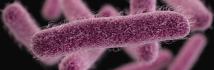
Image CDC

Townsville Public Health Unit is responding to a shigella outbreak at Richmond State School where there have been 12 confirmed cases.

Shigella infection is a serious form of gastroenteritis caused by a bacterium that attacks the intestines leading to diarrhea, abdominal pain or cramps and fever.

The illness is spread if you accidentally swallow the bacteria that is found in faeces, usually through not washing your hands properly after going to the toilet or changing diapers.

Townsville Public Health Unit physician, Dr Julie Mudd said additional cleaning was being undertaken at Richmond School today as it is closed for a public holiday.

Of the 12 cases, one was brought to Townsville University Hospital as a precaution and has since been discharged. The remaining 11 cases are recovering in the community.

Denmark – Imported, fresh mint linked to Shigella outbreak

Outbreak News Today

Shigella - kswfoodworld

The Statens Serum Institut (SSI) has in collaboration with the Danish Veterinary and Food Administration and the DTU Food Institute report that a Shigella outbreak in August and September that sickened some 44 people is linked to fresh mint bought at a local greengrocer or bazaar in and around the Copenhagen area.

Of the 44 cases from August 22 to September 9, 30 of the cases was reported in women and 14 in men. A total of 13 people have been hospitalized. The sick live primarily in the Capital Region.

Because fresh mint has a short shelf life, it is no longer on the market. There is therefore no risk of more consumers becoming infected, says Emergency Manager Nikolas Kühn Hove from the Danish Veterinary and Food Administration.

Research – Switzerland – Do changes in STEC diagnostics mislead interpretation of disease surveillance data in Switzerland? Time trends in positivity, 2007 to 2016

Eurosurveillance

Infections caused by Shiga toxin (Stx)-producing  (STEC) are generally mild and self-limiting or even asymptomatic. However, particularly in children and elderly people, STEC infections can lead to severe gastroenteritis with haemorrhagic diarrhoea and life-threatening conditions, e.g. haemolytic uraemic syndrome (HUS) [1,2].

STEC transmission can occur through the consumption of contaminated food and drinks, or by direct contact with infected individuals or animals shedding the bacterium* [1,35]. STEC infections are endemic in Europe, including Switzerland [6,7]. Cases occur sporadically or in outbreaks; a large outbreak attributed to contaminated sprouts occurred in Germany in 2011 [8]. Smaller outbreaks have also been reported, e.g. there was an outbreak in Italy in 2013 and in Romania in 2016, both were suspected to be caused by contaminated dairy products [9,10]. Considering 22 years of population-based data up to 2012, Majowicz et al. estimated in 2014 that STEC leads to an estimated 2.8 million illness cases per year, including 3,800 cases of HUS, globally [11].

The National Notification System for Infectious Diseases (NNSID) of the Swiss Federal Office of Public Health (FOPH) has been receiving all notifications of laboratory-confirmed STEC infections since 1999. Case numbers were generally constant until 2010, with only a few laboratories reporting STEC cases in Switzerland. An increase in cases was observed in 2011 following the outbreak in Germany, before returning to expected yearly fluctuations, and then markedly increasing since 2015 [12]. Given that this increase was observed around the same time as the introduction of syndromic multiplex PCR panels for stool analyses in standard laboratory practice in Switzerland [12], it was hypothesised that these panels were the cause of the increase in notified STEC cases. Traditionally, routine testing of stool samples for bacterial pathogens involved only  spp.,  spp. and  spp. using culture-based techniques. With syndromic multiplex PCR panels, stool samples can be tested for up to 22 pathogens, including STEC, in one single run [12,13].

Prior to the gradual introduction of multiplex PCR to the routine diagnostics between 2014 and 2015, STEC was only specifically tested for in Switzerland upon physician request, and this rarely happened. Current testing practice includes the use of small syndromic enteric bacterial panels for testing in patients without a travel history or a larger gastrointestinal panel if travel history is reported on the test order form [7].

A qualitative assessment found that Swiss laboratory experts uniformly agreed that the increase in STEC case numbers was due to the introduction and increasing use of multiplex PCR panels [7]. We set out to conduct a quantitative investigation as to whether an increase in the STEC testing rate associated with the use of the panels is what led to the increased notification of cases.

Our study assesses the development of the STEC positivity in the Swiss population between 2007 and 2016 using routine laboratory data, and gives insight into the epidemiology and notification numbers of STEC infections in Switzerland.

Europe – Shigellosis Annual Epidemiological Report for 2017

Click to access AER_for_2017_shigellosis.pdf

Europe – Shigellosis – Annual Epidemiological Report for 2017

Shigella - kswfoodworld

Image CDC

Shigellosis is a relatively uncommon disease in the European Union/European Economic Area (EU/EEA), but remains of concern in some countries and for some population groups. For 2017, 30 EU/EEA countries reported 6 337 confirmed shigellosis cases. The overall notification rate was 1.7 cases per 100 000 population, slightly higher than in 2016. The highest notification rate was observed in children below five years of age, followed by male adults aged 25–44 years. Sexual transmission of shigellosis among men who have sex with men (MSM) is thought to have contributed to the gender imbalance in the latter group.

Click to access AER_for_2017_shigellosis.pdf

USA -Portland: Small Pharaoh #1 food cart closed, Linked to Shigella outbreak

outbreak News Today

Shigella - kswfoodworld

Image CDC


Multnomah County health officials have closed the Small Pharaoh #1 food cart in downtown Portland (SW 5th and Stark) late Tuesday, Aug. 11, 2020 after linking the business to an outbreak of shigellosis. This is the first food cart closure in Multnomah County in many years due to health concerns. Food carts are inspected, regulated and scored the same as brick and mortar restaurants.

Health officials took the unusual step of ordering the closure of the food cart at 5th and SW Stark after several individuals from different households were confirmed to have shigellosis after eating food from the facility. Four cases have been confirmed with three additional presumptive cases with symptoms who have not been tested. Shigella is a very contagious bacteria and can spread after swallowing a very small amount of the bacteria.

Anyone with symptoms of shigellosis who ate at the downtown location of Small Pharaoh between July 27 and August 11 should contact their care provider or seek medical care as needed.


Research -Microbial composition of Korean kefir and antimicrobial activity of Acetobacter fabarum DH1801

Wiley Online

Kefir is a probiotic dairy product containing multiple species of lactic acid bacteria, acetic acid bacteria, and yeast, with varying microbial composition depending on geographical origin. In the present study, we characterized the acetic acid bacterial population in Korean kefir by next‐generation sequencing‐based community analysis and isolated a novel acetic acid bacterial strain, Acetobacter fabarum DH1801. To evaluate its potential application in the food industry, the antimicrobial activity of A. fabarum DH1801 against seven foodborne pathogens (Bacillus cereusStaphylococcus aureusListeria monocytogenesCronobacter sakazakiiSalmonella Enteritidis, enterotoxigenic Escherichia coli, and Shigella flexneri) was analyzed by growth curve analysis. Remarkably, the culture filtrate of the novel isolate inhibited the growth of all seven pathogenic bacteria in a dose‐dependent manner, which was superior to acetic acid solution of same pH value. Our findings suggest that the A. fabarum DH1801 strain forms a protective barrier during kefir fermentation against contamination by foodborne pathogens.

Research – Shigella Bacteremia, Georgia, USA, 2002–2012

CDC

Abstract

Shigella commonly causes gastroenteritis but rarely spreads to the blood. During 2002–2012, we identified 11,262 Shigella infections through population-based active surveillance in Georgia; 72 (0.64%) were isolated from blood. Bacteremia was associated with age >18 years, black race, and S. flexneri. More than half of patients with bacteremia were HIV-infected.

Research – Massachusetts General Hospital publishes new Shigella research

Outbreak News Today

The bacterial pathogen Shigella, often spread through contaminated food or water, is a leading cause of mortality in both children and older adults in the developing world. Although scientists have been studying Shigella for decades, no effective vaccine has been developed, and the pathogen has acquired resistance to many antibiotics. The recent discovery of an early adherence step in the infection cycle by researchers at Massachusetts General Hospital (MGH) could provide a new therapeutic target or even a new method for vaccine development.

As it moves through the digestive system, Shigella traverses the small intestine and subsequently infects the large intestine, causing cramping, diarrhea and dehydration in the disease called shigellosis. “We wanted to determine how Shigella makes its first contact with epithelial cells in the early stages of disease development,” says Dr. Christina Faherty, senior author on the study published in mSphere. “Because of certain gene sequence annotations, and the way that Shigella appeared following growth in standard laboratory media, it was believed that Shigella strains do not produce fimbriae or other adherence factors.” Fimbriae are short hair-like fibers that bacterial cells use to adhere to individual epithelial cells to instigate infection.

USA – Multistate Outbreak of Gastrointestinal Illnesses Linked to Oysters Imported from Mexico is Over

CDC

Photo of oysters.

Image CDC

This outbreak appears to be over. Consumers, restaurants, and retailers should always handle and cook oysters properly. Get CDC’s tips for preventing foodborne illness from oysters and other shellfish.

Final Outbreak Information
Illustration of a megaphone.
  • As of June 21, 2019, this outbreak appears to be over.
  • Sixteen ill people were reported from five states.
    • Illnesses started on dates ranging from December 16, 2018, through April 17, 2019.
    • Two people were hospitalized. No deaths were reported.
  • Laboratory testing on samples from patients identified multiple pathogens causing infections. Some people were infected with more than one pathogen.
  • Case counts by pathogen or illness:
    • Four cases of Shigella flexneri infection
    • Two cases of Vibrio parahaemolyticus infection
    • One case of Vibrio parahaemolyticus and Shiga toxin-producing Escherichia coli (STEC) non-O157 coinfection
    • One case of Vibrio parahaemolyticus and Shigella flexneri coinfection
    • One case of Shigella flexneri and Campylobacter lari coinfection
    • One case of Vibrio albensis infection
    • One case of norovirus genogroup 1 infection
    • One case of infection with Vibrio of unknown species
    • Four cases of illness without a pathogen identified
  • Epidemiologic and traceback evidence indicated that raw oysters harvested from Estero El Cardon in Baja California Sur, Mexico, were the likely source of this outbreak.
  • On May 6, 2019, one U.S. distributor of oysters harvested from Estero El Cardon issued a voluntary recallexternal icon.
  • At the request of Mexico’s public health authorities, all raw oysters distributed from Estero El Cardon from the last week of April 2019 through the first week of May 2019 were recalled pdf icon[PDF – 474 KB]external icon.