Category Archives: Microbiology

Research – Listeria monocytogenes Biofilms in the Food Industry: Is the Current Hygiene Program Sufficient to Combat the Persistence of the Pathogen?

MDPI

Biofilms contain microbial cells which are protected by a self-produced matrix and they firmly attach themselves to many different food industry surfaces. Due to this protection, microorganisms within biofilms are much more difficult to eradicate and therefore to control than suspended cells. A bacterium that tends to produce these structures and persist in food processing plants is Listeria monocytogenes. To this effect, many attempts have been made to develop control strategies to be applied in the food industry, although there seems to be no clear direction on how to manage the risk the bacteria poses. There is no standardized protocol that is applied equally to all food sectors, so the strategies for the control of this pathogen depend on the type of surface, the nature of the product, the conditions of the food industry environment, and indeed the budget. The food industry performs different preventive and corrective measures on possible L. monocytogenes-contaminated surfaces. However, a critical evaluation of the sanitization methods applied must be performed to discern whether the treatment can be effective in the long-term. This review will focus on currently used strategies to eliminate biofilms and control their formation in processing facilities in different food sectors (i.e., dairy, meat, fish, chilled vegetables, and ready-to-eat products). The technologies employed for their control will be exemplified and discussed with the objective of understanding how L. monocytogenes can be improved through food safety management systems. View Full-Text
Research – Evaluation of foodborne pathogen die-off in back-sweetened wine and apple cider models

Journal of Food Protection

Wine and alcoholic apple cider are commonly back-sweetened with unpasteurized juice to produce fresh, natural, and palatable sweetened alcoholic beverages. Foodborne pathogens may be introduced from unpasteurized juice into alcoholic beverages through this back-sweetening process. Although pathogens generally do not survive under low pH conditions or high alcohol environment, the die-off of these pathogens has not been established to ensure the safety of the products. To determine the safety of these back-sweetened beverages, we evaluated the survival of three common foodborne pathogens, E. coli O157:H7, Salmonella enterica , and Listeria monocytogenes in modified white grape juice and apple juice models. White grape juice and apple juice were modified with hydrochloric acid/sodium hydroxide and ethanol to achieve conditions that are similar to the back-sweetened white wine and alcoholic apple cider. Pathogen cocktails were inoculated separately into modified juice models and their survival in the juice models were recorded over a 96-hour period. Our results show that a combination of low pH and high ethanol content resulted in a faster pathogen die-off compared to higher pH and lower ethanol conditions. The holding times required for different combinations of pH and ethanol concentration for each juice model to achieve 5-log reduction were reported. This research provides data to validate pathogen die-off to comply with Juice HACCP 5-log pathogen inactivation requirements for back-sweetened wine and alcoholic apple cider.

Research – Impact of a Combination of UV-C Irradiation and Peracetic Acid Spray Treatment on Brochothrix thermosphacta and Yersinia enterocolitica Contaminated Pork

MDPI

Efficient ways of decontamination are needed to minimize the risk of infections with Yersinia (Y.) enterocolitica, which causes gastrointestinal diseases in humans, and to reduce the numbers of Brochothrix (B.) thermosphacta to extend the shelf-life of meat. While many studies have focused on a single treatment of peracetic acid (PAA) or UV-C-irradiation, there are no studies about a combined treatment on meat. Therefore, in the present study, pork was inoculated with either Y. enterocolitica or B. thermosphacta, and was treated with a combination of 2040 mJ/cm2 UV-C irradiation followed by a 2000 ppm PAA spray treatment (30 s). Samples were packed under modified atmosphere and stored for 1, 7, or 14 days. The samples were examined for Y. enterocolitica and B. thermosphacta content, chemical and sensory effects, and meat quality parameters. For Y. enterocolitica, a significant reduction of up to 2.16 log10 cfu/cm2 meat and for B. thermosphacta, up to 2.37 log10 cfu/cm2 meat was seen on day 14 after UV-C/PAA treatment compared to the untreated controls.

Research – Case Report: Identification of the Source for Salmonella Contamination of Carcasses in a Large Pig Slaughterhouse

MDPI

To identify the major source of Salmonella contamination in a pig slaughterhouse, samples were collected from the clean and unclean area and Salmonella isolates were further typed. Carcasses entering the clean area showed a Salmonella contamination rate of 96.7% in the oral cavity and 55.0% in the rectum content samples. Evisceration seemed not to be critical as the contamination rate of the carcasses was similar before (16.7%) and after (18.3%) this slaughter step. In the unclean area, a limited number of oral cavity samples were positive after bleeding, while a dramatic increase of positives was observed after dehairing. Salmonella was detected in up to 0.01 mL of the recycled water collected from the dehairing machine. Genotyping of Salmonella isolates showed that similar pulsotypes were present in the oral cavity and recycled water. Based on these observations it can be concluded that the recycled water used in the dehairing machine was the major source for the carcass contamination in this slaughterhouse. View Full-Text

Research – High risk of potential diarrheagenic Bacillus cereus in diverse food products in Egypt

Journal of Food Protection

bacillus

Bacillus cereus is one of the important foodborne pathogens that can be found in various foodstuffs; causing diarrheal and/or emetic syndromes. This study aimed to evaluate the prevalence, antimicrobial susceptibility profile, pathogenic potential, and genotypic diversity of B. cereus isolated from diverse food products from markets in Cairo, Egypt. A total of 39 out of 165 food samples were positive for B. cereus (detection rate of 24%) with a contamination level ranged from 2 to 6 log CFU/g and a higher incidence of > 3 log bacterial count. Antimicrobial susceptibility testing showed that B. cereus isolates were fully sensitive to all tested antimicrobial agents except β-lactams. The pathogenic potential of the 39 B. cereus isolates was assessed by detecting and profiling the secreted virulence or toxin encoding genes including the chromosomal-carried genes hblA , bceT , plc , sph , nheA , entFM , cytK associated with the diarrheal syndrome and the plasmid-carried ces gene associated with the emetic syndrome. The most frequently detected  genes were hblA , nheA and entFM . All isolates harbored more than one of the diarrheal enterotoxins encoding genes with the genetic profile hblA-bceT-nheA-entFM-cytK-plc-sph was the most prevalent (in 20/39 isolates). The emetic toxin ces was not detected at all. ERIC-based analysis of the 20 B. cereus isolates harboring the prevalent genetic profile revelated that they were genetically distinct. In conclusion, the findings of this study provide useful information for public health management and serve as a warning of the potential risk of diarrheagenic B. cereus in diverse food products. Therefore, the consideration to extensively study the epidemiology of this food pathogen in Egypt is warranted. Additionally, strict procedures should be applied to monitor, protect, and safely handle food products, particularly ready to eat foodstuffs that are usually consumed without heat treatment.

USA – FDA’s CORE Response Team Updateed

FDA

The following is a list of outbreak investigations being managed by FDA’s CORE Response Teams. The investigations are in a variety of stages, meaning that some outbreaks have limited information, and others may be near completion.

Iceland – Mold poison in Sportmix cat food -Mycotoxin -Aflatoxin

MAST

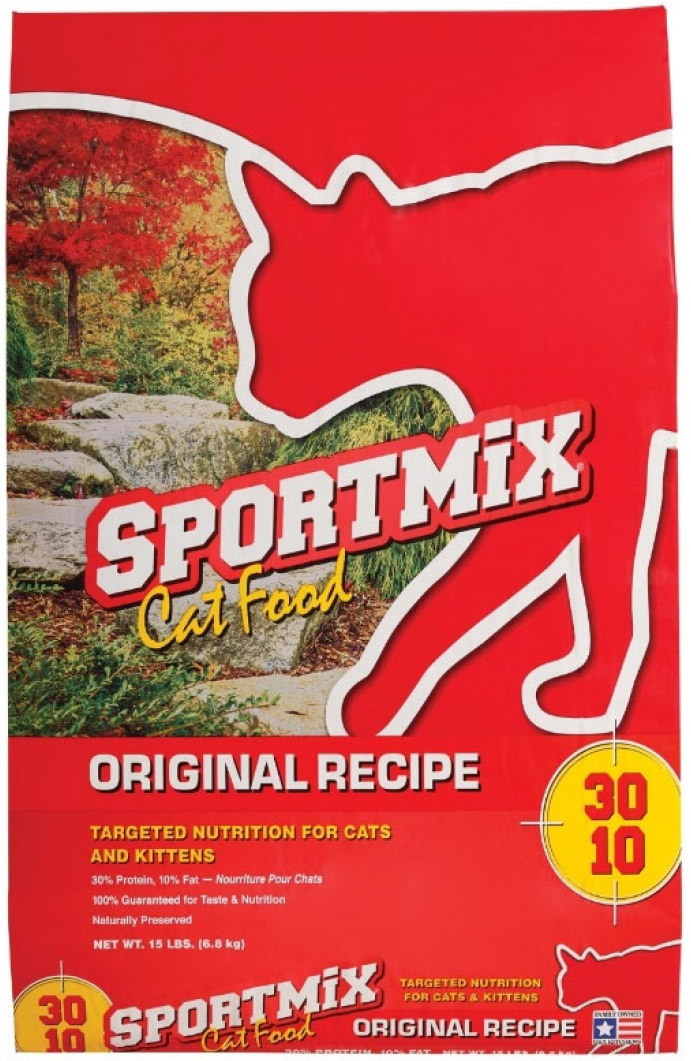
Matvælastofnun warns against  Sportmix original cat food cat food  from  Midwestern pet food  in 6.8 kg bags due to aflatoxin mold toxin. The company Pak ehf. has recalled the feed with the help of the Food Administration. The feed was taken from online sales at the end of December and buyers were contacted. 

The recall only applies to the following batches:

  • Product name: Sportmix original cat food
  • Weight: 6.8 kg (15 lbs)
  • Manufacturer: Midwestern pet foods
  • Batch number: All dates before or 07.09.22 / batch number 07092021L3 05
  • Country of manufacture: United States
  • Importer: Pak ehf., Strandgata 32, 220 Hafnarfjörður
  • Distribution:  https://www.litlagaeludyrabudin.is/netverslun/

Sportsmix cat food

Parties who own this feed are advised to return it to PAK ehf., Melabraut 19, 220 Hafnarfjörður or call 517 8119.

Aflatoxin is a poison produced by the fungus Aspergillus flavus  which can grow on maize and other grains used in pet food. If the poison is high in the product, it can cause illness or even death.

RASFF Alerts – Salmonella – Various Chicken/Turkey/Egg Products from Poland – Raw Smoked Bacon Strips – Organic Chilli Pepper – Black Pepper – Sesame Seeds – Chipolata – Paprika Powder – Turkey Fillets – Turkey Escalopes

European Food Alerts

RASFF

Salmonella (in 1 out of 5 samples /25g) in raw smoked bacon strips from Germany in Germany

RASFF

Salmonella (presence /25g) in organic chilli pepper from Uganda in the Netherlands

RASFF

Salmonella (presence /25g) in organic sesame seeds from Turkey in the Netherlands

RASFF

Salmonella (presence /25g) in chipolata from the Netherlands in the Netherlands

RASFF

Salmonella (presence /25g) in paprika powder from China in Spain

RASFF

Salmonella enterica ser. Matadi (presence /25g), Salmonella enterica ser. München (presence /25g), Salmonella enterica ser. Newport (presence /25g) and Salmonella enterica ser. Saintpaul (presence /25g) in black pepper from Brazil in Germany

RASFF

Salmonella enterica ser. Abaetetuba (in 1 out of 10 samples /25g), Salmonella enterica ser. Coeln (in 1 out of 10 samples /25g), Salmonella enterica ser. Matadi (in 1 out of 10 samples /25g), Salmonella enterica ser. Newport (in 1 out of 10 samples /25g) and Salmonella enterica ser. Oranienburg (in 2 out of 10 samples /25g) in black pepper from Brazil in Germany

RASFF

Salmonella enterica ser. Saintpaul (presence /25g) in black pepper from Brazil in Germany

RASFF

Salmonella enterica ser. Typhimurium (presence /25g) in chilled turkey fillets and escalopes from France in Finland

RASFF

Salmonella enterica ser. salamae (in 3 out of 5 samples /25g) in frozen turkey breast fillets from Poland, via Estonia in Finland

RASFF

Salmonella enterica ser. Enteritidis (in out of 5 samples /25g) in chilled chicken thighs from Poland in Lativa

RASFF

Salmonella enterica ser. Liverpool (in 1 out of 5 samples /25g) in sesame seeds from Uganda in Germany

RASFF

suspicion of Salmonella enterica ser. Enteritidis (found in faecal samples) in eggs from Poland in Poland

RASFF

Salmonella enterica ser. Enteritidis (presence /25g) in frozen chicken broiler fillets from Poland in Lithuania

RASFF

Salmonella (presence /25g) in chilled chicken meat from Poland in Poland

RASFF

Salmonella enterica ser. Enteritidis (presence/ /25g) in chilled chicken broiler soup sets from Poland in Lithuania

RASFF

Salmonella enterica ser. Infantis (presence /25g) in chicken wings from Poland in Lithuania

RASFF Alert – Listeria monocytogenes – Frozen Pre-Cooked Chicken Curry Cassolettes

European Food Alerts

RASFF

Listeria monocytogenes (< 10 CFU/g) in frozen pre-cooked chicken curry cassolettes from Spain in France

Hong Kong – Prevention and Reduction of Aflatoxin Contamination in Peanuts

Click to access Peanuts_and_Aflatoxins_Guideline_e.pdf