Category Archives: Food Toxin

Germany – Farmer’s bratwurst, spreadable raw sausage – STEC E.coli

LMW

Alert type: Food
Date of first publication: 06.09.2022
Product name:

Farmer’s bratwurst, spreadable raw sausage

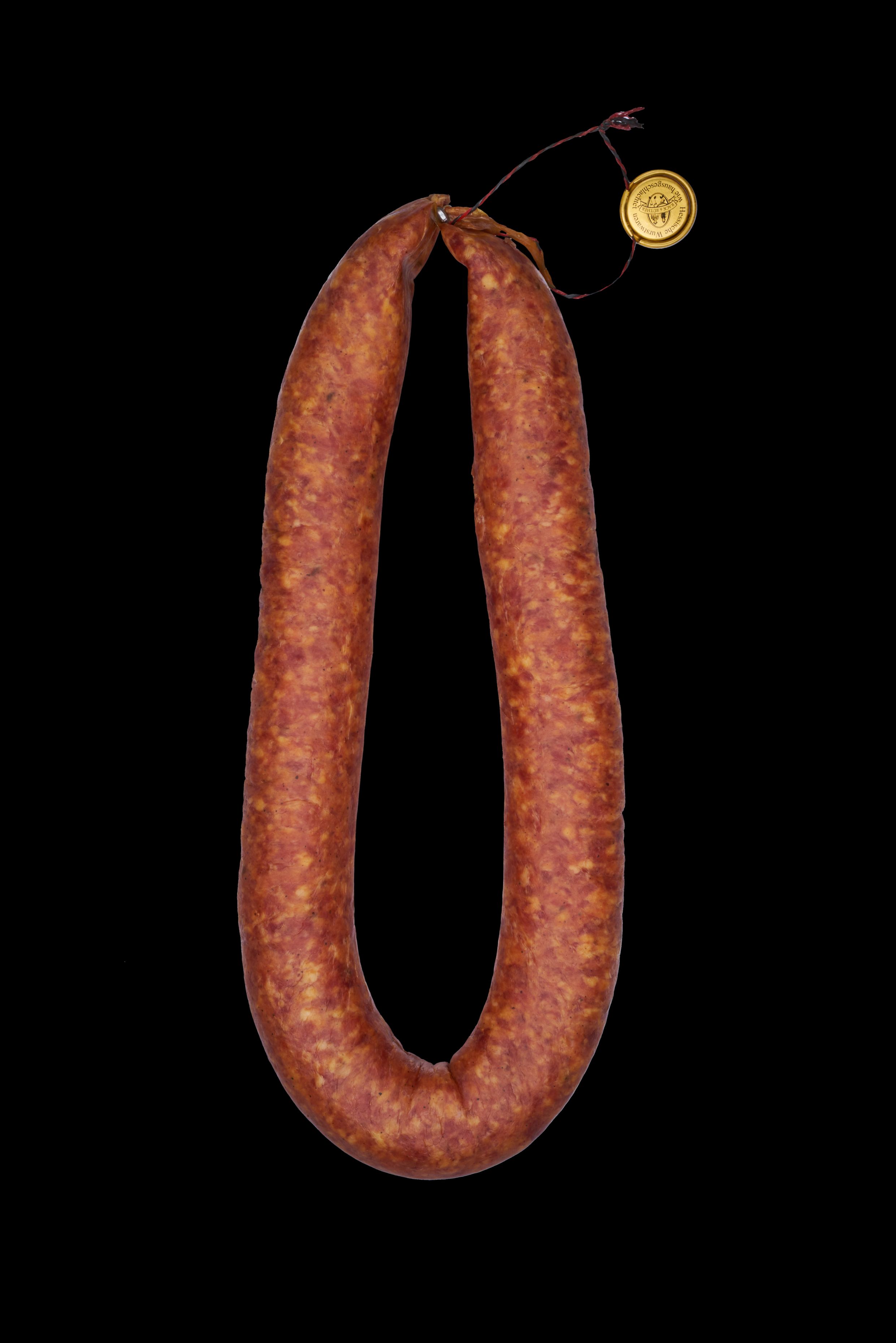
Product images:

Hessische_Bauernbratwurst_streichfaehig.jpg

Rack & Rüther GmbH

Manufacturer (distributor):

Rack & Rüther GmbH Steinbreite 14 34277 Fuldabrück

Reason for warning:

Detection of shigatoxin-producing Escherichia coli (STEC)

Durability: 09/30/2022
Lot identification: 238
Further information:

An EHEC (synonyms: STEC, VTEC) disease usually manifests itself within a week after infection with diarrhea and abdominal cramps. Babies, small children, the elderly and people with a weakened immune system in particular can develop more severe illnesses with bloody diarrhea. Rarely, especially in small children, acute kidney failure can occur in a second flare-up a few days after the onset of diarrhea. Anyone who has eaten this food and develops severe or persistent symptoms should seek medical attention and report possible EHEC infection. It makes no sense to seek preventive medical treatment without symptoms.

Further information on the pathogen can be found here: http://www.infectionsschutz.de/erregersteckbriefe/ehec/

For more information, please refer to the attached customer information.

Manufacturer’s website:

Luxembourg – RECALL: FLUTE CEREALS & SEEDS OF THE CHÂTEAU BLANC BRAND – Mycotoxin – Ergot Alkaloids

SAP

Deli Traiteur is recalling the following product :

Last name Cereal & seed flute
Mark White Castle
Unity 230g
Use-by date (DLC) 01/13/2023

Danger  : Presence of ergot alkaloids in rye flour

Ergots or sclerotia are formed by a fungus ( Claviceps purpurea ), a parasite of rye and other cereals. Sclerotia or ergots replace the seed and contain alkaloids, in particular lysergic acid from which LSD is derived, toxins responsible for diseases observed in humans as well as in animals (ergotism). Ergotism, more specifically linked to the ingestion of ergot from rye, is known to be responsible for the “Saint Anthony’s fires” or “mal des ardents” observed in humans. Symptoms included slow blood circulation, which caused alternating feelings of extreme heat and cold, and then gangrene in the extremities of the body. Nerve seizures could also occur.

Sale in Luxembourg by: Deli Traiteur

A sale by other operators cannot be excluded.

Information Source: Deli Traiteur Recall Notification

Belgium – Wholemeal rye flour Bio Demeter 1kg from the Hermus brand – Ochratoxin A

AFSCA

Recall of Biofresh Belgium
Product: Wholemeal rye flour Bio Demeter 1kg from the Hermus brand.
Problem: too high content of ochratoxin A.

In agreement with the FASFC, Biofresh Belgium withdraws the wholemeal rye flour Bio Demeter 1kg of the Hermus brand from sale and recalls it from consumers because of an excessively high content of ochratoxin A.
Biofresh Belgium asks its customers to not to consume this product and to bring it back to the point of sale where it was purchased where the product will be refunded.

Product description

– Product name: Wholemeal rye flour Bio Demeter 1kg
– Brand: Hermus
– Expiry date (DDM): 19/12/2022
– Batch number: 220222
– Sale period: from 21/03/2022 to 05/10/2022
– Type of packaging: paper bag
– Weight: 1kg

For further information, contact Biofresh Belgium customerservice, Telephone number: 015 79 59 39 or E-mail: customer@biofresh.be

France – Mackerel fillet – Histamine

Gov france

Identification information of the recalled product

  • Product category Feed
  • Product subcategory Fishery and aquaculture products
  • Product brand name Unbranded
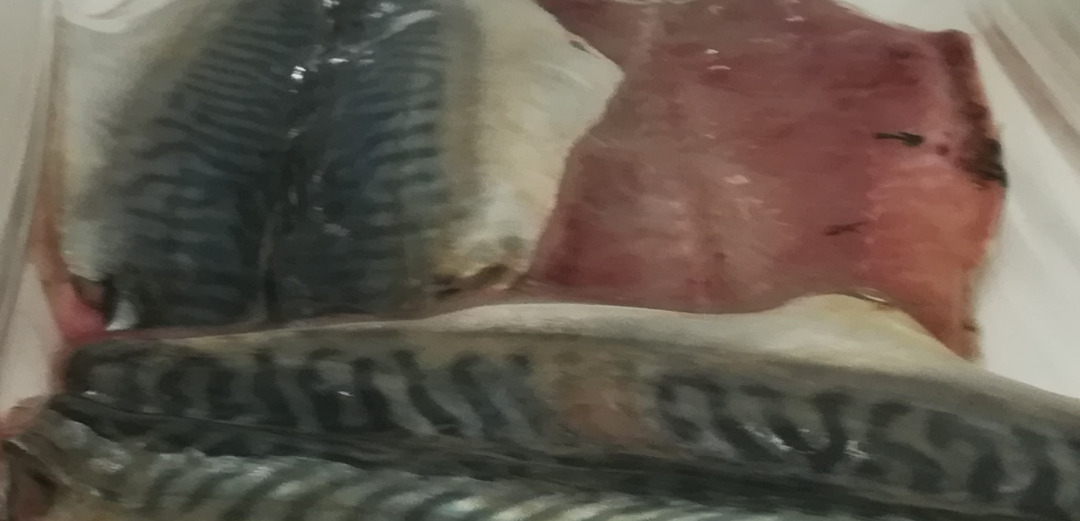
  • Model names or references Mackerel fillet
  • Identification of products
    GTIN Batch
    00000000 All lots
  • Packaging Sold at the traditional tide counter
  • Marketing start/end date From 08/24/2022 to 08/31/2022
  • Storage temperature Product to be stored in the refrigerator
  • Geographic area of ​​sale MONDEVILLE SUPER U (dpt 14)
  • Distributors MONDEVILLE SUPER U (dpt 14)

Practical information regarding the recall

  • Reason for recall Histamine
  • Risks incurred by the consumer Endogenous toxins: histamine (fish, cheese, alcoholic beverages, meats)

Sweden – Histamine in fish again – 20 Sick

Food Safety News

Meanwhile, 20 people fell sick recently in Sweden due to histamine levels in fish. The foodborne outbreak was linked to tuna from Vietnam.

In April 2021, 19 people were affected by histamine poisoning in Stockholm after eating tuna loins from Vietnam at three different restaurants.

In 2020, there were three outbreaks of histamine poisoning in tuna from Vietnam in three months. These incidents affected about 60 people but contaminated tuna came from different batches. Patients were from different areas in southern and central Sweden.

Czech Republic – Brazil Nuts – kernels – Aflatoxin B1

Potravinynapranyri

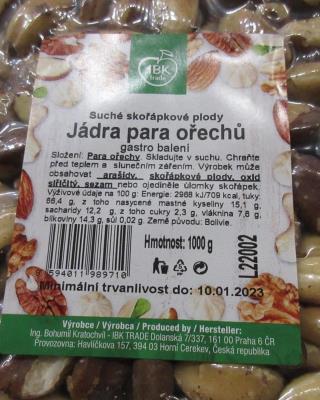
Illustrative photo #1

Place of inspection:
Horní Cerekev ( Havlíčkova 157, 394 03 Horní Cerekev )
ID: 07361092
Food group: Nuts Nuts

Brazil nuts – kernels
Category: Dangerous foods
Invalid parameter:

aflatoxin B1

In Brazil nuts, the limit for the content of contaminating substances – aflatoxins – was exceeded twice.

Aflatoxins are classified as mycotoxins. 

Batch: L74-22
Best before date: 30/3/2023
Packaging: plastic bag 20 kg
Quantity of the product in the package: 20 kg
Distributor: Supplier: CATZ INTERNATIONAL BV, BLAKEBURG build, Blaak 22, ROTTERDAM
Country of origin:  Bolivia
Date of sample collection: 5/3/2022
Reference number: 22-000336-SZPI-CZ
The sample was detected by the official control of the State Agricultural and Food Inspection.

Norway -Do not eat the contents of crab shells in Agder – DSP Algal Toxin

Matportalen

The Norwegian Food Safety Authority warns people in Agder against eating the contents of the crab’s shells, following the discovery of diarrhea poison. The meat from the claws is safe to eat.

The Norwegian Food Safety Authority has found high concentrations of the algae poison DSP (Diarrhetic Shellfish Poisoning) in crab from Agder.

DSP is one of the most common types of mussel poisoning in Norway. Once the crab has eaten mussels with DSP, the crab becomes poisonous to people who eat it. DSP causes diarrhoea, nausea, vomiting and abdominal pain. It takes from half an hour to a few hours from the time you eat until you get sick. The symptoms disappear by themselves after 2-3 days.

Since the beginning of July this year, high levels of the algal toxin DSP have been detected in mussels along the Sørland coast, and in Agder the levels of the toxin have increased significantly in recent times. This is the reason why the Norwegian Food Safety Authority has also tested crabs in Agder for DSP. 

Sweden – Pasta meal behind 80 illnesses in Sweden – Staphylococcus/Bacillus

Food Safety News

Around 80 people got food poisoning from a pasta meal at a soccer tournament this past month in Sweden.

An investigation into the incident in Gammelstad on Aug. 5 revealed people fell ill after eating spaghetti bolognese from a restaurant in the city of Luleå.

Testing of the bolognese left at the restaurant was found to be satisfactory. Samples were also taken in Gammelstad where serving took place. High levels of bacteria were detected in the pasta, plus the presence of toxins that can cause food poisoning. Food had been left at room temperature for some time after serving, which provided an opportunity for bacterial growth.

Bacillus cereus and Staphylococcus aureus were found in the pasta meal. Symptoms experienced by those sick matched what would be expected with such contamination.

New Zealand – Public health warning for shellfish extended for West Coast, North Island – PSP – Toxins

MPI

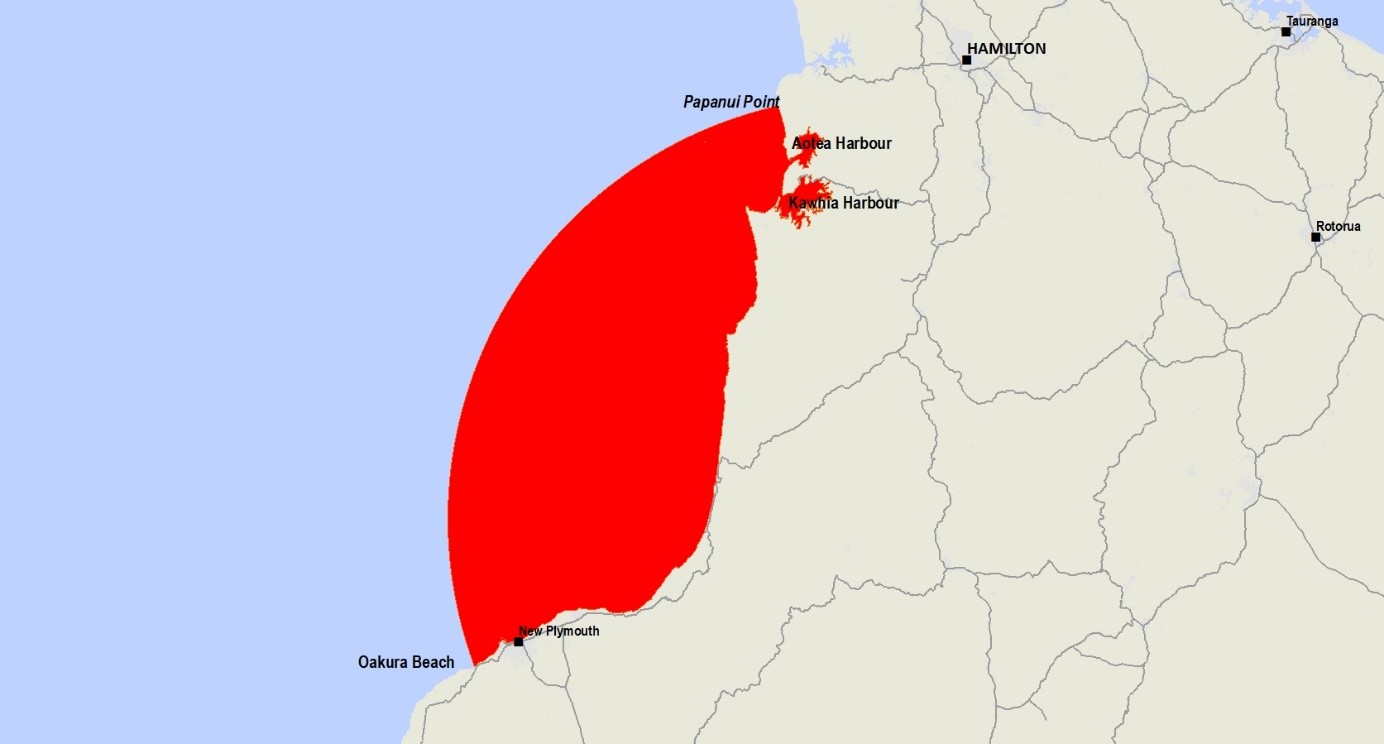
Map of the affected area in the Kawhia Harbour area, West Coast, North Island

New Zealand Food Safety today extended a public health warning against collecting shellfish in the Waikato region and have extended this south to the Taranaki region. The public health warning now applies to the coastline from Papanui Point (south of Raglan), south to Oakura Beach. Paralytic shellfish toxins have been detected at levels above the safe limit set by MPI.

Routine tests on shellfish samples taken from this region have shown levels of Paralytic Shellfish Poisoning (PSP) toxins above the safe limit of 0.8 mg/kg set by New Zealand Food Safety. Anyone eating shellfish from this area is potentially at risk of illness.

Mussels, oysters, tuatua, pipi, toheroa, cockles, scallops, catseyes, kina (sea urchin), and all other bivalve shellfish should not be eaten.

Note, cooking shellfish does not remove the toxin.

Pāua, crab, and crayfish may still be eaten if the gut has been completely removed prior to cooking, as toxins accumulate in the gut. If the gut is not removed, its contents could contaminate the meat during the cooking process.

Symptoms typically appear between 10 minutes and 3 hours after ingestion and may include:

  • numbness and a tingling (prickly feeling) around the mouth, face, and extremities (hands and feet)
  • difficulty swallowing or breathing
  • dizziness
  • headache
  • nausea
  • vomiting
  • diarrhoea
  • paralysis and respiratory failure and in severe cases, death.

If anyone becomes ill after eating shellfish from an area where a public health warning has been issued, phone Healthline for advice on 0800 61 11 16, or seek medical attention immediately. You are also advised to contact your nearest public health unit and keep any leftover shellfish in case it can be tested.

Monitoring of toxin levels will continue and any changes will be communicated accordingly. Commercially harvested shellfish – sold in shops and supermarkets, or exported – is subject to strict water and flesh monitoring programmes by MPI to ensure they are safe to eat.

RASFF Alert- Mycotoxin – Patulin – Apple Sauce

RASFF

Patulin in Apple sauce From Netherlands in France, Germany and Ireland