Category Archives: Food Poisoning

RASFF Alerts – Aflatoxin – Dried Figs – Groundnuts – Peanuts- Pistachios

RASFF

Aflatoxins in dried figs from Turkey in Germany

RASFF

Aflatoxins in shelled groundnuts from the United States in the Netherlands

RASFF

Aflatoxins (B1 = 330; Tot. = 540 µg/kg – ppb) in dried figs from Turkey in France

RASFF

Aflatoxins (B1 = 16.1; Tot. = 17.9 µg/kg – ppb) in dried figs from Turkey in France

RASFF

Aflatoxins (Tot. = 8.9 µg/kg – ppb) in peanuts in shell from China in Italy

RASFF

Aflatoxins (B1 = 21; Tot. = 23 µg/kg – ppb) in pistachios in shell from Iran in France

RASFF

Aflatoxins (B1 = 39; Tot. = 41 µg/kg – ppb) in shelled pistachios from Turkey in Germany and Italy

RASFF

Aflatoxin B1 in Bolivian organic groundnuts in the Netherlands and Spain

RASFF

Aflatoxins (B1 = 20.8; Tot. = 29.5 µg/kg – ppb) in dried figs from Turkey, via Bosnia and Herzegovina in Croatia

UK – Estimating deaths from foodborne disease in the UK for 11 key pathogens

NCBI

Objective

To estimate the number of deaths from foodborne disease in the UK from 11 key pathogens.

Design

Four different models were developed using data from a range of sources. These included enhanced surveillance, outbreaks, death certificates and hospital episode statistics data. For each model, median estimates were produced with 95% credible intervals (CrI). The results from the different models were compared.

Results

The estimates for foodborne deaths for each pathogen from the different models were consistent, with CrIs largely overlapping. Based on the preferred model for each pathogen, foodborne norovirus is estimated to cause 56 deaths per year (95% CrI 32 to 92), foodborne Salmonella 33 deaths (95% CrI 7 to 159), foodborne Listeria monocytogenes 26 deaths (95% CrI 24 to 28), foodborne Clostridium perfringens 25 deaths (95% CrI 1 to 163) and foodborne Campylobacter 21 deaths (95% CrI 8 to 47). The considerable overlap in the CrIs means it is not possible to make any firm conclusions on ranking. Most of these deaths occur in those aged over 75 years. Foodborne deaths from ShigellaCryptosporidiumGiardia, adenovirus, astrovirus and rotavirus are all rare.

Conclusions

We estimate that there are 180 deaths per year in the UK (95% CrI 113 to 359) caused by foodborne disease based on these 11 pathogens. While this is a small fraction of the estimated 2.4 million cases of foodborne illness per year it still illustrates the potential severity of these illnesses demonstrating the importance in continuing efforts to reduce these infections.

Keywords: infectious disease, CampylobacterSalmonella

Summary box

What is already known about this subject?

  • Foodborne disease is a common illness in the UK.

  • Previous research has estimated that there are 566 000 cases, 74 000 general practitioner presentations and 7600 hospital admissions related to foodborne disease from 13 known pathogens in UK; no estimate was made for deaths.

  • Campylobacter and norovirus are the most common foodborne pathogens in the UK.

  • Other common foodborne pathogens include Clostridium perfringens and Salmonella.

What are the new findings?

  • This study provides updated estimates of deaths for each of the 11 key foodborne pathogens considered; in total, these 11 pathogens cause 180 deaths per year in the UK (95% credible interval (CrI) 113 to 359).

  • Among them, Campylobacter, C. perfringens, Listeria monocytogenes, Salmonella and norovirus pathogens are responsible for over 98% of these deaths.

  • Ranking between these five is difficult due to overlapping CrIs.

How might it impact on clinical practice in the foreseeable future?

  • This highlights the potential severity of Salmonella, L. monocytogenesC. perfringensCampylobacter and norovirus, particularly in comparison with other infectious intestinal diseases that have a food source.

USA – Dangerous E. Coli O157 Found in Ground Beef Sold at Kroger and Fred Meyer Supermarkets

Consumer Reports

Kroger-brand ground beef purchased at a Fred Meyer supermarket in Seattle and tested by Consumer Reports was found to have a deadly strain of E. coli called O157:H7. The tested package of 93 percent lean ground beef is marked with an “Establishment” (EST) number of 965, representing the plant where the meat was processed, and a “use or freeze by date” of 1/11/2022. (See the product label below.)

At this time, there is no recall of this ground beef, and no illnesses have been linked to the product. But CR’s food-safety experts warn consumers who might have purchased Kroger-branded 93 percent lean ground beef from any Kroger-owned grocery store to check their packages and to throw away the product if it contains that establishment number and “use or freeze by” date. Those stores include Fred Meyer, Harris Teeter, Ralphs, Dillons, and several other supermarkets. (See a complete list of Kroger-owned grocery stores.) Consumers also should not buy ground beef with those markings from any of those stores.

Belgium – Ground Ginger – Aflatoxin –

AFSCA

Recall of the AFSCA
product Product: ground ginger of the TRS Asia’s Finest Food brand.
Problem: too high aflatoxin content.


The AFSCA is today recalling consumers of “Ginger Powder” ground ginger from the TRS Asia’s Finest Food brand.

This recall follows a RASFF concerning an excessively high aflatoxin content. It was therefore decided to withdraw this product from sale and to recall it to consumers.

Product: Ginger Powder
Brand: TRS Asia’s Finest Food
Expiration date (DDM):
02/28/2022 Lot: GGR 20060 – 38251
Weight: 100g

This product has been marketed through various stores in Belgium.

For any further information, you can contact the AFSCA contact point for consumers: 0800 / 13.550 or pointdecontact@afsca.be .

Belgium – “Sankhal” (millet couscous) from the La Vivière brand- Aflatoxin

AFSCA

01/04/2022 (update 12/16/2021)
AFSCA recall
Product: “Sankhal” (millet couscous) from the La Vivière brand.
Problem: too high aflatoxin content.

Following a notification via the RASFF system (European Food and Feed rapid alert system), the AFSCA is withdrawing from sale the product “Sankhal” (millet couscous) of the La Vivière brand and is recalling it to consumers because too high aflatoxin content.

The AFSCA asks not to consume this product and to bring it back to the point of sale where it was purchased.

Product Description

• Product name: “Sankhal” (millet couscous)
• Brand: La Vivière
• Lots and expiry dates:
            L21-08067 – DDM:
06/30/2023 L21-08078 – DDM: 07/30/2023
• Weight: 400g

This product was sold in Belgium via various general food stores including:
– Bilal and Laiba Sprl., Boulevard Paul Janson 10, 6000 CHARLEROI
– Fezan Voeding, leemput str. 14, 8000 BRUGGE
– Best Pilorijnstraat 4 9000 GHENT
– Oriental Exotic Langestr. 21 1730 ASSE

For any further information , you can contact the AFSCA contact point for consumers: 0800 / 13.550 or pointdecontact@afsca.be .

USA – Alaska hit with 2 E. coli illnesses linked to Simple Truth Organic Power Greens and Nature’s Basket Organic Power Greens – E.coli O157

Food Poison Journal

As of December 29, 2021, 13 people infected with the outbreak strain of E. coli O157:H7 have been reported from six states. Illnesses started on dates ranging from November 27, 2021, to December 9, 2021.

Sick people range in age from 4 to 79 years, with a median age of 54, and 92% are female. Of 12 people with information available, four have been hospitalized and one person developed a type of kidney failure called hemolytic uremic syndrome (HUS). No deaths have been reported.

State and local public health officials are interviewing people about the foods they ate in the week before they got sick. Of 12 people interviewed, all reported eating packaged salads. Of 10 people who provided brand information, 6 ate or bought Simple Truth Organic Power Greens and 1 ate Nature’s Basket Organic Power Greens. Both Organic Power Greens salads have the same mix of leafy greens: organic spinach, mizuna, kale, and chard. Several sick people reported using these salads in smoothies.

USA – Seven sickened by Simple Truth Organic Power Greens from QFC and Fred Meyer stores in Washington – E.coli O157

Food Poison Journal

The Washington State Department of Health (DOH) confirmed today that the state is part of an E. coli outbreak affecting six states. The seven cases of E. coli O157:H7 found so far in Washington are likely linked to Simple Truth Organic Power Greens purchased at QFC and Fred Meyer stores in Washington state. Consumers with Simple Truth Organic Power Greens with best-by dates through December 20, 2021, should discard them to prevent further illnesses.

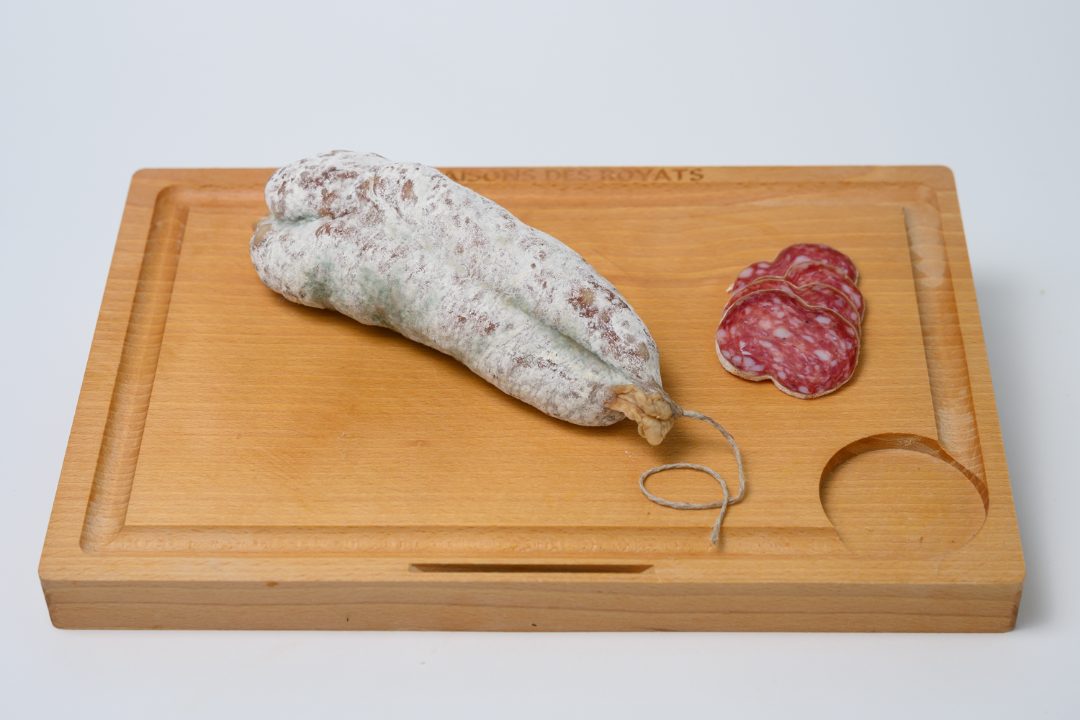
France – dry sausage, dry sausage, dry sausage fourme, mini rosette, rosette, dry jesus – Salmonella

Gov france

Identifying information for the recalled product

  • Product category Food
  • Product sub-category Meats
  • Product brand name salted meats from the royats
  • Names of models or references dry sausage dry sausage dry sausage four me mini rosette rosette dry jesus
  • Product identification
    GTIN Lot Dated
    24461310 3445021 Recommended consumption date 02/15/2022
    24461300 3445021 Recommended consumption date 02/15/2022
    24461330 3445021 Recommended consumption date 02/15/2022
    24003700 3445021 Recommended consumption date 02/15/2022
    24003710 3445021 Recommended consumption date 02/15/2022
  • Products List List_of_products_concerned.pdf Attachment
  • Start date / End of marketing From 12/15/2021 to 12/18/2021
  • Storage temperature Product to be stored at room temperature
  • Geographical sales area Regions: Auvergne-Rhône-Alpes
  • Distributors simply market, intermarché, super u, butcher, independent trader

Practical information regarding the recall

  • Reason for recall risk of toxin infection Salmonellosis
  • Risks incurred by the consumer Salmonella spp (causative agent of salmonellosis)

RASFF Alert – EIEC Outbreak – Spring Onions

RASFF

Spring onions from Egypt suspected to be the source of an outbreak of EIEC in Denmark

RASFF Alerts – Aflatoxins – Ginger – Dried Figs – Pistachios – Dried Chilli Peppers – Millet Couscous – Groundnut Kernels

RASFF

Aflatoxins (aflatoxin B1 and total aflatoxin) in ginger from India, via the United Kingdom and the Netherlands in Germany

RASFF

Aflatoxins (B1 = 12.5; Tot. = 12.5 µg/kg – ppb) in raw pistachio nuts in shell from Turkey in Spain

RASFF

Aflatoxins (B1 = 36.6; Tot. = 36.6 µg/kg – ppb) in dried chili peppers from China in Finland

RASFF

Aflatoxine in Millet Couscous from Senegal in Belgium, France, Germany, Netherlands, Luxembourg, Spain

RASFF

Aflatoxins (B1 = 14.4; Tot. = 14.4 µg/kg – ppb) in dried figs from Turkey in Spain

RASFF

Aflatoxins (Tot. = 18.6 µg/kg – ppb) in dried figs from Turkey in Austria, Germany, Netherlands, UK

RASFF

Aflatoxins (B1 37.8 µg/kg – Tot. 56.1 µg/kg) in shelled pistachios from Turkey in Italy and France

RASFF

Aflatoxins (B1 = 38.7; Tot. = 40.7 µg/kg – ppb) in pistachio kernels from Turkey in Italy

RASFF

Aflatoxins (B1 = 12; Tot. = 12 µg/kg – ppb) in groundnut kernels from the United States in the Netherlands