Category Archives: Food Poisoning

USA – Lyons Magnus Expands Voluntary Recall to Include Additional Nutritional and Beverage Products Due to the Potential for Microbial Contamination – Cronobacter sakazakii – Clostridium botulinum

FDA

Summary

Company Announcement Date:
FDA Publish Date:
Product Type:
Food & Beverages
Meal Replacements
Foodborne Illness
Reason for Announcement:
Due to the potential for microbial contamination, including Cronobacter sakazakii and Clostridium botulinum
Company Name:
Lyons Magnus LLC
Brand Name:
Lyons, Barista, Ready Care, various
Product Description:
Nutritional and beverage products

Company Announcement

FRESNO, Calif. – August 10, 2022 – Lyons Magnus LLC (“Lyons Magnus” or the “Company”) today announced that following continued collaboration and consultation with the U.S. Food and Drug Administration (“FDA”) and in furtherance of its longstanding commitment to food safety, the Company is expanding its July 28, 2022, voluntary recall of nutritional and beverage products to include additional brands and code dates. A complete list of the recalled products is in the table below. Consumers also are advised not to consume any products that are beyond their Best By Date.

This recall is being conducted due to the potential for microbial contamination, including from the organisms Cronobacter sakazakii and Clostridium botulinum. Although Clostridium botulinum has not been found in products, consumers are warned not to consume any of the recalled products even if they do not look or smell spoiled. The list of recalled products does not include products intended for infants (i.e., under the age of one).

While infection related to Cronobacter sakazakii is rare, the common symptoms of illness could include fever, vomiting and urinary tract infection. However, vulnerable and immunocompromised populations may be more susceptible to infection.

Clostridium botulinum may cause a severe form of food poisoning. It can begin from six hours to two weeks after eating food that contains the toxin. Symptoms may include double vision, blurred vision, drooping eyelids, slurred speech, difficulty swallowing, and muscle weakness. Botulism poisoning can cause respiratory paralysis, resulting in death, unless assistance with breathing (mechanical ventilation) is provided.

Root cause analysis indicates that the products did not meet commercial sterility specifications.

The products are packed in various formats under many different brand names, which are listed in the table below. To identify the Lot Code and Best By Date refer to the top of the carton for individual cartons or the side of the case for multi-carton cases. Some products were distributed nationally, while some products were limited in scope. Products included in the recall were distributed starting in April 2021.

Anyone who has a recalled product in his or her possession should dispose of it immediately or return it to the place of purchase for a refund. Consumers in all time zones with questions may contact the Lyons Recall Support Center 24/7 at 1-800-627-0557, or visit its website at www.lyonsmagnus.com. This recall is being conducted in cooperation with the FDA.
Sri Lanka – Customs probing seized coconut oil bowsers amid Aflatoxin scare

Economy Next

Sri Lanka customs has taken into their custody two bowsers which were said to contain coconut oil, an official said amid a scare involving aflatoxin contaminated oil being released to the market.

The two bowsers said to contain 55,000 liters of oil destined to a coconut oil refining company had been handed over to Sri Lanka Customs by Dankotuwa police.

“Currently they are being handed over to the Customs Preventive Directorate,” Director General of the Customs Vijitha Ravipriya told reporters Wednesday.

“We are now investigating. However, the bowsers have not been opened yet to see whether it is, unrefined oil, refined oil or some other substances.”

Italy – 17 Belgian boy scouts suffer food poisoning in Monza

ANSA

ROME, AUG 8 – Some 17 Belgian boy scouts suffered food poisoning after eating fish in a restaurant in Monza Saturday night, the Eco di Bergamo newspaper reported Monday.
The youths, aged 12 to 20, all from Antwerp, had symptoms including fainting, vomiting, dizziness and pallor, and were taken from the iconic Bergamo Alta (Upper Bergamo), where they had travelled Sunday morning, to three hospitals in the Lombardy city.
They said their symptoms had already presented on the coach from Monza to Bergamo. (ANSA).

Iceland – Histamine in dried fish

MAST

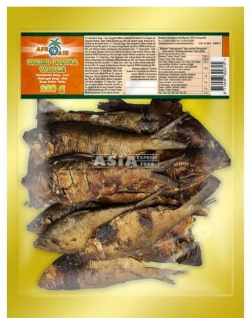
Matvælastofnun warns against the consumption of one batch of Afroase Bongo fish dried whole  that the company Lagsmaður ehf. imported because the fish is unfit for consumption. The product was detected with excessive levels of histamine and other organic amines. The company has recalled the product with the help of the health authorities of Garðabær, Hafnarfjörður, Kópavog, Mosfellsbær and Seltjarnarness (HEF) and sent out a press release.

The recall notification came through the RASFF European Rapid Alert System for Dangerous Food and Feed on the Market.

It is only a recall for the below production batches:

  • Brand: Afroase
  • Product name: Bongo fish dried whole
  • Best before date:  31.12.2022
  • Barcode: 8719497392315
  • Net quantity: 200g
  • Manufacturer: Asia Express Food BV – Kilbystraat – Kampen – 8263 – Netherlands
  • Country of manufacture: Gambia
  • Importer: Lagsmaður ehf. / fiska.is, Nýbýlaveðir 6 Kópavogur
  • Distribution: Verslun fiska.is, Nýbýlvegi 6, 200 Kópavogur

bongo fish

Consumers who have purchased the above product are asked not to consume it and to discard or return it to Lagsmann’s /fiska.is store at Nýbýlavegi 6.

Click to access innkollun-a-bonga-dry-fish.pdf

RASFF Alerts – Aflatoxin – Peanuts – Pistachio – Dried Figs – Groundnuts – Hazelnut Kernels – Figs

RASFF

Aflatoxins in peanuts from the United States in Germany

RASFF

Aflatoxins in pistachios from USA via Turkey in Belgium

RASFF

Level of aflatoxins exceeding limits in dried figs from Turkey in France

RASFF

Too high content of aflatoxins in groundnuts from USA in France

RASFF

Aflatoxin in Egyptian groundnuts in the Netherlands

RASFF

Aflatoxins in pistachios from the Islamic Republic of Iran in Germany

RASFF

Aflatoxins in hazelnut Kernels from Georgia in Bulgaria and Germany

RASFF

Level of aflatoxins exceeding limits in figs from Turkey in France

RASFF

Aflatoxins in peanuts from India in Belgium

RASFF Alerts – STEC E.coli – Lamb Rump Steak – Minced Meat – Horse Meat

RASFF

VTEC/EHEC in chilled lamb rump steaks from New Zealand in Austria, Germany and Sweden

RASFF

STEC (stx+;eae+) in minced meat in Belgium and the Netherlands

RASFF

STEC (stx+;eae+) in horse meat from Italy in Belgium

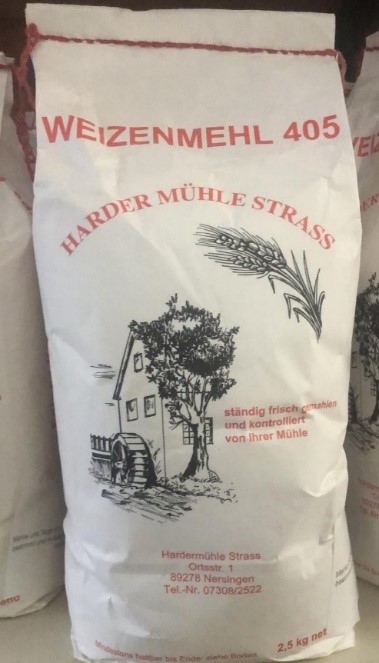
Germany – Wheat flour Hardermühle Strass Type 405 – STEC E.coli

LMW

Alert type: Food
Date of first publication: 08/03/2022
Product name:

Wheat flour Hardermühle Strass Type 405

Product images:
product image.jpg


Manufacturer (distributor):

Mill shop Birgitt Harder

Reason for warning:

Shiga toxin-producing Escherichia coli (STEC)

Packaging Unit:

See attached consumer information

Durability:

See attached consumer information

Production date:

See attached consumer information

Lot identification:

See attached consumer information

Further information:

Reference is made to the company’s attached consumer information.

Contact to the competent authorities:

Bavaria:

poststelle@lgl.bayern.de

Press Releases and Information
title attachment or web link
consumer information

RASFF Alert – Histamine – Tuna

RASFF

Suspected histamine in tuna from Vietnam in Sweden

Research – English E. coli outbreak caused by milk pasteurisation problem in 2019

Cambridge Org

In November 2019, an outbreak of Shiga toxin-producing Escherichia coli O157:H7 was detected in South Yorkshire, England. Initial investigations established consumption of milk from a local dairy as a common exposure. A sample of pasteurised milk tested the next day failed the phosphatase test, indicating contamination of the pasteurised milk by unpasteurised (raw) milk. The dairy owner agreed to immediately cease production and initiate a recall. Inspection of the pasteuriser revealed a damaged seal on the flow divert valve.

Ultimately, there were 21 confirmed cases linked to the outbreak, of which 11 (52%) were female, and 12/21 (57%) were either <15 or >65 years of age. Twelve (57%) patients were treated in hospital, and three cases developed haemolytic uraemic syndrome. Although the outbreak strain was not detected in the milk samples, it was detected in faecal samples from the cattle on the farm. Outbreaks of gastrointestinal disease caused by milk pasteurisation failures are rare in the UK. However, such outbreaks are a major public health concern as, unlike unpasteurised milk, pasteurised milk is marketed as ‘safe to drink’ and sold to a larger, and more dispersed, population. The rapid, co-ordinated multi-agency investigation initiated in response to this outbreak undoubtedly prevented further cases.

Argentina – Botulism case prompts warning in Argentina

Food Safety News

kswfoodworld

Argentinian officials have warned people not to consume a specific product line due to the risk of botulism.

The National Administration of Drugs, Foods and Medical Devices (ANMAT) said a suspected case of botulism has been associated with a product of the A Pleno brand, produced in Villa de las Rosas.

No official details were given about the sick person but local station Radio Verdad was told the patient was 47-years old and remained in the hospital in a serious condition after eating an expired A Pleno product.

The General Directorate of Control of the Food Industry in Córdoba and agencies in the areas of Villa de las Rosas and Villa Dolores are involved in the investigation.

ANMAT advised people not to eat any A Pleno branded products, which include peanut butter and cheese spread alternatives, and told traders to stop selling them.

Another outbreak in Argentina in Misiones earlier this year affected up to 18 people with two deaths. It was linked to homemade sausages made from wild animal meat that were shared in the community.