Category Archives: Food Microbiology

New Research Links Foodborne E. Coli Infections to “Hundreds of Thousands” of UTIs in U.S.

Food Safety Magazine

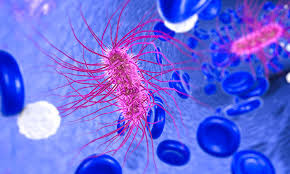
A new study suggests that Escherichia coli infection from contaminated meat products may be responsible for hundreds of thousands of urinary tract infections in the U.S. each year.

A team of scientists led by George Washington University (GWU) Milken Institute School of Public Health researchers have developed a new genomic approach for tracking the origins of E. coli infections. Using this method, the team estimated that between 480,000 and 640,000 UTIs in the United States each year may be caused by foodborne E. coli strains.

According to GWU, E. coli is the most common cause of UTIs, causing upwards of 85 percent of cases each year. Women are at greater risk of developing UTIs, which can range from simple bladder infections to life-threatening bloodstream infections. At present, only specific types of diarrhea-causing E. coli, such as E. coli O157:H7, are rigorously monitored by the U.S. Food and Drug Administration (FDA), but the new findings from GWU suggest that other strains may also pose serious health risks.

In the study, researchers collected raw chicken, turkey, and pork from major grocery store chains in Flagstaff, Arizona, and isolated E. coli from the meat samples. Simultaneously, researchers collected urine and blood E. coli isolates from patients hospitalized at the Flagstaff Medical Center for UTIs.

Research – Salmonella Biofilm Formation under Fluidic Shear Stress on Different Surface Materials

MDPI

Abstract

This study characterized biofilm formation of various Salmonella strains on common processing plant surface materials (stainless steel, concrete, rubber, polyethylene) under static and fluidic shear stress conditions. Surface-coupons were immersed in well-plates containing 1 mL of Salmonella (6 log CFU/mL) and incubated aerobically for 48 h at 37 °C in static or shear stress conditions. Biofilm density was determined using crystal violet assay, and biofilm cells were enumerated by plating on tryptic soy agar plates. Biofilms were visualized using scanning electron microscopy. Data were analyzed by SAS 9.4 at a significance level of 0.05. A surface–incubation condition interaction was observed for biofilm density (p < 0.001). On stainless steel, the OD600 was higher under shear stress than static incubation; whereas, on polyethylene, the OD600 was higher under static condition. Enumeration revealed surface–incubation condition (p = 0.024) and surface–strain (p < 0.001) interactions. Among all surface–incubation condition combinations, the biofilm cells were highest on polyethylene under fluidic shear stress (6.4 log/coupon; p < 0.001). Biofilms of S. Kentucky on polyethylene had the highest number of cells (7.80 log/coupon) compared to all other strain–surface combinations (p < 0.001). Electron microscopy revealed morphological and extracellular matrix differences between surfaces. Results indicate that Salmonella biofilm formation is influenced by serotype, surface, and fluidic shear stress.

Research – Effects of Selected Essential Oils on Listeria monocytogenes in Biofilms and in a Model Food System

MDPI

Abstract

The composition of 18 essential oils was determined using gas chromatography–mass spectrometry, and their antilisterial activity was evaluated by the disk diffusion method, followed by the determination of the minimum inhibitory and minimum bactericidal concentrations. The most active essential oils were oregano, thyme, cinnamon, winter savory, and clove, with MIC values ranging from 0.09 to 1.78 µL/mL. We investigated the biofilm-forming potential of Listeria monocytogenes on polystyrene at 5 °C, 15 °C, and 37 °C in three different media. The formation of biofilm was found to be dependent on the temperature and the availability of nutrients. After treatment with selected essential oils, the reduction in biofilm biomass was in the range of 32.61% and 78.62%. Micromorphological changes in the L. monocytogenes treated by oregano and thyme essential oils were observed in the form of impaired cell integrity and cell lyses by using scanning electron microscope. Oregano and thyme essential oils (MIC and 2MIC) significantly (p < 0.05) reduced the population of L. monocytogenes in minced pork meat during storage at 4 °C. In conclusion, the obtained results indicated the good activity of some selected essential oils on L. monocytogenes, with bacteriostatic, bactericidal, and antibiofilm effects at very low concentrations.

Research -Climate change and food safety: Temperature impact on the attachment of Escherichia coli pathogroups on cress leaf

Wiley Online

Abstract

Climate change and its worldwide effects are undeniable. Temperature increase due to climate change may affect foodborne pathogen survival on fresh produce. This study aimed to present an evaluation of climate change impact regarding temperature rise situations, on attachment of different pathogenic Escherichia coli strains on cress grown under controlled conditions. EHEC O157:H7, EAEC O104:H4 and EPEC O26 were inoculated with initial inoculum concentration of 8 log MPN/mL at different stages during growth to observe how inoculation time (7, 14, 21 and 28 days post sowing; dps) and route (seed and leaves) affect pathogen load on fresh produce. This study revealed that temperature increase designed according to mitigation scenarios for climate change (+2, +4 and +6 °C) did not cause any considerable change in pathogen persistence on leaf at 30 dps (~4.5 to 7 log MPN/g). In plants contaminated at later stage (21 and 28 dps), higher bacterial populations were obtained for all temperatures studied. Our results show that E. coli translocated towards leaf portions from seed and established significant amount of pathogen load on leaf (~4 to 5.3 log MPN/g). Also, inoculated bacteria have tightly bound to leaf (~3.5 to 7 log MPN/g) and cannot be eliminated by washing. Although persistence of E. coli O157:H7, O104:H4 and O26 did not differ significantly according to temperature, the bacterial load on the leaves was above infectious dose for humans.

Research – Scientists Discover How Foodborne Vibrio Infects People, Could Lead to New Treatments

Food Safety.Com

Food Illness

Researchers at the University of Texas (UT) Southwestern Medical Center have discovered how foodborne pathogen Vibrio parahaemolyticus infects people after eating raw or undercooked shellfish. The findings could lead to new ways to treat illness caused by the enteric bacteria.

The study provides the first visual evidence of how a gut bacterial pathogen uses an “assembly method” to build syringe-like structures to inject toxins into intestinal cells, giving a new view of how enteric bacteria, when exposed to bile acids, efficiently respond and build a virulence system.

RASFF Alerts – Aflatoxins -Peanut Butter – Groundnuts – Nutmeg- Organic Ground Cayenne Pepper – Almonds – Pistachios- Dried Figs

RASFF

Aflatoxin B1 and Total in Peanut butter from India in Germany and the Netherlands

RASFF

Aflatoxin in Indian groundnuts in the Netherlands and Switzerland

RASFF

Aflatoxin in Indian groundnuts in the Netherlands and Switzerland

RASFF

Aflatoxin in USA groundnuts in the Netherlands

RASFF

Aflatoxin in Indonesian Nutmeg in the Netherlands

RASFF

Aflatoxins in organic ground cayenne from Spain in Portugal and Italy

RASFF

Aflatoxin B1 above MRL in almonds from Australia in Spain

RASFF

Aflatoxins above MRL in almonds from Australia in Spain

RASFF

Presence of Aflatoxins beyond the permitted limits in shelled Pistachios from the USA in Italy

RASFF

Aflatoxins above MRL in almonds from Australia in the Netherlands and Spain

RASFF

Aflatoxins in dried figs from Turkey in France

RASFF Alerts – Salmonella – Polish Chicken Products – Brazilian Chicken Products – Sesame Seeds – Beef – Chicken – Chicken Mince – Tahini Paste – Pork Sausage Meat- Pork Mince Meat

RASFF

Salmonella spp. in organic sesame seeds from Uganda in Germany

RASFF

Presence of Salmonella Typhimurium in beef from the Netherlands in Italy

RASFF

Salmonella typhimurium in chicken from the Netherlands in the UK

RASFF

Salmonella Enteritidis in fresh chicken from Poland in the UK

RASFF

Salmonella infantis, Newport in frozen halal chicken wings from Poland in Italy

RASFF

Salmonella Infantis in frozen chicken mince in the Netherlands

RASFF

Salmonella in Tahini paste from Egypt in Slovenia and the Czech Republic

RASFF

Salmonella Minnesota in frozen chicken breast fillets from Brazil, via Ireland in the Czech Republic

RASFF

Presence of Salmonella Derby in pork sausage meat and pork minced meat from raw material originating in the Czech Republic in Slovakia

RASFF

Salmonella Minnesota in frozen chicken half breast fillets from Brazil in the Czech Republic and Netherlands

RASFF Alert – STEC E.coli – Raw Fermented Milk – Dry Aged Mincemeat

RASFF

E.Coli STEC in fermented raw milk in Belgium and France

RASFF

Shiga-toxin producing E. coli, serotype O104, detected in frozen dry-aged minced beef from Poland in Lithuania

RASFF Alert – Mycotoxins – Ochratoxin A- Raisins

RASFF

Ochratoxin A (17,6 μg/kg) in raisins from Uzbekistan, via Lithuania in Latvia

RASFF Alerts – Vibrio cholerae- Shrimps from Ecuador

RASFF

Vibrio cholerae in shrimps from Ecuador in Spain

RASFF

Vibrio cholerae in shrimps from Ecuador in Spain