Listeria monocytogenes in smoked swordfish carpaccio in Italy
Listeria monocytogenes in whipped codfish from Croatia in Italy

Listeria monocytogenes in smoked swordfish carpaccio in Italy
Listeria monocytogenes in whipped codfish from Croatia in Italy
Histamine in tuna from Sri Lanka in Sweden
Histamine in Frozen Sardines (Sardina pilchardus) from The United Kingdom in France
Posted in food contamination, food handler, Food Hazard, Food Hygiene, Food Inspections, Food Micro Blog, Food Microbiology, Food Microbiology Blog, Food Microbiology Testing, Food Poisoning, food recall, Food Safety, Food Safety Alert, Food Testing, Food Toxin, Histamine, RASFF, Scombroid, scombroid poisoning
Salmonella Bareilly and Bacillus cereus (enterotoxin) in Tumeric from Bosnia and Herzegovina in Slovenia
Posted in Bacillus, Bacillus cereus, Bacterial Toxin, Enterotoxin, food contamination, Food Hazard, Food Hygiene, Food Inspections, Food Micro Blog, Food Microbiology, Food Microbiology Blog, Food Microbiology Testing, Food Pathogen, Food Poisoning, food recall, Food Safety, Food Safety Alert, Food Testing, Food Toxin
Salmonella Infantis and Salmonella Enteritidis in chilled chicken meat from Poland in Latvia, Czech Republic, Belgium and Bulgaria
Salmonella enteritidis in chicken breast from Poland in the Czech Republic
Fresh poultry meat-Salmonella spp from Poland in Poland, UK, Netherlands and France
Salmonella in Brazilian black pepper in the Netherlands
Salmonella in Brazilian black pepper in the Netherlands
Salmonella Typhimurium in frozen chicken wings and drumsticks from Hungary in Croatia
Salmonella Enteritidis and Salmonella Typhimurium in poultry meat from Poland in Bulgaria, Hungary, Italy, Latvia and Poland
Salmonella Enteritidis in chicken meat from Poland in France
Salmonella Minnesota, Salmonella Newport and Salmonella Abaetetuba in black pepper from Brazil in Germany
Salmonella enterica ser. Saintpaul (presence /25g) in black pepper from Brazil in Germany
Salmonella Minnesota in black pepper from Brazil in Germany
Salmonella Münster in black pepper from Brazil in Germany
Salmonella Bovismorbificans and Salmonella II 42:r:- in black pepper from Brazil in Germany
S. Poona and S. Morehead in black pepper from Brazil in Germany
Salmonella Poona, Salmonella Oranienburg, Salmonella Minnesota and Salmonella Saintpaul in black pepper from Brazil in Germany
Salmonella group E1 O-form in black pepper from Brazil in Germany
Salmonella enterica ser. Typhimurium in chilled turkey thighs from Poland in Poland and Belgium
Salmonella enterica ser. Derby (in 1 out of 5 samples /25g) in chilled chicken meat from Poland in Austria, Bulgaria, Czech Republic, Germany, Greece, Hungary, Latvia, Poland and Slovakia
Salmonella derby in official samples of chicken neck skins from Poland in Hungary, Italy and Romania
Salmonella in chicken meat preparation from Thailand in the Netherlands
Salmonella Bareilly and Bacillus cereus (enterotoxin) in Turmeric from Bosnia and Herzegovina in Slovenia
Salmonella Enteritidis in official samples of chicken neck skins from Poland in Hungary and Latvia
Salmonella in chicken cutlets from Italy in Germany
Salmonella Enteritidis in poultry meat (guinea fowl and chicken) from France in Germany and Monaco
Posted in food contamination, Food Hazard, Food Hygiene, Food Inspections, Food Micro Blog, Food Microbiology, Food Microbiology Blog, Food Microbiology Testing, Food Pathogen, food recall, Food Safety, Food Safety Alert, Food Testing, Polish Chicken Salmonella, RASFF, Salmonella, Salmonella in Black Pepper, Salmonella in Chicken, Salmonella Poland
Aflatoxin in USA groundnuts (FEED) in the Netherlands
Mold – sheepskin growth on the surface and in the depth of the material, discoloration, change in structure to spongy, disgusting smell of mold and rotting of the feed material from Ukraine in Poland .
Mold – sheepskin growth on the surface and in the depth of the material, discoloration, change in structure to spongy, disgusting smell of mold and rotting of the feed material in Poland
Dried beet pulp from Ukraine infested with moulds in Poland
Do not consume, use, sell, serve, or distribute the recalled products
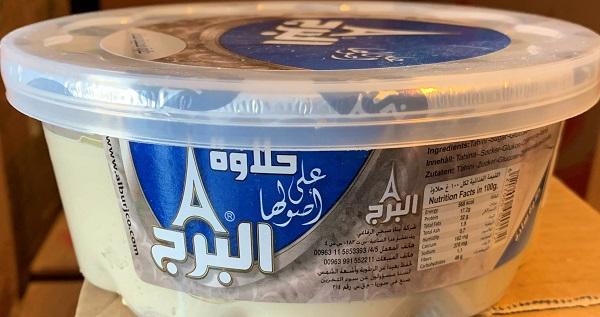
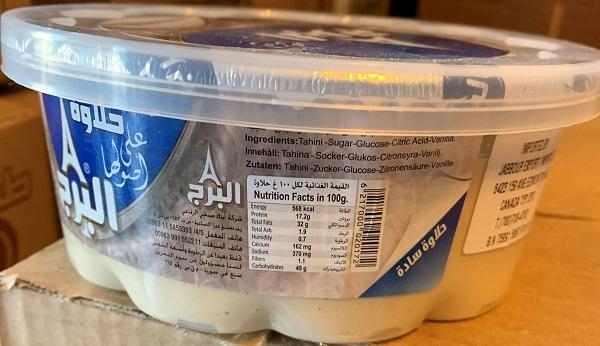
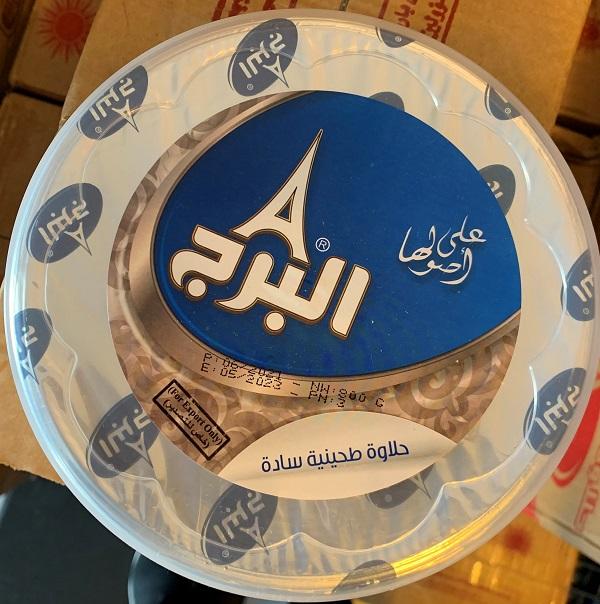
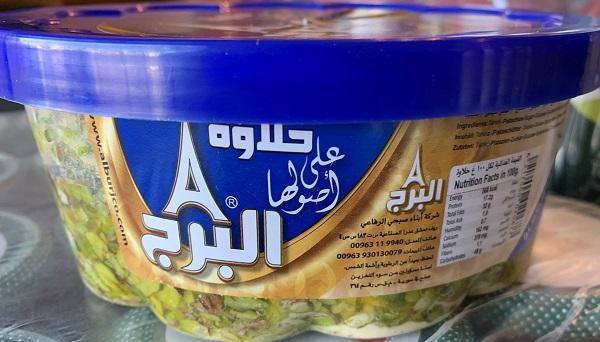
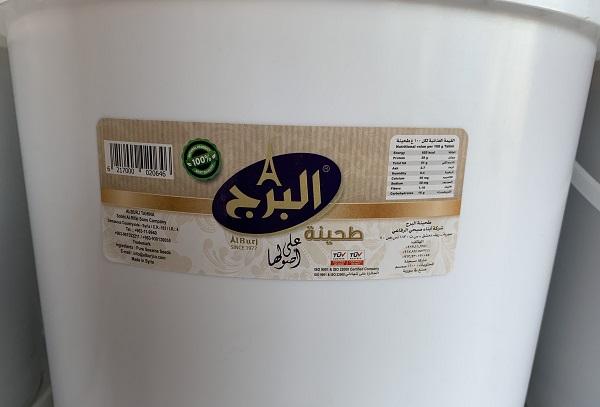
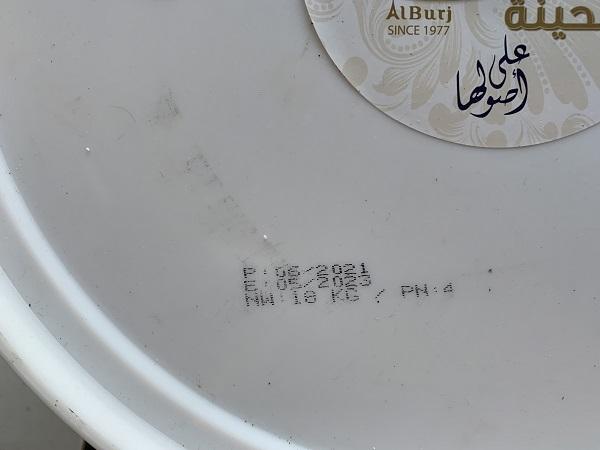
| Brand | Product | Size | UPC | Codes |
|---|---|---|---|---|
| AlBurj (Arabic characters only) | Tahina | 800 g | 6 217000 020646 | All codes up to and including: P: 06/2021 |
| AlBurj | Tahina | 18 kg | 6 217000 020646 | All codes up to and including: P: 06/2021 |
| AlBurj (Arabic characters only) | Halawa Original (Arabic characters only) | 800 g | 6 217000 020172 | All codes up to and including: P: 06/2021 |
| AlBurj (Arabic characters only) | Halawa Pistachio Extra (Arabic characters only) | 800 g | 6 217000 020677 | All codes up to and including: P: 06/2021 |
| AlBurj (Arabic characters only) | Halawa Pistachio (Arabic characters only) | 800 g | 6 217000 020486 | All codes up to and including: P: 06/2021 |
Jabbour Export/Import Ltd. is recalling AlBurj brand Tahina and Halawa from the marketplace due to possible Salmonella contamination.
The recalled products have been sold in Alberta.
Three family members including one month old baby died of food poisoning symptoms in Phoe Kanbay village, Maubin Township, Ayeyawaddy Region on the morning of November 10.
“The family of three where husband is 20 years old, wife is 18 years old and the baby is one month old died on the morning of November 10. When they were not appear at the fink farm where they were working, people came to their house and saw them dead. In the mosquito net, they found half eaten coconut, Morinda and papaya fruits,” said Sayadaw of Nay+Toe philanthropic organization.
Posted in Death, food contamination, food death, Food Hazard, Food Hygiene, Food Illness, Food Inspections, Food Micro Blog, Food Microbiology, Food Microbiology Blog, Food Microbiology Testing, Food Pathogen, Food Poisoning, Food Poisoning Death, Food Safety, Food Safety Alert, Food Testing, Food Toxin, Poisoning
Fifty employees of the Pasay City Treasurer’s Office, two janitorial staff, and a reporter fell ill after eating pancit Malabon on Nov. 9
Amor Virata, publisher of a weekly newspaper “People’s Lider”, was among the victims of food poisoning.
City Epidemiology and Surveillance Unit (CESU) head Mico Llorca said most of the employees affected by the food poisoning are now recovering at home.
Llorca said Mayor Emi Calixto-Rubiano ordered an investigation to determine if the pancit Malabon, which was ordered through food delivery service, was indeed the cause of food poisoning.
Posted in food contamination, food handler, Food Hazard, Food Hygiene, Food Illness, Food Inspections, Food Micro Blog, Food Microbiology, Food Microbiology Blog, Food Microbiology Research, Food Microbiology Testing, Food Pathogen, Food Poisoning, food recall, Food Safety, Food Safety Alert, Food Testing, Food Toxin, Foodborne Illness, Illness, Poisoning
Black peppercorn is a common ingredient imported and used in uncooked or ready-to-eat foods in the United States. They might be exposed to fecal coliforms and other microbial contamination due to a lack of good agricultural and manufacturing practices in some developing countries under which they were grown and harvested, thus causing economic losses to the peppercorn industry in the United States. We investigated the effect of gaseous chlorine dioxide (ClO2) on reducing the microbial population levels of coliforms, aerobic bacteria, yeasts, and molds on unprocessed black peppercorns. Treatments on peppercorns were conducted in a 30-L airtight chamber, and equal amounts of dry media precursors were used to generate gaseous ClO2. Whole peppercorns (200 g) were exposed to 20, 30, and 40 g of precursor dose for up to 60 min at 21 ± 0.4°C and in combination with mild heat at 40 ± 2°C. Aerobic bacteria, coliforms, yeasts, and molds on peppercorns were enumerated before (7.4, 7.2, and 7.1 log CFU/g, respectively) and after treatments. Results after treatment demonstrated 0.8–1 log10 (90%) reduction for all the microbes post-treatment at 21 ± 0.4°C. The treatments conducted with a 30 g precursor dose for 60 min at 21 ± 0.4°C reduced statistically higher (p < .05) microorganisms than those at 40 ± 2°C. Our work demonstrated that gaseous ClO2 could be used as a part of an overall hurdle technology to reduce the coliforms, aerobes, yeasts, and molds on black peppercorns without affecting the visual quality.
Posted in Coliforms, Decontamination Microbial, E.coli, Food Micro Blog, Food Microbiology, Food Microbiology Blog, Food Microbiology Research, Food Microbiology Testing, Food Technology, microbial contamination, Microbiological Risk Assessment, Microbiology, Microbiology Investigations, Mould Toxin, Moulds, Research, Technology, Yeasts


