Category Archives: Food Illness

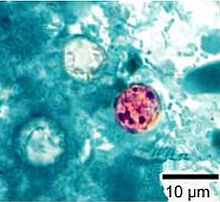
USA/Canada – Cyclospora sucks: 1060 North Americans sickened in summer Fresh Express outbreak

220px-Cyclospora_cayetanensis_stained

Barf Blog

The parasite, Cyclospora, continues to provide illness and intrigue.

Florida-based Southeastern Grocers has issued a voluntary recall for its “SE Grocers Naturally Better Organic Fresh Cut Basil” following the detection of Cyclospora.

The company says the product was delivered through all of its distribution centers and sold in all its stores, including Winn-Dixie, BI-LO, Fresco y Más and Harveys Supermarkets. The basil comes in a 0.5-ounce container with UPC code 6-07880-20230-4.

The latest recall follows a summer outbreak of Cyclospora in the U.S. linked to Fresh Express and private label brand salad products produced at its Streamwood, IL facility that contain iceberg lettuce, red cabbage, and/or carrots.

690 people with laboratory-confirmed Cyclospora infections and who reported eating bagged salad mix before getting sick weren reported from 13 states (Georgia, Illinois, Iowa, Kansas, Massachusetts, Minnesota, Missouri, Nebraska, North Dakota, Ohio, Pennsylvania, South Dakota, and Wisconsin).

Illnesses started on dates ranging from May 11, 2020 to July 20, 2020.

37 people were hospitalized. No deaths were reported.
Canadians in several provinces were also sickened.

USA – Outbreak of E. coli Infections – Unknown Source 2 – Update

CDC

CDC E.coli

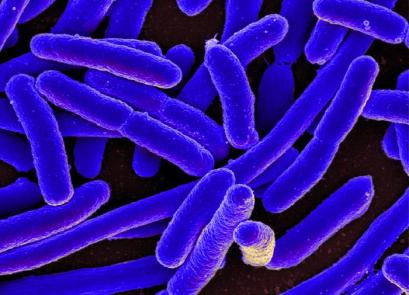
CDC, public health and regulatory officials in several states, and the U.S. Food and Drug Administration (FDA) are investigating several multistate outbreaks of E. coli O157:H7 infections. This outbreak is different from two other E. coli O157:H7 outbreaks CDC is currently investigating (E. coli outbreak with unknown source 1 and E. coli outbreak with unknown source 3).

At A Glance
  • Since the last update on October 28, 2020, 16 ill people were added to this investigation.
  • CDC is not advising people avoid any particular food at this time.
  • Investigators are working to collect different types of data to identify the source of this outbreak.
  • CDC will provide updates as they become available.

Take action if you have symptoms of an E. coli infection:

  • Talk to your healthcare provider.
  • Write down what you ate in the week before you got sick.
  • Report your illness to your local or state health department.
  • Help us solve the outbreak by answering public health officials’ questions about your illness.

Follow these general ways to prevent getting sick from E. coli:

  • Wash your hands after using the restroom or changing diapers, before and after preparing or eating food, and after contact with animals.
  • Cook meats thoroughly. Use a food thermometer to check that the meat has reached a safe internal temperatureexternal icon.
  • Don’t cross-contaminate food preparation areas. Thoroughly wash hands, counters, cutting boards, and utensils after touching raw meat.
  • Wash fruits and vegetables before eating, unless the package says the contents have been washed.
  • Avoid raw milk, other unpasteurized dairy products, and unpasteurized juices.
  • People usually get sick from Shiga toxin-producing E. coli (STEC) 2 to 8 days (average of 3 to 4 days) after swallowing the germ.
  • Symptoms often include severe stomach cramps, diarrhea (often bloody), and vomiting. Some people may have a fever, which usually is not very high (less than 101˚F/38.5˚C).
  • Some people with a STEC infection may get a type of kidney failure called hemolytic uremic syndrome (HUS).
  • Antibiotics are not recommended for patients with suspected E. coli infections until diagnostic testing can be performed and E. coli infection is ruled out. Some studies have shown that administering antibiotics to patients with E. coli infections might increase their risk of developing HUS, and a benefit of treatment has not been clearly demonstrated.
  • For more information, see Symptoms of E. coli Infection.
Investigation Details

November 23, 2020

Since the last update on October 28, 2020, 16 ill people were added to this investigation.

As of November 19, 2020, a total of 39 people infected with the outbreak strain of E. coli O157:H7 have been reported from 18 states. A list of the states and the number of cases in each can be found on the Map of Reported Cases page.

Illnesses started on dates ranging from August 10, 2020, to October 23, 2020. Ill people range in age from 1 to 85 years, with a median age of 38 years, and 62% are female. Of 30 ill people with information available, 19 people were hospitalized and 4 people developed hemolytic uremic syndrome (HUS), a type of kidney failure. No deaths have been reported.

Illnesses might not yet be reported due to the time it takes between when a person becomes ill and when the illness is reported. This takes an average of 2 to 4 weeks. Please see the Timeline for Reporting Cases of E. coli O157 Infection for more details.

Investigation of the Outbreak

Investigators are continuing to collect different types of data to identify the source of this outbreak.

State and local public health officials are interviewing ill people to determine what they ate and other exposures in the week before they got sick. Of the 22 ill people interviewed to date, all reported eating a variety of leafy greens, like spinach (16), romaine lettuce (15), iceberg lettuce (12), and mixed bag lettuce (8). No single type or brand of leafy greens or other food item has been identified as the source of this outbreak. CDC is not advising people avoid any particular food at this time.

This investigation is ongoing, and CDC will provide more information as it becomes available.

USA – Food Safety Tips for Your Holiday Turkey

CDC

Handling poultry (chickens and turkey) incorrectly and undercooking it are the most common problems that lead to foodborne disease outbreaks linked to poultry.1 Follow these four tips to help you safely prepare your next holiday turkey meal.

USDA

Turkey Basics: Safe Thawing at the Link Above

USA – FDA – Investigations of Foodborne Illness Outbreaks

FDA

The following is a list of outbreaks investigations being managed by FDA’s CORE Response Teams. The investigations are in a variety of stages, meaning that some outbreaks have limited information, and others may be near completion.

public health advisory will be issued for outbreak investigations that have resulted in specific, actionable steps for consumers to take to protect themselves. Please direct your attention to those pages for the most up to date information on the investigation and for consumer protection information.

Germany – Bakery link investigated in hepatitis A outbreak in Germany

Food Safety News

More than 20 people have been infected with hepatitis A in an outbreak in a German municipality.

There have been 23 infections in the community of Dummerstorf in the Rostock district of Mecklenburg-Vorpommern. Three more test results are pending. Officials believe the virus has been spread through food.

Of those affected, 21 live in and around the municipality and two in neighboring districts. Four people have needed hospital treatment. More than 100 potential contacts have been identified and contacted by the health department.

Bakery staff link
Investigations by the health department and food control authorities are concentrated on the employees of a bakery branch in the region that officials did not name but have temporarily closed.

Samples of drinking water have been taken and ruled out as a pathway of infection. Vaccinations are being offered.

Belgium – Sequoia – Organic free-range chicken from Le Picoreur – Salmonella

AFSCA

In agreement with the AFSCA, Sequoia is withdrawing the Le Picoreur organic free-range chicken product from sale and is recalling it to consumers because of the presence of Salmonella.

Sequoia asks its customers not to consume this product and to return it to the point of sale where it was purchased, with proof of purchase for reimbursement.

Product description
– Product name: Organic black free-range chicken
– Brand: Le Picoreur
– Use -by date (DLC) (“To be consumed until”): 18/11/2020, 19/11/2020.
– Batch number: 30708105 // Sanitary stamp: FR 85.223.001 CE
– Weight: variable
– Sales period: from 6/11/20 to 10/11/20
– Type of packaging: cardboard and plastic

The product has was sold via:
– Sequoia Jourdan: 2, rue Gray 1040 Etterbeek
– Sequoia Lepoutre: 512, chaussée de Waterloo 1050 Ixelles
– Sequoia Uccle: 532, chaussée de Saint-Job 1180 Uccle

For any further information , contact:
Sequoia
info@sequoia.bio

France – Product recall: Saint Alby brand Rosette de Lyon -Salmonella

Oulah

Product recall: Saint Alby brand Rosette de Lyon

ENCOUNTERED PROBLEM

Presence of salmonella

PROPOSED SOLUTION

Those in possession of this product are asked not to consume it and to return it to the point of sale where it was purchased for reimbursement.

Foodborne illness caused by salmonella results in gastrointestinal disturbances, diarrhea, vomiting and abdominal pain, often accompanied by fever; these symptoms may be more severe in young children, immunocompromised individuals and the elderly. The incubation period can range from 6 to 72 hours.
People who have consumed the products mentioned below and who have these symptoms are invited to consult their doctor, notifying him of this consumption.

FURTHER INFORMATION

▸ Barcode
20021139

▸ Lot
• 111001
• 111928

▸ DLC
• 01/22/2021
• 01/29/2021

▸ Health
stamp FR 69.238.010 CE

▸ Marketing date
From 10/15/2020 to 11/17/2020

▸ Consumer service contact
The LIDL consumer service is at your disposal at the following telephone number 0 800 900 343.

▸ Source
https://www.lidl.fr/fr

Netherlands – Netherlands records more than 700 outbreaks in 2019

Food Safety News

More than 700 food-related outbreaks were reported in the Netherlands in both 2018 and 2019.

In 2018, 756 foodborne outbreaks with 2,805 illnesses were recorded and in this past year 735 outbreaks with 3,058 illnesses were reported. The number of outbreaks went up from 2017 but illnesses declined.

The data comes from an overview by the National Institute for Public Health and the Environment (RIVM) of the main zoonoses and their prevalence in the country for the Netherlands Food and Consumer Product Safety Authority (NVWA). It features 2018 and 2019 figures. The NVWA did not report 2018 outbreak data in 2019 because of a technical issue.

Norovirus was the main cause of outbreaks with 16 and 17 in 2018 and 2019, respectively, and most patients in both years with 370 and 375. The number of outbreaks is lower than 2017 but higher than 2016.

Canada – Sarnia – Bad hummus most likely source of Salmonella outbreak

The Sarnia Journal

The exact source of a food poisoning outbreak that sickened about 200 people may never be known, although contaminated hummus has been fingered as the most likely suspect, Lambton Public Health said.

Forty-five people were lab-confirmed to be infected with Salmonella and another 185 reported feeling sick after eating at the Barakat restaurant in Sarnia and Barakat food truck in Corunna in late October.

An investigation involving local, provincial and federal officials did not identify a specific food, but officials suspect cross-contamination of multiple dishes with hummus the most likely source of contamination, the health unit said.

“Many of these foodborne investigations are not conclusive in their cause, and this is one of those,” said Dr. Sudit Ranade Ranade, Lambton’s medical officer of health.

When the restaurant and food truck are ready to reopen they will be re-inspected.

UK – Investigation – STEC E.coli O157- 2017 Frozen Beef Burgers

Cambridge Press

In November 2017, Public Health England identified an outbreak of Shiga toxin-producing Escherichia coli O157:H7 in England where whole genome sequencing results indicated cases were likely to be linked to a common source, and began investigations.

Hypothesis generation included a review of enhanced surveillance data, a case-case study and trawling interviews. The hypothesis of interest was tested through the administration of focussed questionnaires and review of shopping history using loyalty card data. Twelve outbreak cases were detected, eight were hospitalised and four developed haemolytic uraemic syndrome. Frozen beef burgers supplied by a national retailer were identified as the vehicle of the outbreak. Testing of two left-over burger samples obtained from the freezers of two separate (unlinked) cases and a retained sample from the production premises were tested and found to be positive for the outbreak strain. A voluntary recall of the burgers was implemented by the retailer. Investigations at the production premises identified no contraventions of food safety legislation. Cooking guidance on the product packaging was deemed to be adequate and interviews with the cases/carers who prepared the burgers revealed no deficiencies in cooking practices at home. Given the long-shelf life of frozen burgers, the product recall likely prevented more cases.