Category Archives: Food Illness

Canada – Public Health Notice: Outbreak of Vibrio parahaemolyticus infections linked to shellfish

Finance Yahoo

Food Illness

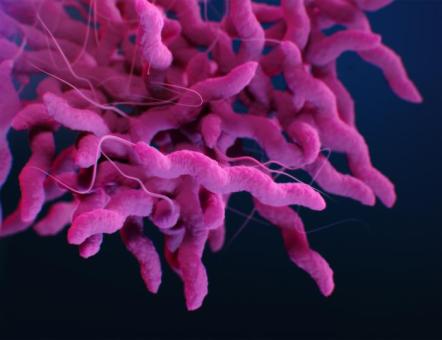
Image CDC

Final Update

This notice has been updated to reflect that the outbreak appears to be over and the investigation is winding down.

Why you should take note

The Public Health Agency of Canada (PHAC) collaborated with provincial and territorial public health and food safety partners to investigate an outbreak of Vibrio parahaemolyticus infections that occurred in four provinces. The outbreak appears to be over and the investigation is winding down.

Investigation findings identified exposure to shellfish as a likely source of the outbreak. The majority of the individuals who became sick reported eating shellfish, mainly raw oysters, harvested from Atlantic Canadian coastal waters, before their illnesses occurred.

Although the outbreak appears to be over, this event is a reminder that you can get sick from eating raw or undercooked shellfish, especially oysters. To prevent the risk of illness, shellfish should be cooked thoroughly to a safe internal temperature of 74°C (165°F) before eating or serving it.

This notice contains more advice on how to avoid getting sick.

What is Vibrio

Vibrio is a naturally-occurring bacterium that can be present at high levels in coastal waters during periods of increased water temperatures. Most people come in contact with Vibrio by eating raw or undercooked shellfish, especially oysters.

Investigation summary

In total, 23 confirmed cases of Vibrio parahaemolyticus illness were reported in the following provinces: Saskatchewan (1), Quebec (7), New Brunswick (10), and Prince Edward Island (5). Individuals became sick between early July and late October 2020. One individual was hospitalized. No deaths were reported. Individuals who became ill were between 11 and 92 years of age. The majority of illnesses (61%) were male.
USA – Outbreak of Listeria Infections Linked to Deli Meats

CDC

Latest Outbreak Information
At A Glance

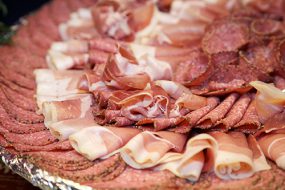
Close-up shot of a platter of cold cuts including salami, pepperoni and cured ham.

  • Since the last update on October 23, 2020, one ill person was added to this investigation.
  • Epidemiologic evidence shows that deli meat is a likely source of this outbreak.
    • In interviews with 10 ill people, all reported eating Italian-style meats, such as salami, mortadella, and prosciutto. They reported purchasing prepackaged deli meats and meats sliced at deli counters at various locations.
  • Investigators are working to identify a specific type of deli meat or a common supplier.
  • Deli meats, also called lunch meat or cold cuts, can have Listeria bacteria. Always follow food safety steps to prevent getting sick from Listeria in deli meats, even when there are no ongoing outbreaks

Research – Norovirus outbreak causing gastroenteritis in a hotel in Menorca, Spain

Science Direct

Food Borne Illness - Norovirus -CDC Photo

Abstract

Objectives

To establish the agent responsible for a gastroenteritis outbreak in a hotel in Menorca (Spain) in September 2016.

Methods

The study included epidemiological and laboratory analysis. Environmental and stool samples were examined for bacterial and viral pathogens.

Results

One hundred and fifty-one cases were detected, 123 among the tourists staying in the hotel and 28 affecting the staff. The presence of genotype 2 norovirus was discovered in the microbiological studies of patient’s faeces, as well as in the surface samples of rooms and common areas. The control plan implemented allowed for control of the outbreak.

Conclusions

This study on a genotype 2 norovirus outbreak reveals the importance of a rapid response for controlling these types of outbreaks.

Research – Updated food safety guidance gives pregnant women more certainty and choice on a wider range of foods

MPI

New research from New Zealand Food Safety provides pregnant women with more options and certainty about what they can safely eat with updated tips to avoid foodborne illness.

“We’ve looked at new foods that were not previously considered because we want pregnant women to have the most up-to-date food safety information so they can enjoy a diverse diet and stay healthy,” says Dr Claire McDonald, Manager Operational Research at New Zealand Food Safety.

“The guidance reflects the increased diversity in the New Zealand diet. The update not only provides more options, but also ensures all risky foods are captured and provides simple ways to reduce the chance of illness from food,” she said.

“It’s important pregnant women know what’s safe to they can avoid dangerous infections, such as listeriosis and toxoplasmosis, which can affect them more severely than non-pregnant women.”

Dr McDonald said the key information for women include:

  • thoroughly cooking seed sprouts (such as alfalfa or mung bean) before eating.
  • thoroughly cooking dried herbs before eating.
  • avoiding unpasteurised fruit juices and non-alcoholic cider.
  • avoiding low-acid, soft, pasteurised cheeses like Brie, Camembert, blue cheeses, ricotta, mozzarella, and feta unless they’re cooked.
  • updating guidance on some pasteurised dairy products (i.e. following manufacturer’s labelling advice and “best before” dates, etc.).
  • freshly cooked fish, mussels, oysters, crayfish, scallops, etc., should be cooked thoroughly until piping hot and eaten while hot.
  • whole melons should be washed and dried before cutting.
  • frozen berries should be cooked thoroughly before eating.
  • no restrictions on number of servings per week for gemfish, oreo dories, orange roughy, ling and smooth oreo fish species (previous advice limited the number of servings per week to minimise mercury intake).

“We know more about food safety now than we did just a few a years ago and it’s important people educate themselves and take simple steps such as washing produce and cooking certain foods properly,” Dr McDonald said.

More information on food and pregnancy

New Zealand Food Safety’s updated food safety guidance for pregnant women – YouTube

Hong Kong – Four poisoned by chicken dish

The Standard

Four people have fallen sick from two suspected food poisoning cases after eating a chicken dish at Chicken Soup Noodle House in Pilkem Street in Jordan, the Center for Health Protection said today.

All the patients were in stable condition as of last night.

In the first case, a 39-year-old man and a 41-year-old woman developed symptoms such as abdominal pains, diarrhea and vomiting within 9.5 to ten hours after consuming the chicken dish at the eatery on November 21.

In another case, two women aged between 32 and 34 developed similar symptoms within 10 to 12.5 hours after eating the same dish from the restaurant on November 22.

France – Mostly children sick in French Salmonella outbreak

Food Safety News

Mainly children are sick in a Salmonella outbreak in France linked to a type of dried sausage.

There have been 26 cases of salmonellosis, 17 of which concern children, identified by the National Reference Center for Salmonella at Institut Pasteur and Santé publique France in October and November. Those interviewed fell ill from Sept. 22 and ate dry sausages bought in the same store.

The link between Salmonella Bovismorbificans illness and consumption of dry cold meats manufactured by France Salaison was confirmed earlier this month by the Directorate General for Food (DGAL), the Directorate General for Health and Santé publique France. The company is based in Saint-Symphorien-sur-Coise in the Rhone region of France.

Potentially contaminated product has also been sent to Belgium, Luxembourg, Poland, Portugal and Slovenia.

Research – Source attributed case-control study of campylobacteriosis in New Zealand

IJID

Campylobacter kswfoodworld

Image CDC

Background

Following an initial reduction in human campylobacteriosis in New Zealand after the implementation of poultry food chain-focused interventions during 2006–2008, further decline has been relatively small.
We report a year-long study of notified campylobacteriosis cases, incorporating a case control study combined with a source attribution study. The purpose was to generate up-to-date evidence on the relative contributions of different sources of campylobacteriosis in New Zealand.

Methods

The study approach included: A case-control study of notified cases (aged six months or more) sampled in a major urban centre (Auckland, every second case) and a mixed urban/rural area (Manawatū/Whanganui, every case), between 12 March 2018 and 11 March 2019.
Source attribution of human campylobacteriosis cases sampled from these two regions over the study period by modelling of multilocus sequence typing data of Campylobacter jejuni and C. coli isolates from faecal samples of notified human cases and relevant sources (poultry, cattle, sheep).

Results

Most cases (84%) were infected with strains attributed to a poultry source, while 14% were attributed to a cattle source. Approximately 90% of urban campylobacteriosis cases were attributed to poultry sources, compared to almost 75% of rural cases.
Poultry consumption per se was not identified as a significant risk factor. However specific risk factors related to poultry meat preparation and consumption did result in statistically significantly elevated odds ratios.

Conclusions

The overall findings combining source attribution and analysis of specific risk factors indicate that poultry meat remains a dominant pathway for exposure and infection.

Research – Attributing Human Foodborne Diseases to Food Sources and Water in Japan Using Analysis of Outbreak Surveillance Data

Journal of Food Protection

ABSTRACT

In Japan, strategies for ensuring food safety have been developed without reliable scientific evidence on the relationship between foodborne diseases and food sources. This study aimed to provide information on the proportions of foodborne diseases caused by seven major causative pathogens (Campylobacter spp., Salmonella, enterohemorrhagic Escherichia coli [EHEC], Vibrio parahaemolyticus, Clostridium perfringens, Staphylococcus aureus, and norovirus) attributed to foods and to explore factors affecting changes in these source attribution proportions over time using analysis of outbreak surveillance data. For the calculation of the number of outbreaks attributed to each source, simple-food outbreaks were assigned to the single-food category in question, and complex-food outbreaks were classified under each category proportional to the estimated probability. During 2007 to 2018, 8,730 outbreaks of foodborne diseases caused by seven pathogens were reported, of which 6,690 (76.6%) were of unknown source. We estimated the following source attribution proportions of foodborne diseases: chicken products (80.3%, 95% uncertainty interval [UI] 80.1 to 80.4) for Campylobacter spp.; beef products (50.1%, UI 47.0 to 51.5) and vegetables (42.3%, UI 40.9 to 45.5) for EHEC; eggs (34.6%, UI 27.8 to 41.4) and vegetables (34.4%, UI 27.8 to 40.8) for Salmonella; finfish (50.3%, UI 33.3 to 66.7) and shellfish (49.7%, UI 33.3 to 66.7) for V. parahaemolyticus; grains and beans (57.8%, UI 49.7 to 64.9) for S. aureus; vegetables (63.6%, UI 48.5 to 74.6), chicken products (12.7%, UI 4.6 to 21.5), and beef products (11.1%, UI 8.5 to 13.1) for C. perfringens; and shellfish (75.5%, UI 74.7 to 76.2) for norovirus. In this study, we provide the best available evidence-based information to evaluate the link between foodborne diseases and foods. Our results on source attribution for Campylobacter spp. and EHEC suggest that the strict health regulations for raw beef were reflected in the proportions of these diseases attributed to this food.

HIGHLIGHTS
  • Source attribution proportions of foodborne diseases in Japan were estimated.
  • Source attribution was useful to guide interventions and evaluate their effect.
  • Strict health regulations for raw beef affected source attribution proportions.

USA – FDA CORE Outbreak Investigation Table Updated

FDA

The link above has a list of outbreaks investigations being managed by FDA’s CORE Response Teams. The investigations are in a variety of stages, meaning that some outbreaks have limited information, and others may be near completion.

public health advisory will be issued for outbreak investigations that have resulted in specific, actionable steps for consumers to take to protect themselves. Please direct your attention to those pages for the most up to date information on the investigation and for consumer protection information.

Outbreaks of Foodborne Illness

Note: Not all recalls and alerts result in an outbreak of foodborne illness. Check recent Food Recalls and Safety Alerts.

Outbreak investigations that do not result in specific, actionable steps for consumers may or may not conclusively identify a source or reveal any contributing factors. If a source and/or contributing factors are identified that could inform future prevention, FDA commits to providing a summary of those findings.

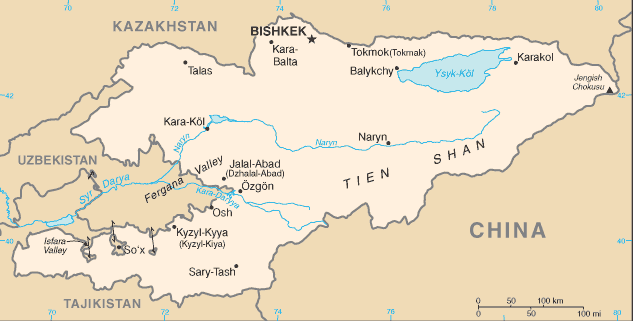
Kyrgyzstan – reports 28 botulism cases in first 10 months of 2020

Outbreak News Today

kswfoodworld

Image CDC

Health officials in Kyrgyzstan are reporting 28 foodborne botulism cases through Oct. 2020, prompting a warning for the public.

Of the 28 cases, 19 were reported in the Osh region.

In most cases, botulism begins acutely. It can manifest itself in people who ate canned salads or cucumbers, mushrooms, eggplants, other vegetables and meat products the day before.