Category Archives: Decontamination Microbial

Qatar recalls microbial-contaminated shrimp from India

SeaFoodSource

Qatar’s Ministry of Public Health has issued a warning against a certain volume of fresh and frozen shrimp imported from India and has decided to recall the affected quantity from the market, Gulf Times reported on 8 October.

Analyses at Qatar’s food laboratories have reportedly found that some volumes of Indian imported shrimp are microbially contaminated, according to a statement from the ministry.

The public health ministry is working with the Ministry of Municipal Affairs to recall all the …

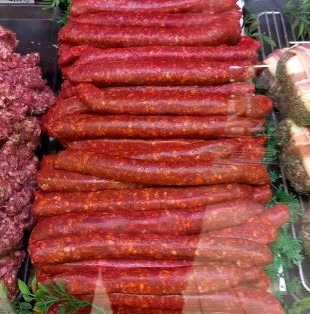
France – MERGUEZ – Listeria monocytogenes

Gov france

Identification information of the recalled product

  • Product category Feed
  • Product subcategory Meats
  • Product brand name Unbranded
  • Model names or references– Bulk sale in the traditional department between 04/10/2022 and 08/10/2022 – In LS: trays of 6 units with a DLC on 08/10/2022
  • Identification of products
    Batch Date
    MERGUEZ product sold in the traditional department and in self-service Use-by date 08/10/2022
  • Products ListPoster_consumer.pdfAttachment
  • Packaging Sold in the traditional department and in self-service
  • Marketing start/end date From 04/10/2022 to 08/10/2022
  • Storage temperature Product to be stored in the refrigerator
  • Geographic area of ​​sale Super U Limoges Corgnac (Manufacture store)
  • Distributors Super U Limoges Corgnac

Practical information regarding the recall

  • Reason for recall Microbiological contamination
  • Risks incurred by the consumer Listeria monocytogenes (causative agent of listeriosis)

Research – Straw Can Pose Mycotoxin Risk in Dairy Heifer Diets

Dairy Herd

Straw is a common, high-fiber, low-energy ingredient in U.S. dairy heifer rations. While we normally monitor grain quality to watch for harmful mycotoxins, it turns out straw can carry its own mycotoxin risk, according to a recent feed quality evaluation by Alltech, Inc.

Each year, Alltech conducts comprehensive mycotoxin testing programs in the U.S., Canada, and Europe to assess the mycotoxin risk in newly harvested grain crops. For the first time this year, wheat and barley straw were added to the sampling in Europe.

Danish farmers were worried about the damaging effects of wet weather both pre- and post-harvest. Because excessive moisture delayed straw harvest, the crops lay in the field for extended periods, damaging quality and fueling mold contamination.

A total of 70 straw samples from Denmark were evaluated. Deoxynivalenol (DON) was identified in 84% of samples, and emerging mycotoxins were found in 70% of samples. All told, 95% of samples contained some form of mycotoxin, with 50% containing two or more.

According a bulletin on mycotoxins in forage shared by the University of Wisconsin, DON may be a marker for other mycotoxins in contaminated feeds. When young dairy animals consume mycotoxins, they can be at risk for feed refusals, diarrhea, and immunosuppression. Additionally, mycotoxin-induced outcomes may be vague, and include unthriftiness, rough haircoat, poor body condition, and reproductive problems.

Alltech technical advisor and veterinarian, Dr. Radka Boutova, DVM, suggested adding straw to the list of feedstuffs that are screened for mycotoxins if it is a commonly used ingredient in a young stock ration. This is particularly important if the straw crop was stressed and/or delayed in the field due to unfavorable weather conditions, or for any straw that shows visible signs of mold.

Research – Cultivation Conditions of Spinach and Rocket Influence Epiphytic Growth of Listeria monocytogenes

MDPI

Leafy vegetables are associated with Listeriosis outbreaks due to contamination with Listeria monocytogenes. To date, contradictory findings were reported on spinach, rocket, and kale, where some studies reported growth of L. monocytogenes, while others did not. Thus, the current study investigated the reason for conflicting findings by producing leafy vegetables, where cultivation factors were known for growth potential studies. Of all polytunnel produce, kale Nero di Toscana demonstrated the highest growth potential (2.56 log cfu g−1), followed by spinach F1 Cello (1.84 log cfu g−1), rocket Buzz (1.41 log cfu g−1), spinach F1 Trumpet (1.37 log cfu g−1), and finally rocket Esmee (1.23 log cfu g−1). Thus, plant species and variety influenced L. monocytogenes growth potentials. Moreover, significantly lower growth potentials of 0.3 log cfu g−1 were identified when rocket Buzz was cultivated in open fields (1.11 log cfu g−1) instead of a polytunnel. The opposite effect was observed for spinach F1 Trumpet, where growth potentials increased significantly by 0.84 log cfu g−1 when cultivated in open fields (2.21 log cfu g−1). Furthermore, a significant seasonality effect between batches was found (p < 0.05). This study revealed that spinach and rocket cultivation conditions are at least co-factors in the reporting of differing growth potentials of L. monocytogenes across literature and should be considered when conducting future growth potential studies.

Research – History of Food Poisoning Outbreaks Linked to Cantaloupe

Food Poisoning Bulletin

In the latest update to the FDA‘s CORE Outbreak Investigation Table, that agency stated that a Salmonella Typhimurium outbreak that has ended is linked to cantaloupe. This is not the first time that this fruit has caused illnesses. What is the history of food poisoning outbreaks linked to cantaloupe?

While the outbreak is over, the FDA says that more information is forthcoming. We do not know the case count by state, but there are at least 87 people who are sick. We also do not know the patient age ranges, or illness onset dates.

History of Food Poisoning Outbreaks Linked to Cantaloupe

There have been six other multistate food poisoning outbreaks since 2011 that were linked to cantaloupe. Many of these outbreaks were deadly.

Read more in the link above.

India – 3 Tamil Nadu Children Die, 11 Hospitalised Allegedly Due To Food Poisoning

NDTV

Chennai: 

Three children died allegedly due to food poisoning at a children’s home in Tiruppur in Tamil Nadu.

Eleven other children who had consumed the same food are being treated at a hospital.

The children, all residents of Vivekananda Sevalaya, investigators say had fallen sick after they consumed idli and Pongal on Wednesday morning. Officials of the Sevalaya had given them medicines. Their condition did not improve and the children could not eat rice and rasam served for both lunch and dinner.

Two of the 15 students in the Sevalaya were found dead this morning in the hostel and another died on the way to the hospital. Those who died are between 10-14 age cohort.

Officials say no arrests have been made yet and food samples have been sent for investigation.

RASFF Alert – Animal Feed – Moulds/Mold – Bran

RASFF

Wheat bran infested with moulds from Ukraine in Poland

RASFF Alerts – Animal Feed – Salmonella – Dog Chews

RASFF

Salmonella in dog chews from South Africa in the Netherlands and Belgium

Research – Quantitative Determination Of Campylobacter On Broilers Along 22 UK Processing Lines, To Identify Potential Process Control Points and Cross-contamination From Colonized To Uncolonized Flocks

Journal of Food Protection

As part of a program to reduce numbers of the human pathogen Campylobacter on retail chickens twenty-two broiler processing lines, representing over 90% of United Kingdom (UK) production, were characterized by enumerating Campylobacter on pooled neck skins after the exsanguination, scalding, defeathering, evisceration, crop removal, inside-outside washing, and air-chilling stages of processing.  Sixteen of the processing lines investigated showed significant (p<0.05) reductions in Campylobacter numbers because of carcass scalding.  However, in all these lines, the following defeathering stage caused a significant increase in Campylobacter contamination that effectively negated the reductions caused by scalding.  On four processing lines, primary chilling also caused a significant reduction in numbers of Campylobacter.  On three lines, there was a significant microbiological benefit from inside-outside (I/O) washing.  The stages where Campylobacter numbers were reduced require further investigations to determine the specific mechanisms responsible so that the observed pathogen reductions can be optimized, and more widely implemented. The transfer of up to 4 log cfu Campylobacter per gram of neck skin from a colonized flock to a following uncolonized flock was observed.  The cross contamination was substantial and still detectable after 5,000 carcasses from an uncolonized flock had been processed.  The numbers of Campylobacter recovered from the uncolonized flocks were highest on the first of the uncolonized birds to pass along the line and, in general, numbers fell as more uncolonized birds were processed.  Air sampling recovered low numbers at the processing stages monitored, indicating that airborne transmission was unlikely to be the primary transfer mechanism operating for cross-contamination between flocks.

USA – FDA Core Outbreak Investigation Table

FDA

What’s New

  • For the Salmonella Litchfield outbreak in a not yet identified product (reference #1105), the case count has increased from 28 cases to 29 cases.
  • For the E. coli O157:H7 outbreak (reference #1081) in a not yet identified product, CDC announced the outbreak is over on 10/4/2022. FDA’s investigation is ongoing.
  • For the Listeria monocytogenes outbreak in Brie and Camembert cheese (reference #1106), an Outbreak Advisory was issued on 9/30/2022.
  • For the Salmonella Typhimurium outbreak (reference #1095), one additional case was added, and the product linked to illnesses has been changed to cantaloupe. The vehicle of the outbreak was confirmed after the outbreak ended. Given the product(s) were no longer on the market, there was no ongoing risk to public health and no need to avoid eating cantaloupe. Additional information on this outbreak will be forthcoming.
  • For the outbreak of Cyclospora cayetanensis in a not yet identified product (reference #1080) the case count has increased from 81 to 84 and the outbreak has ended.
  • For the outbreak of Cyclospora cayetanensis in a not yet identified product (reference #1084) the outbreak has ended.
  • For Listeria monocytogenes adverse event in a not identified product (reference #1040), the outbreak has ended.