
shigatoxin-producing Escherichia coli (stx1, stx2, eae, v. 14 /25g) in chilled steak sausage from the Netherlands in the Netherlands

shigatoxin-producing Escherichia coli (stx1, stx2, eae, v. 14 /25g) in chilled steak sausage from the Netherlands in the Netherlands
Posted in Bacteria, bacterial contamination, Bacterial Toxin, E.coli, eae, food contamination, Food Hygiene, Food Inspections, Food Micro Blog, Food Microbiology, Food Microbiology Blog, Food Microbiology Testing, Food Pathogen, Food Poisoning, food recall, Food Safety, Food Safety Alert, Food Testing, Food Toxin, microbial contamination, Microbiology, Poisoning, RASFF, Recall, Shigatoxin, STEC, STEC E.coli, STX 1, STX 2

Image CDC
New Brunswick health officials have declared an outbreak of vibrio parahaemolyticus, a bacteria found in shellfish that causes gastrointestinal illness in humans.
The province says nine cases of vibrio have been confirmed. The average for New Brunswick is typically only two to three cases a year.
“I am advising all New Brunswickers to ensure that they obtain shellfish and other seafood from a licensed establishment or harvest shellfish from fishing zones which are currently open by Fisheries and Oceans Canada,” said N.B. chief of health Dr. Jennifer Russell in a news release.
Posted in Bacteria, bacterial contamination, Bacterial Toxin, food contamination, food handler, Food Hygiene, Food Illness, Food Inspections, Food Micro Blog, Food Microbiology, Food Microbiology Blog, Food Microbiology Testing, Food Pathogen, Food Poisoning, food recall, Food Safety, Food Safety Alert, Food Testing, Food Toxin, foodborne outbreak, foodbourne outbreak, microbial contamination, Microbiology, Pathogen, Shellfish, shellfish toxin, Vibrio, Vibrio parahaemolyticus, Water, water microbiology, Water Safety
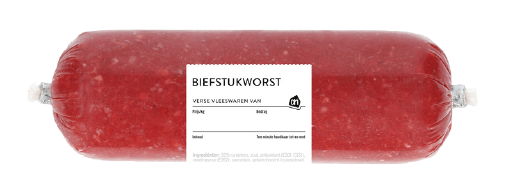
Albert Heijn has decided on the AH Steak sausage st. 200 grams from the stores. With the AH Steak sausage st. 200 grams with an expiry date of 21 September 2020, the bacterium e.coli was found.
Albert Heijn urges customers not to eat AH steak sausage and to bring it back to an Albert Heijn store, where they will be reimbursed for the purchase price upon return of the product.
See also the Albert Heijn website
Eating a product with an E. coli bacteria (faeces bacteria, STEC, EHEC) can, if not thoroughly cooked, result in nausea, vomiting and (bloody) diarrhea within a week. Especially for young children, the elderly, people with low immunity and pregnant women. Consult your doctor or general practitioner for more information if you have health complaints after eating the said product.
Posted in Bacteria, bacterial contamination, Bacterial Toxin, E.coli, EHEC, food contamination, Food Hygiene, Food Inspections, Food Micro Blog, Food Microbiology, Food Microbiology Blog, Food Microbiology Testing, Food Pathogen, Food Poisoning, food recall, Food Safety, Food Safety Alert, Food Testing, Food Toxin, microbial contamination, Microbiology, Pathogen, pathogenic, STEC, STEC E.coli
shigatoxin-producing Escherichia coli (O104, stx1- stx2+ eae- /25g) in chilled vacuum-packed beef meat from France in Italy
shigatoxin-producing Escherichia coli in raw goat’s milk cheese from France in Germany
shigatoxin-producing Escherichia coli (O 103; stx +, eae + /25g) in minced beef from Belgium in Belgium
Posted in Bacteria, bacterial contamination, Bacterial Toxin, Biotoxin, E.coli, E.coli O103, E.coli O104, eae, food contamination, Food Hygiene, Food Inspections, Food Micro Blog, Food Microbiology, Food Microbiology Blog, Food Microbiology Testing, Food Pathogen, Food Poisoning, food recall, Food Safety, Food Safety Alert, Food Testing, Food Toxin, microbial contamination, Microbiology, O103, Pathogen, pathogenic, Poisoning, RASFF, STEC, STEC E.coli, STX 1, STX 2
Kurnool (Andhra Pradesh) [India], September 14 (ANI): Two children died of food poisoning, and another is in critical condition in Kurnool district of Andhra Pradesh after they consumed biscuits bought from a local shop along with tea on Sunday.
The SI added that Allagadda Government Hospital’s doctor has confirmed that case was of food poisoning, but whether the poisoning occurred due to biscuits or tea is yet to be probed.
Infections caused by Shiga toxin (Stx)-producing Escherichia coli (STEC) are generally mild and self-limiting or even asymptomatic. However, particularly in children and elderly people, STEC infections can lead to severe gastroenteritis with haemorrhagic diarrhoea and life-threatening conditions, e.g. haemolytic uraemic syndrome (HUS) [1,2].
STEC transmission can occur through the consumption of contaminated food and drinks, or by direct contact with infected individuals or animals shedding the bacterium* [1,3–5]. STEC infections are endemic in Europe, including Switzerland [6,7]. Cases occur sporadically or in outbreaks; a large outbreak attributed to contaminated sprouts occurred in Germany in 2011 [8]. Smaller outbreaks have also been reported, e.g. there was an outbreak in Italy in 2013 and in Romania in 2016, both were suspected to be caused by contaminated dairy products [9,10]. Considering 22 years of population-based data up to 2012, Majowicz et al. estimated in 2014 that STEC leads to an estimated 2.8 million illness cases per year, including 3,800 cases of HUS, globally [11].
The National Notification System for Infectious Diseases (NNSID) of the Swiss Federal Office of Public Health (FOPH) has been receiving all notifications of laboratory-confirmed STEC infections since 1999. Case numbers were generally constant until 2010, with only a few laboratories reporting STEC cases in Switzerland. An increase in cases was observed in 2011 following the outbreak in Germany, before returning to expected yearly fluctuations, and then markedly increasing since 2015 [12]. Given that this increase was observed around the same time as the introduction of syndromic multiplex PCR panels for stool analyses in standard laboratory practice in Switzerland [12], it was hypothesised that these panels were the cause of the increase in notified STEC cases. Traditionally, routine testing of stool samples for bacterial pathogens involved only Campylobacter spp., Salmonella spp. and Shigella spp. using culture-based techniques. With syndromic multiplex PCR panels, stool samples can be tested for up to 22 pathogens, including STEC, in one single run [12,13].
Prior to the gradual introduction of multiplex PCR to the routine diagnostics between 2014 and 2015, STEC was only specifically tested for in Switzerland upon physician request, and this rarely happened. Current testing practice includes the use of small syndromic enteric bacterial panels for testing in patients without a travel history or a larger gastrointestinal panel if travel history is reported on the test order form [7].
A qualitative assessment found that Swiss laboratory experts uniformly agreed that the increase in STEC case numbers was due to the introduction and increasing use of multiplex PCR panels [7]. We set out to conduct a quantitative investigation as to whether an increase in the STEC testing rate associated with the use of the panels is what led to the increased notification of cases.
Our study assesses the development of the STEC positivity in the Swiss population between 2007 and 2016 using routine laboratory data, and gives insight into the epidemiology and notification numbers of STEC infections in Switzerland.
Posted in Bacteria, bacterial contamination, Bacterial Toxin, Campylobacter, cross contamination, E.coli, E.coli O157, E.coli O157:H7, eae, food contamination, Food Hygiene, Food Inspections, Food Micro Blog, Food Microbiology, Food Microbiology Blog, Food Microbiology Research, Food Microbiology Testing, Food Pathogen, Food Poisoning, Food Poisoning Death, food recall, Food Safety, Food Safety Alert, Food Testing, Food Toxin, microbial contamination, Microbiology, Pathogen, Salmonella, Shigella, Shigella flexneri, Shigella Sonnei, STEC, STEC E.coli, STX 1, STX 2
Posted in Bacteria, bacterial contamination, Bacterial Toxin, Biotoxin, food contamination, food handler, Food Hygiene, Food Illness, Food Inspections, Food Micro Blog, Food Microbiology, Food Microbiology Blog, Food Microbiology Research, Food Microbiology Testing, Food Pathogen, Food Poisoning, food recall, Food Safety, Food Safety Alert, Food Temperature Abuse, Food Testing, Food Toxin, foodborne outbreak, foodbourne outbreak, microbial contamination, Microbiology, Shigatoxin, Shigella, Shigella flexneri, Shigella Sonnei
Sharon Jeffreys dreads this time of year.
As children return for the start of the school year, she relives what happened to her family 15 years ago over and over, and over again.
It was only two weeks into the start of the school year at Deri Primary in 2005 when her eldest son Chandler came home with stomach pains and the beginning of a nightmare for the young family.
Chandler had contracted E.coli O157 after eating contaminated food that had been supplied to the school by a local butcher.
But worse was to come after his younger brother Mason also became ill with the food poisoning.
The five-year-old had only just switched from taking packed lunches to having school dinners because he was so fond of chips and sausages.
“It was the worse decision I ever made,” says Sharon. “Mason loved his food. He was taking sausages and chips off the plates of children, so we decided to switch him to school dinners and he was really happy.”
Mason and eight-year-old Chandler were two of more than 150 schoolchildren and adults struck down in the south Wales outbreak. Thirty-one people were admitted to hospital, but Mason was the only one to die.
Following a control and as a precautionary measure in order to guarantee the safety of the consumer, the company LDC – SABLE SAS asks to withdraw from the trade the White Farm Chicken Fillet of the Loué brand and the White Farm Chicken Leg of the Loué brand sold in the butcher’s department of certain Carrefour stores in Belgium and reminds consumers of them following a possible presence of salmonella. Product Description: Name: White Farm Chicken Fillet EAN: 2951079500000 Best Before Date ( BBD ): 14-15 / 09/20 LOT 2020037740 Name: White Farmer Chicken Leg EAN: 2951079400000 Best Before Date ( BBD ): 14-15 -17/09/20


Lot: 2020037740
The company LDC – SABLE SAS is proceeding today as a precautionary measure with the withdrawal from sale of the White Farm Chicken Fillet of the Loué brand and the White Farm Chicken Leg of the Loué brand following the suspicion of the presence salmonella.
All products have been withdrawn from sale. Some of these products were, however, marketed on the Belgian market before the withdrawal measure. It is therefore recommended that people who hold the products described above do not consume them and destroy them or return them to the point of sale where they will be refunded to you.
Foodborne illness caused by salmonella results in gastrointestinal disturbances often accompanied by fever within 12 to 72 hours of consuming the contaminated products. These symptoms may be aggravated in young children, immunocompromised individuals and the elderly.
People who have consumed the products mentioned above and who have these symptoms, are invited to consult their doctor by notifying him of this consumption.
For any further information, you can contact the Carrefour Belgium consumer service by dialing the free number 0800.9.10.11 , from 8:30 a.m. to 8 p.m. on working days and from 9 a.m. to 5 p.m. on Saturdays.
The societyLDC – SABLE SAS apologizes to Carrefour customers for the inconvenience caused.
Posted in Bacteria, bacterial contamination, Bacterial Toxin, cross contamination, food contamination, food handler, Food Hygiene, Food Inspections, Food Micro Blog, Food Microbiology, Food Microbiology Blog, Food Microbiology Testing, Food Pathogen, Food Poisoning, food recall, Food Safety, Food Safety Alert, Food Testing, microbial contamination, Microbiology, Pathogen, pathogenic, Salmonella
A total of 523 Chinese villagers suffered from food poisoning symptoms after eating durian from a capsized cargo ship in Guangxi on August 26, the local disease control center announced on Tuesday, the state media said.
A later investigation showed that they were infected with vibrio parahaemolyticus bacterium, which, when ingested, causes gastrointestinal illness in humans, and was probably caused by the durian becoming contaminated by sea water.
An announcement from the local government on August 27 said 101 of the villagers suffered from abdominal pains, diarrhea and vomiting while others only displayed mild symptoms. Nine people are currently in hospital,
Video clips circulating online showed the villagers rushing to the sea to try and recover durian floating on the sea water’s surface, after a cargo ship loaded with durian overturned around 200 meters away from the coast of Dongxing in Guangxi on August 26.
Local authorities tried to stop the villagers, but they still managed to recover some durian.
More common in the sea, vibrio parahaemolyticus bacterium is a microorganism that favors salty food, and is commonly found in food poisoning cases in coastal areas in the summer and autumn months, Guangxi Center for Disease Prevention and Control said.
It often lurks in fish, shrimp, crab, shellfish and other seafood, and occasionally spreads through salted products like pickles, seasoned meats and salted eggs. It is suspected the durian, soaked in sea water, could have been contaminated with the microorganism.
Experts said the incubation period for those infected with the bacterium ranges from 1 hour to 4 days, but lasts 10 hours in most cases. The symptoms resulting from its ingestion start quickly, and include chills, abdominal pains, nausea and vomiting, followed by fever, diarrhea, and watery or bloody stool.
Posted in Bacteria, bacterial contamination, Bacterial Toxin, food contamination, Food Hygiene, Food Illness, Food Inspections, Food Micro Blog, Food Microbiology, Food Microbiology Testing, Food Pathogen, Food Poisoning, food recall, Food Safety, Food Safety Alert, Food Temperature Abuse, Food Testing, Food Toxin, foodborne outbreak, foodbourne outbreak, microbial contamination, Microbiology, Vibrio, Vibrio parahaemolyticus

 FoodWorld