Monthly Archives: April 2022

RASFF Alert – Listeria monocytogenes – Pigs Head

RASFF

Listeria monocytogenes in pig’s head from Belgium in Luxembourg

RASFF Alert – Traceability related to the foodborne outbreak suspected (Salmonella Typhimurium monophasic) to be caused by chocolate products from Belgium

RASFF

 Albania (d) Andorra (d) Argentina (d) Armenia (d) Australia (d) Austria (d)(ffa) Azerbaijan (d) Belarus (d) Belgium (n)(o)(d)(op)(ffa) Bosnia and Herzegovina (d) Bulgaria (d)(ffa) Canada (d) Chile (d) Costa Rica (d) Croatia (d)(ffa) Cyprus (d)(ffa) Czech Republic (d)(ffa) Denmark (d)(ffa) Dominican Republic (d) Egypt (d) El Salvador (d) Estonia (d)(ffa) Ethiopia (d)Faeroe Islands (d) Finland (d)(ffa) France (d)(ffa) French Guiana (d) French Polynesia (d) Georgia (d) Germany (d)(ffa) Greece (d)(ffa) Guadeloupe (d) Guatemala (d) Honduras (d) Hong Kong (d) Hungary (d)(ffa)INFOSAN (ffa) Iceland (d)(ffa) India (d) Iraq (d) Ireland (d)(ffa) Israel (d) Italy (d)(ffa) Jordan (d) Kazakhstan (d)Kosovo (d) Kuwait (d) Kyrgyzstan (d) Latvia (d)(ffa) Lebanon (d) Lithuania (d)(ffa) Luxembourg (d)(ffa) Madagascar (d) Malaysia (d) Malta (d)(ffa) Mauritius (d) Mayotte (d) Mexico (d)Moldova (d) Mongolia (d) Montenegro (d) Morocco (d) Netherlands (d)(ffa) New Caledonia (d) New Zealand (d) Nicaragua (d) Norway (d)(ffa) Oman (d) Panama (d) Paraguay (d) Poland (d)(ffa) Portugal (d)(ffa) Qatar (d)Republic of North Macedonia (d) Romania (d)(ffa)Russia (d) Réunion (d) San Marino (d) Saudi Arabia (d) Serbia (d) Singapore (d) Slovakia (d)(ffa) Slovenia (d)(ffa) Spain (d)(ffa) Sweden (d)(ffa) Switzerland (d)(ffa)Syria (d)Taiwan (d) Tajikistan (d) Tunisia (d) Turkey (d) Turkmenistan (d) Ukraine (d) United Arab Emirates (d) United Kingdom (d) United States (d) Uruguay (d) Uzbekistan (d)Vatican City (d)

(n) Notifying | (o) Origin | (d) Distribution | (op) Operator
(ffup) Flagged for Follow-Up | (ffa) Flagged For Attention

RASFF Alerts -Salmonella – Polish Chicken Products – Black Pepper – Chicken Neck Skins – Ham and Pistachio Roll – Chicken Liver – Frozen Pork Meat – Organic Coriander Seed –

RASFF

Salmonella enteritidis in chicken neck skins from the Czech Republic in Slovakia

RASFF

Salmonella Infantis in 25 g of the product – poultry meat from Poland in the Czech Republic

RASFF

Salmonella in meat product (ham and pistachio roll) from Belgium in France

RASFF

Salmonella spp. in Chicken elements and chicken neck skin from Poland in the UK and Germany

RASFF

Salmonella Enteritidis in official samples of chicken neck skins from Poland in the Netherlands

RASFF

Salmonella in frozen pork meat from Spain in Finland

RASFF

Salmonella gr C in chicken filet from Poland in the Netherlands

RASFF

Salmonella spp. in organic coriander seed of unknown origin, via Italy in Germany

RASFF

Salmonella spp. in black pepper from Brazil in Germany

RASFF

Salmonella spp. in black pepper from Brazil in Germany

RASFF

Salmonella spp. in black pepper from Brazil in Germany

RASFF

Salmonella spp. in black pepper from Brazil in Germany

RASFF

Salmonella spp. in black pepper from Brazil in Germany

RASFF

Salmonella spp. in black pepper from Brazil in Germany

RASFF

Salmonella spp. in black pepper from Brazil in Germany and  the Netherlands

RASFF

Salmonella in chicken liver from Poland in the Netherlands

RASFF

Salmonella spp. in black pepper from Brazil in Germany

Research – Mechanisms of Inhibition of Quorum Sensing as an Alternative for the Control of E. coli and Salmonella

MDPI

Quorum sensing (QS) is a process of cell–cell communication for bacteria such as E. coli and Salmonella that cause foodborne diseases, with the production, release, and detection of autoinducer (AI) molecules that participate in the regulation of virulence genes. All of these proteins are useful in coordinating collective behavior, the expression of virulence factors, and the pathogenicity of Gram-negative bacteria. In this work, we review the natural or synthetic inhibitor molecules of QS that inactivate the autoinducer and block QS regulatory proteins in E. coli and Salmonella. Furthermore, we describe mechanisms of QS inhibitors (QSIs) that act as competitive inhibitors, being a useful tool for preventing virulence gene expression through the downregulation of AI-2 production pathways and the disruption of signal uptake. In addition, we showed that QSIs have negative regulatory activity of genes related to bacterial biofilm formation on clinical artifacts, which confirms the therapeutic potential of QSIs in the control of infectious pathogens. Finally, we discuss resistance to QSIs, the design of next-generation QSIs, and how these molecules can be leveraged to provide a new antivirulence therapy to combat diseases caused by E. coli or SalmonellaView Full-Text

RASFF Alerts – Ochratoxin A – Raisins

RASFF

Ochratoxin A (68 mg/kg – ppm) in raisins from Uzbekistan, via Lithuania in Latvia

RASFF Alerts- Aflatoxins – Groundnut Kernels – Ground Ginger – Organic Spelt Flour – Basmati Brown Rice – Groundnuts – Shelled Pistachios – Dried Figs

RASFF

Aflatoxins in Indian Groundnut Kernels in the Netherlands and Switzerland

RASFF

Aflatoxins in Indian Groundnut Kernels in the Netherlands and Switzerland

RASFF

Aflatoxin B1 in Indian Groundnut Kernels in the Netherlands and Switzerland

RASFF

Aflatoxins in ground ginger from Syria in Germany

RASFF

Aflatoxins in organic spelt flour from France in Belgium

RASFF

Aflatoxin B1 in super basmati brown rice from Pakistan in the Netherlands

RASFF

Aflatoxin in Bolivian Groundnuts in the Netherlands and Spain

RASFF

Aflatoxins in organic blanched Egyptian Groundnuts in Germany and the Netherlands

RASFF

Aflatoxins beyond the maximum limits allowed in shelled Pistachios from Turkey in Italy

RASFF

Pistachios in shell origin Iran / aflatoxins above the legal limits in pistachios in shell from Iran in Italy

RASFF

Aflatoxin B1 in Turkish organic diced dried Figs in the Netherlands

RASFF Alert – Animal Feed – Salmonella – Premix NutriBlend Plus Dry – Raw Dog Food

RASFF

Salmonella spp. in premix NutriBind Plus Dry from Germany in Belgium

RASFF

Salmonella Diarizonae in raw dog feed from Norway in Denmark, France, Germany, Lithuania, Norway Sweden, Switzerland and the UK

Research – Unraveling the Antimicrobial Effectiveness of Coridothymus capitatus Hydrolate against Listeria monocytogenes in Environmental Conditions Encountered in Foods: An In Vitro Study

MDPI

The increased resistance of bacteria to antimicrobials, as well as the growing interest in innovative and sustainable alternatives to traditional food additives, are driving research towards the use of natural food preservatives. Among these, hydrolates (HYs) have gained attention as “mild” alternatives to conventional antimicrobial compounds. In this study, the response of L. monocytogenes ATCC 7644 exposed to increasing concentrations of Coridothymus capitatus HY (CHY) for 1 h at 37 °C was evaluated by means of Phenotype Microarray, modelling the kinetic data obtained by inoculating control and treated cells into GEN III microplates, after CHY removal. The results revealed differences concerning the growth dynamics in environmental conditions commonly encountered in food processing environments (different carbon sources, pH 6.0, pH 5.0, 1–8% NaCl). More specifically, for treated cells, the lag phase was extended, the growth rate was slowed down and, in most cases, the maximum concentration was diminished, suggesting the persistence of stress even after CHY removal. Confocal Laser Scanner Microscopy evidenced a diffuse aggregation and suffering of the treated cells, as a response to the stress encountered. In conclusion, the treatment with HY caused a stressing effect that persisted after its removal. The results suggest the potential of CHY application to control L. monocytogenes in food environments.

New Zealand – Public health warning for shellfish for all of Crail Bay, Marlborough Sounds – Paralytic Shellfish Poisoning (PSP) toxins

MPI

Map of the affected area all of Crail Bay, Marlborough Sounds

The Ministry for Primary Industries (MPI) today issued a public health warning advising the public not to collect or consume shellfish harvested from all of Crail Bay in the Marlborough Sounds.

Routine tests on shellfish samples taken from this region have shown levels of Paralytic Shellfish Poisoning (PSP) toxins above the safe limit of 0.8 mg/kg set by MPI. Anyone eating shellfish from this area is potentially at risk of illness.

Mussels, oysters, tuatua, pipi, toheroa, cockles, scallops, catseyes, kina (sea urchin) and all other bivalve shellfish should not be eaten.

Note, cooking shellfish does not remove the toxin.

Pāua, crab and crayfish may still be eaten if the gut has been completely removed prior to cooking, as toxins accumulate in the gut. If the gut is not removed, its contents could contaminate the meat during the cooking process.

Symptoms typically appear between 10 minutes and 3 hours after ingestion and may include:

  • numbness and a tingling (prickly feeling) around the mouth, face, and extremities (hands and feet)
  • difficulty swallowing or breathing
  • dizziness
  • headache
  • nausea
  • vomiting
  • diarrhoea
  • paralysis and respiratory failure and in severe cases, death.

If anyone becomes ill after eating shellfish from an area where a public health warning has been issued, phone Healthline for advice on 0800 61 11 16, or seek medical attention immediately. You are also advised to contact your nearest public health unit and keep any leftover shellfish in case it can be tested.

Monitoring of toxin levels will continue and any changes will be communicated accordingly. Commercially harvested shellfish – sold in shops and supermarkets, or exported – is subject to strict water and flesh monitoring programmes by MPI to ensure they are safe to eat.

Find out more

Read the signs in the affected area.

Shellfish biotoxin alerts

Subscribe to shellfish biotoxins to receive email alerts

Collecting shellfish and keeping them safe [PDF, 1.4 MB]

Causes and symptoms of toxic shellfish poisoning

About toxic algal blooms

Food safety for seafood gatherers booklet [PDF, 688 KB]

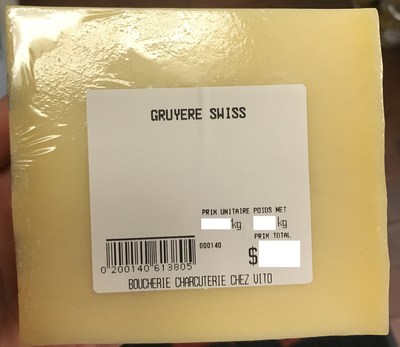
Quebec – Absence of information necessary for the safe consumption of raw milk Gruyère cheese packaged and sold by the Butchery Charcuterie at Vito

MAPAQ

QUEBEC CITY , April 27, 2022 /CNW Telbec/ – The Ministry of Agriculture, Fisheries and Food (MAPAQ), in collaboration with the Food Inspection Division of the City of Montreal and the Boucherie Charcuterie at Vito located at 5180, rue Saint-Urbain in Montreal, advises people considered vulnerable (pregnant women, people with weakened immune systems, children and the elderly) not to consume the product indicated in the table below. below, because it does not include the mention “made of raw milk” which is required.

Product name

Format

Affected batch

“GRUYERE SWISS”

Variable

Units sold until April 27, 2022

The product that is the subject of this warning was offered for sale until April 27, 2022 inclusive, only at the establishment designated above. It was wrapped in clear plastic wrap and sold chilled. The product label included the words “Boucherie Charcuterie chez Vito”.

The retailer is voluntarily recalling the products in question. It has agreed with MAPAQ and the Food Inspection Division of the City of Montreal to issue this warning as a precautionary measure. In addition, persons deemed vulnerable (designated above) who have this product in their possession are advised not to consume it. They should return it to the establishment where they bought it, use it in a cooked dish that will be cooked until it reaches a safe cooking temperature of 74°C or throw it away. However, no case of disease associated with the consumption of this food has been reported to MAPAQ to date.

Additional information

The Ministry publishes various information documents concerning food safety. Interested persons can consult them in the “Food Consumption” section of the MAPAQ website: www.mapaq.gouv.qc.ca/consommation  . They also have the possibility of registering online by visiting www.mapaq.gouv.qc.ca/rappelsfoods  to receive, by e-mail, the food recall press releases published by the Ministry. Finally, it is possible to follow “MAPAQfoods” on Twitter at the following address: www.twitter.com/MAPAQfoods  .

Gruyère Swiss (CNW Group/Ministry of Agriculture, Fisheries and Food) 

Hazard Classification: Class 1
Reference Number: 4540

Source:
Media relations
Direction des communications
Ministry of Agriculture, Fisheries
and Food
Tel. : 418 380-2100, extension 3512