Monthly Archives: March 2022

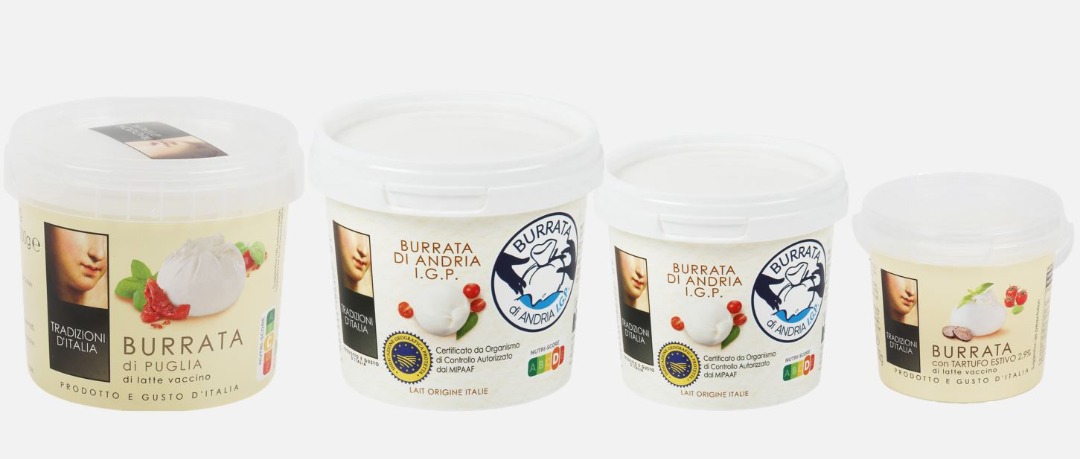
France – BURRATA 100G – 120G – 200G – Pseudomonas fluorescens

Gov france

Identification information of the recalled product

  • Product category Food
  • Product subcategory Milk and dairy products
  • Product brand name TRADITIONI D’ITALIA
  • Model names or references BURRATA DI PUGLIA 200G – BURRATA DI ANDRIA IGP 120G and 200G – BURRATA CON TARTUFO ESTIVO 100G
  • Identification of products
    GTIN Lot Dated
    3760113766282 All lots Use-by date between 05/03/2022 and 19/03/2022
    3664335100322 All lots Use-by date between 05/03/2022 and 19/03/2022
    3760113768866 All lots Use-by date between 05/03/2022 and 19/03/2022
  • Packaging JARS OF 100G – 120G – 200G
  • Marketing start/end dateFrom 02/15/2022 to 03/03/2022
  • Storage temperature Product to be stored in the refrigerator
  • Health mark IT 16 153 EC
  • Geographic area of ​​sale Whole France
  • Distributors E.LECLERC

Practical information regarding the recall

  • Reason for recall Risk of presence of Pseudomonas fluorescens
  • Risks incurred by the consumer Pseudomonas
  • Additional description of the risk This bacterium is likely to degrade the product and give it a bad taste and a bluish color, making it inedible.

Belgium -Different Nuts & Berries brand bars – Aflatoxin B1

AFSCA

03/03/2022
Euras International recall
Product: Different Nuts & Berries brand bars.
Problem: Aflatoxin B1 content too high.


Euras International has decided, in agreement with the FASFC, to withdraw various bars of the Nuts & Berries brand from sale and to recall them from consumers due to an excessively high content of aflatoxin B1 in the Brazil nuts supplied by a supplier.

Euras International asks its customers not to consume these products and to bring them back to the point of sale.

Description of products

NUTS&BERRIES CASHEW APRICOT REPEN
LOT 21301 & DDM 28/12/2022

NUTS&BERRIES PECAN CINNAMON REPEN
LOT 21302 & DDM 29/12/2022

NUTS&BERRIES PROTEIN STRAWBERRY REPEN
LOT 21319 & DDM 15/01/2023

NUTS&BERRIES PROTEIN COCOA REPEN
LOT 21319 & DDM 15/01/2023

NUTS&BERRIES GINGER LIME
LOT 21300 & DDM 27/12/2022
LOT 21306 & DDM 02/01/2023

The products were distributed in Belgium via various points of sale.

For any further information contact:

Mustafa Kemal Akpinar
0032479280231

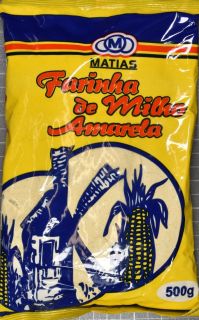
Luxembourg – UPDATE: RECALL: MATIAS BRAND YELLOW CORN FLOUR – Mycotoxins – Fumonsins

SAP

Exceeding the legal limit in fumonisins

Luxembourg food safety authorities are recalling the following product:

*Update

name Type 100 yellow corn flou
Mark matias
Unity 500g
Use-by date (DLC) April 2022
Lot 070621D2

Hazard description: Fumonisins

Fumonisins are toxins formed by molds of the genus Fusarium on maize under certain climatic conditions. Fumonisins are classified as “possibly carcinogenic” to humans.

Sold in Luxembourg by: Primavera,  Epicerie Fernandes*, Epicerie Petit Panier*, Butcher and Epicerie Le Coq*

A sale by other operators cannot be excluded.

Source of information: Official Control

Communicated by: Government Commission for Quality, Fraud and Food Safety .

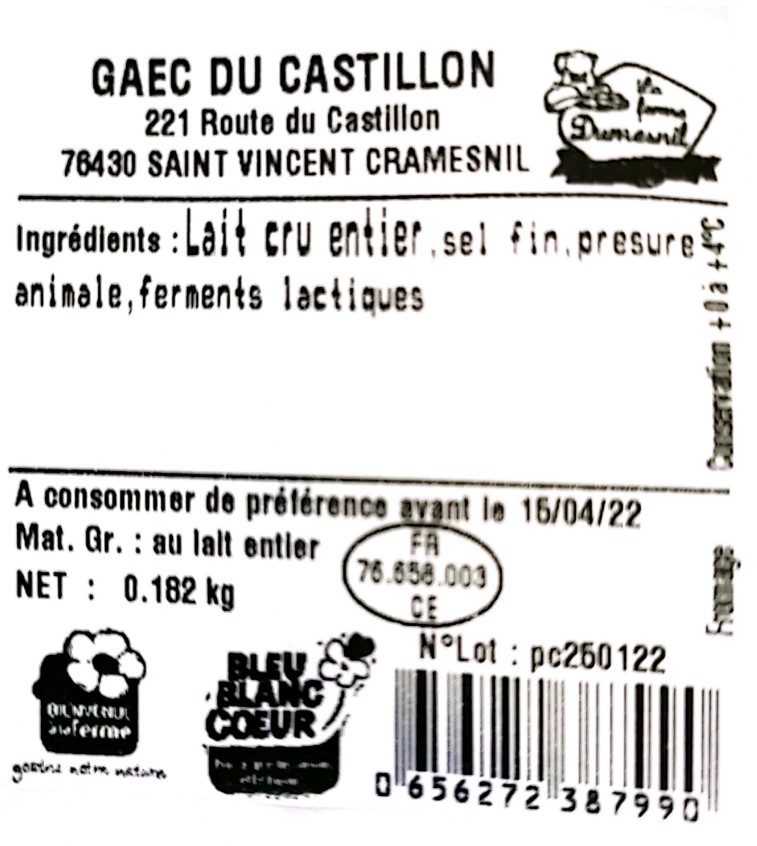
France – Little Brie Normand Cheese – Salmonella

Gov france

Identification information of the recalled product

  • Product category Food
  • Product subcategory Milk and dairy products
  • Product brand name THE FARM DUMESNIL
  • Model names or references P’tit brie normand, creamy & powerful, with whole raw milk
  • Identification of products
    GTIN Lot Date
    0656272387990 batch number: pc250122 for the whole brie Use-by date 04/15/2022
    0656272387990 batch number: pc250122 for the brie in part Use-by date 02/19/2022
    0656272387990 batch number: pc250122 for the brie in part Use-by date 02/26/2022
  • Packaging Whole Brie packed with micro-perforated packaging part of about 200g wrapped in cellophane film with DLC
  • Marketing start/end date From 07/02/2022 to 14/03/2022
  • Storage temperature Product to be stored in the refrigerator
  • Health mark FR 76,658,003 CE
  • Geographic area of ​​sale Regions: Normandy
  • Distributors See table List of points of sale below
  • List of points of saletraceability_of_brie_normand_du_25.01.22.pdf

Practical information regarding the recall

  • Reason for recall  presence of Salmonella
  • Risks incurred by the consumer Salmonella spp (causative agent of salmonellosis)

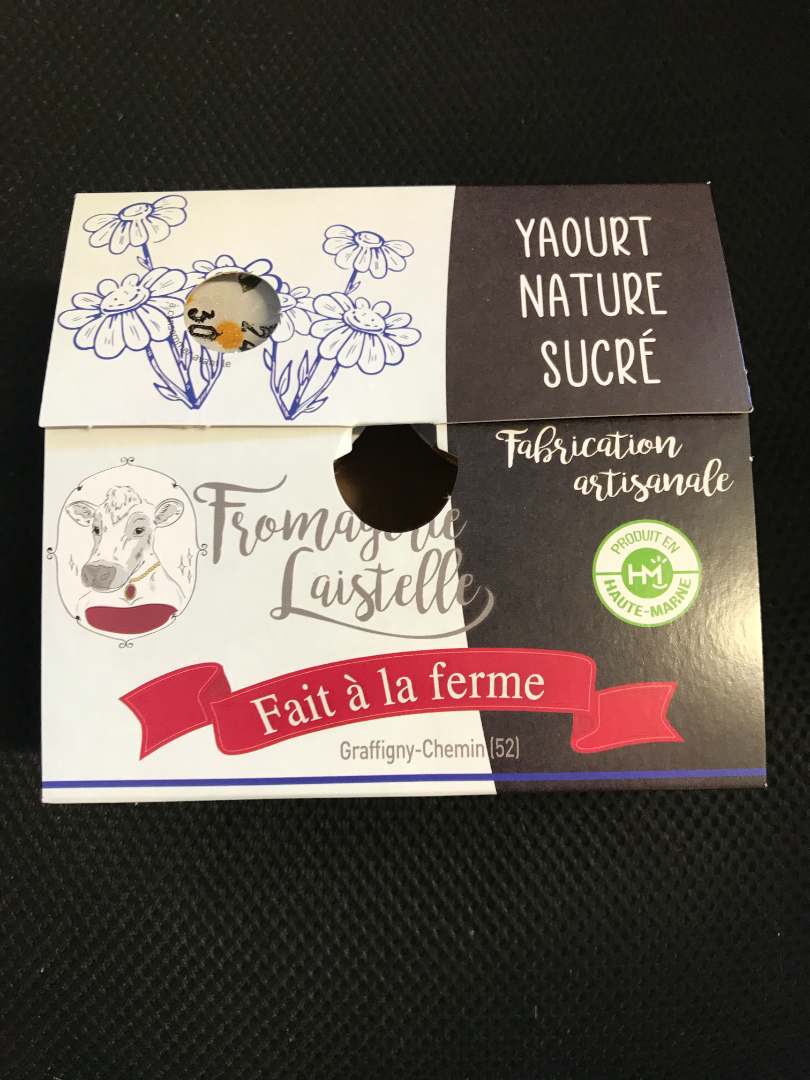
France – Plain sweetened yogurt pack*4 – Salmonella

Gov france

Identification information of the recalled product

  • Product category Food
  • Product subcategory Milk and dairy products
  • Product brand name Laistelle cheese dairy
  • Model names or references Plain sweetened yogurt pack*4
  • Identification of products
    GTIN Lot Dated
    3760260500371 3048 Use-by date 03/24/2022
  • Packaging pack of 4 yoghurts
  • Marketing start/end date From 02/22/2022 to 02/25/2022
  • Storage temperature Product to be stored in the refrigerator
  • Health marken52227001ce
  • Geographic area of ​​sale Whole France
  • Distributors Intermarché Longeau, Brin de campagne (chaumont), E.Leclerc Chaumont, E.Leclerc Troyes, E.Leclerc Langres.

Practical information regarding the recall

  • Reason for recall salmonella

UK – Norovirus outbreaks increasing in England

Gov UK

Norovirus outbreaks in care homes have risen in recent weeks, leading UKHSA to remind people of simple steps that can be taken to limit the spread of the bug.

The UK Health Security Agency (UKHSA) is reminding the public of simple actions that they can take to reduce the spread of norovirus. The advice comes after routine surveillance in England shows that the number of outbreaks caused by the vomiting bug has increased in recent weeks (4-week period from end January to February), initially in educational settings and now in care home settings.

Norovirus is highly infectious and causes vomiting and diarrhoea but usually passes in a couple of days. It is easily transmitted through contact with infected individuals or contaminated surfaces.

The increase in reported outbreaks was initially in educational settings, particularly in nursery and childcare facilities, with 48% more incidents reported to UKHSA than would be expected.

Reports of norovirus outbreaks in care home settings to UKHSA have also increased in recent weeks in 2022 – with a rise from 24 reported in week 6 (week commencing 7 February), to 40 reported in week 7 (week commencing 14 February).

While outbreaks reported in care home settings overall remain below pre-pandemic expected levels, it is likely they will continue to increase in the coming weeks and a rise in norovirus outbreaks in care home settings often precedes an increase in outbreaks in hospital settings. Therefore, it is important to take steps to limit the spread of norovirus.

Professor Saheer Gharbia, Gastrointestinal Pathogens and Food Safety Directorate, UKHSA, said:

Norovirus, commonly known as the winter vomiting bug, has been at lower levels than normal throughout the pandemic but as people have begun to mix more, the numbers of outbreaks have started to increase again.

Symptoms include sudden onset of nausea, projectile vomiting and diarrhoea but can also include a high temperature, abdominal pain and aching limbs. Stay at home if you are experiencing norovirus symptoms and do not return to work or send children to school or nursery until 48 hours after symptoms have cleared.

Please avoid visiting elderly relatives if you are unwell – particularly if they are in a care home or hospital. As with COVID-19 and other infectious illnesses, hand washing is really important to help stop the spread of this bug, but remember, unlike for COVID-19 alcohol gels do not kill off norovirus so soap and water is best.

How to reduce the spread of norovirus

  1. Stay at home if you are experiencing norovirus symptoms. Do not return to work or send children to school until 48 hours after symptoms have cleared. Also avoid visiting elderly or poorly relatives, particularly if they are in hospital or a care home.
  2. Wash your hands frequently and thoroughly with soap and warm water. Alcohol hand gels don’t kill norovirus.
  3. When an infected person vomits, the droplets contaminate the surrounding surfaces. A bleach-based household cleaner or a combination of bleach and hot water should be used to disinfect potentially contaminated household surfaces and commonly used objects such as toilets, taps, telephones, door handles and kitchen surfaces.
  4. If you are ill, avoid cooking and helping prepare meals for others until 48 hours after symptoms have stopped, as norovirus can be spread through food contaminated by the virus when food is handled by symptomatic people or infected individuals.
  5. Wash any contaminated clothing or bedding using detergent and at 60°C and, if possible, wear disposable gloves to handle contaminated items.

Norovirus activity has risen as people have begun to mix more – it is possible that unusual or out-of-season increases could be seen in the coming months.

UKHSA’s National Norovirus Surveillance Team will continue to closely monitor all available surveillance data to ensure early detection of any unusual norovirus activity and outbreaks.

You can view the National Norovirus and Rotavirus Bulletin here.

Those showing symptoms should avoid visiting their GP, but if they are concerned should contact NHS 111 or talk to their GP by phone.

RASFF Alerts – Salmonella – Polish Chicken Products

RASFF

Poultry meat – Salmonella enteritidis from Poland in Belgium

RASFF

Salmonella Infantis in chilled chicken broiler wings from Poland in Lithuania

RASFF

Salmonella Infantis in chilled minced chicken broiler meat from Poland in Lithuania

RASFF Alert – Mycotoxin – Ochratoxin A – Nutmeg

RASFF

Ochratoxin A in Indonesian Nutmeg in the Netherlands

RASFF Alerts – Listeria monocytogenes – Raw Goats Milk Cheese – Vannamei Shrimp

RASFF

Listeria monocytogenes in raw goat’s milk cheese from France in Germany

RASFF

Listeria Monocytogenes in frozen Vannamei Shrimp in Belgium, Bulgaria, Czech Republic, Denmark, Finland, Hungary, Italy, Latvia, Lithuania, Netherlands, Norway, Poland, Romania, Slovakia, Spain and Sweden

RASFF Alert – VTEC/STEC E.coli – Beef Tartar

RASFF

Verotoxin E.coli in beef tartar from Poland in Lithuania