Monthly Archives: February 2022

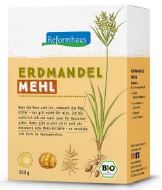
Germany – Organic Tigernut Flour – Salmonella

LMW

Alert type: Food
Date of first publication: 03.02.2022
Product name:

Organic Tigernut Flour

Product images:

Organic tigernut flour.JPG


Reform Kontor GmbH & Co. KG

Manufacturer (distributor):

Reform Kontor GmbH & Co. KG, Ernst-Litfaß-Str. 16, in 19246 Zarrentin

Reason for warning:

Detection of Salmonella spp.

Packaging Unit: 200 g
Durability: Best before September 14, 2022
Lot identification: Lot 98476
Further information:

Salmonella disease manifests itself within a few days after infection with diarrhoea, abdominal pain and occasionally vomiting and a slight fever. The symptoms usually subside on their own after a few days. Babies, small children, senior citizens and people with a weakened immune system in particular can develop more severe illnesses. Anyone who has eaten this food and develops severe or persistent symptoms should seek medical attention and report possible salmonella infection. It makes no sense to seek preventive medical treatment without symptoms.

Manufacturer’s website:


RASFF Alert – Mycotoxin – Fumonisins – Cornmeal

RASFF

Fumonisins in cornmeal from Peru in Spain

RASFF Alert – Mycotoxin – Ochratoxin A – Dried Figs

RASFF

Ochratoxin-A in Turkish dried figs in the Netherlands

RASFF Alert – Mold/Mould – Cake Layers

RASFF

Mould on sponge cake layers from Sweden in Denmark, Iceland, Spain, Sweden and UK

RASFF Alerts – Salmonella – Polish Chicken Products – Sesame Seeds – Black Pepper – Fresh Stuffed Pasta – Turkey Meat – Mini Sausages

RASFF

Presence of Salmonella spp. in sesame seeds from Egypt in Greece and the UK

RASFF

Salmonella in carne di tacchino (turkey) from Hungary in Italy

RASFF

Salmonella in fresh stuffed pasta from France in New Caledonia, Djibouti, Ivory Coast

RASFF

Suspicion Salmonella in mini sausages 125 g from Belgium in Luxembourg and Romania

RASFF

Salmonella in Brazilian black pepper in the Netherlands

RASFF

Salmonella newport in carne pollame origine Polonia//Salmonella newport in poultry meat from Poland in Italy

RASFF Alerts – Aflatoxin – Pistachios – Groundnuts – Peanuts

RASFF

Aflatoxins in pistachios inshell from Turkey in Greece

RASFF

Aflatoxins in pistachios inshell from Turkey in Greece

RASFF

Aflatoxin in Egyptian groundnuts in Germany and the Netherlands

RASFF

Aflatoxin in USA groundnuts in the Netherlands

RASFF

Aflatoxins in Egyptian Organic Peanut Kernels in the Netherlands

RASFF

Aflatoxin in South African groundnuts in the Netherlands

RASFF

Aflatossine oltre i limiti consentiti in Pistacchio in guscio da Iran/Aflatoxins beyond the allowed limits in Pistachio in shell from Iran in Italy

RASFF Alerts – Animal Feed – Salmonella – Feeder Mice – Rapeseed Extraction Meal

RASFF

Salmonella spp. in rapeseed extraction meal from Germany in the Netherlands

RASFF

Salmonella detected in Feeder Mice from Lithuania in the UK, Poland and Netherlands

Research – Effect of phenolic compounds and cold shock on survival and virulence of Escherichia coli pathotypes

Wiley Online

Phenolic compounds (PC) affect many metabolic processes of microbes; however, there is no information about their effectiveness when these act in combination with low temperatures for the control of Escherichia coli pathotypes. In this study, four PC, (tannic acid [TA], gallic acid [GA], methyl gallate [MG], and epigallocatechin gallate [EG]) in combination with cold shock (CS, 10°C) were evaluated for their effect on growth, swarming motility, biofilm formation, and expression of selected virulence-related genes of E. coli pathotypes [enteropathogenic (EPEC), enterohemorrhagic (EHEC), and enterotoxigenic (ETEC)]. Sub-inhibitory concentrations of the PC were used alone (37°C) or in combination with CS. For CS assays, E. coli strains were grown at 37°C until mid-log phase and then subjected to 10°C for 4 hr. Membrane damage was determined by flow cytometry; swarming motility was measured on soft-LB agar, biofilm formation was analyzed by crystal violet staining, and gene expression of CS, biofilm, and swarming motility related-genes was determined by qPCR. Sub-inhibitory concentrations of the PC did not affect the viability of the strains. The combination of CS + TA provoked the highest (p ≤ .05) mortality in all pathotypes. CS + GA inhibited (100%) the motility of EHEC and ETEC. PC and CS + PC reduced (p ≤ .05) biofilm formation. The combination of PC and CS affected virulence factors and their gene expression of pathogenic E. coli presenting a novel alternative for its control in foods.

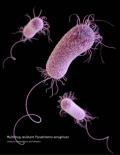
UK – Water quality – Risk assessments for Pseudomonas aeruginosa and other waterborne pathogens. Code of practice

BSI

CDC Pseudomonas

Overview

What is BS 8580-2 – Risk assessments for Pseudomonas aeruginosa about?

Our experts identified a lack of guidance on how to conduct risk assessments for Pseudomonas aeruginosa (PA) and other opportunistic waterborne pathogens other than Legionella. To fill that gap, BS 8580-2 is a new British Standard recommending a PA risk assessment process and supplying information and support on how to understand microbial hazards, prioritize actions and minimize risks.

Who is BS 8580-2 – Risk assessments for Pseudomonas aeruginosa for?

BS 8580-2 on risk assessments for pseudomonas aeruginosa applies in all types of healthcare provision, including hospitals, and care, nursing and residential homes, together with other settings where water systems and associated equipment can pose a risk. This can include in the educational, travel, industrial, leisure and beauty sectors, including health spas, nail bars and tattoo parlours.

Users of BS 8580-2 will be building and design engineers and architects; providers of fittings, outlets and components for water systems; installers and commissioners; risk assessors; regulatory bodies; building services engineers; water treatment consultants; travel, leisure and other relevant buildings owners and operators; and those responsible for the safe management of water systems, especially within leisure centres, schools, swimming pools, passenger vessels, spa pools, hot tubs etc.

BS 8580-2 will also interest clinicians, microbiologists, augmented care specialists and infection controllers in healthcare.

What does BS 8580-2 – Risk assessments for Pseudomonas aeruginosa cover?

BS 8580-2 gives recommendations and guidance on how to carry out risk assessments for pseudomonas aeruginosa (PA) and other waterborne pathogens whose natural habitat is within constructed water systems and the aqueous environment (autochthonous), rather than those present as a result of a contamination event. It includes those pathogens that can colonize and grow within water systems and the associated environment.

BS 8580-2 also covers risk assessments of distributed water systems and associated equipment, system components and fittings as well as above ground drainage systems. It covers PA risk assessment reviews and reassessments where a previous assessment has been undertaken and risk factors identified. It takes account of all relevant environmental and clinical factors and aspects of human behaviour leading to contamination events. It considers risk factors within the associated environment leading to conditions which can encourage the colonization and growth of waterborne pathogens and transfer of antibiotic resistance.

NOTE: BS 8580-2 does not cover risk assessments for Legionella spp.; these are covered in BS 8580-1, or risk assessments for enteric microorganisms derived from human or animal faecal contamination or sewage ingress.

Why should you use BS 8580-2 – Risk assessments for Pseudomonas aeruginosa?

You should use BS 8580-2 on risk assessments for pseudomonas aeruginosa because:

  • It plugs an information gap in relation to pseudomonas aeruginosa (PA) risk assessments, taking its unique additional considerations into account
  • It codifies the latest and most efficient approach to multidisciplinary PA risk assessments
  • Its recommended processes can be applied to other opportunistic waterborne pathogens
  • It can help healthcare providers demonstrate compliant risk management in respect of Dept of Health Guidance
  • It can help leisure sector organizations maintain compliance with their legal health and safety obligations
  • It can help users develop their expertise in risk assessment and strengthen organizational risk management

BS 8580-2 contributes to UN Sustainable Development Goal 3 on good health and well-being and Goal 6 on clean water and sanitation.

USA -FDA Warning Letter – 5,000 Years Foods, Inc.

FDA

The U.S. Food and Drug Administration (FDA or we) inspected your kimchi operation located at 3465 N. Kimball Ave, Chicago, IL 60618 from June 14, 2021 through August 3, 2021. FDA conducted this inspection as a follow up to the Regulatory Meeting held with your firm on February 21, 2019.

During the inspection, FDA investigators found serious violations, described below, of the Current Good Manufacturing Practice, Hazard Analysis, and Risk-Based Preventive Controls for Human Food regulation (CGMP & PC rule), Title 21, Code of Federal Regulations, Part 117 (21 CFR Part 117). At the conclusion of the inspection, FDA issued an FDA Form 483, Inspectional Observations, listing deviations found at your facility.

Based on FDA’s inspectional findings, we have determined that the ready-to-eat kimchi products manufactured in your facility are adulterated within the meaning of Section 402(a)(4) of the Federal Food, Drug, and Cosmetic Act (the Act) [21 United States Codes (U.S.C.) § 342(a)(4)] in that they were prepared, packed, or held under insanitary conditions whereby they may have become contaminated with filth or whereby they may have been rendered injurious to health. In addition, failure to comply with the requirements under Section 418 of the Act [21 U.S.C. § 350h] is a prohibited act under section 301(uu) of the Act [21 U.S.C. § 331(vv)]. You can find the Act and FDA’s regulations through internet links in FDA’s home page at http://www.fda.gov.External Link Disclaimer

We received your written responses dated July 3, 2021, and August 17, 2021, which included a summary of corrective actions by your facility. After reviewing the inspectional findings and your response to the observations listed in the FDA Form 483, we are issuing this letter to advise you of FDA’s concerns and provide detailed information describing the findings at your facility.

Hazard Analysis and Risk-Based Preventive Controls (21 CFR Part 117, Subpart C):

1. Your hazard analysis did not evaluate known or reasonably foreseeable hazards to determine whether there are any hazards requiring a preventive control for your ready-to-eat kimchi products (e.g., sliced cabbage kimchi, cube cut radish kimchi, and white whole kimchi), as required by 21 CFR 117.130(a). Your “Hazard List” consisted of a number of potential hazards but did not evaluate which ones actually require a preventive control. Specifically:

a. You did not evaluate environmental pathogens, such as Listeria monocytogenes, to determine whether they are a hazard requiring a preventive control, to comply with 21 CFR 117.130(c)(1)(ii). For example, you manufacture ready-to-eat sliced cabbage kimchi which is exposed to the environment at the steps of cabbage halving, brining, rinsing, draining, chopping, mixing with sauce, and packaging. The kimchi does not receive a lethal treatment or otherwise include a control measure (such as a formulation lethal to the pathogen) that would significantly minimize the pathogen. Thus, environmental pathogens are a hazard likely to occur in the absence of preventive controls (i.e., sanitation controls). Your “Hazard List” identified but did not otherwise evaluate contamination from the “food handling environment.”

We note that at the start of the inspection, your written procedures for sanitation of food-contact surfaces consisted of a generic “Cleaning and Disinfection” document downloaded from the internet, which indicated general tips for completing and checking sanitation tasks. The document was not specific to your facility or food. In addition, your monitoring record was a general-facility (b)(4) “Cleaning Record” which did not specify what was being cleaned or monitored and which was not subject to record review. Further, deficiencies in your sanitation monitoring are evidenced by FDA investigators’ observations on June 14-15, 2021, that the (b)(4) that was cleaned, sanitized, and deemed ready for production of ready-to-eat kimchi had apparent food residue on the blades and behind the feed mechanism used to push the (b)(4) through the (b)(4) blades.

During the closeout meeting at the end of the inspection, you provided an updated blank sanitation monitoring record (“Environm[en]tal Cleaning & Sanitizing Log”) with a statement at the top on how to clean and sanitize specific pieces of food-contact equipment such as the (b)(4), cutting boards, preparing tables, utensils, and kimchi mixer. The form did not cover your tanks for cabbage brining and mixing. The form instructed to clean with soap and water but did not describe the type and concentration of soap or the tools and technique for cleaning. The form instructed to sanitize the equipment “using a mixture of (b)(4) of (b)(4) to (b)(4)” but did not actually describe how to sanitize the equipment with the solution.

FDA’s current inspection included the collection of environmental swabs on June 15, 2021, during the production of ready-to-eat kimchi, and confirmed five (5) of sixty-six (66) swabs positive for Listeria monocytogenes. Of the positive findings, three (3) swabs were collected from areas adjacent to food-contact surfaces where RTE ingredients were being prepared, including:

• Topside of a large white cutting board used to hold baskets of cabbage for draining after brining and rinsing. During our inspection, cabbage was observed hanging off the side of the baskets and in direct contact with cutting boards.
• Underside of a white cutting board was used to hold draining baskets of cabbage.
• Side of wet and difficult to clean wooden crate used to hold cutting boards that were holding the draining baskets of cabbage.

Whole genome sequencing (WGS) was conducted on the above referenced L. monocytogenes isolates obtained from the FDA environmental samples. Based on the results of the WGS analysis, the environmental samples collected at your facility represent one (1) unique strain. We advised you of the importance of these WGS results via a conference call on September 10, 2021.

L. monocytogenes is a pathogenic bacterium that is widespread in the environment and may be introduced into a food processing facility from raw materials, humans or equipment. Without proper controls, it can proliferate in food processing facilities where it may contaminate food. Once L. monocytogenes is established in a production area, personnel or equipment can facilitate the pathogen’s movement and contamination of food-contact surfaces and finished product. It is essential to identify the areas of the food processing plant where this organism is able to survive, and to take such corrective actions as necessary to eradicate the organism by rendering these areas unable to support the survival and growth of the organism and prevent the organism from being re-established in such sites.

Note that environmental monitoring is required when contamination of a ready-to-eat food with an environmental pathogen is a hazard requiring a preventive control (see 21 CFR 117.165(a)(3)). Environmental monitoring is used to verify that sanitation preventive controls are designed and functioning to reduce the hazard of environmental pathogens such as Listeria monocytogenes contaminating your finished product.