Monthly Archives: June 2021

Ireland – Further Recall of all Dairy Products from Dunlavin Dairy as they were Produced in an Unapproved Establishment

FSAI

Wednesday, 16 June 2021

Summary
Category 1: For Action
Alert Notification: 2021.45
Product: All Dunlavin Dairy products.

Please see photos below of some examples of these products.

Batch Code: All batch codes, all use-by dates.
Country Of Origin: Ireland

Message:

Further to FSAI Food Alert 2020.81, all Dunlavin Dairy products including those bearing approval number IE 1989 EC or raw milk registration number RM02 are being recalled as the products were produced in an unapproved establishment. Products implicated include raw and pasteurised milk, semi-skimmed milk, buttermilk, cream and butter.

Action Required:

Inspectors:

EHOs are requested as part of their routine checks to verify that the implicated batches are recalled from sale.

Manufacturers, wholesalers, distributors, caterers & retailers:

Retailers are requested to remove the implicated batches from sale and to display a point-of-sale recall notice in stores where the affected batches were sold.

Caterers should not use the implicated batches.

Consumers:

Consumers are advised not to eat or drink the implicated batches.

Dunlavin Pictures 1
Dunlavin Pictures 2
Dunlavin Pictures 3

New Zealand – Shellfish biotoxin alerts – Hawkes Bay

MDPI

North Island warnings

Hawke’s Bay

Reason for alert Paralytic Shellfish Poisoning (PSP)

Check the symptoms of PSP

Date warning issued 16 June 2021

Media release

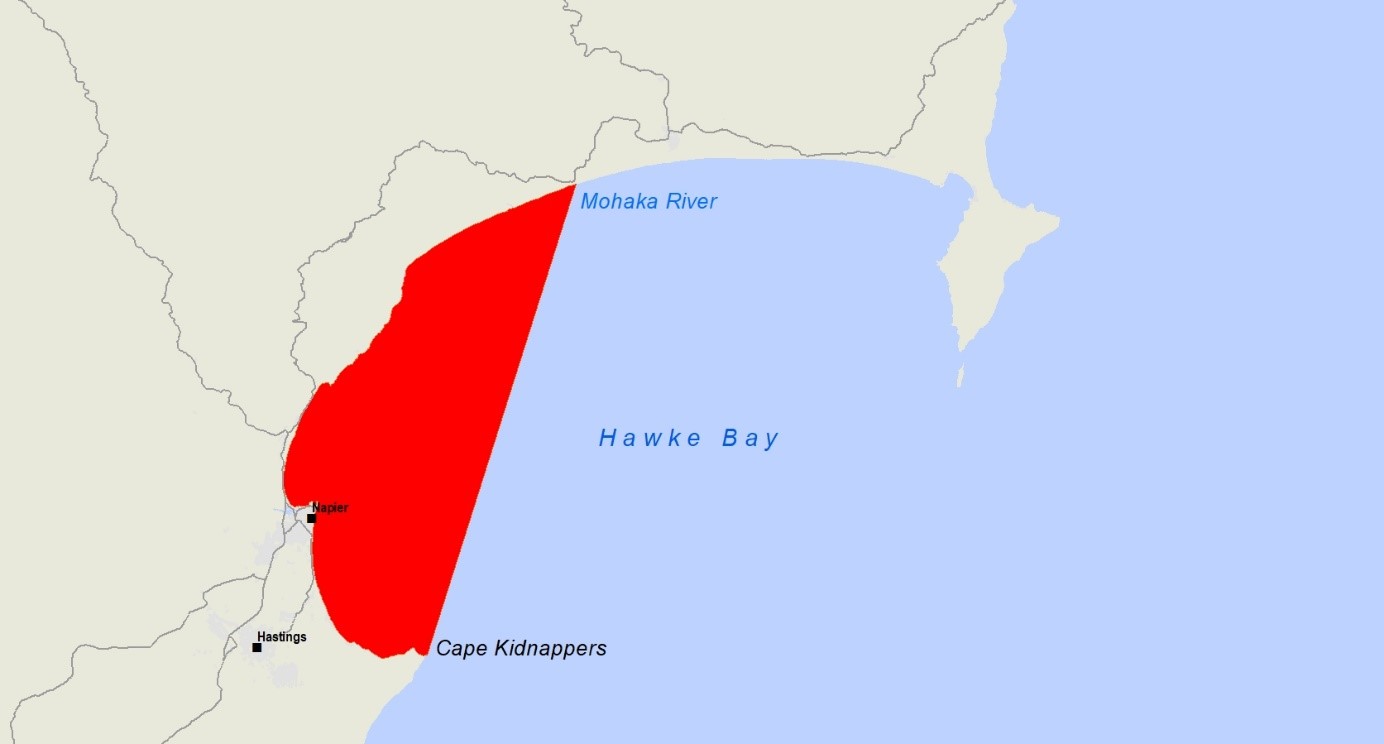
Affected area From the Mohaka River mouth, south to Cape Kidnappers.
Shellfish affected Mussels, oysters, tuatua, pipi, toheroa, cockles, scallops, catseyes, kina (sea urchin), and all other bivalve shellfish.

Note, cooking shellfish does NOT remove the toxin.

Pāua, crab, and crayfish may still be eaten if the gut has been completely removed prior to cooking, as toxins accumulate in the gut. If the gut is not removed its contents could contaminate the meat during the cooking process.

Symptoms Symptoms typically appear between 10 minutes and 3 hours after ingestion and may include:

  • numbness and a tingling (prickly feeling) around the mouth, face, and extremities (hands and feet)
  • difficulty swallowing or breathing
  • dizziness
  • headache
  • nausea
  • vomiting
  • diarrhoea
  • paralysis and respiratory failure, and in severe cases, death.
Other information Paralytic shellfish toxins have been detected in shellfish from Pania Reef at levels over the safe limit of 0.8mg/kg set by MPI. Ongoing testing will continue and any changes will be communicated accordingly.

Map of affected area

Map showing the affected area

New Zealand – New Zealand Food Safety places precautionary controls on North Island egg producer – Salmonella Outbreak

MDPI

New Zealand Food Safety has placed movement controls on a North Island egg producer as a precautionary measure after environmental testing indicated Salmonella Enteritidis on the farm.

New Zealand Food Safety has been carrying out tracing and testing of poultry operations after Salmonella Enteritidis was found at an Auckland hatchery that supplies chicks to other operators, earlier this year.

Symptoms of Salmonella illness include abdominal cramps, diarrhoea, fever, headache, nausea and vomiting. It can be serious in people with reduced immunity, frail elderly, children under 2 years, and pregnant women.

New Zealand Food Safety director of food regulation Dr Paul Dansted said to date no eggs had tested positive.  However, it was possible that some eggs could contain Salmonella Enteritidis so it was prudent to provide advice to consumers.

“No product is leaving the farm at present while we carry out more investigations.

“It’s important to note the positive results are not from eggs, but from samples from within the farm.”

“While the risk is low, we are taking this precautionary action as we are not yet in a position to assure consumers that Salmonella Enteritidis is not in some eggs.”

There are key actions consumers can take to protect against Salmonella Enteritidis.

They include:

  • Keep eggs in the fridge after purchase.
  • Cook eggs thoroughly – until the white is completely firm and the yolk begins to thicken.
  • Wash your hands after handling eggs.
  • Consume eggs within the recommended date on the carton.
  • Don’t serve raw eggs to children under 2 years of age, pregnant woman, the frail and elderly, and people with low or compromised immune systems.
  • Keep surfaces and kitchen utensils clean and dry before and after handling eggs.
  • Use clean eggs free from dirt, faecal matter and cracks.

Last month, NZ Food Safety stopped 2 farms from sending eggs to sale after tests found Salmonella Enteritidis on their properties.

Media release: Food safety actions to protect consumers

“We have been conducting tests with the poultry industry and action will be taken where necessary to identify and manage any suspect flocks.”

NZ Food Safety is working closely with the Ministry of Health, which has been monitoring Salmonella Enteritidis cases in humans.

“To date, while there is no proven association between human illness and poultry meat and eggs, we continue to investigate.”

Dr Dansted said NZ Food Safety would continue to work with the poultry industry to assist it to manage the risk of Salmonella Enteritidis in commercial flocks and reduce the risk to consumers.

“Many countries have Salmonella Enteritidis in poultry flocks and manage the risk with on-farm prevention measures. By taking this pre-emptive action with the farm and informing people to handle and prepare food safely at home, we reduce the risk.”

Salmonellosis, the illness caused by Salmonella Enteritidis bacteria, can spread in a variety of ways outside of food, including contact with infected animals, material, or surfaces, and between persons.

If you have health concerns after consuming eggs or chicken, seek medical advice from your doctor or Healthline.

Resources

Frequently asked questions [PDF, 134 KB]

Director-General privileged statement regarding Section 289 of the Food Act [PDF, 837 KB]

Learn more about Salmonellosis – Ministry of Health

Clean, Cook, Chill for home food safety advice

Salmonella symptoms and advice

Research – Poultry study points to genes linked to food bug – Campylobacter.

Roslin

Campylobacter kswfoodworld

Variation in the response of chickens to Campylobacter helps identify key genes that may provide resistance to infection.

Research has identified genes in chickens that could offer resistance to harmful bacteria commonly found in poultry and could inform ways to limit the risk of associated food poisoning in people.

The study, led by a team from the Roslin institute, has identified a large number of genes in chicken guts that may determine whether the birds are resistant to Campylobacter.

The insights could inform research towards breeding chickens that are less likely to carry Campylobacter bacteria, and so limit the risk to poultry consumers.

New Zealand – Salmonella Outbreak

Food Safety News

Officials in New Zealand are investigating a Salmonella outbreak that has sickened 35 people so far this year.

Salmonella Enteritidis sequence type 11 (ST 11) was first detected in 2019 in an outbreak traced to a restaurant in the Auckland region. Since May 2019, the number of patients associated with this strain is 101 and from 2019 it has been found in four other outbreaks.

The majority of people sick from January to April this year live in the Auckland region, according to the Institute of Environmental Science and Research (ESR).

New Zealand Food Safety found Salmonella Enteritidis at an Auckland poultry farm and there has been a rise in infections caused by this strain of Salmonella despite attempts to prevent contaminated eggs reaching consumers.

British Virgin Islands- Ciguatera increase

Food Safety News

Authorities in the British Virgin Islands have issued a warning after a surge in Ciguatera fish poisoning (CFP) within the past few weeks.

Cases until the week of June 6 were sporadic, but within three weeks there have been eight confirmed infections with other suspected cases also being investigated.

National Epidemiologist Harmony Massiah said CFP is not uncommon in tropical and sub-tropical areas and is mainly associated with consumption of big coral reef fish like snapper, bass and perch that have accumulated ciguatoxin in the body.

Larger fish will have higher amounts of the toxin. Contaminated fish cannot be identified by appearance and the toxin cannot be destroyed by cooking or freezing.

Denmark – Risk of mold in wheat buns with vanilla cream

DVFA

Pågen A / S is recalling Pågen Vanillas, as mold has been found in the product following a number of consumer inquiries.

Recalled Foods , Published: June 15, 2021

What foods:
Pågen Vanilla (see picture  here )
Net Contents: 220g
Expiry date: 29.06.2021-07.07.2021
EAN number: 7311070006230

Sold at:
The product is sold in grocery stores throughout the country.

Company recalling:
Pågen A / S

Reason:
After receiving a number of consumer inquiries, the company has established that there is a risk of mold in the products with the mentioned expiry dates.

Risk:
Mold formation makes the product unfit for human consumption.

Advice for consumers: The Danish
Veterinary and Food Administration advises consumers to deliver the product back to the store where it was purchased or to discard it.

Research – Escherichia coli Survival on Strawberries and Unpacked Romaine Lettuce Washed Using Contaminated Water

MDPI

A number of foodborne outbreaks have occurred in the past decade, with higher incidences associated with romaine lettuce and strawberries. Contaminated agricultural water has been reported as the source of microbial contamination in most of these outbreaks. Maintaining the adequate and sanitary quality (0 E. coli/100 mL) of agricultural water can be challenging during post-harvest operations such as washing. The study focused on the attachment of generic E. coli (Rifampicin resistant) onto romaine lettuce and strawberries, mimicking the produce wash step. The produce was washed with contaminated water, air-dried, and stored in display units for 7 days. The produce was sampled randomly each day and analyzed for the surviving E. coli count. The results indicated that E. coli can survive in both lettuce and strawberries over extended periods. A survival population of 2.3 log CFU/cm2 (day 8) was observed on lettuce with an initial population of 2.8 log CFU/cm2 (day 0). On strawberries, the population reduced from 3.0 (day 0) to 1.7 log CFU/cm2 (day 7), with an initial E. coli concentration of approx. 6 log CFU/mL in the wash water. Strawberry leaves had a higher attachment of E. coli than the fruit (p < 0.05). In conclusion, romaine lettuce and strawberries washed with contaminated water can cause an outbreak affecting consumers and public health. View Full-Text

Research – Prevalence, Antibiogram and Genetic Characterization of Listeria monocytogenes from Food Products in Egypt

MDPI

World Health Organization classified Listeria monocytogenes as a major notable foodborne pathogen associated with high mortality and hospitalization. The study reports the prevalence, antibiogram, virulence determination and genetic characterization of L. monocytogenes from different food products. A total of 250 food samples, fifty samples each from raw milk, ice cream, minced meat, fish fillet and sausage were collected from the Menoufiya governorate in Egypt. L. monocytogenes was detected in 17 (6.8%) of the tested food samples including minced meat (14%), fish fillet (8%), sausage (6%) and raw milk (6%). The antimicrobial susceptibility assay of 17 L. monocytogenes isolates against seventeen antibiotics belonging to eight antibiotics classes revealed a high susceptibility to norfloxacin (82.3%), amoxicillin-clavulanic acid (76.4%), cefotaxime (70.5%), erythromycin (64.6%), amoxicillin (64.6%), gentamicin (58.7%) and vancomycin (58.7%). While, high resistance was observed against oxytetracycline (76.4%), trimethoprim-sulfamethoxazole (76.4%), chloramphenicol (70.5%), doxycycline (64.6%), levofloxacin (41.2%) and azithromycin (41.2%). Of note, all L. monocytogenes isolates were multidrug-resistant. The multiplex PCR successfully amplified L. monocytogenes in all tested isolates. Screening of the five virulence-related genes revealed the hlyA and iap as the most prevalent genes followed by actA gene, however, the inlA and prfA genes were not detected in any of the studied isolates. The partial 16S rRNA gene sequencing of three L. monocytogenes isolates showed a high nucleotide similarity (99.1–99.8%) between the study isolates and various global clones, and phylogenetic analysis clustered these L. monocytogenes strains with other Listeria species including L. welshimeriL. seeligeri and L. innocua. This study demonstrates the impact of L. monocytogenes as a major contaminant of various food products and suggests more attention to the awareness and hygienic measures in the food industry. View Full-Text

Research – Occurrence of Human Enteric Viruses in Shellfish along the Production and Distribution Chain in Sicily, Italy

MDPI

Contamination of bivalve mollusks with human pathogenic viruses represents a recognized food safety risk. Thus, monitoring programs for shellfish quality along the entire food chain could help to finally preserve the health of consumers. The aim of the present study was to provide up-to-date data on the prevalence of enteric virus contamination along the shellfish production and distribution chain in Sicily. To this end, 162 batches of mollusks were collected between 2017 and 2019 from harvesting areas, depuration and dispatch centers (n = 63), restaurants (n = 6) and retail stores (n = 93) distributed all over the island. Samples were processed according to ISO 15216 standard method, and the presence of genogroup GI and GII norovirus (NoV), hepatitis A and E viruses (HAV, HEV), rotavirus and adenovirus was investigated by real-time reverse transcription polymerase chain reaction (real-time-RT PCR), nested (RT)-PCR and molecular genotyping. Our findings show that 5.56% of samples were contaminated with at least one NoV, HAV and/or HEV. Contaminated shellfish were sampled at production sites and retail stores and their origin was traced back to Spain and several municipalities in Italy. In conclusion, our study highlights the need to implement routine monitoring programs along the whole food chain as an effective measure to prevent foodborne transmission of enteric viruses. View Full-Text