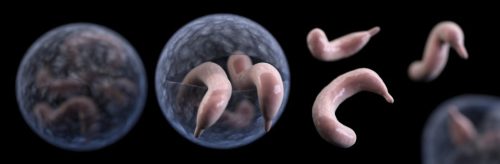
RASFF Alert – Vibrio vulnificus – Frozen Shrimp

RASFF

Detection of vibrio vulnificus in frozen raw shrimps from Ecuador in France

RASFF Alerts – Mold/Mould – Date Hazelnut Cream – Mortadella

RASFF

Mold in organic date hazelnut cream from Poland in Austria, Germany, Czech Republic, Germany, Spain, Switzerland

RASFF

Mould in mortadella from Italy in Belgium

RASFF Alerts – STEC E.coli – Spinach and Arugula – Salami with Truffles – Bovine Carcass – Bovine Meat

RASFF

STEC in Spinach and arugula from the Netherlands in Belgium, Cyprus, Denmark, Germany, Kuwait, Netherlands, Portugal, USA, UK, Qatar and Spain

RASFF

Suspicion of enterohaemorrhagic Escherichia coli in salami with truffles from Italy in Germany

RASFF

STEC (stx+;eae+) in bovine carcass from Belgium in the Netherlands

RASFF

Presence of E.coli STEC in bovine meat (sirloin) from Uruguay in Spain

RASFF Alert – Food Poisoning – Raw Oysters

RASFF

Food poisoning after eating oysters from France in Germany, Belgium, Finland and Netherlands

RASFF Alerts – Aflatoxin – Pistachios – Peanuts

RASFF

Aflatoxins B1 and total over the limits allowed in Pistachio in shell from Iran in Italy and Germany

RASFF

Aflatoxins in peanuts in shell from Egypt in Germany

RASFF Alert – Listeria monocytogenes – Chilled Beef Snout Salad

RASFF

Listeria monocytogenes (180 CFU/g) in chilled beef snout salad from Germany in France

RASFF Alerts – Mycotoxin – Ochratoxin A – Organic Dried Figs – Dark Raisins – Sultana Raisins

RASFF

High content of Ochratoxin A in organic dried figs from Turkey in Italy

RASFF

Ochratoxin A in dark raisins from Uzbekistan in Poland

RASFF

Exceeding the maximum level of mycotoxins (Ochratoxin A) in sultana raisins from Turkey in Poland

RASFF Alerts – Salmonella – Polish Chicken Products – Sesame Seeds – Betel Leaves – Crayfish -Pasteurised Egg White – Pork Crackling – Sow Meat – Chicken Thighs – Salted Chicken Fillet – Black Pepper – Tahini Halva with Cocoa

RASFF

Salmonella in betel leaves from Bangladesh in Italy

RASFF

Salmonella spp. in chicken broiler drumettes from Poland in Lithuania

RASFF

Suspicion of salmonella in crayfish from China in Sweden

RASFF

Salmonella in pasteurized egg white from France in Spain

RASFF

Salmonella Typhimurium in turkey neck skin from Poland in Germany

RASFF

Salmonella spp. in pork crackling meal from Italy in Germany

RASFF

Salmonella Infantis in sow meat from Germany via Estonia in Finland

RASFF

SALMONELLA IN SESAME SEEDS FROM NIGERIA in Greece

RASFF

SALMONELLA IN SESAME SEEDS FROM NIGERIA in Greece

RASFF

SALMONELLA IN SESAME SEEDS FROM NIGERIA in Greece

RASFF

Salmonella Infantis (in 2 out of 5 samples) in chicken thighs from Lithuania in Latvia

RASFF

Salmonella spp. in salted chicken (inner)fillet from Brazil in Germany and the Netherlands

RASFF

Salmonella enteritidis in chicken from Poland in UK, France, Netherlands and Luxembourg

RASFF

Salmonella Coeln (in 1 out of 5 samples) in chicken thighs from Poland in Latvia

RASFF

Salmonella spp. in tahini halva with cocoa from Türkiye in Denmark, France, Germany, Netherlands and Sweden

RASFF

Salmonella spp. in black pepper from Brazil in Germany

RASFF

SALMONELLA IN SESAME SEEDS FROM NIGERIA in Greece and Turkey

RASFF

SALMONELLA IN SESAME SEEDS FROM NIGERIA in Greece

RASFF Alerts – Animal Feed – Salmonella – Soybean Extraction Meal – Wheat Feed – Barley Feed

RASFF

Salmonella spp. in soybean extraction meal from Germany in Switzerland and Netherlands

RASFF

Salmonella enterica ser. Senftenberg in soybean meal from Russia, via Luxembourg in Sweden

RASFF

Salmonella Infantis in wheat feed from Poland in Finland

RASFF

Salmonella Enteritidis in barley feed from Spain in Finland

Research – An outbreak of cryptosporidiosis associated with drinking water in north-eastern Italy, August 2019: microbiological and environmental investigations

Eurosurveillance

crypto

The enteric parasite , along with norovirus, ,  and rotavirus, is among the most frequent causes of waterborne disease [1,2]. In humans, transmission of  occurs via the faecal-oral route, either through direct exposure to infected people (person-to-person infection) or animals (animal-to-person infection), or through ingestion of water (drinking water, recreational water such as swimming pools, water parks, lakes, rivers) or consumption of raw or undercooked food contaminated with infectious oocysts [3]. Infection may remain asymptomatic or manifest as acute gastroenteritis (> 80% of infected individuals). Symptoms occur 1 to 12 days (mean: 7 days) after exposure and usually last 6 to 9 days. The severity and duration of symptoms are linked to the immune status of the host, and cryptosporidiosis can be life threatening in immunosuppressed individuals [4].

There are many  species that can infect humans, but the vast majority of cases are due to , a zoonotic species that also infects young ruminants, and , which is essentially only a human pathogen [5]. The environmental route of transmission is of high relevance for  [6]. This is due to several factors including: (i) the high survival rate of oocysts in water (more than 24 months at 20°C), (ii) high resistance to disinfection (30 mg/L of free chlorine are needed to achieve 99% inactivation at pH 7, with a recommended value of 0.2 mg/L for drinking water) [6], (iii) low infectious dose (10–132 oocysts in healthy adults [7]) and (iv) low host specificity [5]. Oocysts lose their infectivity when frozen, boiled or heated over 60°C [6].

The ability of  to survive at high chlorine concentrations [8] and, consequently, at the disinfectant concentrations commonly used in water treatment, has always been a challenge for water treatment plant operators. However, other disinfectants, such as chlorine dioxide, ozone, UV rays and filtration have proved to be rather effective in removing . Water safety mainly depends on the combination of different treatment stages, and a multi-barrier approach is a key paradigm for ensuring safe drinking water [6]. Nonetheless, in small water supplies managed by local communities that serve only few thousand people, multi-barrier treatment systems are usually not implemented. Thus, in order to ensure the safety of drinking water, more traditional treatments, e.g. disinfection, are used and water quality is checked against certain regulatory parameters.

During 2017–20, 60 waterborne outbreaks of cryptosporidiosis have been detected in Europe, the majority of which involving treated recreational water (swimming pools) as the vehicle of infection [9]. The number of outbreaks linked to contaminated drinking water has shown a notable decrease in the past decades, although, when occurring, large numbers of individuals may be involved, as exemplified by the outbreaks reported in 2010–11 in Sweden [10,11].