RASFF Alert – Norovirus – Clams

RASFF

Norovirus genogroup II in clams (Chamelea gallina) from Italy in Spain

RASFF Alert- Mycotoxins – Ergot Alkaloids – Rye Flour

RASFF

Ergot alkaloids in rye flour from Belgium in the Netherlands

RASFF Alerts – Listeria monocytogenes – Cantonese Rice – Fried Fish Fillets – Sliced Smoked Marlin – Duck Meat – Smoked Salmon

RASFF

Listeria monocytogenes in ready meal Cantonese rice from Spain in Italy

RASFF

Listeria monocytogenes in fried fish fillets from Poland in Denmark

RASFF

Listeria monocytogenes in slices smoked marlin from Spain in Italy

RASFF

Duck meat with Listeria monocytogenes from France in Belgium and the Netherlands

RASFF

Listeria monocytogenes in smoked salmon from Poland in Germany

RASFF

High levels of Listeria monocytogenes in smoked salmon from Denmark in Italy

RASFF Alerts – Animal Feed – Salmonella – Rapeseed Extract – Meat Product

RASFF

Salmonella in post-extraction rapeseed meal from Ukraine in Poland and Lithuania

RASFF

Salmonella in meat product from Belgium in France

Research – Prevalence and Implications of Shiga Toxin-Producing E. coli in Farm and Wild Ruminants

MDPI

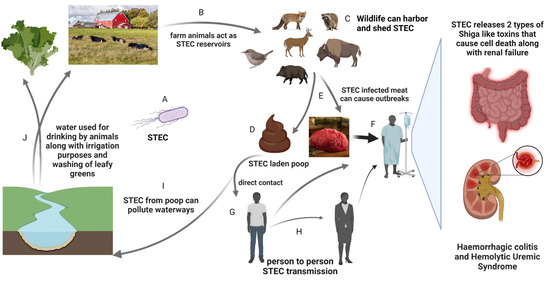
Shiga-toxin-producing Escherichia coli (STEC) is a food-borne pathogen that causes human gastrointestinal infections across the globe, leading to kidney failure or even death in severe cases. E. coli are commensal members of humans and animals’ (cattle, bison, and pigs) guts, however, may acquire Shiga-toxin-encoded phages. This acquisition or colonization by STEC may lead to dysbiosis in the intestinal microbial community of the host. Wildlife and livestock animals can be asymptomatically colonized by STEC, leading to pathogen shedding and transmission. Furthermore, there has been a steady uptick in new STEC variants representing various serotypes. These, along with hybrids of other pathogenic E. coli (UPEC and ExPEC), are of serious concern, especially when they possess enhanced antimicrobial resistance, biofilm formation, etc. Recent studies have reported these in the livestock and food industry with minimal focus on wildlife. Disturbed natural habitats and changing climates are increasingly creating wildlife reservoirs of these pathogens, leading to a rise in zoonotic infections. Therefore, this review comprehensively surveyed studies on STEC prevalence in livestock and wildlife hosts. We further present important microbial and environmental factors contributing to STEC spread as well as infections. Finally, we delve into potential strategies for limiting STEC shedding and transmission. View Full-Text

Research – Low levels of E. coli found in Norwegian produce testing

Food Safety News

Testing of fresh produce in Norway has found a low level of E. coli contamination.

The Norwegian Food Safety Authority (Mattilsynet) commissioned the Veterinary Institute to examine ready-to-eat lettuce and sugar snap peas in 2021.

A total of 118 samples, of which 37 were sugar snap peas and 81 ready-to-eat leafy greens, were analyzed. Salmonella was not detected, while E. coli was found in 11 samples, one of sugar snap peas and 10 of lettuce. E. coli, as a hygiene indicator, at levels above the guideline values was only detected in one sample of lettuce.

Results were considered unsatisfactory if three or more samples contained more than 100 colony forming units per gram or one sample contained above 1,000 CFU/g.

Officials said finding high levels of E. coli in lettuce may indicate the production process is not working optimally. Good raw material control and management of the washing and rinsing process are important, so microorganisms do not build-up and cross-contamination via water is minimized.

Research – The underestimated risk of mycotoxins in dairy cows

All About Feed

It is a myth that rumen microbial activity allows dairy cows to handle mycotoxin toxicity completely. A closer look at rumen degradation capability shows that this is not the case. Therefore, a mitigation strategy should be holistic, practical and beyond binding.

Risk, impact, and diagnostics

A complex and diverse Total Mixed Ration (TMR) poses multiple mycotoxin toxicity challenges. Although rumen microbes can reduce the toxicity of some mycotoxins, not all mycotoxins are equally degraded in the rumen. In high-yielding dairy cows high-starch diets can compromise the detoxification capacity of rumen microbes. For some mycotoxins, such as zearalenone (ZEN), rumen degradation may increase the toxicity. Furthermore, extended periods of exposure to low levels of multiple mycotoxins may lead to chronic toxicity, an increasing issue that is notoriously difficult to diagnose at an early stage.

Mycotoxins can threaten dairy cows’ health, rumen function, feed intake, milk yield, milk quality, lameness, and reproductive abilities. Many “mouldy silage syndrome” cases in the field have shown incidences of increased somatic cell counts, undigested faecal feed particles, laminitis, mastitis and ruminitis cases. Cases of reproductive challenges and vaccination failures have been reported with multiple mycotoxins in TMR.

Read more at the link above

Research – Bacterial Pathogens in the Food Industry: Antibiotic Resistance and Virulence Factors of Salmonella enterica Strains Isolated from Food Chain Links

MDPI

kswfoodworld salmonella

Salmonella is one of the most important foodborne pathogens. Fifty-three strains of Salmonella deposited in the Culture Collection of Industrial Microorganisms—Microbiological Resources Center (IAFB) were identified using molecular and proteomic analyses. Moreover, the genetic similarity of the tested strains was determined using the PFGE method. Main virulence genes were identified, and phenotypical antibiotic susceptibility profiles and prevalence of resistance genes were analyzed. Subsequently, the occurrence of the main mechanisms of β-lactam resistance was determined. Virulence genes, invA, fimA, and stn were identified in all tested strains. Phenotypic tests, including 28 antibiotics, showed that 50.9% of the strains were MDR. The tet genes associated with tetracyclines resistance were the most frequently identified genes. Concerning the genes associated with ESBL-producing Salmonella, no resistance to the TEM and CTX-M type was identified, and only two strains (KKP 1597 and KKP 1610) showed resistance to SHV. No strains exhibited AmpC-type resistance but for six Salmonella strains, the efflux-related resistance of PSE-1 was presented. The high number of resistant strains in combination with multiple ARGs in Salmonella indicates the possible overuse of antibiotics. Our results showed that it is necessary to monitor antimicrobial resistance profiles in all food chain links constantly and to implement a policy of proper antibiotic stewardship to contain or at least significantly limit the further acquisition of antibiotic resistance among Salmonella strains.

USA – Turkey Day Myths

USDA

Quit food safety confusion cold turkey this Thanksgiving! While this holiday is a great time to spend with family and friends, it’s also time to bust some myths.

Myth 1:  Refrigerating a whole cooked turkey is safe

False! Always carve your turkey after cooking. A whole cooked turkey will not cool quickly enough, thus putting it at risk for bacterial growth. Carve the turkey into smaller pieces so it cools faster in the refrigerator.

Myth 2: Thawing a turkey on the counter is safe.

Never thaw a turkey on the kitchen counter. Once a turkey has sat at room temperature beyond two hours, it enters the Danger Zone, where bacteria grow rapidly. Thawing a turkey in a refrigerator is safe. Allow approximately 24 hours of thawing time for every four to five pounds of turkey. Turkeys are also safely thawed in a microwave and cold water. When using the cold-water method, allow 30 minutes per pound of turkey and keep it in the original wrapping. Change the water every 30 minutes and cook immediately after thawing.

Myth 3: My pop-up timer is enough to know if my turkey is fully cooked.

Pop-up timers are disposable thermometers used to measure a turkey’s temperature. These timers are a great tool. However, don’t forget to check in the three recommended places as well. The turkey’s internal temperature must reach 165 F in the following locations: the thickest part of the breast, the innermost part of the thigh, and the innermost part of the wing. Use a food thermometer in addition to a pop-up timer to check the turkey’s internal temperature.

Remember the four steps to food safety:

  • Clean: Wash hands before touching food.
  • Separate: Keep raw meats and poultry away from fruits and vegetables.
  • Cook: Turkey is safe to eat once it reaches an internal temperature of 165 F.
  • Chill: Refrigerate any leftovers within two hours.

For more information, call the USDA Meat and Poultry Hotline at 1-888-MPHotline (1-888-674-6854) or email MPHotline@usda.gov to reach a food safety expert or chat live at ask.usda.gov from 10 a.m. to 6 p.m. Eastern Time, Monday through Friday. The Meat and Poultry Hotline is also open on Thanksgiving Day from 8 a.m. to 2 p.m. Eastern Time.

Research – Fatal Listeria outbreak linked to Scottish fish processor

Food Safety News

A deadly Listeria outbreak in the United Kingdom has been linked to one company but product testing has only found low levels of contamination.

Food Standards Scotland (FSS) and the Food Standards Agency (FSA) suspect the source of contamination to be a salmon-smoking processing factory in Scotland.

Food Standards Scotland wouldn’t name the company or answer questions about the incident from Food Safety News.

Instead, a spokesperson said: “This is an ongoing outbreak of Listeria monocytogenes and, as yet, no definitive source of contamination has been found. Investigations to determine the root cause continue. Investigations of any outbreaks of foodborne illness will comprise both patient questionnaires and sampling of products.

“Local authorities are responsible for working on mitigations with any implicated businesses, and FSS, alongside partners the UK Health Security Agency, Public Health Scotland, and the Food Standards Agency, have been involved in raising awareness of the outbreak with consumers, most recently with targeted messaging to vulnerable groups.”

There have been 14 confirmed Listeria monocytogenes cases in just under two years. At least 10 sick people are above 65 years old, and one was a pregnant woman.

Three people older than 65 have died and for two Listeria monocytogenes was a contributory cause of death. All cases had underlying health conditions.

Of the linked cases of listeriosis since October 2020, eight have been identified since January 2022. The majority of them reported eating ready-to-eat smoked fish.