Ireland – Recall of a Batch of Roosters Gluten Free Breaded Chicken Fillet Goujons due to Presence of Salmonella

FSAI

Roosters Gluten Free Breaded Chicken Fillet Goujons

Summary
Category 1: For Action
Alert Notification: 2022.09
Product: Roosters Gluten Free Breaded Chicken Fillet Goujons;
pack size: 400g; approval number: IE 2410 EC
Batch Code: 211216, 16:00:00, 16.12.2021; best before date: 16.12.2022
Country Of Origin: Ireland

Message:

A batch of Roosters Gluten Free Breaded Chicken Fillet Goujons is being recalled due to the presence of Salmonella.  Point-of-sale recall notices will be displayed in Aldi stores supplied with the implicated batch.

Nature Of Danger:

People infected with Salmonella typically develop symptoms between 12 and 36 hours after infection, but this can range between 6 and 72 hours.  The most common symptom is diarrhoea, which can sometimes be bloody.  Other symptoms may include fever, headache and abdominal cramps.  The illness usually lasts 4 to 7 days. Diarrhoea can occasionally be severe enough to require hospital admission. The elderly, infants, and those with impaired immune systems are more likely to have a severe illness.

Action Required:

Consumers:

Consumers are advised not to eat the implicated batch.

Germany – Organic Tigernut Flour – Salmonella

LMW

Alert type: Food
Date of first publication: 03.02.2022
Product name:

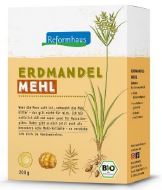
Organic Tigernut Flour

Product images:

Organic tigernut flour.JPG


Reform Kontor GmbH & Co. KG

Manufacturer (distributor):

Reform Kontor GmbH & Co. KG, Ernst-Litfaß-Str. 16, in 19246 Zarrentin

Reason for warning:

Detection of Salmonella spp.

Packaging Unit: 200 g
Durability: Best before September 14, 2022
Lot identification: Lot 98476
Further information:

Salmonella disease manifests itself within a few days after infection with diarrhoea, abdominal pain and occasionally vomiting and a slight fever. The symptoms usually subside on their own after a few days. Babies, small children, senior citizens and people with a weakened immune system in particular can develop more severe illnesses. Anyone who has eaten this food and develops severe or persistent symptoms should seek medical attention and report possible salmonella infection. It makes no sense to seek preventive medical treatment without symptoms.

Manufacturer’s website:


RASFF Alert – Mycotoxin – Fumonisins – Cornmeal

RASFF

Fumonisins in cornmeal from Peru in Spain

RASFF Alert – Mycotoxin – Ochratoxin A – Dried Figs

RASFF

Ochratoxin-A in Turkish dried figs in the Netherlands

RASFF Alert – Mold/Mould – Cake Layers

RASFF

Mould on sponge cake layers from Sweden in Denmark, Iceland, Spain, Sweden and UK

RASFF Alerts – Salmonella – Polish Chicken Products – Sesame Seeds – Black Pepper – Fresh Stuffed Pasta – Turkey Meat – Mini Sausages

RASFF

Presence of Salmonella spp. in sesame seeds from Egypt in Greece and the UK

RASFF

Salmonella in carne di tacchino (turkey) from Hungary in Italy

RASFF

Salmonella in fresh stuffed pasta from France in New Caledonia, Djibouti, Ivory Coast

RASFF

Suspicion Salmonella in mini sausages 125 g from Belgium in Luxembourg and Romania

RASFF

Salmonella in Brazilian black pepper in the Netherlands

RASFF

Salmonella newport in carne pollame origine Polonia//Salmonella newport in poultry meat from Poland in Italy

RASFF Alerts – Aflatoxin – Pistachios – Groundnuts – Peanuts

RASFF

Aflatoxins in pistachios inshell from Turkey in Greece

RASFF

Aflatoxins in pistachios inshell from Turkey in Greece

RASFF

Aflatoxin in Egyptian groundnuts in Germany and the Netherlands

RASFF

Aflatoxin in USA groundnuts in the Netherlands

RASFF

Aflatoxins in Egyptian Organic Peanut Kernels in the Netherlands

RASFF

Aflatoxin in South African groundnuts in the Netherlands

RASFF

Aflatossine oltre i limiti consentiti in Pistacchio in guscio da Iran/Aflatoxins beyond the allowed limits in Pistachio in shell from Iran in Italy

RASFF Alerts – Animal Feed – Salmonella – Feeder Mice – Rapeseed Extraction Meal

RASFF

Salmonella spp. in rapeseed extraction meal from Germany in the Netherlands

RASFF

Salmonella detected in Feeder Mice from Lithuania in the UK, Poland and Netherlands

Research – Effect of phenolic compounds and cold shock on survival and virulence of Escherichia coli pathotypes

Wiley Online

Phenolic compounds (PC) affect many metabolic processes of microbes; however, there is no information about their effectiveness when these act in combination with low temperatures for the control of Escherichia coli pathotypes. In this study, four PC, (tannic acid [TA], gallic acid [GA], methyl gallate [MG], and epigallocatechin gallate [EG]) in combination with cold shock (CS, 10°C) were evaluated for their effect on growth, swarming motility, biofilm formation, and expression of selected virulence-related genes of E. coli pathotypes [enteropathogenic (EPEC), enterohemorrhagic (EHEC), and enterotoxigenic (ETEC)]. Sub-inhibitory concentrations of the PC were used alone (37°C) or in combination with CS. For CS assays, E. coli strains were grown at 37°C until mid-log phase and then subjected to 10°C for 4 hr. Membrane damage was determined by flow cytometry; swarming motility was measured on soft-LB agar, biofilm formation was analyzed by crystal violet staining, and gene expression of CS, biofilm, and swarming motility related-genes was determined by qPCR. Sub-inhibitory concentrations of the PC did not affect the viability of the strains. The combination of CS + TA provoked the highest (p ≤ .05) mortality in all pathotypes. CS + GA inhibited (100%) the motility of EHEC and ETEC. PC and CS + PC reduced (p ≤ .05) biofilm formation. The combination of PC and CS affected virulence factors and their gene expression of pathogenic E. coli presenting a novel alternative for its control in foods.

UK – Water quality – Risk assessments for Pseudomonas aeruginosa and other waterborne pathogens. Code of practice

BSI

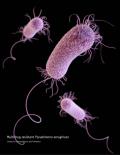
CDC Pseudomonas

Overview

What is BS 8580-2 – Risk assessments for Pseudomonas aeruginosa about?

Our experts identified a lack of guidance on how to conduct risk assessments for Pseudomonas aeruginosa (PA) and other opportunistic waterborne pathogens other than Legionella. To fill that gap, BS 8580-2 is a new British Standard recommending a PA risk assessment process and supplying information and support on how to understand microbial hazards, prioritize actions and minimize risks.

Who is BS 8580-2 – Risk assessments for Pseudomonas aeruginosa for?

BS 8580-2 on risk assessments for pseudomonas aeruginosa applies in all types of healthcare provision, including hospitals, and care, nursing and residential homes, together with other settings where water systems and associated equipment can pose a risk. This can include in the educational, travel, industrial, leisure and beauty sectors, including health spas, nail bars and tattoo parlours.

Users of BS 8580-2 will be building and design engineers and architects; providers of fittings, outlets and components for water systems; installers and commissioners; risk assessors; regulatory bodies; building services engineers; water treatment consultants; travel, leisure and other relevant buildings owners and operators; and those responsible for the safe management of water systems, especially within leisure centres, schools, swimming pools, passenger vessels, spa pools, hot tubs etc.

BS 8580-2 will also interest clinicians, microbiologists, augmented care specialists and infection controllers in healthcare.

What does BS 8580-2 – Risk assessments for Pseudomonas aeruginosa cover?

BS 8580-2 gives recommendations and guidance on how to carry out risk assessments for pseudomonas aeruginosa (PA) and other waterborne pathogens whose natural habitat is within constructed water systems and the aqueous environment (autochthonous), rather than those present as a result of a contamination event. It includes those pathogens that can colonize and grow within water systems and the associated environment.

BS 8580-2 also covers risk assessments of distributed water systems and associated equipment, system components and fittings as well as above ground drainage systems. It covers PA risk assessment reviews and reassessments where a previous assessment has been undertaken and risk factors identified. It takes account of all relevant environmental and clinical factors and aspects of human behaviour leading to contamination events. It considers risk factors within the associated environment leading to conditions which can encourage the colonization and growth of waterborne pathogens and transfer of antibiotic resistance.

NOTE: BS 8580-2 does not cover risk assessments for Legionella spp.; these are covered in BS 8580-1, or risk assessments for enteric microorganisms derived from human or animal faecal contamination or sewage ingress.

Why should you use BS 8580-2 – Risk assessments for Pseudomonas aeruginosa?

You should use BS 8580-2 on risk assessments for pseudomonas aeruginosa because:

  • It plugs an information gap in relation to pseudomonas aeruginosa (PA) risk assessments, taking its unique additional considerations into account
  • It codifies the latest and most efficient approach to multidisciplinary PA risk assessments
  • Its recommended processes can be applied to other opportunistic waterborne pathogens
  • It can help healthcare providers demonstrate compliant risk management in respect of Dept of Health Guidance
  • It can help leisure sector organizations maintain compliance with their legal health and safety obligations
  • It can help users develop their expertise in risk assessment and strengthen organizational risk management

BS 8580-2 contributes to UN Sustainable Development Goal 3 on good health and well-being and Goal 6 on clean water and sanitation.