Category Archives: Uncategorized

RASFF Alerts – Salmonella – Chilled Chicken Fillets – Sesame Seeds – Chicken Legs – Chicken Meat – Frozen Chicken and Turkey Kebab – Rice Flour

RASFF-Logo

RASFF – Salmonella enterica ser. Enteritidis (3 out of 5 samples /25g) in chilled chicken fillets from Poland in Poland

RASFF – Salmonella enterica ser. Benin (presence /25g), Salmonella enterica ser. Chester (presence /25g) and Salmonella enterica ser. Elisabethville (presence /25g) in sesame seeds from Nigeria in Greece

RASFF – Salmonella enterica ser. Jalisco (in 2 out of 5 samples /25g) in sesame seeds from Sudan in Greece

RASFF – Salmonella enterica ser. Gaminara (presence /25g) and Salmonella enterica ser. Livingstone (presence /25g) in sesame seeds from Sudan in Greece

RASFF – Salmonella (presence /25g) in frozen chicken legs from Poland in Bulgaria

RASFF – Salmonella enterica ser. Amager (presence /25g) and Salmonella enterica ser. Livingstone (presence /25g) in sesame seeds from Sudan in Greece

RASFF – Salmonella (presence /25g) and Salmonella enterica ser. Adelaide (presence /25g) in sesame seeds from Sudan, via the United Arab Emirates in Greece

RASFF – Salmonella (presence /25g) in frozen chicken meat from Poland in Italy

RASFF – Salmonella enterica ser. Livingstone (in 1 out of 5 samples /25g) and Salmonella enterica ser. Utrecht (in 1 out of 5 samples /25g) in sesame seeds from Sudan in Greece

RASFF – Salmonella (presence /25g), Salmonella enterica ser. Gaminara (presence /25g), Salmonella enterica ser. Putten (presence /25g) and Salmonella enterica ser. Singapore (presence /25g) in sesame seeds from Sudan, via the United Arab Emirates in Greece

RASFF – Salmonella enterica ser. Infantis (presence /25g) in frozen chicken and turkey kebab from Slovenia in Italy

RASFF – Salmonella (presence /25g), Salmonella enterica ser. Charity (presence /25g), Salmonella enterica ser. Karamoja (presence /25g) and Salmonella enterica ser. Minnesota (presence /25g) in sesame seeds from Sudan in Greece

RASFF – Salmonella enterica ser. Menston gr. C (in 1 out of 5 samples /25g) in sesame seeds from Nigeria in Greece

RASFF – Salmonella (presence /25g), Salmonella enterica ser. Braenderup (presence /25g), Salmonella enterica ser. Karamoja (presence /25g) and Salmonella enterica ser. Reading (presence /25g) in sesame seeds from Sudan in Greece

RASFF – Salmonella enterica ser. Infantis (presence /25g) in frozen chicken fillets from Poland in Bulgaria

RASFF – Salmonella (presence /25g) in hulled sesame seeds from India in Poland

RASFF – Salmonella enterica ser. Infantis (presence /25g) in frozen kebab from Slovenia in Italy

RASFF – Salmonella (presence /25g) in rice flour from Italy in Germany
RASFF Alert – Animal Feed – Salmonella – Fish Meal

RASFF-Logo

RASFF – Salmonella enterica ser. Livingstone (presence /25g) in fishmeal from the United States in Greece

RASFF Alerts – Animal Feed Alfatoxins – Blanched Groundnut Kernels – Birdfeed – Rice Meal

RASFF-Logo

RASFF – aflatoxins (B1 = 28.8 µg/kg – ppb) in blanched groundnut kernels from Argentina in the UK

RASFF – aflatoxins (B1 = 66 µg/kg – ppb) in kernels for birdfeed from Argentina in the Netherlands

RASFF – aflatoxins (B1 = 36.4 µg/kg – ppb) in rice meal from France, via the Netherlands in Belgium

Hong Kong -Review of Food Incidents in 2019

Review of Food Incidents in 2019


CFS

Highlight of ways to prevent cross-contamination.

Hong Kong – Review of Food Poisoning Outbreaks Related to Food Premises and Food Business in 2019

CFS

Food Safety Focus Banner

Food poisoning is a statutory notifiable disease in Hong Kong.  The Centre for Food Safety (CFS) of the Food and Environmental Hygiene Department, in collaboration with the Department of Health (DH), is responsible for the investigation and control of food poisoning outbreaks related to local food premises and food business.  In this article, we will review the food poisoning outbreaks reported to the CFS in 2019.

USA – Chicago Indoor Garden Recall on Products that Include Red Clover Sprouts: E. Coli 0103 Detected in Multi-State E. coli Outbreak

Food Poisoning News

hicago Indoor Garden Recall on Products that Include Red Clover Sprouts: E. Coli 0103 Detected in Multi-State E. coli Outbreak

Chicago Indoor Garden is voluntarily recalling all of their packaged products that include red clover sprouts for the detection of E. coli 0103. The U.S. Food and Drug Administration (FDA) notified the company, Chicago Indoor Garden, of the E. col 0103 after quality testing procedures. The red clover sprouts products included in the recall are the 4-ounce Red Clover clamshell, boxes of 2-pound Red Clover, the 6-ounce Sprout Salad clamshell, the 4-ounce Mixed Greens clamshell, and the 6-ounce Spring Salad clamshell. All of the recalled items have a “Best by” date of December 1, 2019 through March 12, 2020. These packaged items were distributed throughout the Midwest to Whole Foods, Coosemans Chicago Inc., Battaglia Distributing, and Liver Waters Farms.

Hong Kong – Coronaviruses and Foodborne Zoonoses

CFS

The current outbreak of coronavirus disease (COVID-19) has been spreading rapidly around the world.  COVID-19 was believed to be caused by a novel coronavirus (SARS-CoV-2), originated in animals and plausibly jumping across the species barrier to infect humans, The virus has then sustained a human-to-human transmission.

Zoonoses are diseases or infections transmitted between some animals and humans.  There are various ways in which people can catch a zoonosis: through direct contact with animals or materials contaminated by these animals, being bitten by a germ-carrying vector such as a mosquito, as well as through drinking contaminated water or eating contaminated food (foodborne zoonoses).  While COVID-19 is likely a zoonosis, can we acquire the disease through eating?

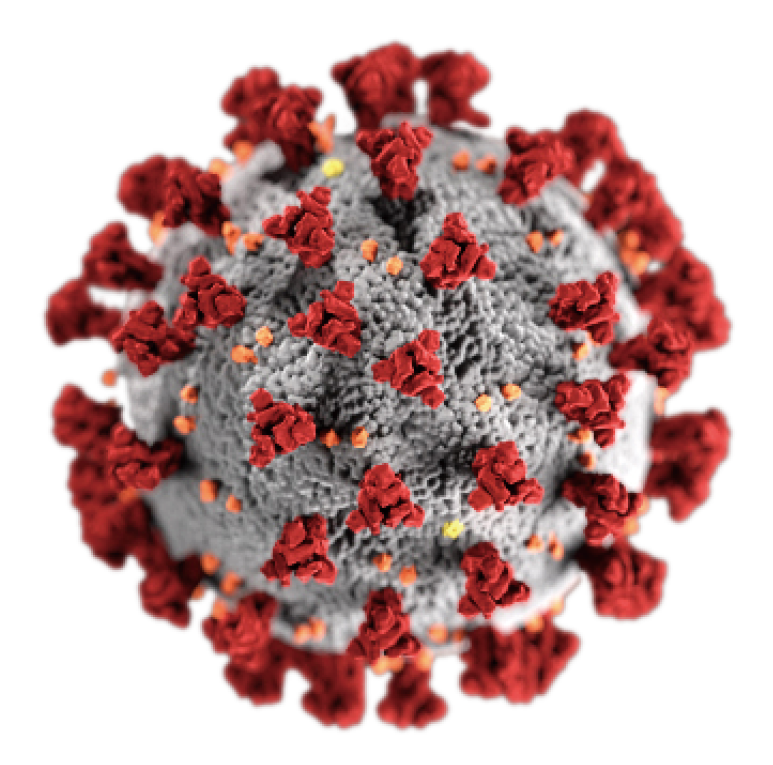
Illustration of a SARS-CoV-2 virion

Germany – Germans think risk of coronavirus transmission by food is low

Food Safety News

The probability of coronavirus being transmitted via food is perceived by the public as being low, according to a survey in Germany.

Two thirds said the probability of being infected with the novel coronavirus (COVID-19) via food was low. More than one in five rated the chance as medium and 12 percent said it was high.

There are no cases which have shown any evidence of humans being infected with the new type of coronavirus by consumption of contaminated food, according to the German Federal Institute for Risk Assessment (BfR). As the viruses are sensitive to heat, risk of infection can be further reduced by heating foods.

The European Food Safety Authority (EFSA) has also said there is no evidence that food is a likely source or route of transmission of the virus.

Information- Coronavirus and Food Live Blog

Just Food

This is a blog dedicated to updated information on the Coronavirus and the Food Industry

Sweden – First recorded EIEC outbreak in Sweden linked to leafy greens – E.coli

Food Safety News

Researchers have shed more light on the first recorded enteroinvasive E. coli (EIEC) outbreak in Sweden.

The outbreak in the county of Halland in 2017 had 83 self-reported infections and one secondary case attributed to household transmission, based on a study published in the journal Eurosurveillance.

Leafy greens were suspected to be behind the outbreak as this item was in a number of dishes associated with illnesses. There was no microbiological evidence to identify the source or vehicle of infection, but contaminated salad greens have been linked to previous EIEC outbreaks.

All five staff members at the conference and hotel venue that met the case definition had symptom onset at least one day after the first reported case among venue visitors.