Category Archives: STEC E.coli

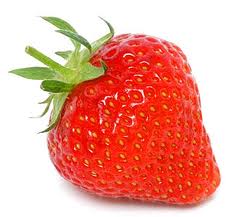
Research – Microbial safety and sanitary quality of strawberry primary production in Belgium: risk factors for Salmonella and Shiga toxin producing Escherichia coli (STEC) contamination.

AEM

Hepatitis A kswfoodworld

Strawberries are an important fruit in Belgium both in production and consumption, but little information is available about the presence of Salmonella and STEC in these berries, the risk factors in agricultural production and possible specific mitigation options. In 2012, a survey was undertaken of three soil and three soilless cultivation systems in Belgium. No Salmonella spp. was isolated. No STEC was detected in the strawberry samples (0 out of 72), but STEC was detected by qPCR in 11 out of 78 irrigation water and 2 out of 24 substrate samples.

Culture isolates were obtained for 2 out of 11 qPCR positive irrigation water samples and 2 out of 2 substrate samples. Multivariable logistic regression analysis revealed elevated generic E. coli numbers (odds ratio (OR) for 1 log increase being 4.6) as the most important risk factor for STEC, together with the berry picking season (elevated risk in summer).

Presence of generic E. coli in the irrigation water (≥ 1 cfu per 100 ml) was mainly influenced by the type of irrigation water (collected rainfall water stored in ponds was more often contaminated than ground water pumped from boreholes (OR = 5.8)) and the lack of prior treatment (untreated water versus water subjected to sand filtration prior to use (OR = 19.2)).

The follow-up study in 2013 at one of the producers indicated cattle as the most likely source of STEC contamination of the irrigation water.
Research – Assessment of the Microbiological Quality and Safety of Unpasteurized Milk Cheese for Sale in England between 2019 and 2020

Journal of Food Protection

Cheese made with unpasteurized milk has been associated with outbreaks of illness. However, there are limited data on the prevalence of Shiga toxin–producing Escherichia coli (STEC) in these products and a lack of clarity over the significance of E. coli as a general indicator of hygiene in raw milk cheeses. The aim of this study was to provide further data to address both of these issues, as well as assessing the overall microbiological quality of raw milk cheeses available to consumers in England. A total of 629 samples of cheese were collected from retailers, catering premises, and manufacturers throughout England. The majority (80%) were made using cow’s milk, with 14% made from sheep’s milk and 5% from goat’s milk. Samples were from 18 different countries of origin, with the majority originating from either the United Kingdom (40%) or France (35%). When interpreted against European Union microbiological criteria and United Kingdom guidance, 82% were considered to be of satisfactory microbiological quality, 5% were borderline, and 12% were unsatisfactory. Four samples (0.6%) were potentially injurious to health due to the isolation of STEC from one, >104 CFU/g of coagulase-positive staphylococci in two, and >100 CFU/g of Listeria monocytogenes in the fourth sample. Indicator E. coli and Listeria species were detected more frequently in soft compared with hard cheese. Higher levels of indicator E. coli were significantly associated with a greater likelihood of detecting Shiga toxin genes (stx1 and/or stx2).

Research – Escherichia coli O103 outbreak associated with minced celery among hospitalized individuals in Victoria, British Columbia, 2021

PHAC

Abstract

Background: In April 2021, a Shiga toxin-producing Escherichia coli (E. coli) (STEC) O103 outbreak was identified among patients at two hospitals in Victoria, British Columbia (BC). The objective of this study is to describe this outbreak investigation and identify issues of food safety for high-risk products prepared for vulnerable populations.

Methods: Confirmed cases of E. coli O103 were reported to the Island Health communicable disease unit. The provincial public health laboratory conducted whole genome sequencing on confirmed case isolates, as per routine practice for STEC in BC. Exposure information was obtained through case interviews and review of hospital menus. Federal and local public health authorities conducted an inspection of the processing plant for the suspect source.

Results: Six confirmed cases of E. coli O103 were identified, all related by whole genome sequencing. The majority of cases were female (67%) and the median age was 61 years (range 24–87 years). All confirmed cases were inpatients or outpatients at two hospitals and were exposed to raw minced celery within prepared sandwiches provided by hospital food services. A local processor supplied the minced celery exclusively to the two hospitals. Testing of product at the processor was infrequent, and chlorine rinse occurred before mincing. The spread of residual E. coli contamination through the mincing process, in addition to temperature abuse at the hospitals, are thought to have contributed to this outbreak.

Conclusion: Raw vegetables, such as celery, are a potential source of STEC and present a risk to vulnerable populations. Recommendations from this outbreak include more frequent testing at the processor, a review of the chlorination and mincing process and a review of hospital food services practices to mitigate temperature abuse.

RASFF Alert – STEC E.coli – Raw Milk Cheese – Bovine Meat – Frozen Lamb

RASFF

Shiga toxin-producing Escherichia coli in raw milk cheese from France in Belgium and Luxembourg

RASFF

Presence E. coli STEC in Bovine meat from Brazil in Spain

RASFF

Shiga toxin-producing Escherichia coli in frozen lamb meat from New Zealand in Italy

USA – FDA Core Outbreak Table Update – New Listeria monocytogenes Outbreak

FDA

Date
Posted

Ref

Pathogen
 

Product(s)
Linked to
Illnesses

(if any)

Investigation
Status

2/9/

2022

1040

Listeria
monocytogenes

Not Yet Identified

Active

2/2/

2022

1054

Enteroinvasive E. coli
O143:H26

Not Yet Identified

Active

1/10/

2022

1050

E. coli
O121:H19

Romaine

Closed

12/29/

2021

1052

E. coli
O157:H7

Packaged Salad

Active

12/20/

2021

1039

Listeria
monocytogenes

Packaged Salad

Active

12/15/

2021

1048

Listeria
monocytogenes

Packaged Salad

Active

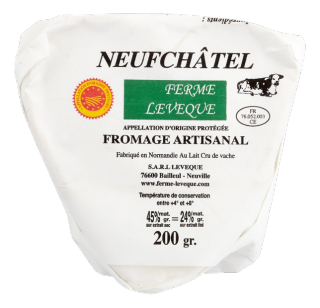
Luxembourg – Neufchâtel cheese from the Ferme Lévêque brand – STEC E.coli

SAP

Recall: Neufchâtel cheese from the Ferme Lévêque brand

Last name Neufchatel cheese
Brand Farm Leveque
Unity 200g
Article number 7960
Date of minimum durability (MDD) 2/27/2022
Sale period from 13/1/2022 to 26/1/2022 inclusive

Danger  : E. coli STEC – Escherichia coli likely to produce toxins (shigatoxins)

E. coli STEC can cause food poisoning which can occur within a week after consumption and result in gastrointestinal disorders often accompanied by cramps. These symptoms may be aggravated in young children, immunocompromised subjects and the elderly. People who have consumed these products and have these symptoms are invited to consult a doctor and report this consumption to him.

Sale in Luxembourg by: Colruyt

A sale by other operators cannot be excluded.

Source of information: Colruyt recall notification

Communicated by: Government Commission for Quality, Fraud and Food Safety .

Click to access Recall-Neuchatel-persbericht-FR-V3.pdf

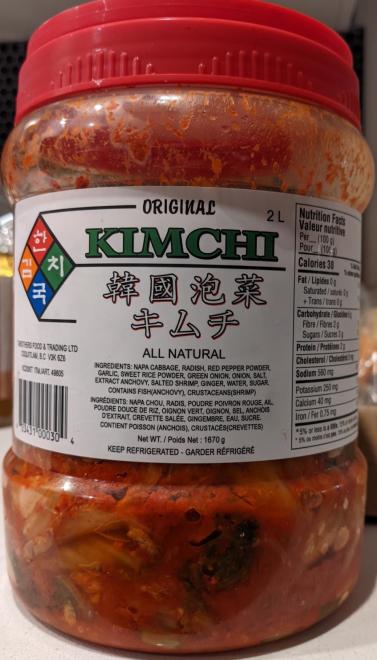
Canada – Public Health Notice: Outbreak of E. coli infections linked to Hankook (Korean characters only) brand Original Kimchi – Update –

PHAC

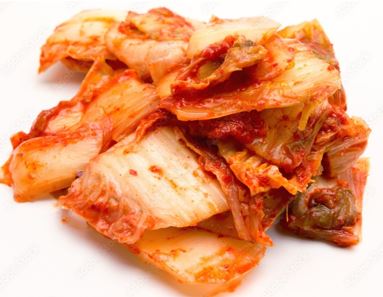
Kimchi

This notice has been updated to reflect an additional food recall warning issued on February 6 for Hankook (Korean characters only) brand Original Kimchi with a best before date of January 23, 2022.

The Public Health Agency of Canada (PHAC) is collaborating with provincial public health partners, the Canadian Food Inspection Agency (CFIA) and Health Canada to investigate an outbreak of E. coli O157 infections involving 2 provinces: Alberta and Saskatchewan.

Based on the investigation findings to date, the outbreak is linked to Hankook (Korean characters only) brand Original Kimchi. Many of the individuals who were sick reported having eaten Hankook (Korean characters only) brand Original Kimchi before their illnesses occurred.

As of February 7, there have been 14 laboratory-confirmed cases of E.coli O157 illness linked to this outbreak in the following provinces: Alberta (13) and Saskatchewan (1).

Individuals became sick between early December 2021 and early January 2022. No deaths or hospitalizations have been reported. Individuals who became ill are between 0 and 61 years of age. The majority of cases (64%) are female.

The CFIA issued food recall warnings on January 28, 2022 and February 6, 2022 for Hankook (Korean characters only) brand Original Kimchi products. The recalled products were distributed in British Columbia, Alberta, Saskatchewan, and Manitoba.

The CFIA is continuing its food safety investigation, which may lead to the recall of other products. If other products are recalled, the CFIA will notify the public through updated food recall warnings.

Canada – Hankook (Korean characters only) brand Original Kimchi recalled due to E. coli O157:H7 – Update

CFIA

Hankook (Korean characters only) - 1670 g

Product
Original Kimchi
Issue
Food » Microbial Contamination » E. Coli O157:H7
What to do

Do not consume the recalled product.

Issue

T-Brothers Food & Trading Ltd. is recalling Hankook (Korean characters only) brand Original Kimchi from the marketplace due to possible E. coli O157:H7 contamination.

The recalled product has been sold in British Columbia.

What you should do

  • If you think you became sick from consuming a recalled product, call your doctor
  • Check to see if you have the recalled product in your home
  • Do not consume the recalled product
  • Recalled products should be thrown out or returned to the location where they were purchased

Food contaminated with E. coli O157:H7 may not look or smell spoiled but can still make you sick. Symptoms can include nausea, vomiting, mild to severe abdominal cramps and watery to bloody diarrhea. In severe cases of illness, some people may have seizures or strokes, need blood transfusions and kidney dialysis or live with permanent kidney damage. In severe cases of illness, people may die.

Research – EU Commission notice on guidance document on addressing microbiological risks in fresh fruits and vegetables at primary production through good hygiene – 2017

EUR LEX

Norovirus Food Safety kswfoodworld

According to the 2014 Zoonosis Monitoring Report (1), the majority of verified outbreaks in the EU were associated with foodstuffs of animal origin. Fruit and vegetables were implicated in only 7,1 % of the verified outbreaks, primarily caused by frozen raspberries contaminated with Norovirus, albeit showing an increase compared to 2013 where ‘vegetables and juices’ were reported in 4,4 % of the outbreaks.

Nevertheless, the possible consequences of microbiological contamination of fresh fruits and vegetables (FFV) cannot be under­estimated as shown by the German crisis (2) linked to the contamination of sprouts by Verotoxin-producing Escherichia coli (VTEC).In the aftermath of this VTEC crisis in 2011, the Commission asked the European Food Safety Authority (EFSA) to advice on the public health risks posed by pathogens in food of non-animal origin (FNAO), addressing in particular the risk factors and the mitigation options including possible microbiological criteria.

As a result, EFSA issued six scientific opinions on the following food/pathogen combinations identified as the most important risks within FNAO:

1) VTEC in seeds and sprouted seeds

(2) Salmonella and Norovirus in food of leafy greens eaten raw as salads.

(3) Salmonella and Norovirus in berries.

(4) Salmonella and Norovirus in tomatoes.

(5) Salmonella in melons.

(6) Salmonella, Yersinia, Shigella and Norovirus in bulb and stem vegetables, and carrots.

This guideline takes account of the relevant opinions of EFSA, and consultation with Member States experts and relevant stakeholders. Though it is intended to offer practical help to growers, it may also be used by official inspectors during their audits where appropriate. EFSA confirmed that further research on possible risks and risk mitigating measures related to FFV should continue.

Research – Effect of phenolic compounds and cold shock on survival and virulence of Escherichia coli pathotypes

Wiley Online

Phenolic compounds (PC) affect many metabolic processes of microbes; however, there is no information about their effectiveness when these act in combination with low temperatures for the control of Escherichia coli pathotypes. In this study, four PC, (tannic acid [TA], gallic acid [GA], methyl gallate [MG], and epigallocatechin gallate [EG]) in combination with cold shock (CS, 10°C) were evaluated for their effect on growth, swarming motility, biofilm formation, and expression of selected virulence-related genes of E. coli pathotypes [enteropathogenic (EPEC), enterohemorrhagic (EHEC), and enterotoxigenic (ETEC)]. Sub-inhibitory concentrations of the PC were used alone (37°C) or in combination with CS. For CS assays, E. coli strains were grown at 37°C until mid-log phase and then subjected to 10°C for 4 hr. Membrane damage was determined by flow cytometry; swarming motility was measured on soft-LB agar, biofilm formation was analyzed by crystal violet staining, and gene expression of CS, biofilm, and swarming motility related-genes was determined by qPCR. Sub-inhibitory concentrations of the PC did not affect the viability of the strains. The combination of CS + TA provoked the highest (p ≤ .05) mortality in all pathotypes. CS + GA inhibited (100%) the motility of EHEC and ETEC. PC and CS + PC reduced (p ≤ .05) biofilm formation. The combination of PC and CS affected virulence factors and their gene expression of pathogenic E. coli presenting a novel alternative for its control in foods.