Category Archives: Research

UK – Listeriosis in England and Wales: summary for 2020

Gov UK

Main points for 2020

This report summarises the number, demographics and clinical outcomes of confirmed cases of listeriosis in England and Wales in 2020:

A total 124 cases of listeriosis were reported in England and Wales.

Incidence rates of listeriosis were highest in people aged 80 years and over.

Overall, the crude incidence of listeriosis was lower in men than women, but reported cases among men aged 60 to 69 were 4 times higher than in women aged 60 to 69.

Pregnancy associated infections accounted for a fifth of all reported cases and, a 34.8% of pregnancy-associated cases resulted in stillbirth or miscarriage.

Among non-pregnancy associated cases of listeriosis, death was reported for 29 cases (29.3%), of whom 17 (17.2%) were known to have listeriosis recorded as a cause of death on the death certificate.

Incidence of listeriosis varied geographically, with the lowest incidence in the North West (0.15 per 100,000 population) and the highest in the East Midlands (0.27 per 100,0000 population).

There were 2 listeriosis outbreaks investigated in England, including a national outbreak associated with smoked salmon.

Research -Food Safety Issues Related to Eating In and Eating Out

MDPI

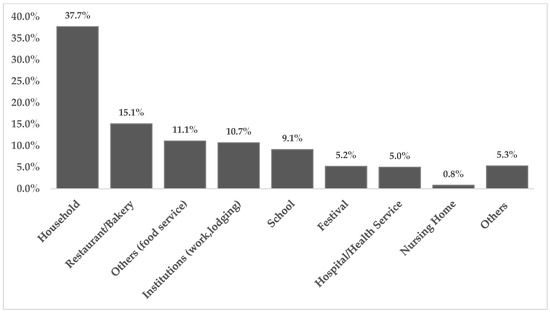
Because of growing urbanization and lack of time to prepare meals at home, eating out or getting food delivered have become common trends for many people. The consumption of food from unknown sources may impose an increased chance of contamination with microbiological hazards, especially if sanitary conditions are not met. We evaluated data from health surveillance agencies and scientific articles on foodborne diseases (FBD) reported internationally according to the exposure sites. We observed that the data are influenced by cultural, political, and socioeconomic differences. For instance, in New Zealand, Australia, United States, Denmark and India, the occurrence of FBD outbreaks was greater from foods prepared in commercial establishments and street vendors than from households. Conversely, in China, countries of the European Union and Brazil, the results are the opposite. Additionally, the pandemic imposed new eating behaviour patterns, increasing delivery services and foods prepared in so-called “Dark Kitchens”. The underreporting and heterogeneity of data among countries prevented a precise conclusion to the question of whether homemade foods are inherently safer than foods prepared out. Nevertheless, a lower level of development in a country influences its sanitation conditions, as well as the number of street food vendors, the search for cheaper foods, and insufficient knowledge of the population on good hygiene practices, which can all increase the chances of FBD cases.

Research – Bacterial Infections and Ice Cream – a Risky Mix

Food Poison Journal

Great article to read at the above link, the table below is edited there is more information in the article.

Year State Agent Brand
2014 Washington Listeria Snoqualmie Ice Cream
2010-2015 Multistate Listeria Blue Bell
2008 Vermont E. coli O157 Homemade ice cream, unpasteurized milk
2008 Minnesota Salmonella  Homemade ice cream
2008 California E. coli O157 Consumed at a restaurant; brand or pasteurization unknown
2007 California Norovirus Ice cream with berries; berries were likely the contaminated ingredient
2007 Pennsylvania Campylobacter Homemade ice cream
2007 Minnesota Hepatitis A Ice cream or yogurt at a restaurant
2007 West Virginia Salmonella Homemade ice cream
2006 Belgium E. coli O145 Ice cream at a farm
2006 California Salmonella Homemade ice cream
2005 Multistate Salmonella  Cold Stone Creamery (cake batter was the contaminated ingredient)
1994 Multistate Salmonella Schwan’s Ice Cream – the estimated # of ill cases is 224,000!
1993 Florida Salmonella  Homemade ice cream

Research – Bacteriophage cocktail shows promise against Vibrio outbreaks in shrimp farms

The Fish Site

Food Illness

Researchers from the Biological Research Center of the Northwest, the Autonomous University of Nuevo León, the Food and Development Research Center AC and the University of Girona evaluated the protective effects of a cocktail of bacteriophages in L. vannamei post larvae against Vibrio bacteria. The scientists found that treating the PLs with bacteriophages kept Vibrio infections at bay and reduced their concentrations in culture water – without harming the surrounding bacterial communities.

Vibrio populations and bacteriophages

Vibrio bacteria are widely disseminated in ocean environments and several Vibrio species are responsible for disease outbreaks in marine animals – especially penaeid shrimp, different fish species and molluscs. Some strains of V. harveyi and V. campbellii have been implicated in disease outbreaks in shrimp hatcheries and grow-out facilities around the world. They’ve also been associated with coral infections.

“We used culture-dependent and culture-independent approaches to explore their effects on bacterial communities associated with shrimp post larvae,” the researchers said. According to the results of the study, administering the phage cocktail drastically reduced Vibrio counts in both in vitro and in vivo environments.

Research – Antifungal action of quaternary ammonium compounds against environmental molds isolated from food industries

Wiley Online

CDC Mould

Abstract

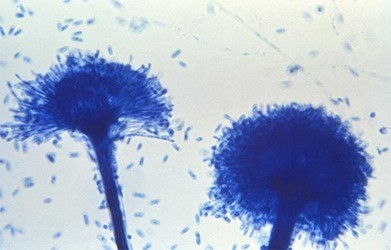
Molds are ubiquitously found microorganisms that are usually present as contaminants in food industrial environments. It has been shown that Cladosporium and Aspergillus genera are two of the most abundant and widely distributed in these locations because they are highly resistant species to sanitizing treatments. Hence, the search of antimicrobial compounds that are effective to these types of fungal contamination becomes relevant. The aim of this report was to evaluate the antifungal capacity of two commercial preparations made both with benzalkonium chloride (a first generation QAC) alone and with the addition of glutaraldehyde at different concentrations and contact times. A suspension-neutralization test was performed employing spores of five strains of both Aspergillus section Nigri and Cladosporium cladosporioides, all isolated from food industries environments. Results have shown that benzalkonium chloride preparation was successful in destroying Cladosporium spores at 5% (v/v) concentration (average 4D value of 9.1 min) but failed in neutralizing Aspergillus propagules at the same conditions. On the other hand, the commercial mixture made of benzalkonium chloride and glutaraldehyde was effective in the inactivation of all food spoilage fungi spores at 1% (v/v) concentration (average 4D value of 1.8 and 8.8 min for Cladosporium and Aspergillus strains, respectively).

Research – Impregnation of the French population by mycotoxins. National Biomonitoring Program, Esteban 2014-2016

Sante Publique

Mycotoxins are substances secreted by certain toxigenic strains of several species of molds (microscopic fungi) such as Aspergillus, Penicillium, Fusarium, Byssochlamys, Alternaria etc. which in particular contaminate cereals and plants before and or after harvest. 

The toxicity of mycotoxins depends on the species and the nature of the toxin. They are generally thermostable, resistant to transformation processes and can be found in many foodstuffs and be responsible for acute or chronic poisoning in humans or animals. 

Of the 300 to 400 known mycotoxins, about ten of them can cause animal or human pathologies: aflatoxins (AF), ochratoxin A (OTA), fumonisins deoxynivalenol (DON), T-2 and HT-2 toxins, trichotecenes (TC), zearalenone (ZEN) and patulins which contaminate fruits, especially apples. In 1993, the IARC (International Agency for Research on Cancer) classified aflatoxins in group 1, carcinogenic to humans; AFB1, considered one of the most potent natural genotoxic carcinogens, is classified in group 1 (IARC, 2002). 

The target organ is the liver. As for OTA, it is considered possibly carcinogenic for humans and classified in group 2B (1993); in humans as in animals, the kidney is the main target organ. OTA would also have immunotoxic and neurotoxic effects. Due to their harmful effects, exposure to mycotoxins must remain as low as possible to protect the population. L’ WHO encourages the monitoring of mycotoxin levels in food because they represent a risk for human and animal health. 

In France, data on the impregnation of the French population by mycotoxins are almost non-existent, with the exception of a study carried out in three French regions [1, 2]. The Esteban cross-sectional study (Health study on the environment, biomonitoring, physical activity and nutrition) made it possible to measure the levels of impregnation by aflatoxins and OTA of the population in mainland France aged 6 at 74 years old between April 2014 and March 2016.

The purpose of this note is to present the results of impregnation by AFs and OTA, and to analyze the determinants of exposure to OTA in adults . Aflatoxins B1, B2, G1, G2, M1 were not quantified, neither in children nor in adults. For OTA, the percentage of quantification was equal to 45.5% in children and 47.8% in adults. The geometric means of the levels of impregnation by the OTA were lower than the LOQ or not provided considering the important rate of censorship. 

The search for the determinants of exposure by OTA, essentially dietary, in adults showed an increase in impregnation with the consumption of processed meats. Not all associations could likely be identified due to small sample size. A future biomonitoring study could make it possible to deepen the search for determinants of the impregnations observed and to broaden the knowledge of the

Author: Oleko Amivi, Hoang Phan, Fillol Clémence, Gane Jessica, Saoudi Abdessattar, Zeghnoun Abdelkrim
Year of publication: 2022
Pages: 35 p.
Collection: Studies and Surveys

Research – Phenotypic and genotypic characterization of salmonella Enteritidis isolated from two consecutive Food-Poisoning outbreaks in Sichuan, China

Wiley Online

Abstract

Salmonella enterica serotype Enteritidis (SE) is a primary pathogen that causes foodborne diseases in humans. Although whole-genome sequencing (WGS) -based typing analyses have been increasingly used to investigate food-poisoning outbreaks, they are rarely applied to the epidemiology of multiple Salmonella outbreaks in Sichuan, China. This study therefore isolated SE from patients and food of two consecutive food-poisoning outbreaks during 2020 in Sichuan, China. We tracked outbreak origin using epidemiological investigation, serotyping, antimicrobial susceptibility testing (AST), pulsed-field gel electrophoresis (PFGE), and WGS. We also determined phylogenetic relationships using PFGE, whole and core genome multilocus sequence typing (wg/cgMLST), and whole-genome single nucleotide polymorphism (wgSNP) analyses. Epidemiological investigations identified a correlation between cake consumption and food poisoning. Thirteen strains isolated from patients and one strain isolated from the cake were confirmed as SE. Among the 14 strains, only six shared the same AST pattern (AMP-AMS-Sul-STR). Isolates from patients and cakes were indistinguishable in PFGE results. All four methods, namely PFGE, wgMLST, cgMLST, and wgSNP were appropriate for bacterial typing in SE-related outbreak investigation. However, wgSNP can assign 12 SE strains from the first outbreak to one cluster and assign two SE strains from the second outbreak to another cluster, while PFGE, wgMLST, cgMLST did not successfully distinguish the SE strains from different outbreaks. Thus, we conclude that SNP-based phylogenetic analysis might be a viable method for differentiating SE strains at the outbreak level.

Research – Cultivation Conditions of Spinach and Rocket Influence Epiphytic Growth of Listeria monocytogenes

MDPI

Leafy vegetables are associated with Listeriosis outbreaks due to contamination with Listeria monocytogenes. To date, contradictory findings were reported on spinach, rocket, and kale, where some studies reported growth of L. monocytogenes, while others did not. Thus, the current study investigated the reason for conflicting findings by producing leafy vegetables, where cultivation factors were known for growth potential studies. Of all polytunnel produce, kale Nero di Toscana demonstrated the highest growth potential (2.56 log cfu g−1), followed by spinach F1 Cello (1.84 log cfu g−1), rocket Buzz (1.41 log cfu g−1), spinach F1 Trumpet (1.37 log cfu g−1), and finally rocket Esmee (1.23 log cfu g−1). Thus, plant species and variety influenced L. monocytogenes growth potentials. Moreover, significantly lower growth potentials of 0.3 log cfu g−1 were identified when rocket Buzz was cultivated in open fields (1.11 log cfu g−1) instead of a polytunnel. The opposite effect was observed for spinach F1 Trumpet, where growth potentials increased significantly by 0.84 log cfu g−1 when cultivated in open fields (2.21 log cfu g−1). Furthermore, a significant seasonality effect between batches was found (p < 0.05). This study revealed that spinach and rocket cultivation conditions are at least co-factors in the reporting of differing growth potentials of L. monocytogenes across literature and should be considered when conducting future growth potential studies.

Research – Efficacy of Repeated Applications of Bacteriophages on Salmonella enterica-Infected Alfalfa Sprouts during Germination

MDPI

Nontyphoidal Salmonella enterica is one of the leading pathogens for foodborne outbreaks in a multitude of food commodities, including alfalfa sprouts, which are commonly consumed raw. The food industry has commonly used chlorinated washes, but such methods may not be perceived as natural; this can be a detriment as a large portion of sprouts are designated for the organic market. A natural and affordable antimicrobial method that has been acquiring popularity is the use of bacteriophages. This study compared the efficacy of repeated daily applications and a single application of two separate bacteriophage cocktails (SE14, SE20, SF6 and SE14, SF5, SF6) against four Salmonella enterica (S. enterica) strains on germinating alfalfa sprout seeds from days 0 to 7. The results show S. Enteritidis to be the most susceptible to both cocktails with ~2.5 log CFU/mL decrease on day 0 with cocktail SE14, SF5, and SF6. S. enterica populations on all strains continued to grow even with repeated daily bacteriophage applications but in a significantly decreased rate (p < 0.05) compared with a single bacteriophage application. The extent of the reduction was dependent on the S. enterica strain, but the results do show benefits to using repeated bacteriophage applications during sprout germination to reduce S. enterica populations compared with a single bacteriophage application.

Research -The annual cost of foodborne illness in Australia

FSANZ

Executive summary
Foodborne illness causes a significant health burden in Australia. Estimates of both the extent of foodborne illness and the costs arising from illness are essential for measuring the impact on the population.
In 2010 it was estimated that Australians experience almost 16million episodes of gastroenteritis each year, with about one quarter of these due to contaminated food. This report updates these numbers to circa 2019 and estimates the associated costs to individuals and the health system. As foodborne disease interventions are often targeted at specific causes of illness, costs are also provided for ten high-priority pathogens.
We estimate that foodborne illness and its sequelae costs Australia AUD 2.44billion each year. The largest component of this cost is lost productivity due to non-fatal illness, followed by premature mortality and direct costs (including hospitalisations and other health care use).
While costs due to lost productivity are lower under the more conservative friction cost model, it remains the largest component cost for foodborne illness due to all causes. The pathogen with the highest individual cost is Campylobacter (AUD 365millionper year), while norovirus, other pathogenic E. coli, and Salmonella are all estimated to cost Australians over AUD 100 million each year. Lost productivity is the largest component cost for most pathogens, although premature mortality is the largest cost for pathogens that typically cause more severe illness, such as Listeria monocytogenes, Shiga toxin-producing Escherichia Coli, and Salmonella.
Significant advances in this report include the incorporation of estimated willingness to pay to avoid pain and suffering based on a discrete choice experiment from another FSANZ commissioned study, and the use of a simulation approach to estimating costs which provides uncertainty intervals on all estimates. A costing tool is provided with this report to allow estimates to be updated in the future.
Costs associated with surveillance for foodborne pathogens and related to outbreak investigations are considered separately to the model. Likewise, industry costs due to outbreaks such as lost sales, disposal of products, recall costs, enforcement related costs and potential business costs are not included in the costing model. Key limitations in this work include the lack of data on the long-term burden and health care usage associated with sequelae or ongoing illness due to toxoplasmosis and listeriosis. These costs are not included in this report due to unavailability of data. Costs of pain and suffering, which we approximate using willingness to pay to avoid pain and suffering, are relatively low compared to those estimated for other countries, which may represent differences in underlying preferences across countries and could suggest that greater international standardisation of methods and data collection may be required.

This report demonstrates that foodborne illness results in a substantial cost to Australia and that interventions to improve food safety across industry, retail, and consumers are needed to improve public health. Pathogen-specific costing estimates allow policy makers to target such interventions at individual pathogens, with the end goal of reducing the burden due to foodborne illness.